Artist
Adam Buck

Ireland
Adam Buck is an Ireland Biedermeier artist. 7 works are cataloged here, principally at Victoria and Albert Museum.
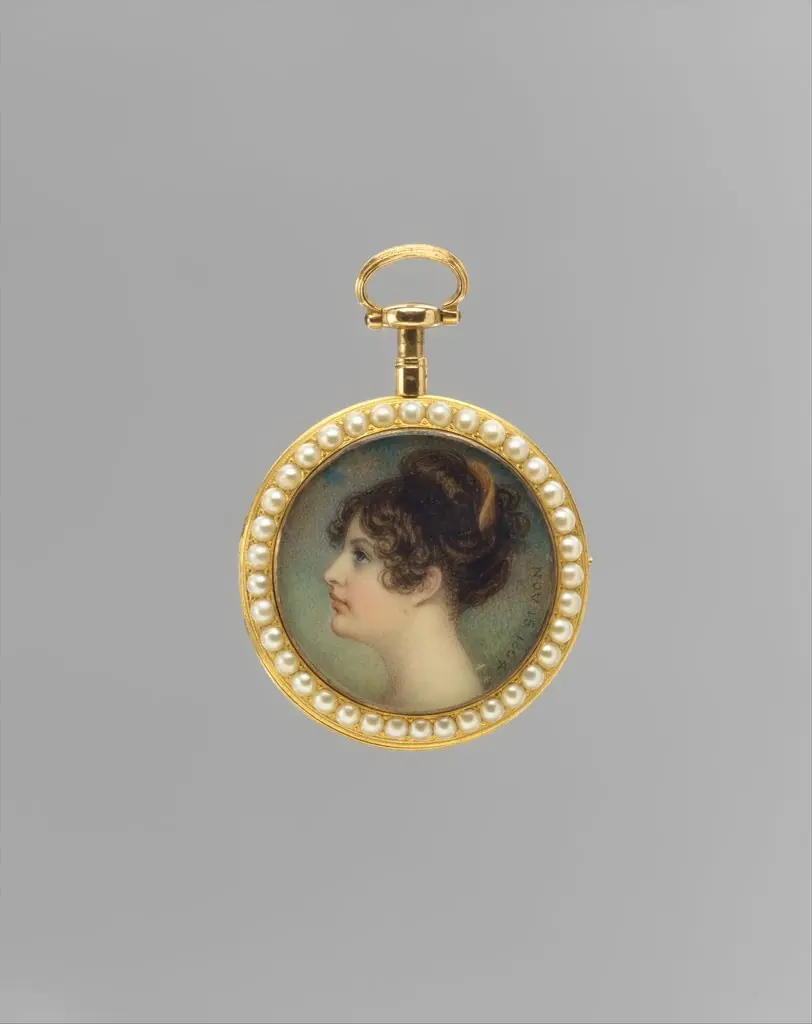
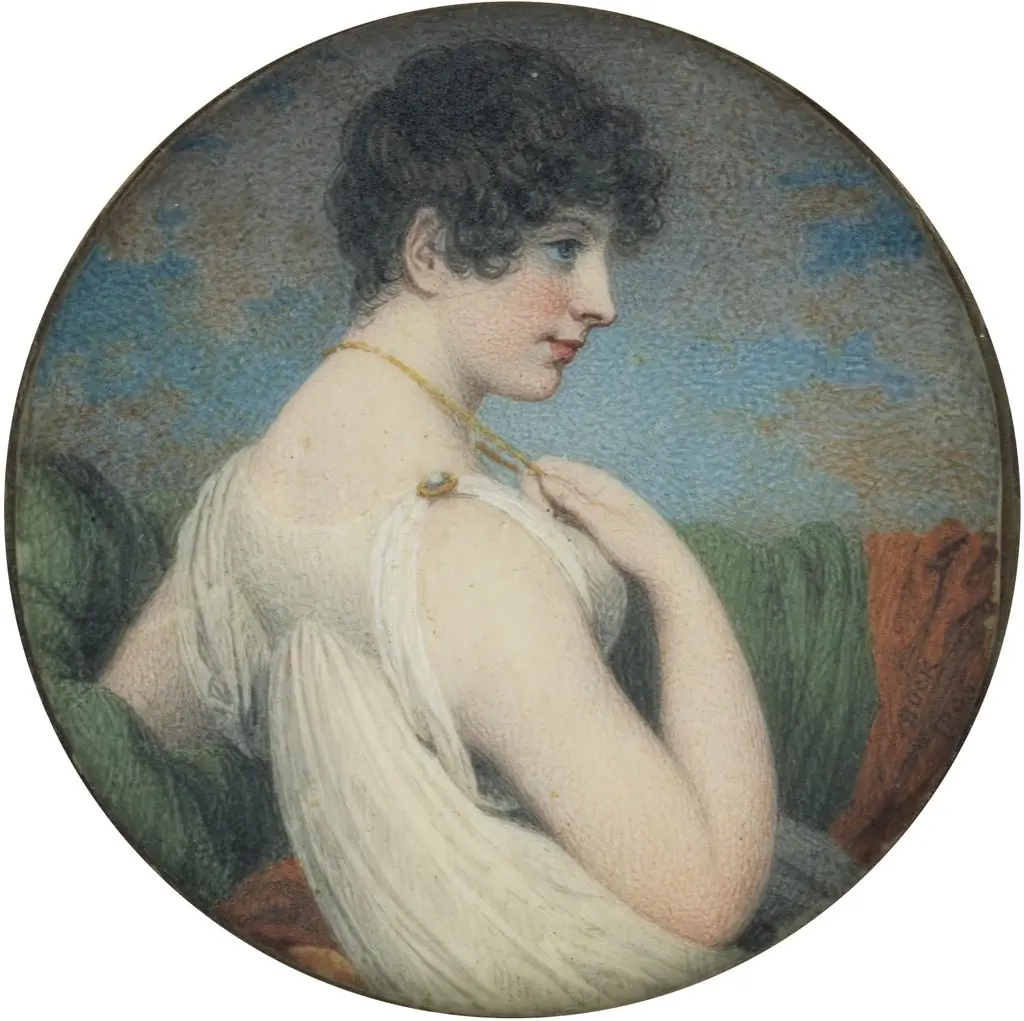
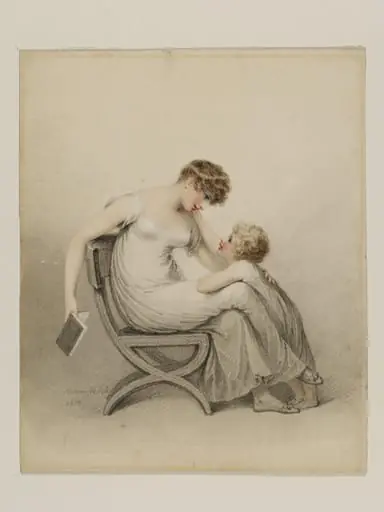
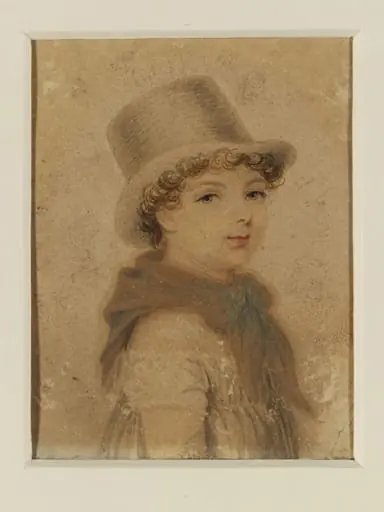
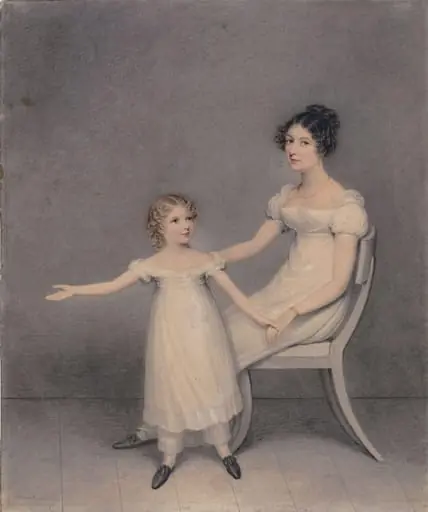
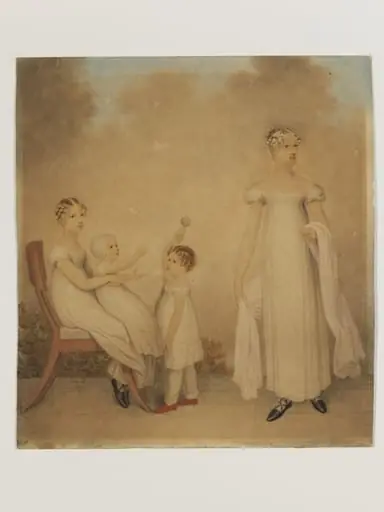
Adam Buck (1759 – August 1833) was an Irish artist who specialised in neoclassical portraits, including portrait miniatures, and engravings. He was principally active in Dublin and London.
Overview
Adam Buck (1759, August 1833) was an Irish artist who became one of the leading neoclassical portrait and miniature painters of the Regency era. Principally active in Dublin and London, he produced portrait miniatures, watercolours, and engravings that helped shape the visual culture of early nineteenth-century Britain. His work is distinguished by its incorporation of Greek Revival elements, including classical furniture, vases, costumes, and hairstyles, and he enjoyed the patronage of figures ranging from George IV to prominent Whig politicians and opera singers. Buck exhibited more than 170 works at the Royal Academy between 1795 and 1833, establishing himself as a significant influence on Regency taste.
Style & movement
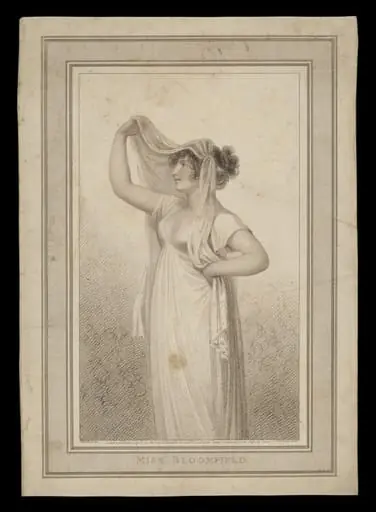
Buck specialised in neoclassical portraits, with particular emphasis on portrait miniatures and small full-length watercolours. His style was deeply informed by the Greek Revival: the furniture, vases, sculptures, costumes, and even hairstyles in his works deliberately evoke ancient Greece. He collected Greek vases himself, and this interest culminated in his 1811 proposal to publish by subscription 100 engravings from paintings on Greek vases from private collections in England, intended as a continuation of Sir William Hamilton's 'Collection of Engravings from Ancient Vases' (1791-7). His small portraits in watercolours typically depicted women, full length, standing or walking against a low horizon in an open landscape. He also produced genre pictures of family and classical scenes, plates of contemporary costume, and illustrations for Laurence Sterne's 'Sentimental Journey'. Through print sellers such as William Holland, Buck ensured wide distribution of his works as engravings and aquatints, making his aesthetic accessible beyond the circle of original patrons.
Major works
Buck's output was substantial and varied. His 1790 'Portrait of an Irish Girl' marked his first success in the small full-length watercolour format. In 1799, he produced 'Archers', a print dedicated to the Prince of Wales, depicting three maidens with free-flowing hair engaged in archery. 'A Confident Child' dates to 1809. He exhibited 'A Girl smelling Geraniums' (also known as 'Girl on a terrace') in 1807 through Colnaghi. Other identified works include 'Portrait of a Young Lady Seated on a Sea-wall', and a pencil and watercolour depicting three small girls in a wild landscape, variously titled 'Martha, Katherine and Isabel Butler', exhibited at Agnews' 94th Annual Exhibition of Watercolours and Drawings in 1957, and previously believed to show daughters of the poet Robert Southey. His 1811 publication project on Greek vases, dedicated to the Earl of Carlisle, remained significant though its execution is unclear. The 'Portraits of the Miss Sneyds' from 1790 and a 'Portrait of a woman and child' are also documented among his works.
Influences & students
Buck's artistic formation drew upon multiple sources. His possible study at the Royal Dublin Society's Drawing School or The Hibernian Academy placed him within an established Irish academic tradition. In London, his proximity to the Neapolitan artist Giacomo Antonio Minasi at 174 Piccadilly suggests a possible avenue of technical influence. The Greek Revival provided his dominant stylistic framework, with Sir William Hamilton's earlier vase publications serving as a direct model for his own 1811 engraving project. Buck also acted as a painting teacher, though specific pupils are not documented in the available sources. His brother Frederick Buck (died 1840) pursued a parallel career as a miniature painter in Cork, primarily serving the local gentry and military, before abandoning painting for property development by 1824. The brothers represent a significant instance of Irish artistic family enterprise during the Georgian period.
Legacy
During his lifetime, Buck occupied a prominent position in London's artistic establishment, with patrons including Angelica Catalani, J.P. Kemble, Sir Francis Burdett, Thomas Hope, George IV, the Duke of York, and Mary Anne Clarke. His 179 works at the Royal Academy over 38 years, plus contributions to the British Institution, the Society of British Artists, and the New Watercolour Society, attest to his professional standing. However, his later years were marked by poverty, reputedly after a royal scandal involving a patron. His broader cultural significance lies in his role as 'a major influence on Regency culture', producing visual material that complemented the world depicted in contemporary literature, including the novels of Jane Austen. His works are now recognised as characteristic examples of Regency neoclassicism, merging political and social portraiture with the decorative aesthetics of the Greek Revival. The dispersal of his output through prints ensured a wider contemporary audience than many miniaturists achieved, though this same reproducibility has complicated the establishment of a definitive oeuvre.
Works by Adam Buck
Collections represented


Artists in a similar vein