Artist
James David Smillie
United States
James David Smillie is an United States Impressionism artist. 28 works are cataloged here, principally at National Gallery of Art.
American, New York 1833–1909 New York
Overview
James David Smillie (January 16, 1833, September 15, 1909) was an American painter, engraver, and illustrator whose career spanned the transformation of American visual arts in the late nineteenth century. Born in New York City to a Scottish immigrant engraver, Smillie first established himself as a master of steel engraving before turning to landscape painting in oils and watercolor. He is best remembered as a cofounder of two enduring institutions: the American Watercolor Society (1866) and the New York Etching Club (1877). His work in landscape painting, particularly mountain views and pastoral scenes, placed him within the mainstream of American taste during the post-Civil War era. His significance lies equally in his organizational role in professionalizing American artists' societies and in his own prolific output across multiple media.
Biography & dates
James David Smillie was born in New York City on January 16, 1833, to Catherine (née Vans Valkenburgh) and James S. Smillie (1807-1885), a Scottish-born engraver who had emigrated to New York in 1829. His father, elected to the National Academy of Design in 1851, worked with his uncle William Cumming (1813-1908) to advance the engraving of bank-notes and gained recognition as a landscape engraver. His brother, George Henry Smillie, also became a painter. Smillie received his initial training from his father, learning steel engraving and producing vignettes for bank-notes. He also created illustrations, notably reproducing F. O. C. Darley's pictures for James Fenimore Cooper's novels. He traveled to Europe in 1862. In 1864 he abandoned engraving to devote himself to landscape painting. He was elected an associate of the National Academy of Design in 1865 and became a full academician in 1876. He married Anna C. Cook in 1881, and the couple had two children. Smillie died on September 15, 1909, at his home in New York City.
Style & movement
Smillie's artistic practice evolved through distinct phases, each reflecting the technical demands of his era. His early career in steel engraving required precision and linear control, skills that informed his later work in etching. After 1864, he concentrated on landscape painting, with a particular focus on mountain scenery. His watercolor practice was closely tied to his leadership in the American Watercolor Society, where he served as treasurer from 1866 to 1873 and president from 1873 to 1878. His oil paintings included Evening among the Sierras (1876) and The Cliffs of Normandy (1885), while his watercolors encompassed A Scrub Race (1876) and The Passing Herd (1888). He also contributed to the popular illustrated volume Picturesque America, writing and illustrating the article on Yosemite. The French source notes his particular affinity for mountain views, a specialization that aligned him with the broader American appetite for wilderness and scenic grandeur during the period.
Major works
Smillie's major works span oil painting, watercolor, and print media. In oils, Evening among the Sierras (1876) and The Cliffs of Normandy (1885) represent his engagement with grand landscape subjects. His watercolors include A Scrub Race (1876) and The Passing Herd (1888). Beyond independent works, he made significant contributions to illustrated publications, most notably his written and illustrated contribution on Yosemite for Picturesque America. Two portraits of Smillie by other artists are held by the National Academy of Design: one by Henry Augustus Loop and another by James Hamilton Shegogue. The James D. Smillie Papers are preserved at the National Gallery of Canada in Ottawa, Ontario.
Influences & students
Smillie's primary formative influence was his father, James S. Smillie, from whom he learned steel engraving and the fundamentals of draftsmanship. His father's election to the National Academy of Design in 1851 and his uncle William Cumming's role in developing bank-note engraving established a family environment of technical and artistic ambition. Smillie supplemented this domestic training with study at the National Academy of Design. The sources do not record named pupils or a broader circle of followers, though his institutional leadership positions suggest significant professional influence through the American Watercolor Society and New York Etching Club rather than through a traditional teaching studio.
Legacy
Smillie's legacy rests on his dual contribution as practitioner and institution-builder. The American Watercolor Society and New York Etching Club, both of which he cofounded, outlived him and shaped American practice in their respective media. His papers at the National Gallery of Canada provide a significant resource for scholars of nineteenth-century American art. Posthumously, his work has been documented in standard reference works including David McNeely Stauffer's American Engravers Upon Copper and Steel (1907), the Cyclopedia of Painters and Paintings (1913), and Emmanuel Bénézit's Dictionnaire critique et documentaire des peintres (1999). His work is represented in major institutional collections including the British Museum, Musée d'Orsay, National Gallery of Art, Smithsonian American Art Museum, and Nationalmuseum.
Works by James David Smillie
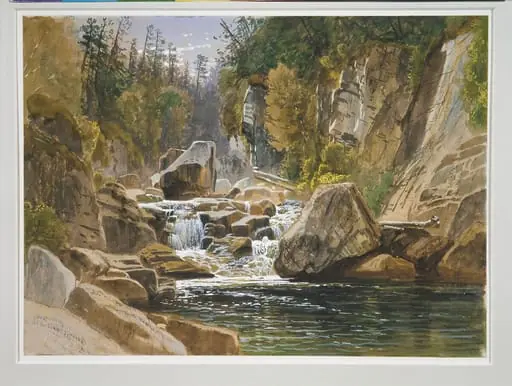 On the Ausable
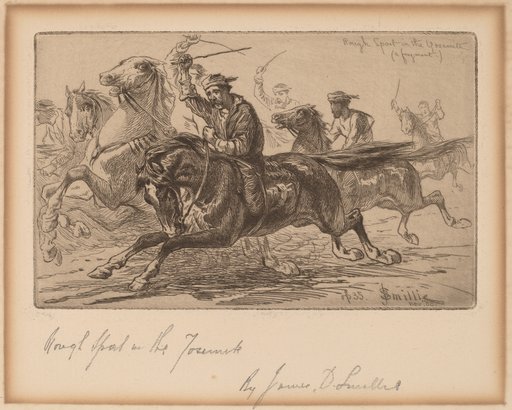
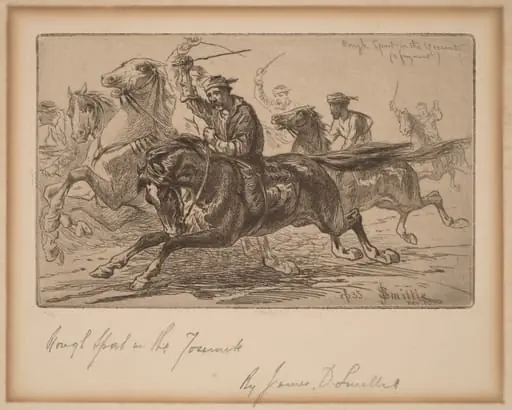 Rough Sport in the Yosemite
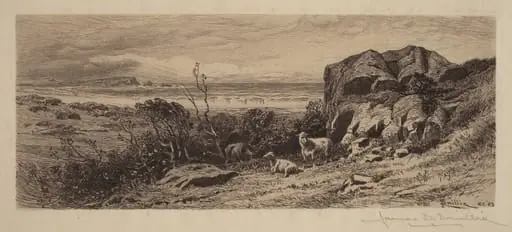 A Bit on Marblehead Neck
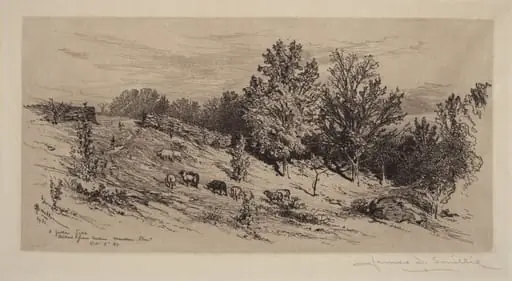 A Fallow Field
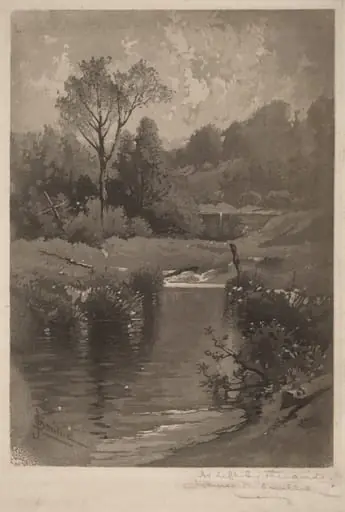 An Old Dam Near Montrose
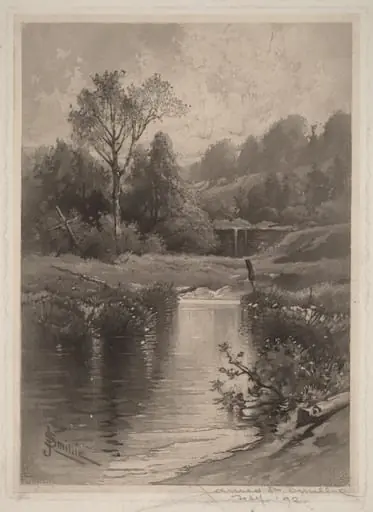 An Old Dam Near Montrose
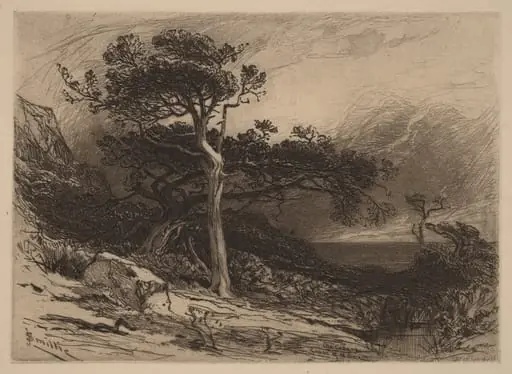 Old Cedars, Coast of Maine
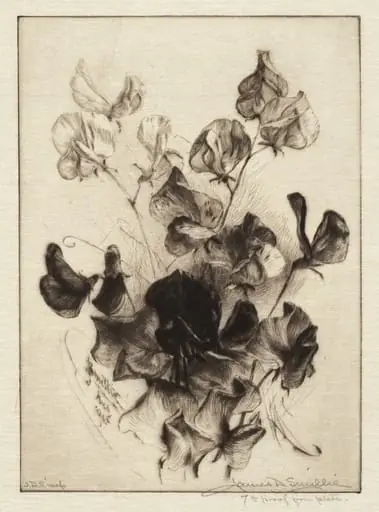 Sweet Peas
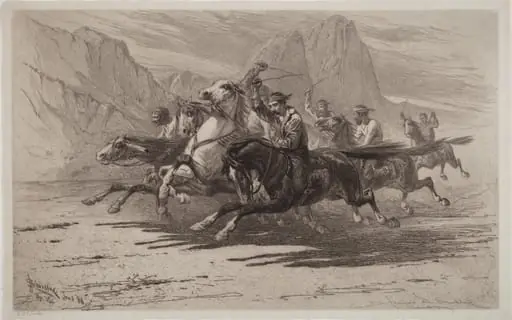 Rough Sport in the Yosemite
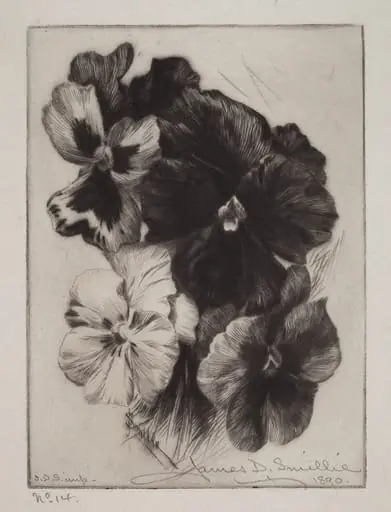 A Bunch of Pansies
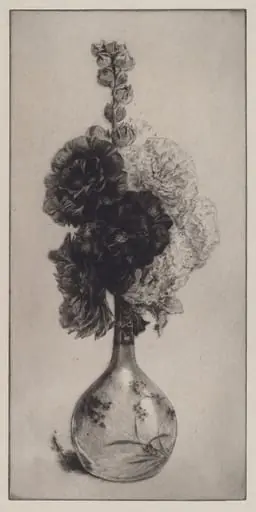 Hollyhocks in a Long-Necked Vase
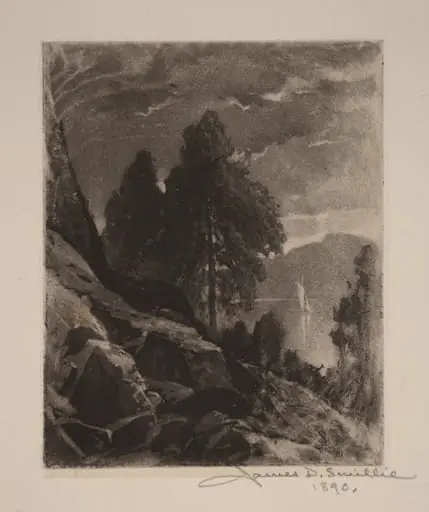 Untitled (Experiment—Wet Aquatint)
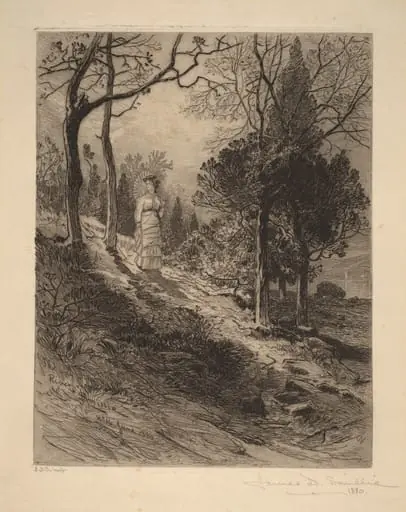 The Way to the River
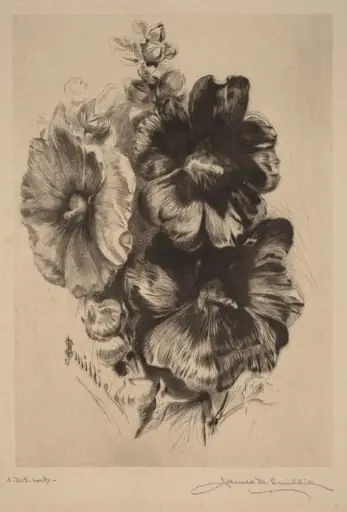 Dark Single Hollyhocks
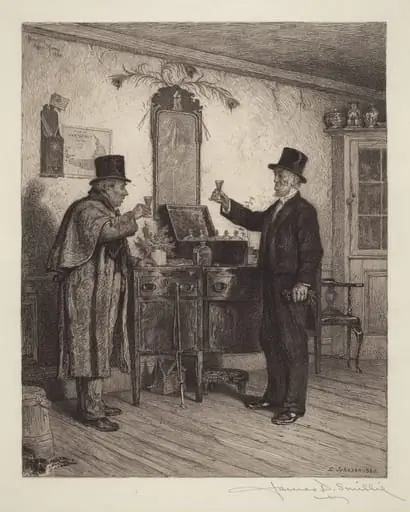 A Glass with the Squire
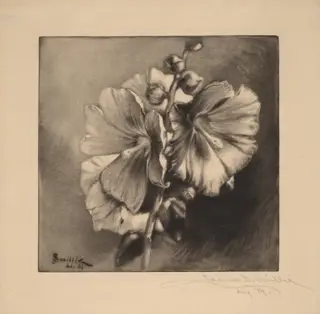 Single Hollyhocks
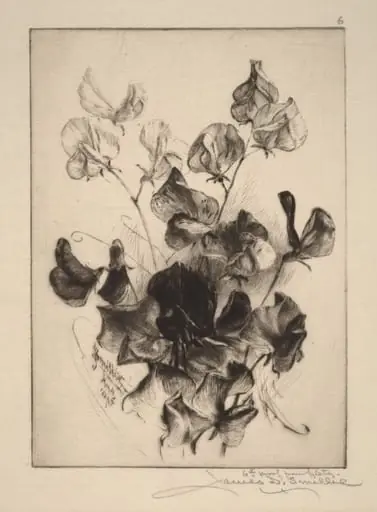 Sweet Peas
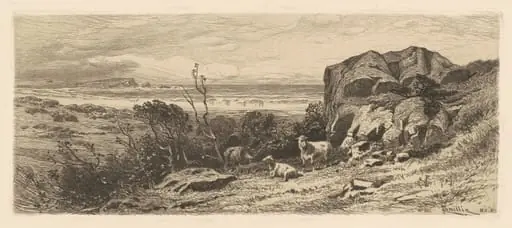 A Bit on Marblehead Neck
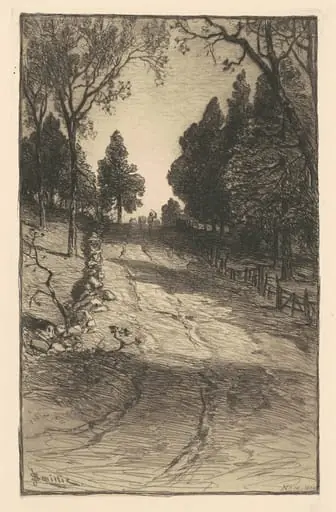 Up the Hill
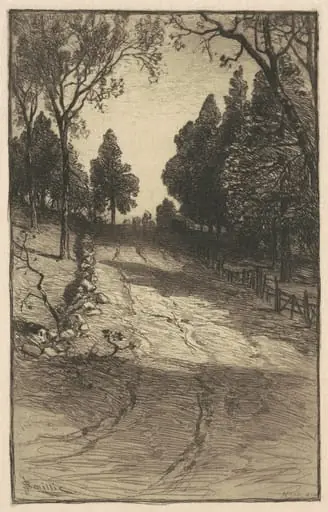 Up the Hill
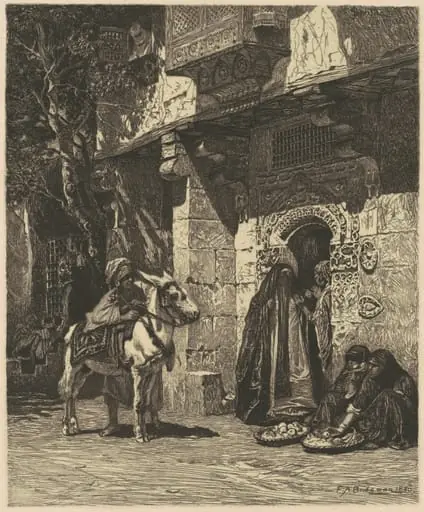 A Lady of Cairo Visiting
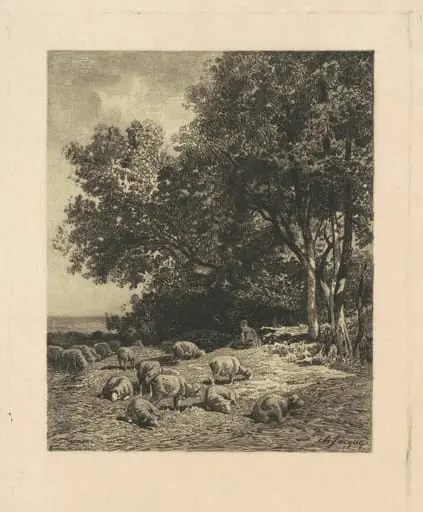 Landscape with Sheep
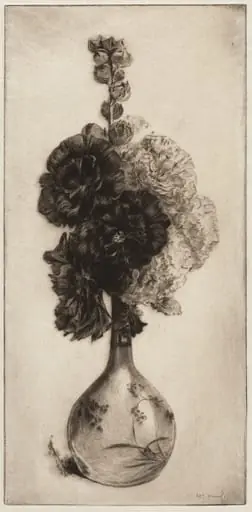 Hollyhocks in a Long-necked Vase
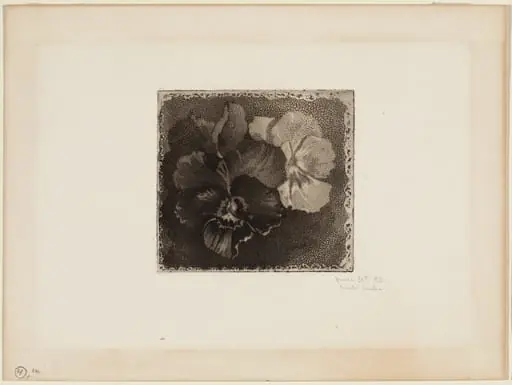 Pansies
28 works in the catalog · 24 shown
Collections represented


Artists in a similar vein