Artwork
On the Ausable
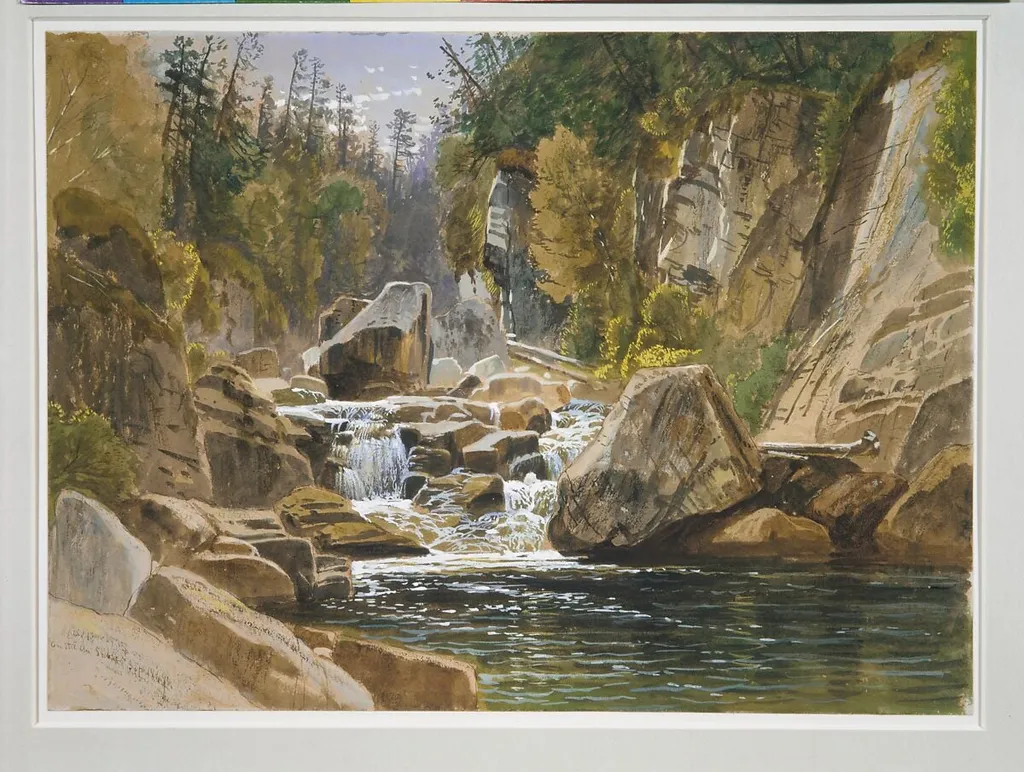
On the Ausable is a watercolor work on paper by the Hudson River School artist James David Smillie. It dates from 1869 and is held in the collection of the Metropolitan Museum of Art.
About this work
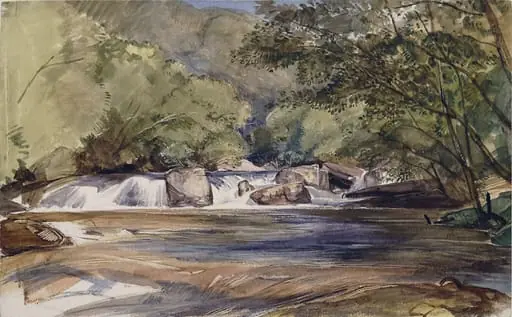
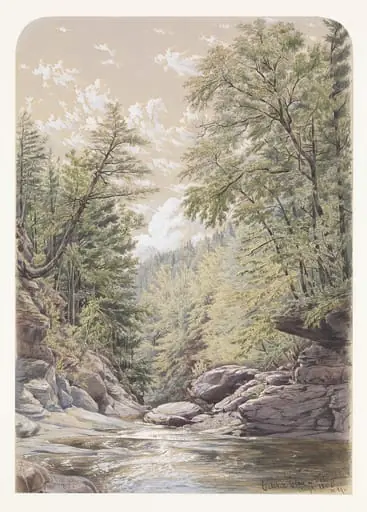
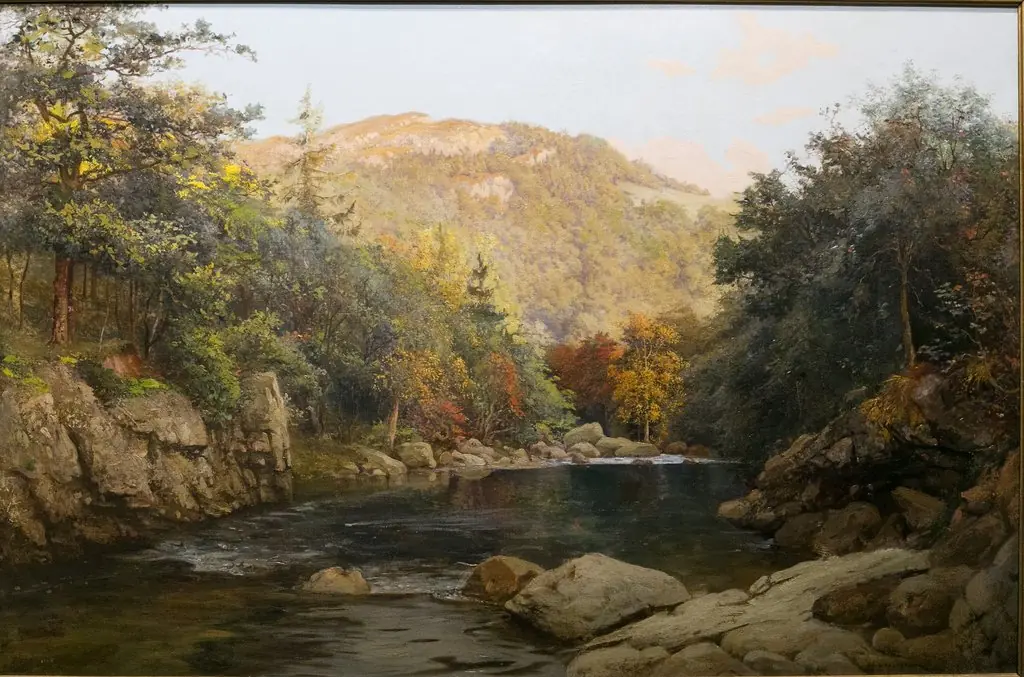
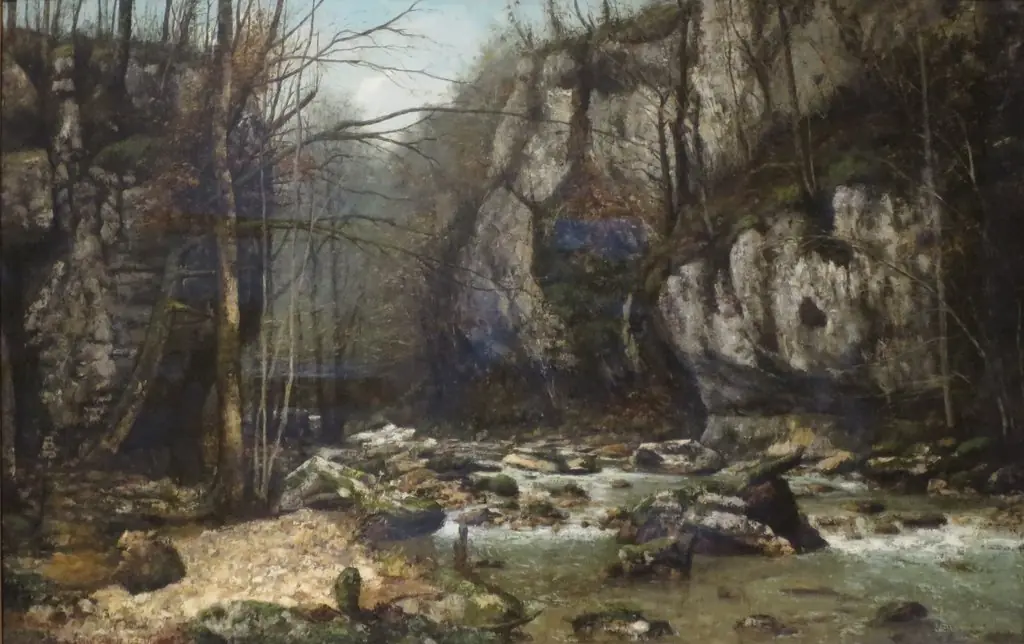
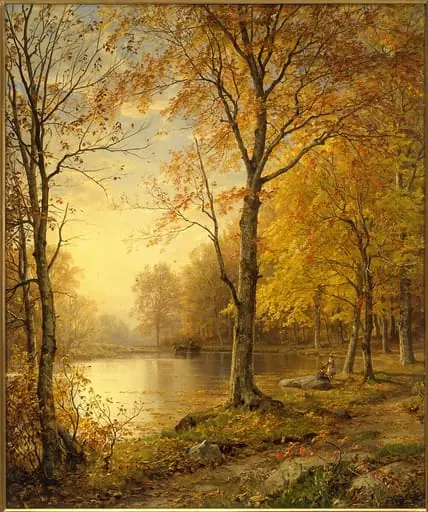
You see a quiet river winding through tall trees, their leaves just starting to turn gold.
Smillie painted this in 1869, right after the Civil War. The calm water feels like a pause, nature healing. Look close: he used tiny strokes of gouache (thicker, opaque watercolor) to make the sunlight pop on the bark.
If you like this, try searching for the subject rivers.
Subject & Meaning
The tree functions as a recurring motif that suggests resilience and the interconnectedness of land and water, reinforcing the painting’s contemplative mood.
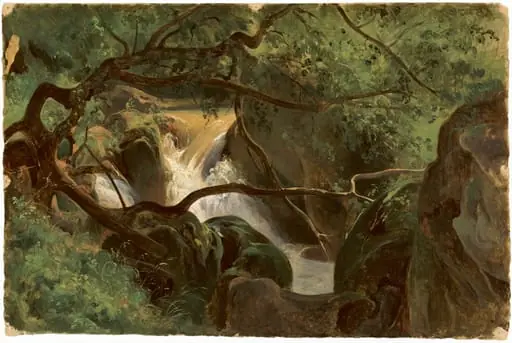
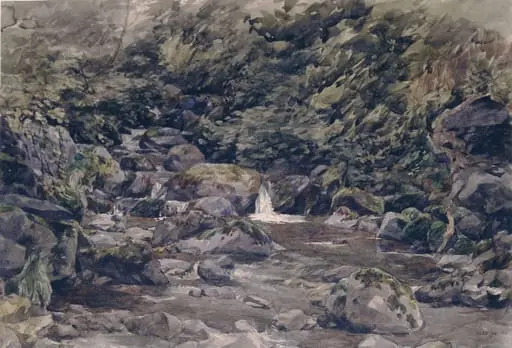
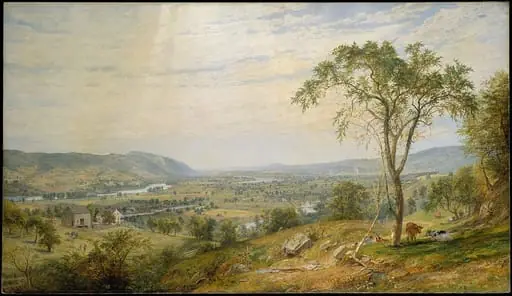
The watercolor and gouache landscape titled On the Ausable portrays a solitary tree beside a stream, evoking the quiet presence of nature in the American wilderness. The work reflects the mid‑nineteenth‑century fascination with the Hudson River School’s idealized scenery, emphasizing both the visual detail of foliage and the symbolic notion of endurance within the natural environment.
The tree functions as a recurring motif that suggests resilience and the interconnectedness of land and water, reinforcing the painting’s contemplative mood.
Technique & Style
On the Ausable is executed in watercolor and gouache on green-gray wove paper, a support choice that lends a muted, neutral ground to the landscape composition. The combination of transparent watercolor washes with opaque gouache highlights is characteristic of mid-19th-century American landscape practice, allowing both atmospheric washes and crisper, more defined accents within a single work.
The sheet measures 24.1 cm in height by 32.7 cm in width, a modest, intimate scale suited to the handling of watercolor. The green-gray tone of the wove paper functions as an integral mid-value, unifying the composition and contributing to the cool, naturalistic palette typical of the depicted tree subject.
History & Provenance
James David Smillie created this watercolor and gouache landscape in 1869 while working for the American art publishing firm Harper & Brothers. The piece entered The American Wing collection at the Metropolitan Museum of Art, where it remains on view in Gallery 770.
The work was donated to the museum by Smillie’s son, Lawrence R. Smillie, in 1952. Its dimensions measure 24.1 centimeters in height by 32.7 centimeters in width on green-gray wove paper.
The work is held in the collection of the Metropolitan Museum of Art, where it is cataloged under its accession number as part of The American Wing's landscape genre holdings. It was created in 1869 and measures 24.1 cm by 32.7 cm. The piece has been exhibited in the museum's galleries dedicated to American landscapes, though specific exhibition dates are not detailed in the available records.
Context
James David Smillie's 1869 watercolor and gouache landscape On the Ausable was created during a period when American artists were developing a distinct regional identity, aligning with the broader context of 19th-century American landscape painting. The work is housed in The American Wing collection at the Metropolitan Museum of Art, reflecting its significance within the canon of American art. Its depiction of a tree connects to contemporary artistic interests in natural subjects and the evolving aesthetic of the American wilderness.
Scholarship on Smillie emphasizes his role in bridging Hudson River School traditions with more intimate, observational approaches to nature.
Overview
James David Smillie's 'On the Ausable,' executed in 1869, is a watercolor and gouache study on green-gray wove paper depicting the Ausable River in the Adirondack Mountains. The composition centers on a calm, winding waterway that guides the viewer's eye through a dense forest of tall trees. Smillie captures the transition of seasons, with foliage beginning to turn gold, suggesting early autumn.
The artist employs a technique characteristic of his mature landscape work, utilizing fine, precise strokes of opaque gouache to render dappled sunlight filtering through the canopy and reflecting off the water's surface. This approach creates a luminous contrast against the darker, more muted tones of the surrounding woods and the green-gray paper ground. Created shortly after the American Civil War, the work reflects the Hudson River School tradition of finding spiritual renewal and national identity in the American wilderness.
The painting exemplifies Smillie's reputation as a master of watercolor, prioritizing atmospheric light and detailed observation over dramatic narrative. It stands as a representative example of his contributions to American landscape art during the late 19th century, emphasizing the serene and restorative qualities of the natural world.
Artist & collection