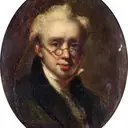
Artist
Daniel Maclise

Ireland
Daniel Maclise is an Ireland British Romanticism artist. 75 works are cataloged here, principally at Victoria and Albert Museum.
Daniel Maclise (25 January 1806 – 25 April 1870) was an Irish history painter, literary and portrait painter, and illustrator, who worked for most of his life in London, England. His works included a series of murals at the Palace of Westminster, among them The Death of Nelson.
Overview
Daniel Maclise (25 January 1806-25 April 1870) was an Irish history painter, literary and portrait painter, and illustrator who spent most of his working life in London, England. Born in Cork, Ireland, he rose from modest beginnings to become one of the most prominent British painters of historical subjects in the mid-nineteenth century. Maclise is best known for his monumental murals at the Palace of Westminster, particularly The Meeting of Wellington and Blücher after the Battle of Waterloo and The Death of Nelson, which cemented his reputation as a master of large-scale historical narrative. His work encompassed history painting, portraiture, literary illustration, and caricature, reflecting the broad intellectual and cultural interests of Victorian Britain. Though his later years were marked by declining health and withdrawal from society, his contributions to British public art and historical painting remain significant.
Biography & dates
Maclise was born in Cork, Ireland, on 25 January 1806, the son of Alexander McLish (also spelled McLeish, McClisse, or McLise), a Scottish former soldier who had served in the Elgin's Regiment of Fencible Infantry under Lord Elgin and later worked as a tanner and shoemaker. His mother was Rebecca McLish (née Buchanan). Baptised in a Presbyterian church in Cork on 2 February 1806, Maclise received only basic formal education but developed early passions for reading and art. In 1820, his father placed him in employment at Newenham's Bank, where he worked for two years before enrolling at the Cork School of Art.
His breakthrough came in 1825 when he made a surreptitious sketch of Sir Walter Scott in a bookseller's shop; the subsequent lithograph became extremely popular and generated numerous portrait commissions. Having saved money himself rather than accepting financial assistance from influential friends, Maclise arrived in London on 18 July 1827. He entered the Royal Academy schools on 20 April 1828, winning a silver medal for drawings of antiquities in 1829 and a gold medal in 1831 for The Choice of Hercules. He first exhibited at the Royal Academy Exhibition of 1829 at Somerset House.
Maclise's career advanced steadily: he was elected associate of the Royal Academy in 1835 and full member on 10 February 1840. He travelled to France in 1831, 1844, and 1855, and to Italy in 1855. In 1859 he went to Berlin to study stereochromy (water-glass painting). The intense labour of his monumental Westminster commissions severely affected his health. He became increasingly reclusive, and when offered the presidency of the Royal Academy in 1865, he declined. He died of acute pneumonia on 25 April 1870 at his home, 4 Cheyne Walk, Chelsea, and was buried at Kensal Green Cemetery. A memoir by his friend William Justin O'Driscoll was published in 1871.
Style & movement
Maclise's artistic style was characterised by powerful intellectual and imaginative qualities, with subjects drawn from history, tradition, Shakespeare, Goldsmith, and Le Sage. His early work included portraits and caricature-like character studies, but he gradually concentrated more exclusively on subject and historical pictures. The late Victorian critic William Monkhouse noted that his works were sometimes marred by harsh and dull colouring, metallic hardness of surface and texture, and theatrical action and attitudes in his figures.
Maclise has been associated with the Pre-Raphaelite Brotherhood movement, and his late works show Pre-Raphaelite influence. His approach to historical painting emphasized narrative drama and detailed reconstruction of events, suited to the Victorian taste for didactic and patriotic subjects. For his Westminster murals, he initially attempted fresco but found the process unmanageable; encouraged by Prince Albert, he mastered the water-glass (stereochromie) technique in Berlin, which allowed him to complete his two greatest works. His last painting, The Earls of Ormond and Desmond, was exhibited at the Royal Academy in 1870.
Major works
Maclise's most significant works are his two monumental murals in the Royal Gallery of the Palace of Westminster: The Meeting of Wellington and Blücher after the Battle of Waterloo, begun in 1858, and The Death of Nelson, completed in 1864. Both were executed in water-glass painting after initial attempts at fresco proved impractical. These works represent the summit of his achievement and the foundation of his lasting fame. His large-scale history painting The Marriage of Strongbow and Aoife (1854) hangs in the National Gallery of Ireland, Dublin. The painting depicts the marriage of Richard de Clare ('Strongbow'), the main Norman conqueror of Ireland, to Aoife, daughter of his Gaelic ally Diarmait Mac Murchada, and reflects Maclise's nationalist sentiments and knowledge of ancient Irish civilization. During the rebuilding of the Houses of Parliament by Charles Barry (1834-1850), Maclise received commissions in 1846 to paint murals in the House of Lords on subjects including Justice and Chivalry. He also painted a wall work by the grand staircase of Halifax Town Hall, completed in 1863. As an illustrator, Maclise designed images for several of Charles Dickens's Christmas books and other works. Between 1830 and 1836, he contributed to Fraser's Magazine under the pseudonym 'Alfred Croquis' a remarkable series of portraits of literary and other celebrities; these character studies, etched or lithographed in outline with caricatural emphasis, were later published as the Maclise Portrait Gallery (1871, with some sources noting 1873).
Influences & students
Maclise's early development was shaped by his study at the Cork School of Art, where he worked from plaster casts of Vatican marbles that King George IV had exhibited in Cork. His encounter with Thomas Crofton Croker in 1826 led to illustrations for Croker's Fairy Legends and Traditions of the South of Ireland, opening connections to literary circles. In London, his friendship with William Maginn, editor of Fraser's Magazine, provided important professional opportunities. His close association with Charles Dickens resulted in significant illustration commissions and placed him within prominent Victorian literary society. Prince Albert's encouragement proved decisive in sustaining Maclise through the difficulties of his Westminster mural commissions. The sources do not record specific pupils or a formal teaching practice, though his work influenced subsequent British historical painters. The Maclise Art Society, named in his honour, was established in Cork in 1981.
Legacy
Maclise's posthumous reputation rests primarily on his two Westminster murals, which secured his place in British art history despite the criticisms of his technique levelled by contemporaries like Monkhouse. His portrait work was celebrated in a 1972 exhibition at the National Portrait Gallery, London. In 2008, the Crawford Art Gallery in his native Cork held the major exhibition Daniel Maclise: Romancing the Past (28 October 2008-14 February 2009), opened by David Puttnam, bringing renewed attention to his oeuvre. The preliminary sketch for The Meeting of Wellington and Blücher was displayed at the Royal Academy of Arts from 2 September 2015 to 3 January 2016, commemorating the bicentenary of Waterloo; it had previously appeared at the Royal Armouries in Leeds from 23 May to 23 August 2015 as part of the Waterloo 1815: The Art of Battle exhibition. Scholarly interest has been sustained by publications including Nancy Weston's Daniel Maclise: An Irish Artist in Victorian London (2001).
Works by Daniel Maclise
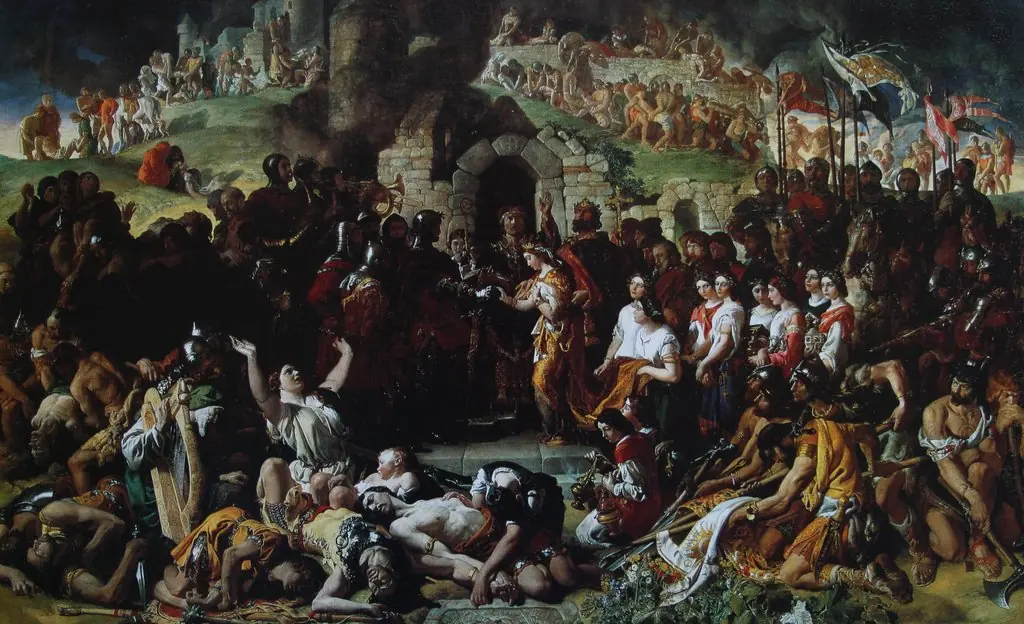 The Marriage of Strongbow and Aoife
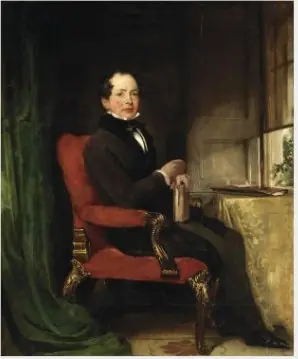 Portrait of Thomas Moore (1779-1852), Poet
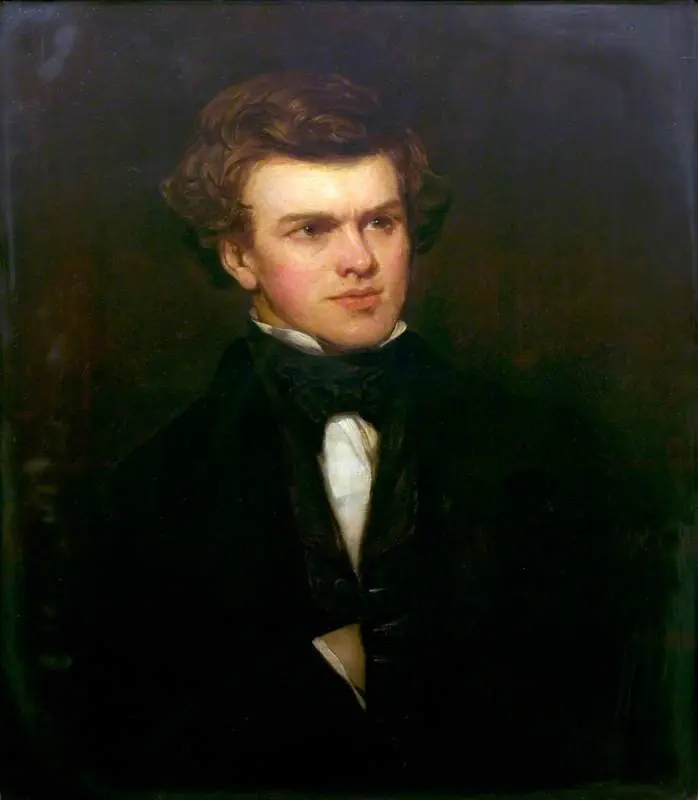 John Forster (1812–1876)
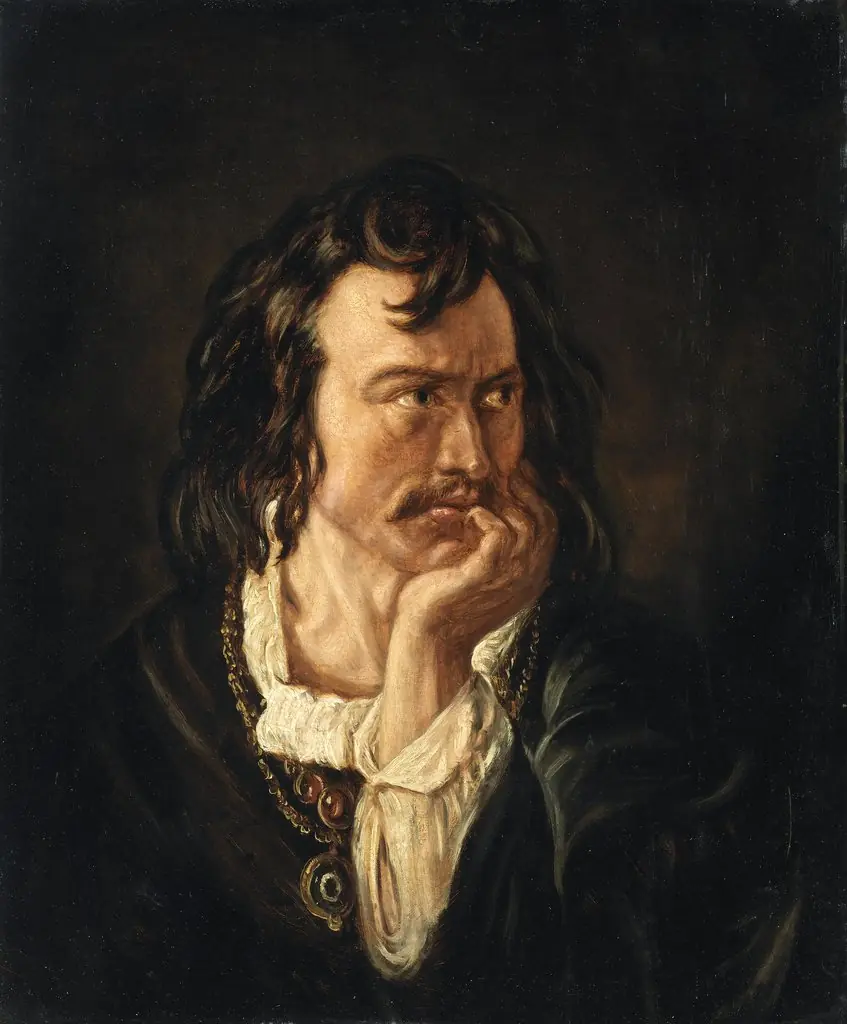 Portrait of Edmund Kean (1787-1833), Actor, as Hamlet
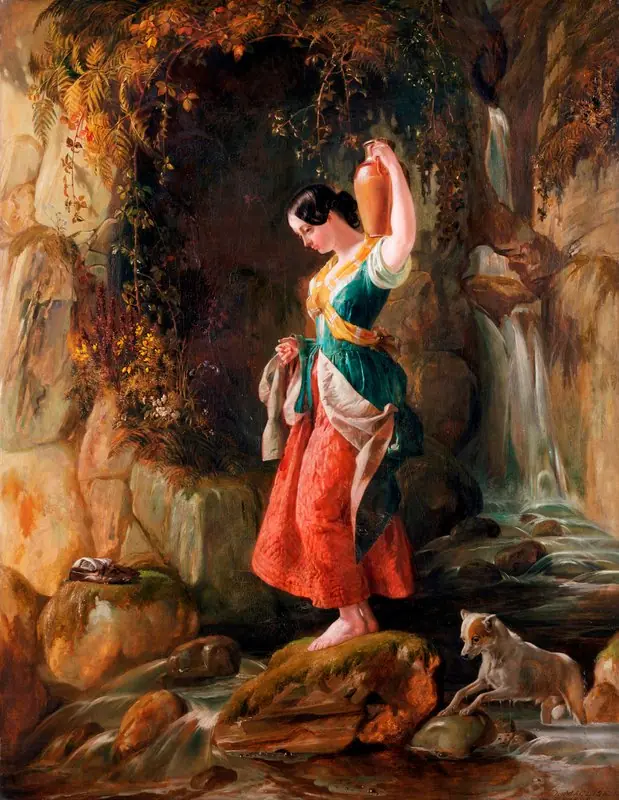 Waterfall at St Nighton's Kieve, near Tintagel
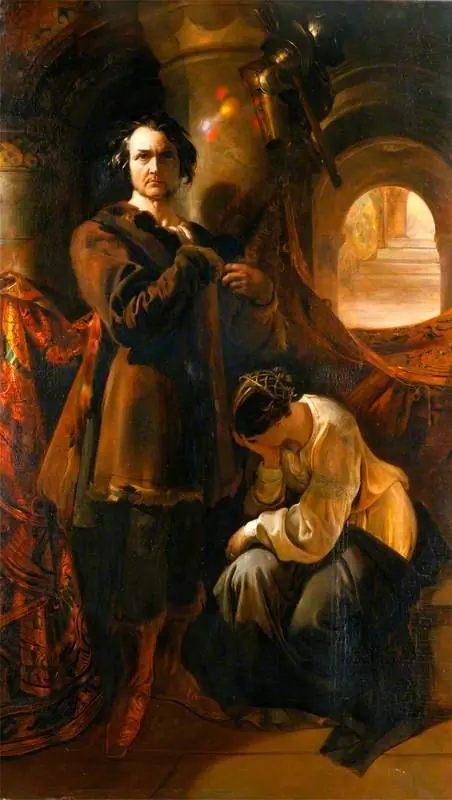 Macready as Werner
 An Interview between Charles I and Oliver Cromwell
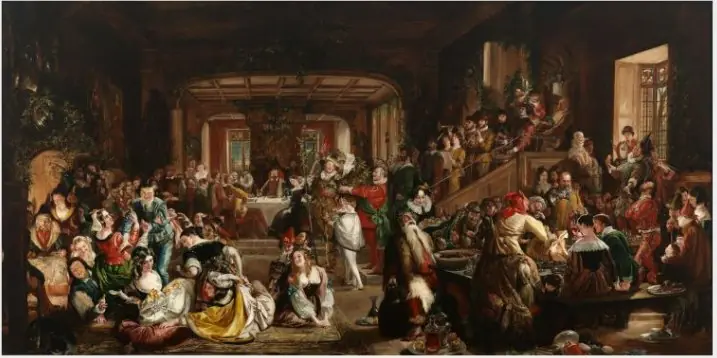 Merry Christmas in the Baron's Hall
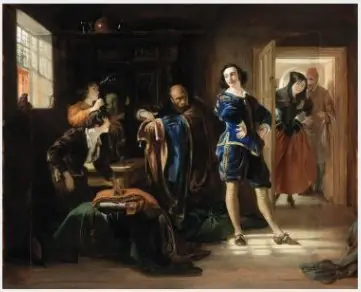 A Scene from Gil Blas
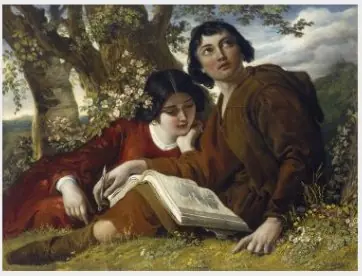 Claude Lorrain Sketching
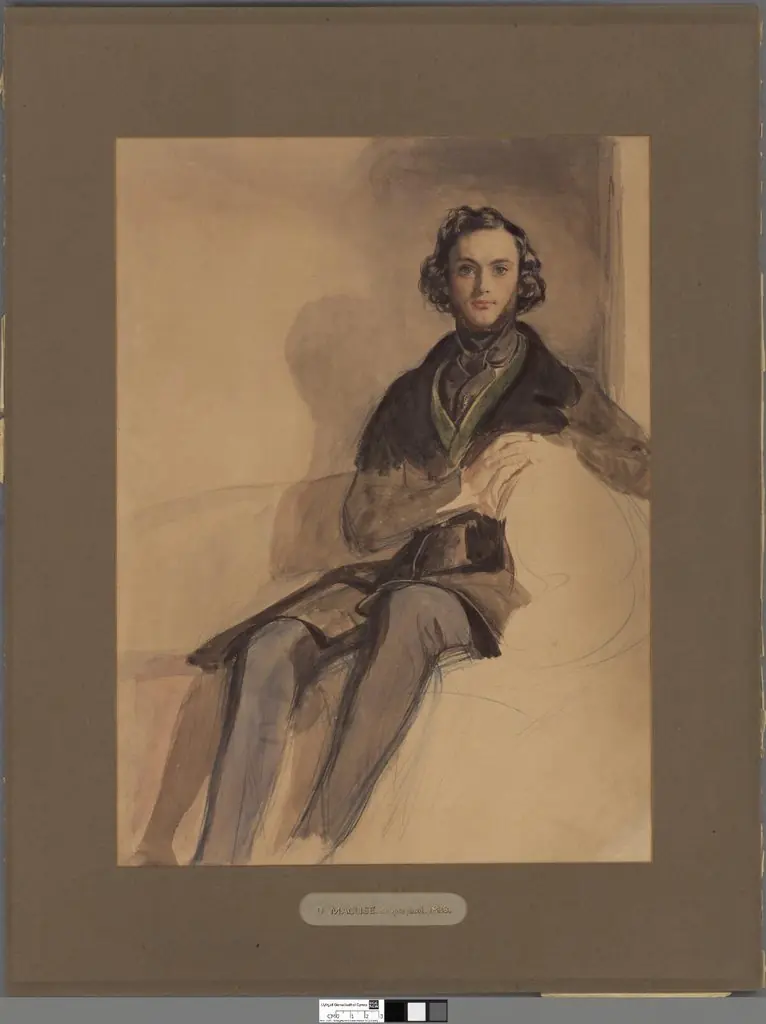 D Maclise
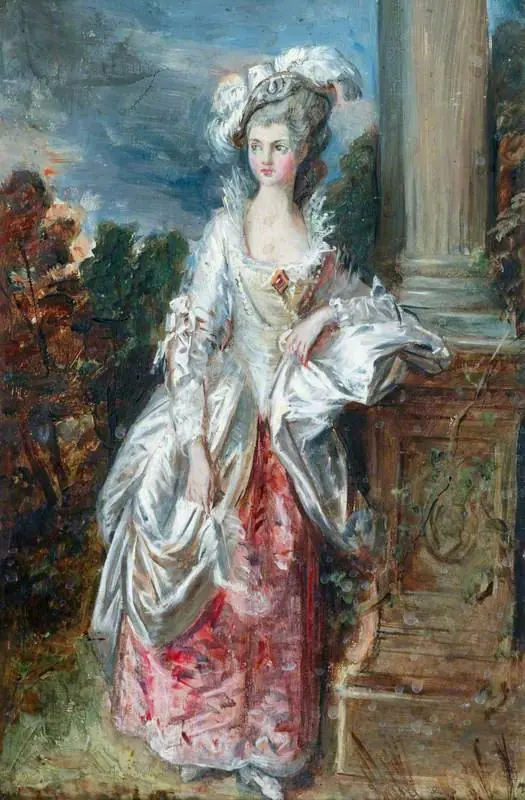 The Honourable Mrs Thomas Graham (1757–1792) (after Thomas Gainsborough)
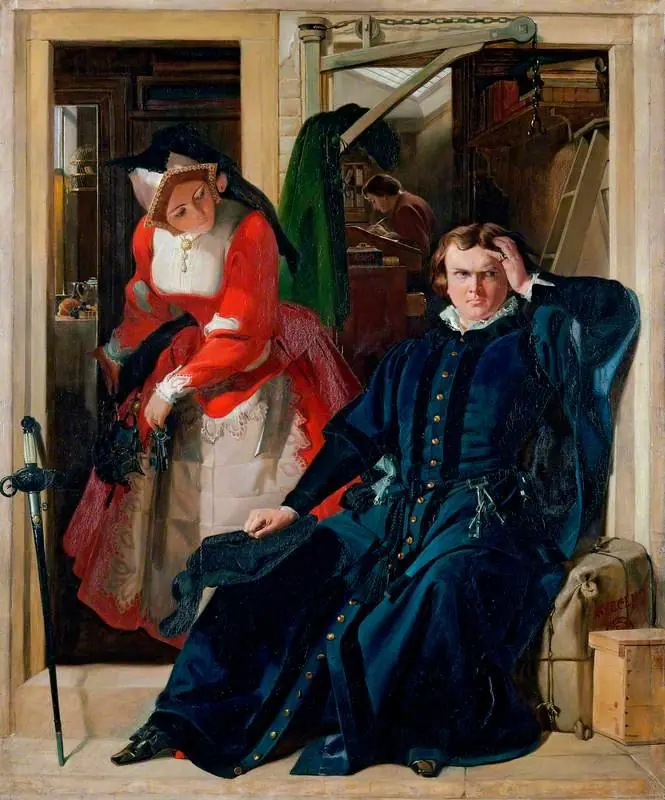 Scene from Ben Jonson's 'Every Man in His Humour' (Act II, Scene 1)
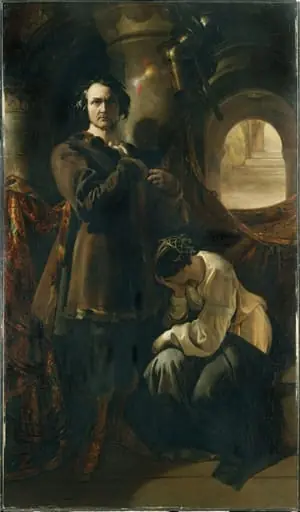 Macready as Werner
 Scene from Ben Jonson's <font -i>Every Man in His Humour</font -i> (Act II, Scene I)
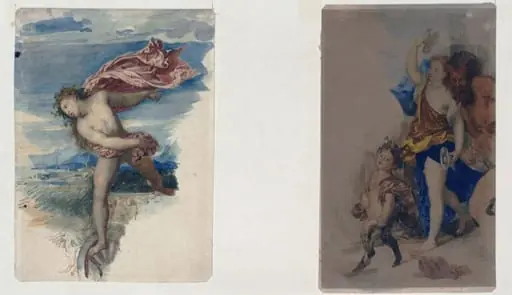 Titian's Bacchus and Ariadne
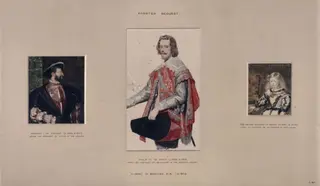 Sketches depicting portraits after Titian and Velazquez
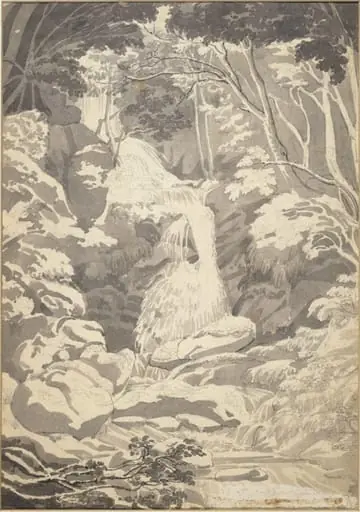 Waterfall
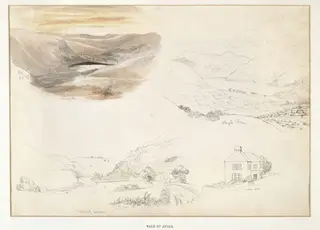 Vale of Avoca
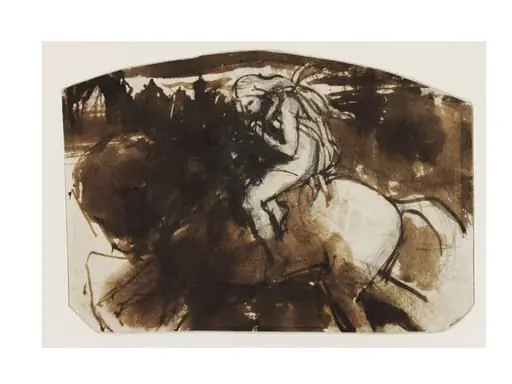 Drawing of a girl on a horse
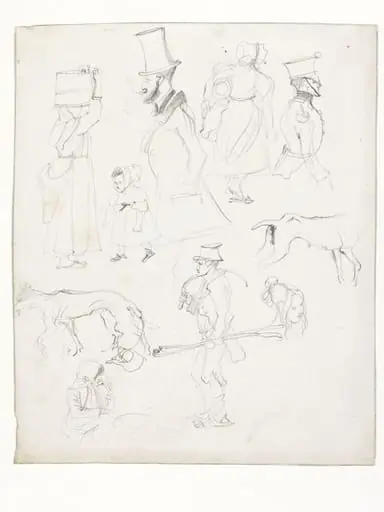 Drawing of figures
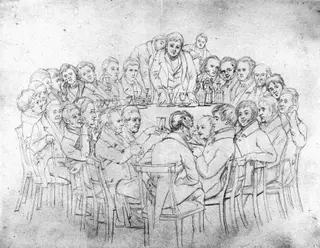 Preliminary drawing for the group caricature, 'The Fraserians'
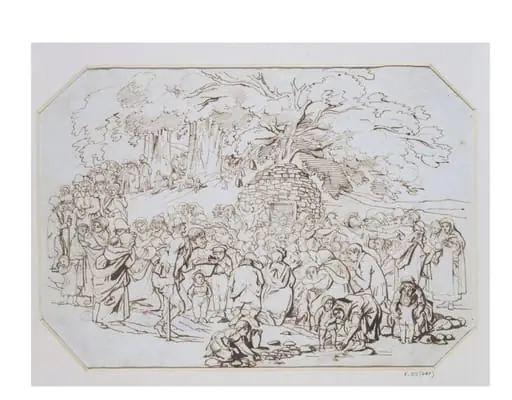 The Holy Well
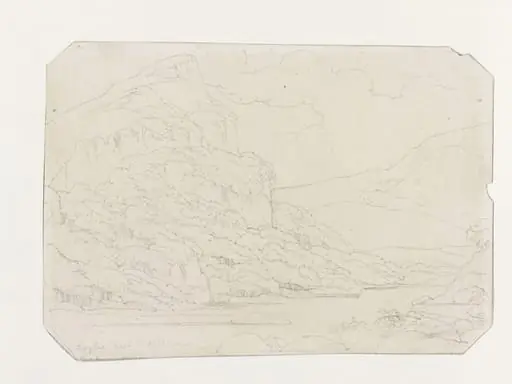 Eagle's Nest, Killarney
75 works in the catalog · 24 shown
Collections represented


Artists in a similar vein
Artist
Artist