Artist
Nicolas Henri Jacob
France
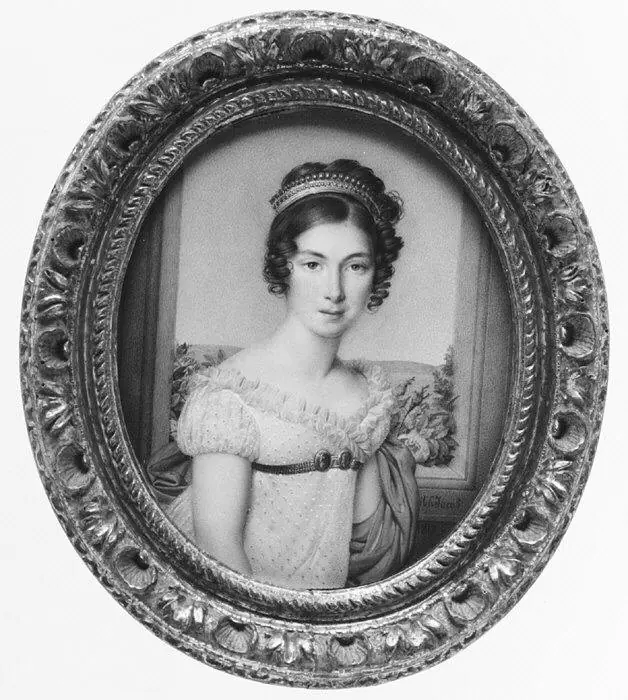
Nicolas Henri Jacob is a France Romanticism artist. 3 works are cataloged here, principally at Cleveland Museum of Art.
Nicolas Henri Jacob (1782–1871) was a French artist.
Overview
Nicolas-Henri Jacob (1782-1871) was a French painter, draftsman, and lithographer whose career bridged the worlds of fine art and scientific illustration. Born in Paris, he emerged as one of the pioneers of lithography in France and is best remembered for his twenty-year collaboration with anatomist Jean Marc Bourgery on the monumental anatomical atlas Traité complet de l'anatomie de l'homme (1831-1854). Jacob's significance lies in his transformation of the artist's role in scientific publishing: rather than serving as a mere technician executing another's vision, he became a true scientific collaborator whose expertise was actively sought by researchers. His work established new standards for anatomical illustration and helped establish lithography as an indispensable tool for scientific and medical publishing.
Biography & dates
Nicolas-Henri Jacob was born in Paris on June 6, 1782, to Henri Jacob (1753-1824), a cabinetmaker, and Antoinette-Charlotte Prudhomme, daughter of the painter Nicolas Prudhomme. He was the cousin of the celebrated ébéniste Georges Jacob. Jacob trained under the painter Jacques-Louis David and the sculptors Jean-Jacques Morgan (1756-1799) and Antoine Léonard du Pasquier (1748-1831). In 1802, he exhibited pen drawings at the Paris Salon and was appointed court painter to Eugène de Beauharnais, Duke of Leuchtenberg and Viceroy of Italy. From 1805 to 1814, Jacob worked in Milan for this patron, where he also designed furniture for Marie Desarnaud's celebrated L'Escalier de Cristal shop, including the notable crystal dressing table for the Duchess of Berry, now in the Louvre. After returning to France, he taught drawing at the École nationale vétérinaire d'Alfort from 1818 to 1830, then established himself in Paris and opened a drawing school. He married the painter Charlotte Hublier. Jacob died at his home at 25 rue du Chemin des Plantes in Paris's 14th arrondissement on January 31 or February 1, 1871.
Style & movement
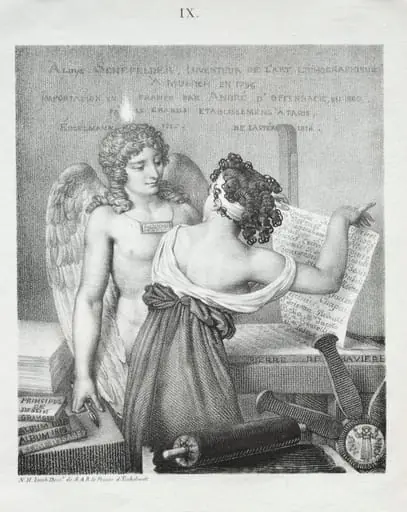
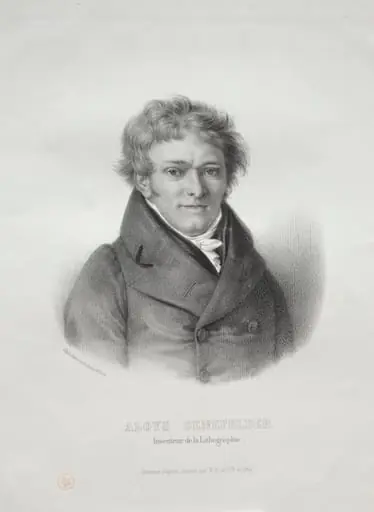
Jacob was a pioneer of lithography in France, working with the technique from its early days and helping to establish it as a valuable auxiliary to scientific publishing. His lithographic work encompassed portraits, genre scenes, and scientific subjects. In his anatomical illustrations, Jacob developed a distinctive approach characterized by naturalistic rendering and the use of an idealized model organism, creating images that were both scientifically accurate and aesthetically unified. He was recognized as a master of lithographic drawing technique, and his involvement in the French translation of Alois Senefelder's treatise on lithography, contributing a frontispiece and portrait of the inventor, attests to his technical authority in the medium. The anatomical plates he produced with Bourgery demonstrated a deliberate conceptual unity that set new standards for the field.
Major works
Jacob's most significant achievement was the illustration of Bourgery's Traité complet de l'anatomie de l'homme (Paris, C.-B. Lefranc, 8 volumes, 1831-1854), for which he executed 512 of 725 lithographic plates containing 2,196 of 3,750 illustrations. A second edition, expanded to 10 volumes, appeared from 1866 to 1871 with contributions from Claude Bernard and Ludovic Hirschfeld. Other major works include the lithographic plates for Philippe Frédéric Blandin's Traité d'anatomie topographique (1826), Jean Girard's Traité des hernies inguinales dans le cheval (1827), and Guillaume Dupuytren's Mémoire sur une manière nouvelle de pratiquer l'operation de la pierre (1836). His 1819 works Le génie de la lithographie and Portrait d'Aloys Senefelder are held at the Musée du dessin et de l'estampe originale de Gravelines and the Institut National d'Histoire de l'Art respectively. A portrait of a young girl is in the collection of the Metropolitan Museum of Art in New York, and the portrait of Dorothée de Courlande, Duchess of Dino, is at the Musée Magnin in Dijon. The crystal dressing table for the Duchess of Berry is in the Louvre.
Influences & students
Jacob's formative training came from Jacques-Louis David, the leading Neoclassical painter of the era, and from the sculptors Jean-Jacques Morgan and Antoine Léonard du Pasquier. His work as a furniture designer in Milan connected him to the circle of Marie Desarnaud and the prestigious L'Escalier de Cristal. As a teacher, Jacob ran his own drawing school in Paris and instructed at the École vétérinaire d'Alfort. His pupils included Jean-Baptiste Léveillé. In his scientific work, he collaborated with Edmond Pouchet and E. Roussin, and all drawings in the Bourgery atlas not by Jacob himself were executed under his direction by students and assistants, indicating a substantial workshop practice that transmitted his methods to a younger generation.
Legacy
Jacob's legacy rests primarily on his redefinition of the scientific illustrator's role. As Bourgery acknowledged in his preface, Jacob was not merely an assistant whose special talent was exploited but a true collaborator whose rational advice was valued and sought. This model of artist-as-scientific-partner influenced numerous students and established a new paradigm for visual communication in medicine and science. During his lifetime, Jacob received the Medal of the Paris Salon in 1824, was named Chevalier of the Legion of Honor in 1838 (in the same promotion as scientific illustrator Antoine Chazal), and shared the Prix Monthyon with Bourgery in 1843. His anatomical plates were republished in modern times, notably in the Taschen edition Atlas of Human Anatomy and Surgery (2005). Scholarly attention to his work includes studies by Jean-Marie Le Minor and Henri Sick, and by C. Stelmackowich on the nineteenth-century anatomical atlas.
Works by Nicolas Henri Jacob
Collections represented

