Artist
Jacques-Louis David
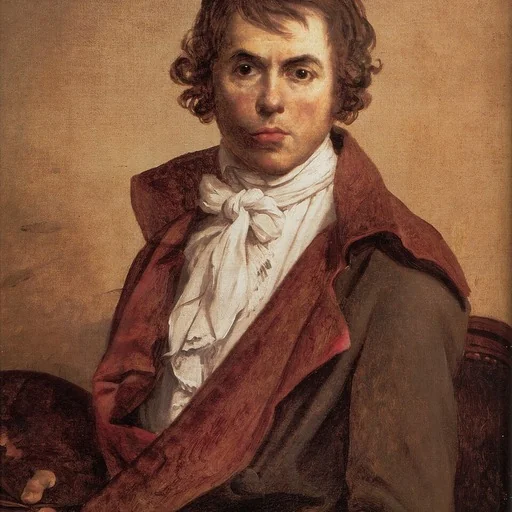
French, 1748–1825
Jacques-Louis David was a French Neoclassicism painter. 133 works are cataloged here, principally at National Gallery of Art, most of them oil paintings. Jacques-Louis David was born in Paris.
Jacques-Louis David was born in Paris on 30 August 1748 into a bourgeois family; his father died in a duel when the boy was nine, and a maternal uncle guided his education. After an accidental visit to the studio of his great-uncle François Boucher, David was sent to study with Joseph-Marie Vien, a precursor of neoclassicism, and entered the Royal Academy of Painting and Sculpture. He failed three times to win the Prix de Rome before succeeding in 1774 with "Erasistratus Discovering the Cause of Antiochus’s Disease."
The ensuing five years in Italy proved decisive: David copied antiquities, studied Caravaggio, and visited the ruins of Pompeii and Herculaneum, forging the severe classical style that would define his mature work.
Returning to France, David established himself with large history paintings that doubled as political arguments. "The Oath of the Horatii" (1784) and "The Death of Socrates" (1787) replaced Rococo frivolity with stoic Roman virtue, preparing the visual ground for revolutionary sentiment. When 1789 came, David threw himself into politics as a Jacobin and friend of Maximilien Robespierre; he voted for the execution of Louis XVI and served as a de facto minister of propaganda, designing festivals, uniforms, and the never-completed "Tennis Court Oath."
His most famous revolutionary work, "The Death of Marat" (1793), distilled martyrdom into a stripped-down realism that evoked Christian iconography.
After Robespierre’s fall, David was imprisoned twice and narrowly escaped the guillotine. Released, he realigned with Napoleon Bonaparte, becoming First Painter to the Emperor in 1804. In this role he produced the monumental "Coronation of Napoleon" (1807) and five versions of "Napoleon Crossing the Alps" (beginning 1801), idealizing the general on a rearing charger.
He was also a penetrating portraitist, as seen in the 1788 double portrait of the chemist Antoine-Laurent Lavoisier and his wife Marie-Anne, a canvas later hidden from the Salon for fear of anti-aristocratic violence.
Following Waterloo and the Bourbon Restoration, David, branded a regicide, chose exile in Brussels rather than accept amnesty. He spent his final decade there, painting mythological subjects and receiving younger artists such as Ingres, until his death on 29 December 1825. France refused the return of his body, and he was buried in Brussels, leaving behind a school that dominated French academic painting for a generation.
Series & cycles
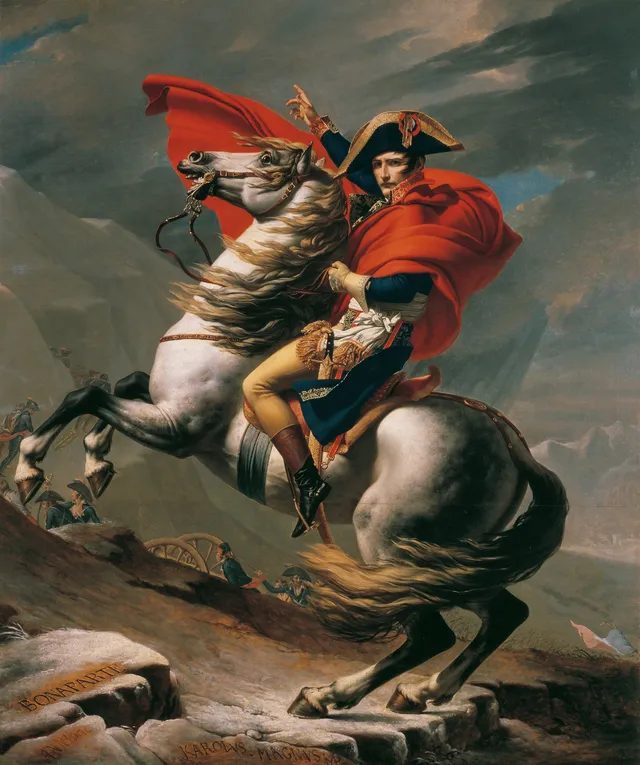
Works by Jacques-Louis David
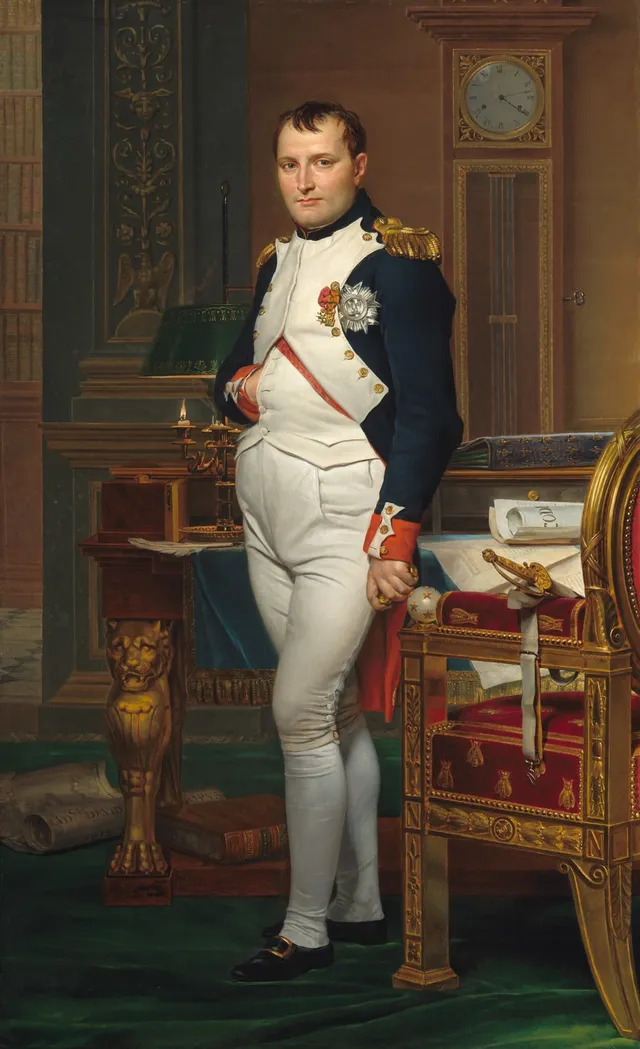 The Emperor Napoleon in His Study at the Tuileries
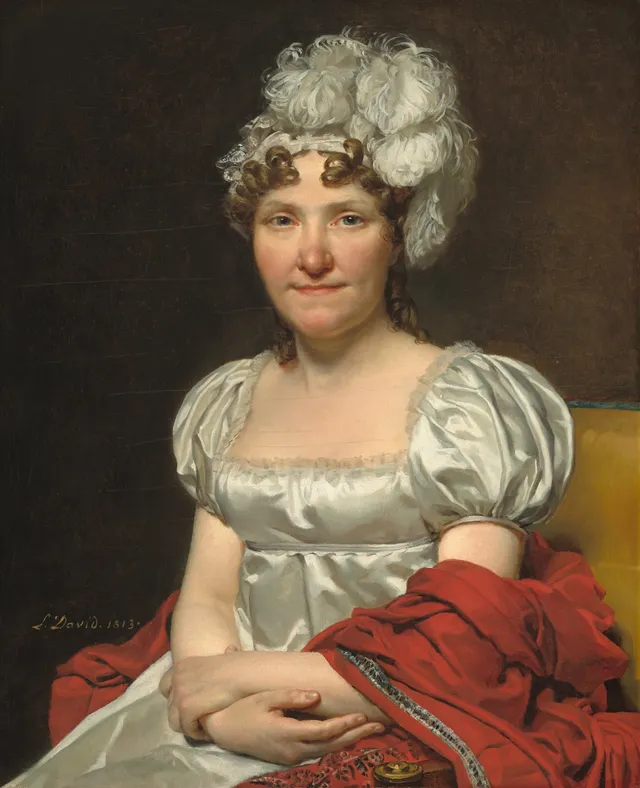 Madame David
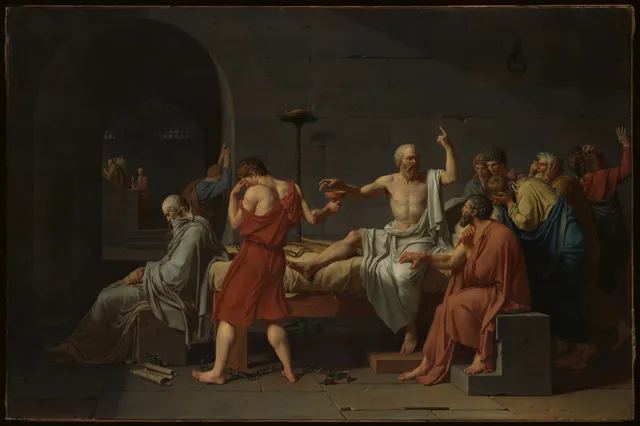 The Death of Socrates
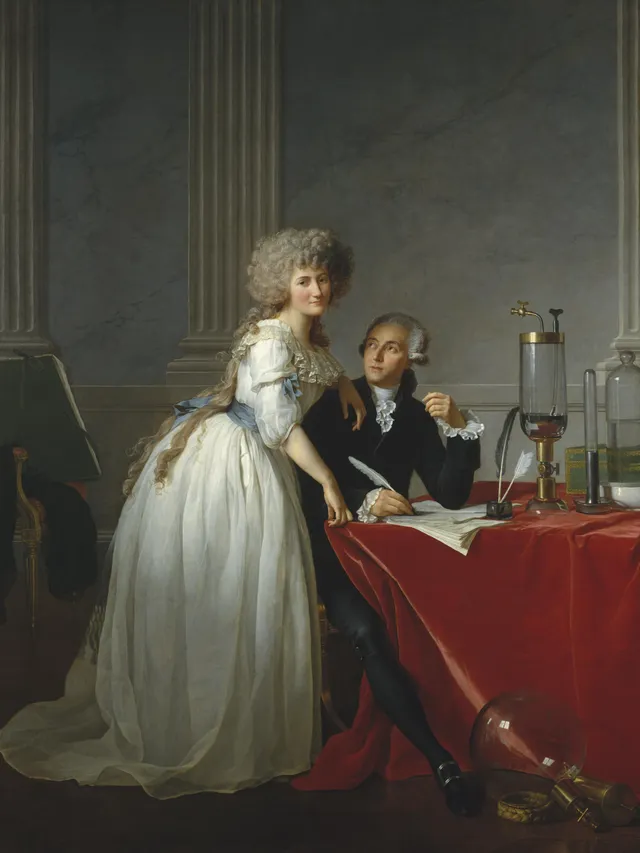 Portrait of Antoine-Laurent Lavoisier and his wife
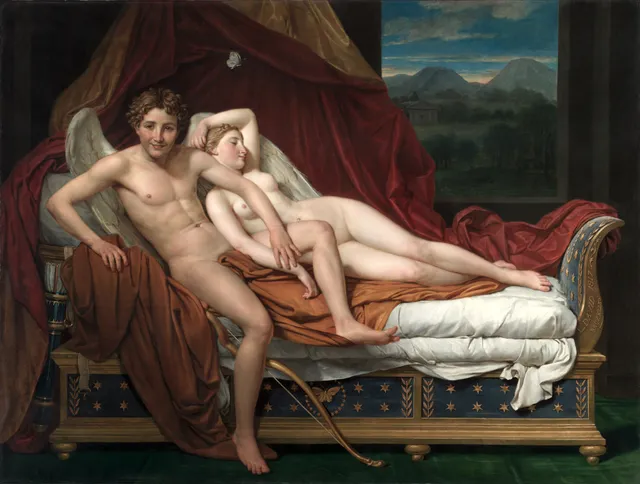 Cupid and Psyche
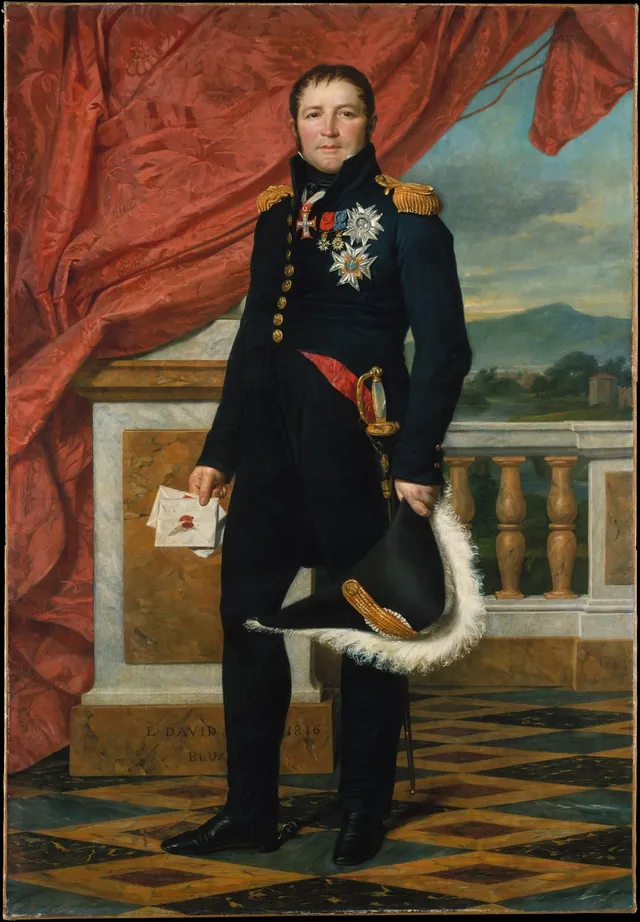 General Étienne-Maurice Gérard (1773–1852), Marshal of France
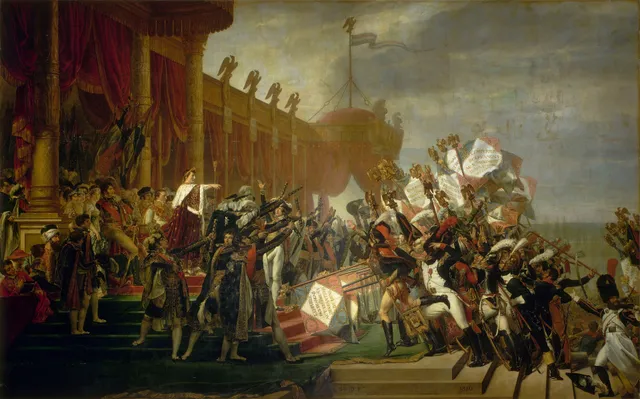 The Distribution of the Eagle Standards
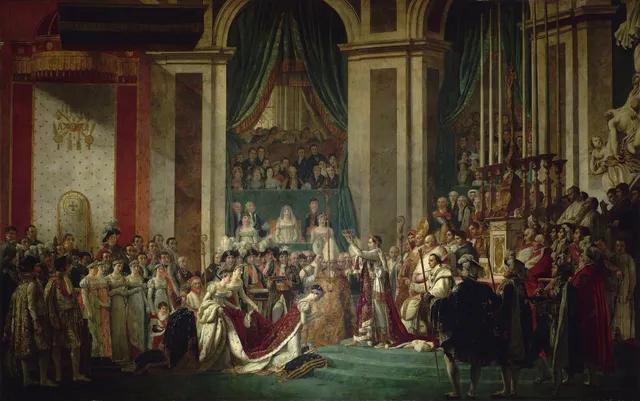 Coronation of Emperor Napoleon I and Coronation of the Empress Josephine
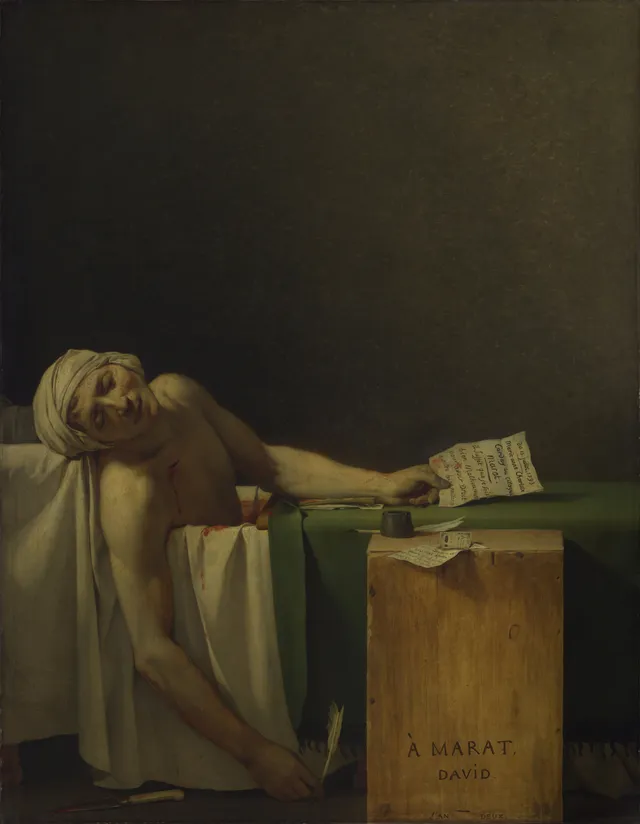 The Death of Marat
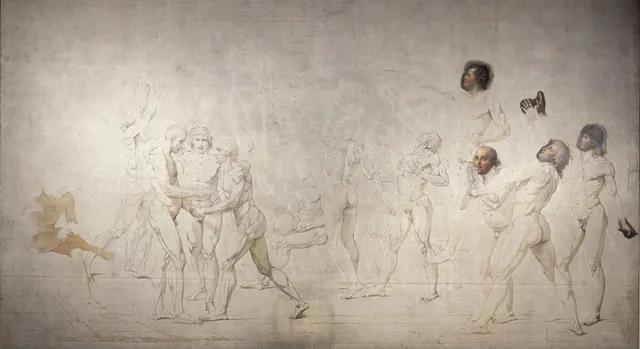 The Tennis Court Oath
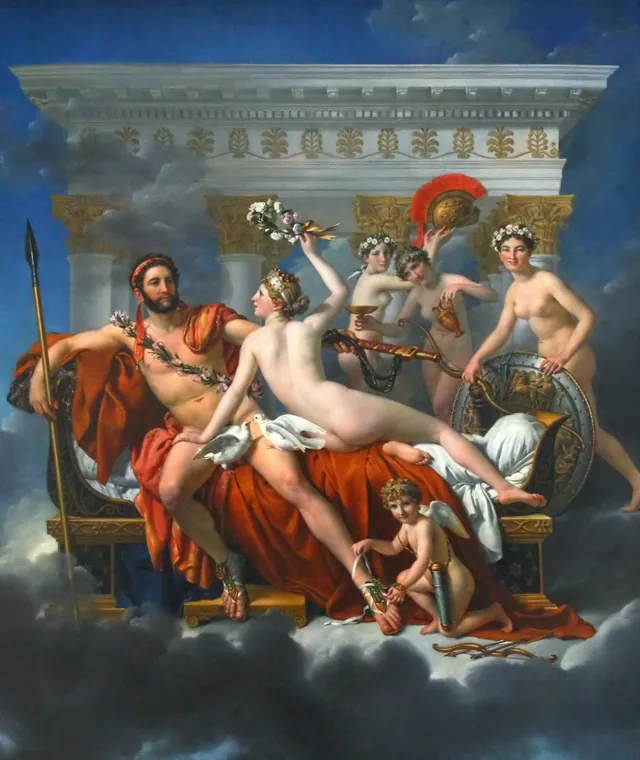 Mars Being Disarmed by Venus
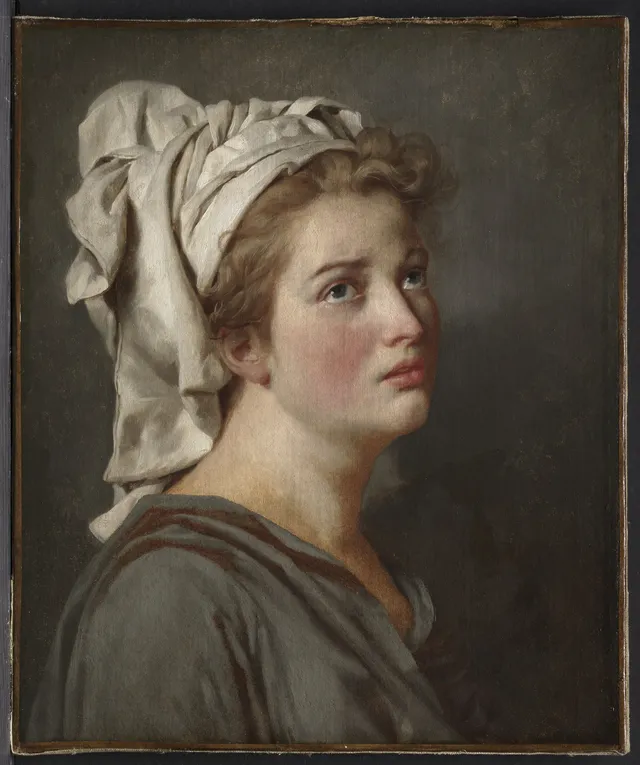 Young Woman with a Turban
Collections represented


Featured in a course
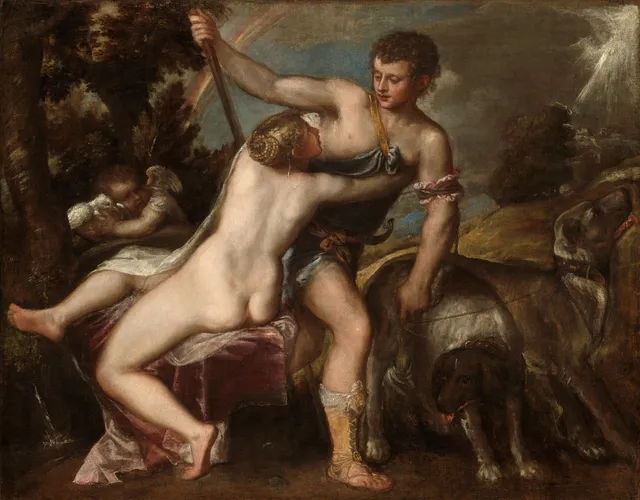
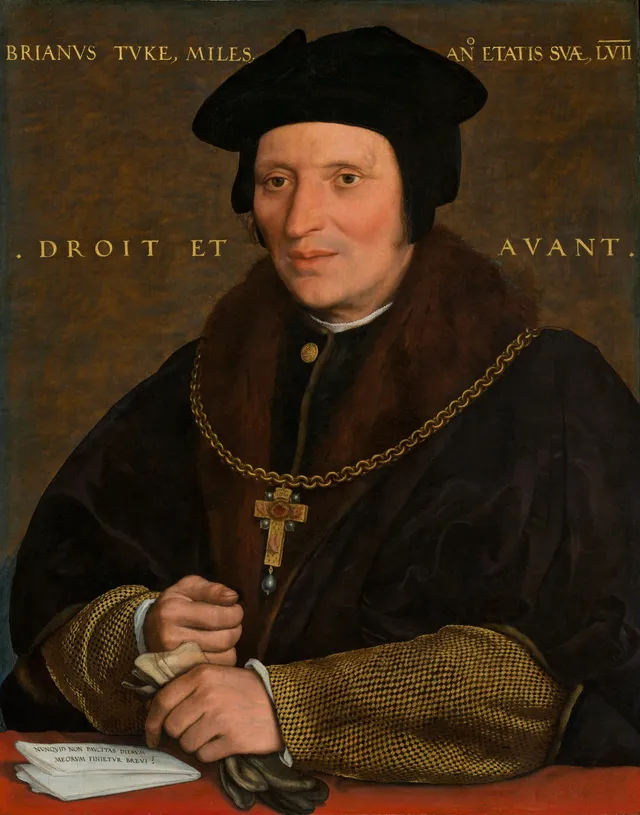
Artists in a similar vein