Artist
Otto H. Bacher

United States
Otto H. Bacher is an United States American Impressionism artist. 111 works are cataloged here, principally at Cleveland Museum of Art.
Otto Henry Bacher (May 31, 1856, Cleveland - August 16, 1909, Bronxville, New York) was an American artist; primarily known for his etchings and illustrations. He also painted oils in a variety of genres.
Overview
Otto Henry Bacher (May 31, 1856, August 16, 1909) was an American painter, etcher, and illustrator whose career bridged the transatlantic art world of the late nineteenth century. Born in Cleveland, Ohio, to a family of German descent, Bacher achieved distinction primarily through his etchings, which depicted landscapes and city views with a free, sketch-like quality. He also produced oil paintings across various genres and became a prolific illustrator for major American magazines and books. His significance rests partly on his close association with James McNeill Whistler in Venice, documented in his 1908 memoir Whistler in Venice, and on his role in introducing modern monotype techniques. Bacher was elected to the Royal Society of Painter-Etchers in 1881 and became an associate of the National Academy of Design in 1906. He spent his final years in Bronxville, New York, where he died in 1909.
Biography & dates
Bacher began his working life as a decorative painter in mansions and on ships after attending Cleveland's public schools. His formal art training commenced in 1874 with De Scott Evans, a still-life specialist, followed by a brief period at the Pennsylvania Academy of Fine Arts. He became one of the first members of the Art Club founded by Archibald Willard, and through his association with Willis Seaver Adams, secured a place on the governing board of the Cleveland Academy of Fine Arts. Around this time, he studied etching with Sion Longley Wenban of Cincinnati.
In 1878, Bacher accompanied Adams to Europe, enrolling at the Academy of Fine Arts in Munich. Through Wenban's introduction, he joined Frank Duveneck, the Cincinnati-born artist, and traveled with him to Florence and Venice where they established a studio. Bacher brought his etching equipment and, notably, became Duveneck's teacher in that medium. He returned to the United States in 1883, opening a studio and joining Joseph DeCamp to operate a summer sketching class in Richfield, Ohio. Unable to sell his oils or earlier works, he returned to Europe, studying briefly at the Académie Julian in Paris before continuing to Venice, where he shared an apartment and studio with Robert Frederick Blum and Charles Ulrich.
By 1888, Bacher had settled permanently in New York City, having married Mary Holland, a former art student from Cleveland; the couple had four sons. He died in Bronxville in 1909 from an undisclosed illness.
Style & movement
Bacher worked in multiple media, but his graphic works brought him the greatest reputation. His etchings and monotypes display a loose, sketch-like handling particularly suited to landscape and urban subjects. During his Venetian period with Duveneck, he helped produce some of the earliest examples of modern monotypes. His etchings of Cleveland scenes from his early years remained among his most admired works. In painting, he concentrated on landscapes and city views. The German Wikipedia source notes that his graphic works reveal a free, sketch-like conception, a quality that aligned him with broader tendencies in late nineteenth-century etching toward atmospheric spontaneity rather than rigid linear precision.
Major works
Bacher's most significant written work is Whistler in Venice (1908), originally serialized in The Century Magazine, which serves as an important contemporary source on James McNeill Whistler's time in Venice and his working methods. The book represents a primary document for scholars studying Whistler's Venetian etchings. Among his graphic works, his etchings of Cleveland scenes and Venetian views constitute his major artistic achievement. In 1904, his etchings earned a silver medal at the St. Louis Exposition. Specific locations of individual artworks are not detailed in the available sources, though the Harvard Art Museums hold examples of his etchings, and the Smithsonian Archive of American Art maintains the Otto Bacher Papers.
Influences & students
Bacher's early training came from De Scott Evans and Sion Longley Wenban, with Wenban providing the crucial introduction to Frank Duveneck. The relationship with Duveneck proved formative; though Bacher initially studied with Duveneck, he soon became Duveneck's teacher in etching during their time in Florence and Venice. His most significant artistic relationship, however, was with James McNeill Whistler, whom he met in Venice. The two artists shared etching techniques and maintained a friendship that lasted until Whistler's death, with Bacher visiting him repeatedly. Bacher's 1908 memoir preserves invaluable details of Whistler's methods and personality. During his second Venetian sojourn, he worked alongside Robert Frederick Blum and Charles Ulrich. The sources do not record pupils or followers of Bacher himself.
Legacy
During his lifetime, Bacher received institutional recognition that secured his professional standing. He was elected to the Royal Society of Painter-Etchers in London in 1881, exhibited with the Royal Academy, and in 1901 became a founding member of the Society of Illustrators. His election as an associate of the National Academy of Design in 1906 confirmed his status within American art institutions. The silver medal at the 1904 St. Louis Exposition recognized his achievement in etching. Posthumously, his reputation rests on two pillars: his etchings, particularly of Cleveland and Venice, and his written documentation of Whistler. His papers are preserved at the Smithsonian Archive of American Art, and his etchings are held at the Harvard Art Museums, ensuring continued scholarly access to his work.
Works by Otto H. Bacher
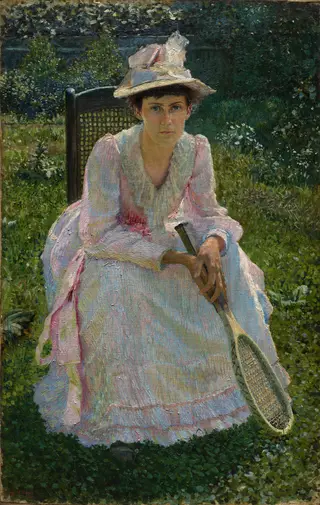 Mary Holland Bacher
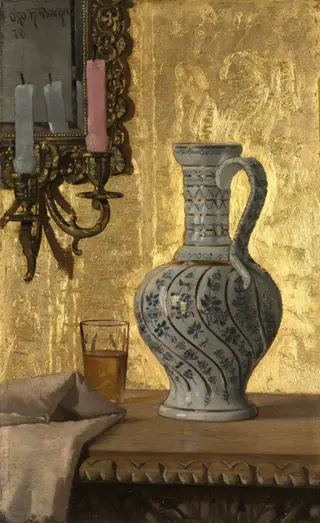 Pitcher and a Glass on a Table
 July
July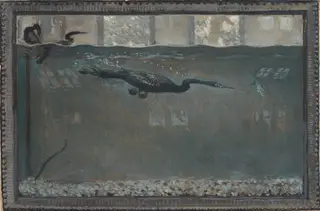 Diving Cormorant
 July
July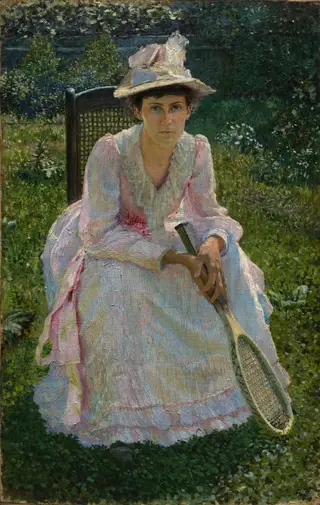 Mary Holland Bacher
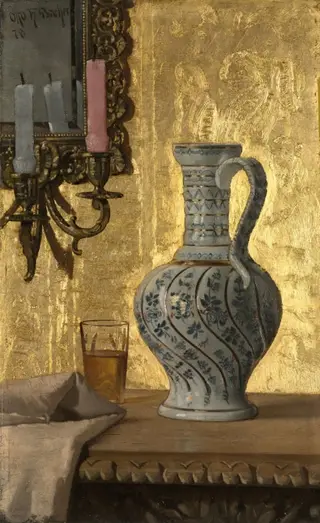 Pitcher and a Glass on a Table
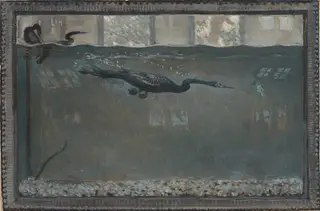 Diving Cormorant
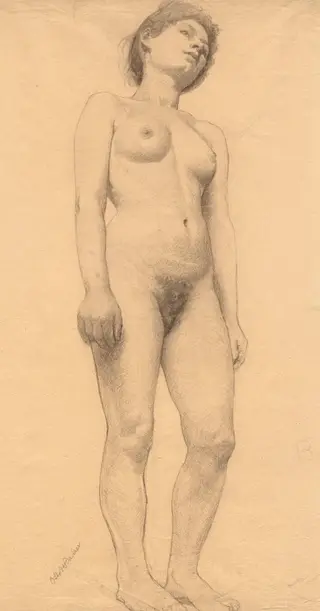 Standing Female Nude
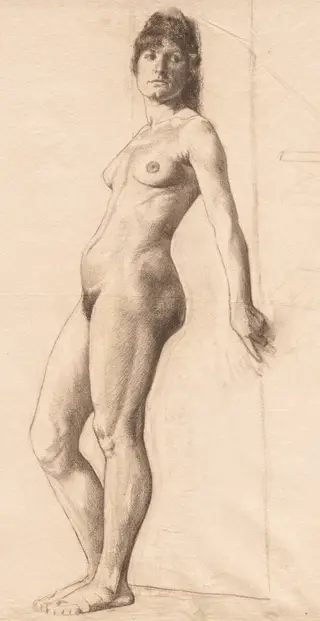 Standing Nude Model
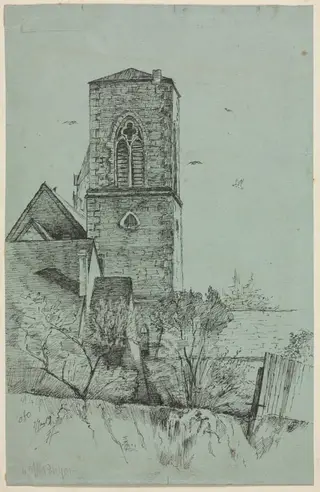 Tower of the Chimes, Old Trinity, Cleveland
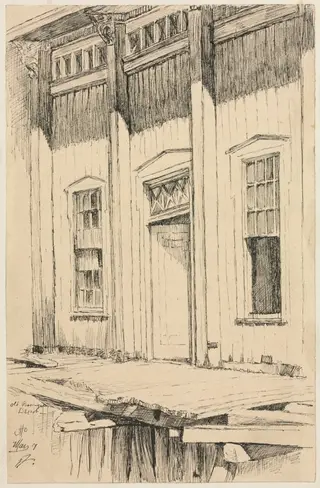 Old Passenger Depot, Cleveland
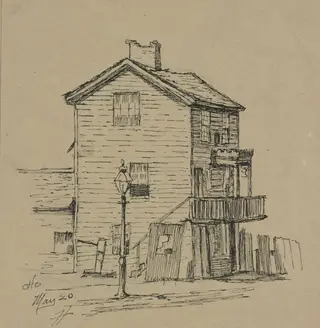 An Old House, Cleveland
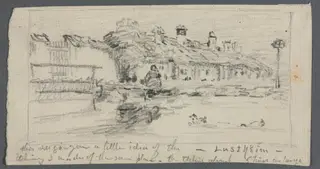 Lustheim
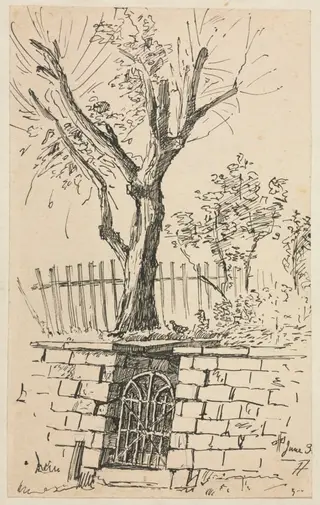 Tree on Top of a Stone Wall, Cleveland
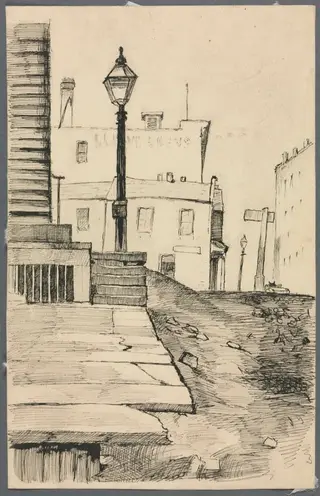 Street Scene, Cleveland
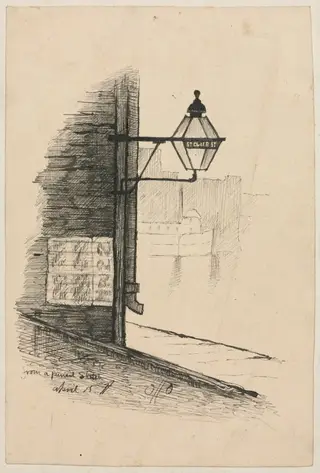 St. Clair Street, Cleveland
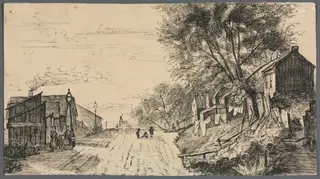 Spring Street, Cleveland
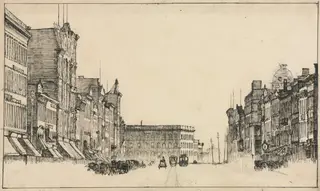 Downtown, Cleveland
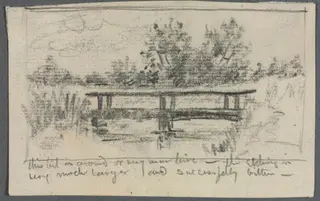 The Bridge, Schleissheim
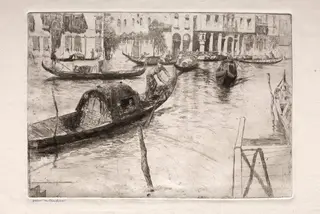 Etchings of Venice: Traghetto San Felice
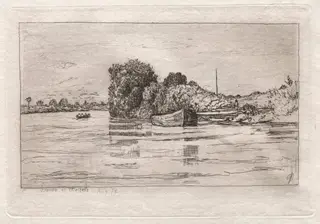 Danube at Walhalla
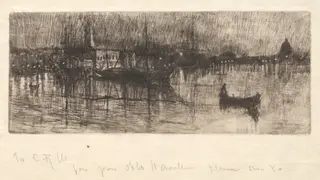 Rainy Night, Venice
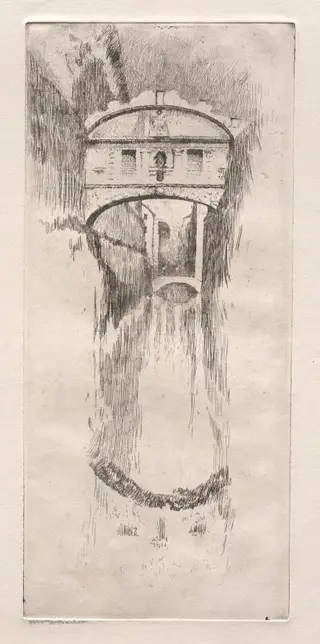 Etchings of Venice: Bridge of Sighs
111 works in the catalog · 24 shown
Collections represented

Artists in a similar vein