Artwork
Mary Holland Bacher
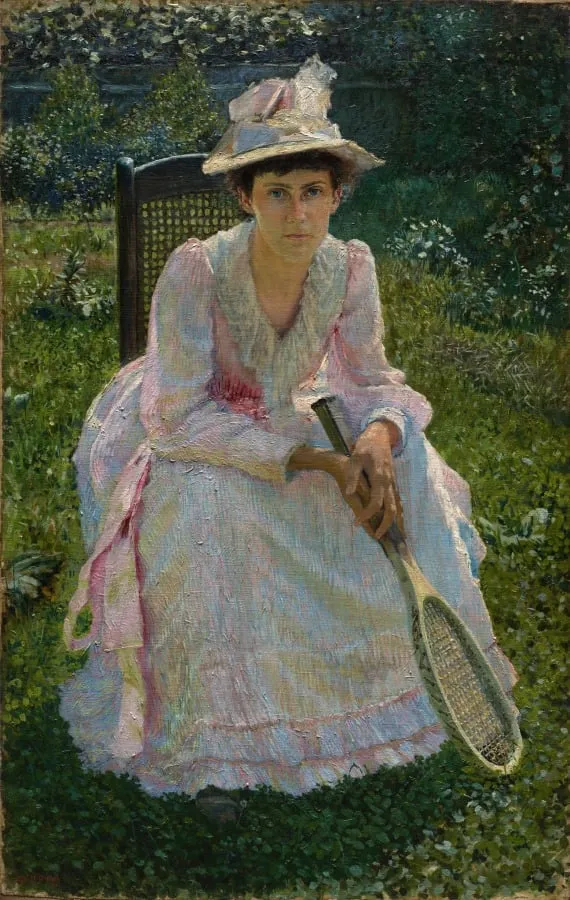
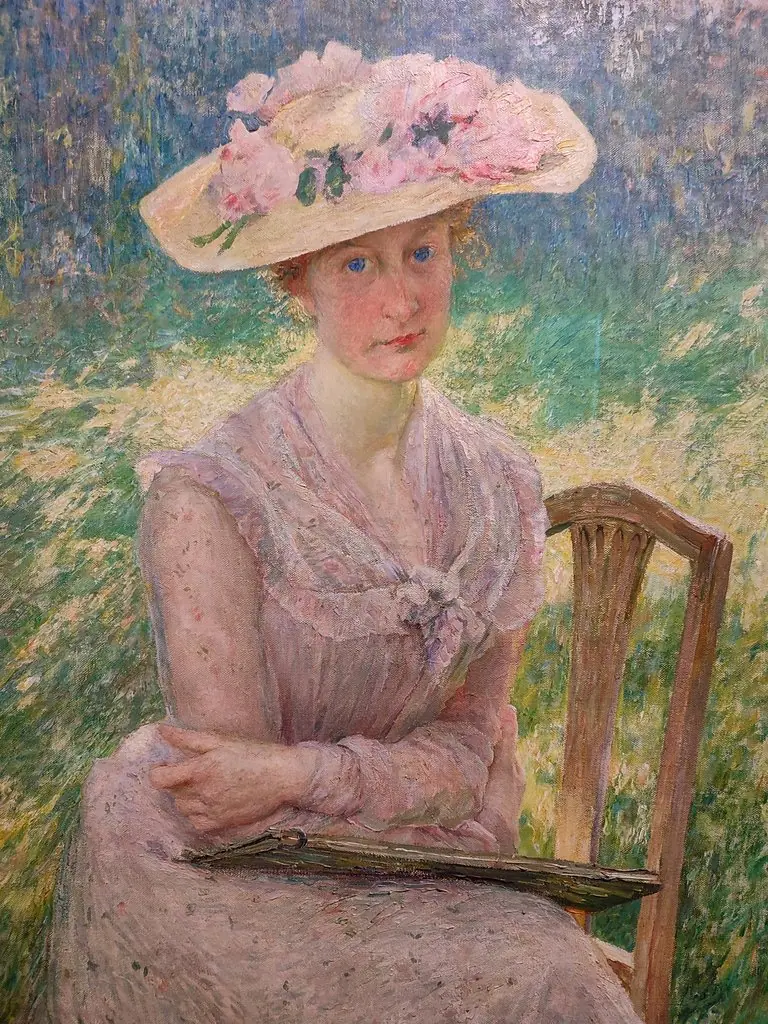
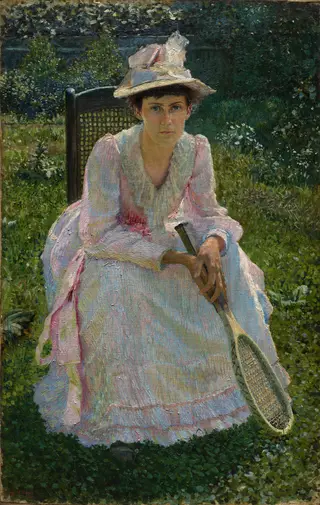
Mary Holland Bacher is an unspecified painting by the American Impressionist artist Otto H. Bacher. It dates from 1891 and is held in the collection of the Cleveland Museum of Art.
- Accession no.
- 1966.388
- Credit line
- Gift of Will Low Bacher
About this work
Overview
This work reflects his adoption of Impressionist techniques, blending light and loose brushwork to capture a quiet, everyday moment rather than a formal pose.
Mary Holland Bacher, painted by her husband, is a portrait that marks a significant moment in Cleveland’s art history. As the first artist from the city to gain international recognition, Bacher developed his style during studies in Paris in the late 1880s. This work reflects his adoption of Impressionist techniques, blending light and loose brushwork to capture a quiet, everyday moment rather than a formal pose.
Subject & Meaning
The subject, the artist’s wife, is depicted mid-motion with a tennis racket, a rare depiction of a woman engaged in sport during the late 19th century. At a time when female physical activity was often restricted, tennis offered a socially acceptable outlet. The painting subtly acknowledges this shift in gender norms, presenting her not as an object of display but as an active participant in a modern pastime.
Technique & Style
Bacher employs the loose, luminous brushwork characteristic of French Impressionism, with visible strokes defining fabric and light rather than precise contours. The background is softly blurred, directing focus to the figure’s posture and the texture of her attire. Color is applied in subtle tonal shifts, capturing the effect of natural daylight without theatrical contrast or idealized detail.
History & Provenance
The painting remained in the artist’s family after its completion and was later acquired by the Cleveland Museum of Art. Its preservation there reflects its importance as both a personal record and a cultural artifact, documenting the transatlantic exchange of artistic ideas and the evolving social roles of women in the Gilded Age.
Context
In the 1890s, tennis emerged as one of the few sports deemed appropriate for middle- and upper-class women, offering a space for mobility and social interaction outside domestic spheres. Bacher’s choice to portray his wife in this setting aligns with broader cultural shifts in Europe and America, where leisure activities began to redefine gender expectations in public life.
Legacy
The portrait stands as an early example of American Impressionism rooted in personal observation rather than grand narrative. It preserves a quiet but significant moment in the history of women’s participation in sport and reflects how artists like Bacher translated European stylistic innovations into distinctly American subjects.
Artist & collection

Artist
Otto Henry Bacher (May 31, 1856, Cleveland - August 16, 1909, Bronxville, New York) was an American artist; primarily known for his etchings and illustrations. He also painted oils in a variety of genres.