Artwork
The arts lamenting the destruction of their works, design for a ceiling painting
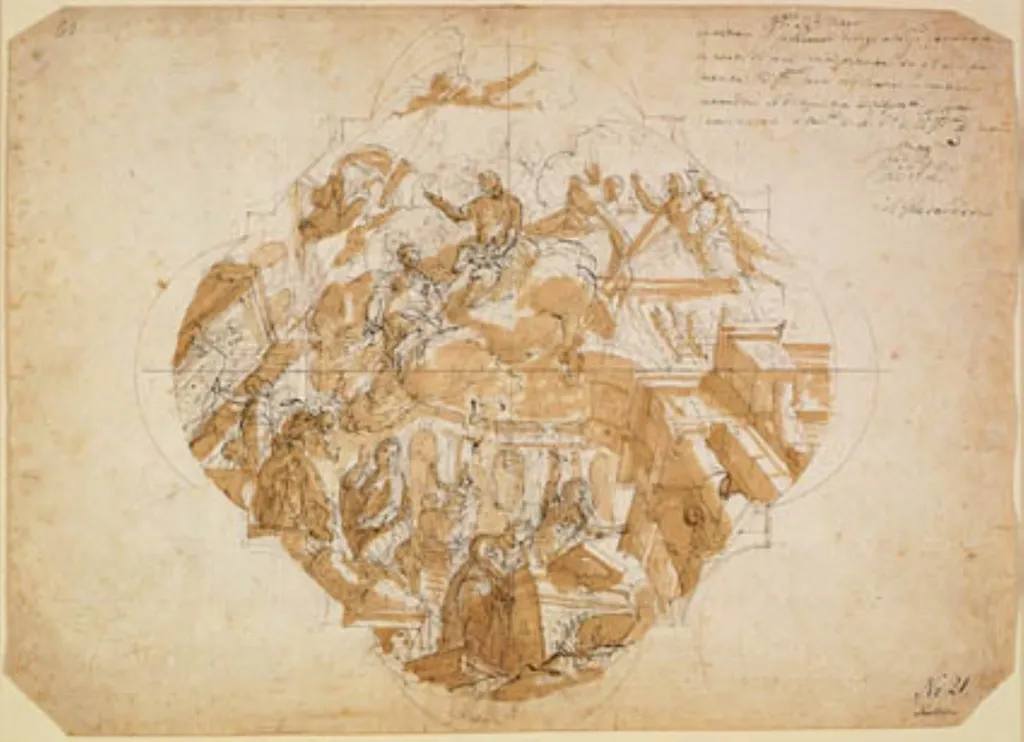
The arts lamenting the destruction of their works, design for a ceiling painting is an unspecified painting by Unknown. It dates from 1750 and is held in the collection of the Statens Museum for Kunst. This ink drawing, dated around 1750, serves as a preparatory study for a ceiling composition.
About this work
Overview
Executed in monochrome tones of brown, gray, and white, it depicts allegorical figures amidst collapsing architecture.
This ink drawing, dated around 1750, serves as a preparatory study for a ceiling composition. Executed in monochrome tones of brown, gray, and white, it depicts allegorical figures amidst collapsing architecture. The sketch’s hurried lines and layered forms suggest an artist working through spatial and narrative challenges, likely in preparation for a large-scale decorative scheme. Faint annotations along the upper edge hint at planning notes or compositional reminders.
Subject & Meaning
The figures represent the personified Arts, mourning the loss of their creations. They are entangled in the ruins of columns and sculptural fragments, their gestures conveying grief and disarray. The scene functions as an allegory for cultural destruction, possibly responding to wartime damage or the erosion of artistic patronage. The absence of clear narrative hierarchy emphasizes collective loss rather than individual heroism.
Technique & Style
Rendered with swift, overlapping strokes, the drawing employs minimal tonal variation to suggest volume and depth. The artist used white highlights sparingly to indicate light striking broken surfaces, while the dominant grays evoke dust and decay. The composition’s density and lack of clean outlines reflect its function as a working sketch, intended for internal exploration rather than public display.
History & Provenance
The drawing resides in the collection of the Museum of Ethnography, though its origin as a ceiling design suggests it was once part of a private or institutional artistic workshop. Its survival as a standalone sheet implies it was preserved for its conceptual value rather than its finish. No record of the final ceiling’s execution has been documented, leaving the study as the sole surviving trace of the intended project.
Context
Created during a period when European courts and churches commissioned grand ceiling paintings to assert cultural authority, this sketch stands in contrast to typical celebratory themes. Its focus on ruin may reflect broader anxieties about the fragility of artistic heritage amid political instability or shifting patronage systems in mid-18th-century Europe.
Legacy
As a rare surviving preparatory study for an unrealized ceiling, it offers insight into the iterative process of large-scale decorative art. Its emotional tone and unfinished quality distinguish it from polished final designs, revealing the artist’s engagement with themes of impermanence. The drawing remains a quiet testament to the vulnerability of cultural expression.
Artist & collection









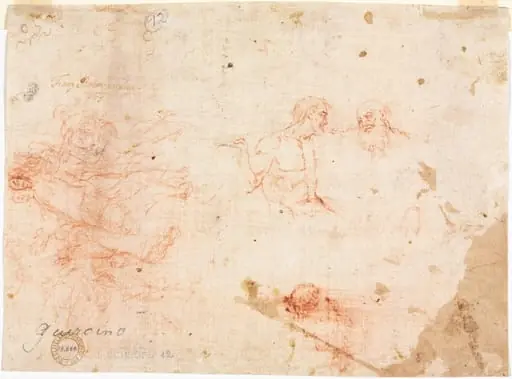
- Sketch of Two Men and Other Various Figures (verso)
![Various Sketches of the Madonna and Child (recto); Architectural Studies (verso) [partially visible on recto], by Paolo Veronese](https://artifactworldgallery.com/img/paolo-veronese--various-sketches-of-the-madonna-and-child-recto-architectura--90586edfc8e8efd5-w320.webp) Various Sketches of the Madonna and Child (recto); Architectural Studies (verso) [partially visible on recto]
Various Sketches of the Madonna and Child (recto); Architectural Studies (verso) [partially visible on recto]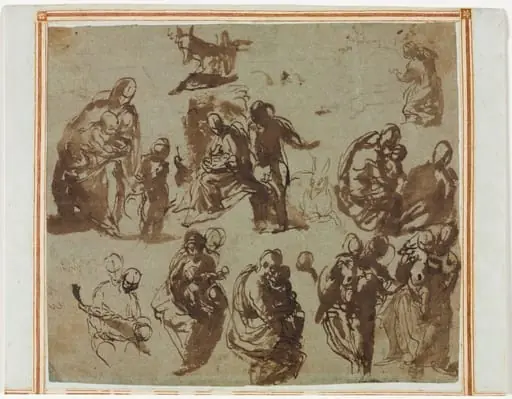 Various Sketches of the Madonna and Child (recto)
![Figure Studies [verso], by Perino del Vaga](https://artifactworldgallery.com/img/perino-del-vaga--figure-studies-verso--d5d88c86be9b1288-w320.webp) Figure Studies [verso]
Figure Studies [verso]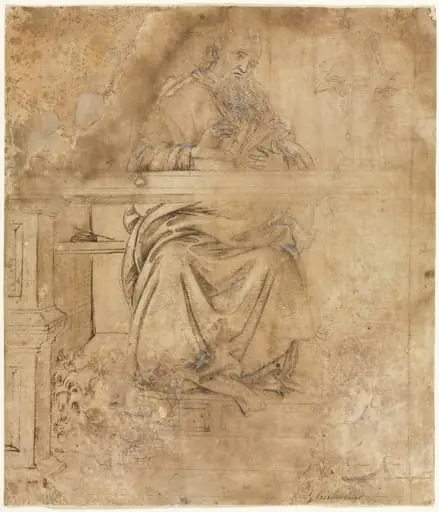 St. Jerome in His Study
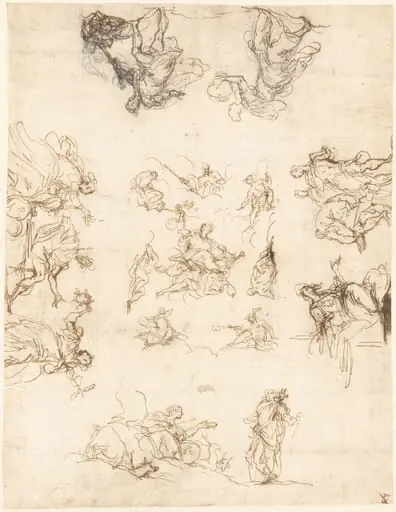 A Compartmented Ceiling with Allegories and Myths
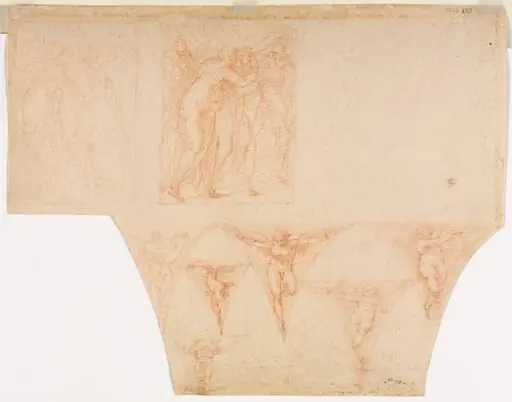 Studies for Christ Meeting His Mother on the Road to Calvary, Studies of an Angel in a Pendentive (verso)
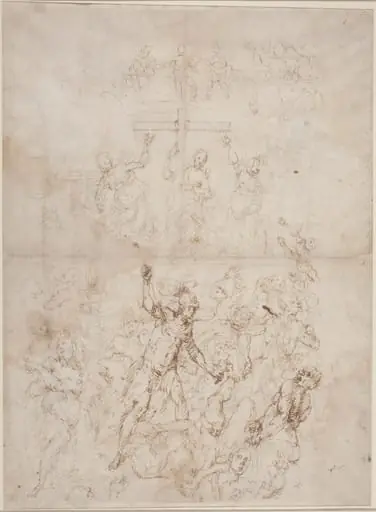 The Last Judgment
![Presentation of the Virgin in the Temple [verso], by Antonio Zanchi](https://artifactworldgallery.com/img/antonio-zanchi--presentation-of-the-virgin-in-the-temple-verso--450080eaf8685583-w320.webp) Presentation of the Virgin in the Temple [verso]
Presentation of the Virgin in the Temple [verso]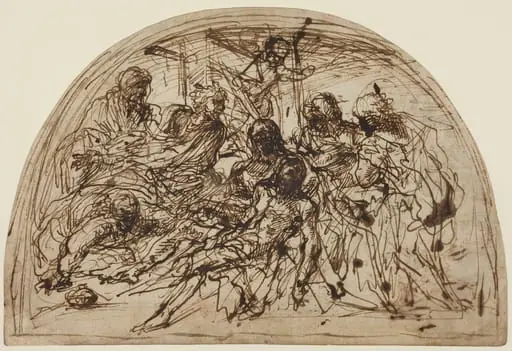 The Lamentation with Saints
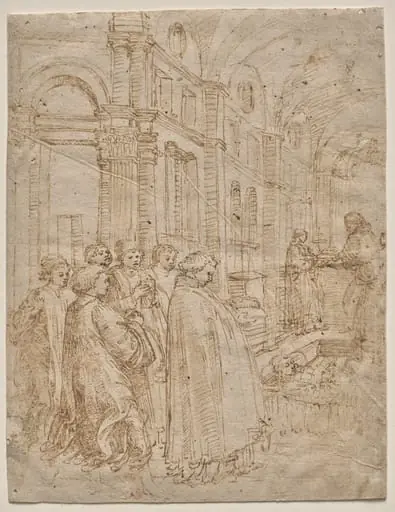 The Funeral of Saint Stephen
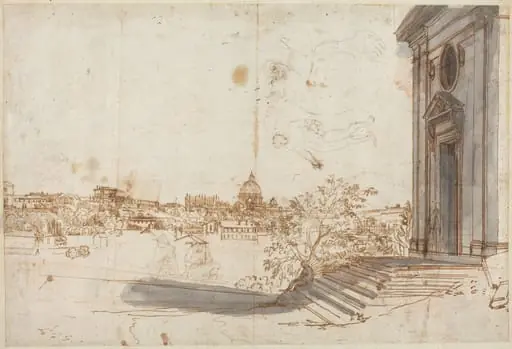 A View of Rome from Santa Maria del Priorato