Artwork
The Russian Ship of the Line "Asow" and a Frigate at Anchor near Elsinore
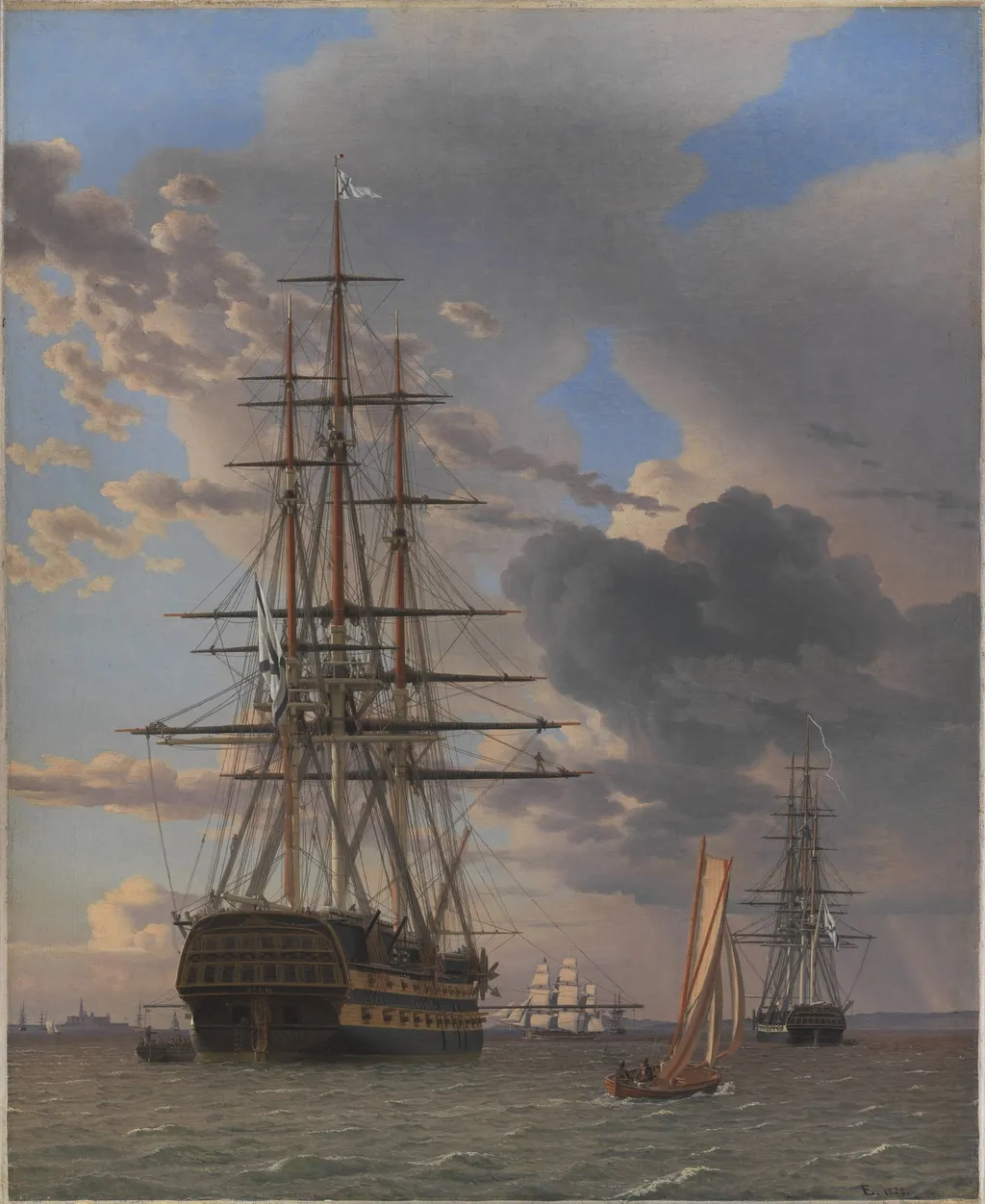
The Russian Ship of the Line "Asow" and a Frigate at Anchor near Elsinore is a photography by the Romanticist artist Unknown artist. It is held in the collection of the Statens Museum for Kunst. This marine painting, dated 1828, portrays two Russian naval vessels at rest near Elsinore, Denmark.
About this work
Overview
The larger ship, a ship of the line named Asow, is depicted alongside a smaller frigate, both anchored in a turbulent sea.
This marine painting, dated 1828, portrays two Russian naval vessels at rest near Elsinore, Denmark. The larger ship, a ship of the line named Asow, is depicted alongside a smaller frigate, both anchored in a turbulent sea. The composition emphasizes the relationship between human-made vessels and the overwhelming force of nature, rendered with attention to maritime detail and atmospheric tension.
Subject & Meaning
The scene captures Russian naval presence in the Baltic during a period of shifting European power dynamics. The anchored ships suggest a pause in transit, perhaps awaiting orders or weather. The stormy sky and churning sea introduce a sense of vulnerability, framing the vessels as transient against elemental forces. This reflects broader 19th-century themes of human endeavor confronting nature’s unpredictability.
Technique & Style
The artist employs precise rendering of rigging, sails, and hull details to convey authenticity, while the sky is rendered with loose, dramatic brushwork to amplify emotional tone. Contrast between the sharply defined ships and the blurred, dark clouds enhances the sense of impending weather. The palette favors muted grays and deep blues, reinforcing the mood of maritime unease characteristic of Romantic-era marine painting.
History & Provenance
The painting entered the collection of the Museum of Ethnography, though its origin as a work by a Chinese artist named Xun Xu is historically inconsistent with the subject and date. No verified records link Xun Xu, a figure from the 3rd–4th century, to 19th-century marine painting. The attribution appears to be erroneous; the true artist remains unidentified, and the work’s provenance prior to museum acquisition is undocumented.
Context
In the 1820s, European artists frequently depicted naval scenes to explore themes of power, isolation, and nature’s dominance. Elsinore, a strategic coastal location, was a known anchorage for Baltic fleets. While Russian naval activity in the region was documented, this painting likely reflects a broader Romantic fascination with the sea rather than a specific historical event, aligning with trends in German and British marine art of the period.
Legacy
The painting survives as an example of 19th-century maritime imagery, though its attribution has been questioned by scholars. Its presence in a museum of ethnography, rather than a naval or fine arts collection, suggests an early, possibly mistaken, categorization. It remains a visual artifact of Romantic-era aesthetics, illustrating how natural drama was used to frame technological and military subjects, regardless of the artist’s true identity.
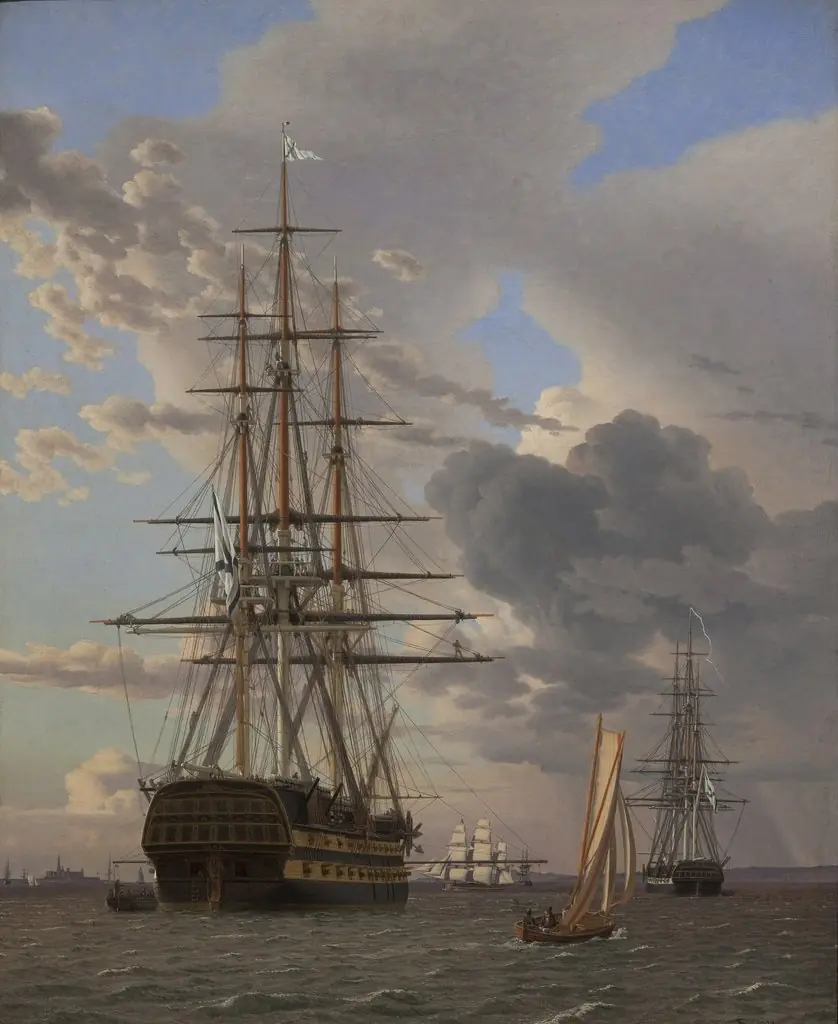
Artist & collection
Artist
Xun Xu (c. 221 – 289), courtesy name Gongzeng, was a Chinese musician, painter, politician, and writer who lived during the late Three Kingdoms period and early Jin dynasty of China. Born in the influential Xun family,…

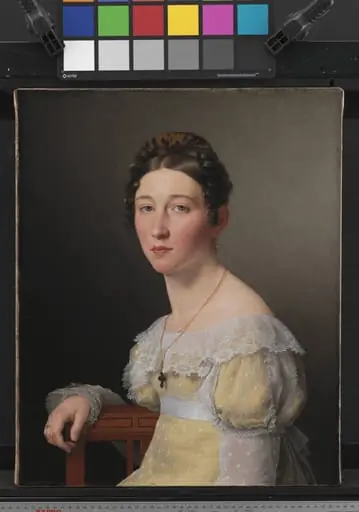 Portrait of Emilie Henriette Massmann, Betrothed of Frederik Wilhelm Caspar von Benzon
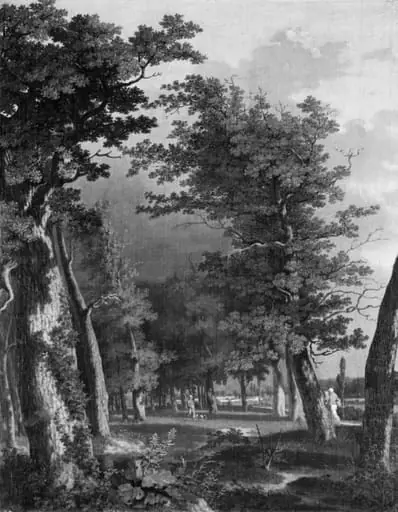 Landscape with Trees near Paris
 Linear Perspective as Applied in Painting - Plate VII, 1 - A Street Corner Encounter
 Self-Portrait
 Landscape with a Stile. The Isle of Møn
 Linear Perspctive as Applied in Painting - Plate VI. The Street Lamp on the Garden Wall, Daylight
 Study of a Wood
 Study of Clouds over the Sea
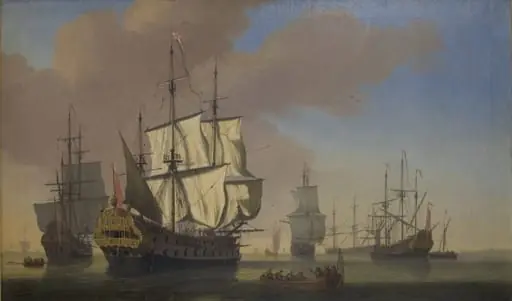 English Warships in a Roadstead in Calm Weather
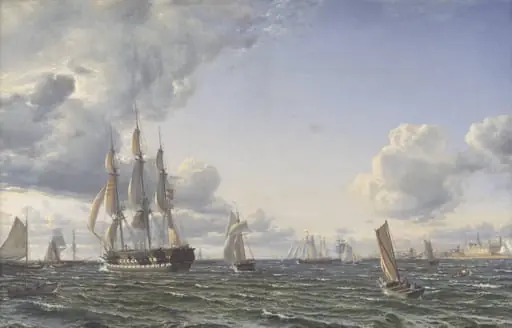 Linieskibet "Valdemar" krydser Sundet ind for en frisk bramsejlskuling
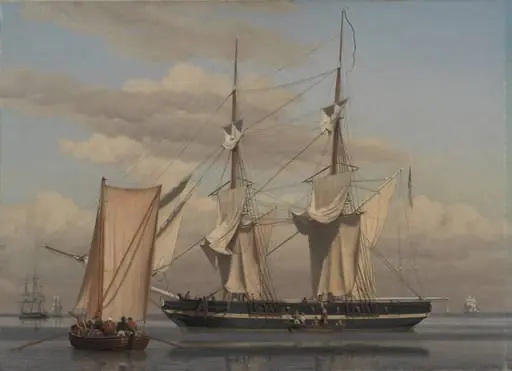 An American Naval Brig Lying at Anchor while Her Sails Are Drying
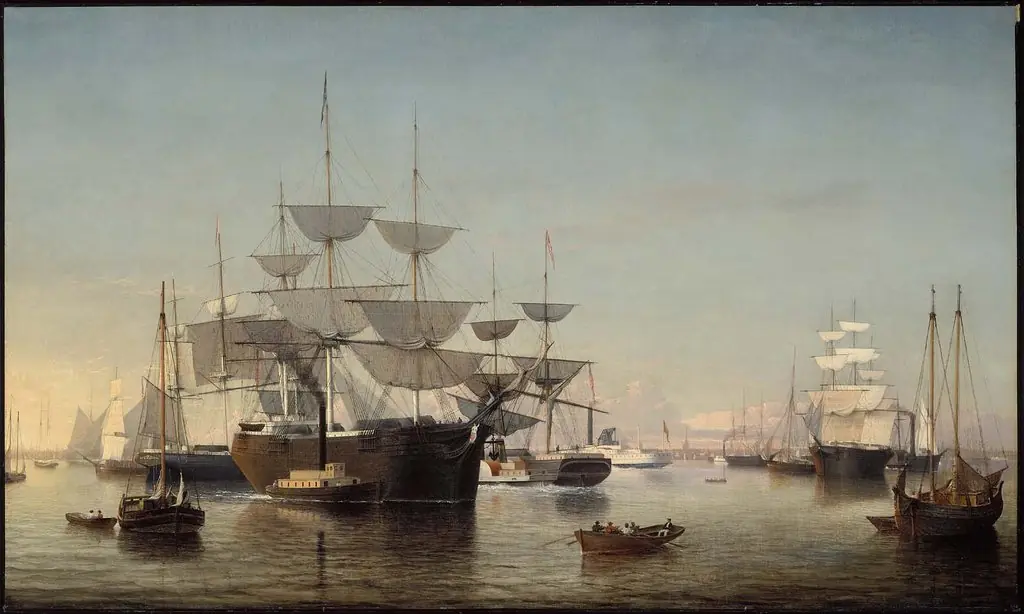 New York Harbor
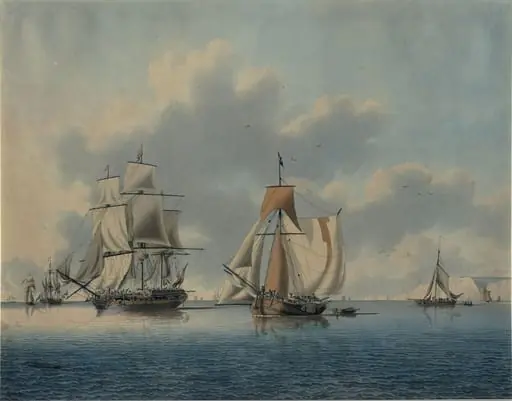 A frigate and Dutch fishing boats off the Isle of Wight
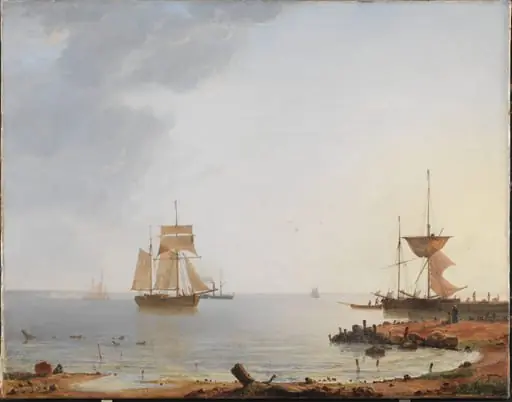 Ships Off the Coast of Zealand. Morning
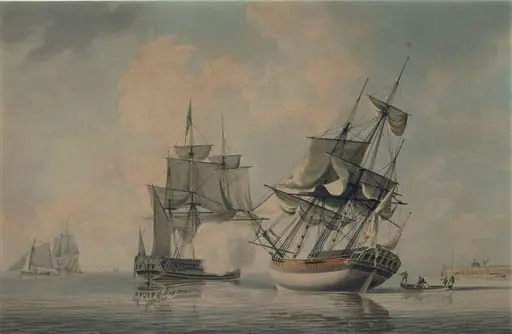 Seapiece with Shipping
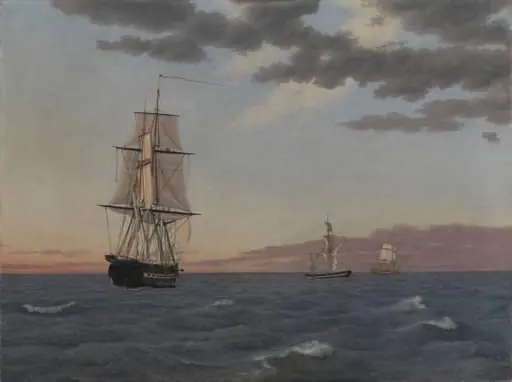 The Corvette "Galathea" Lying to in order to Send Help to the Brig "St Jean"