Artwork
Cattle
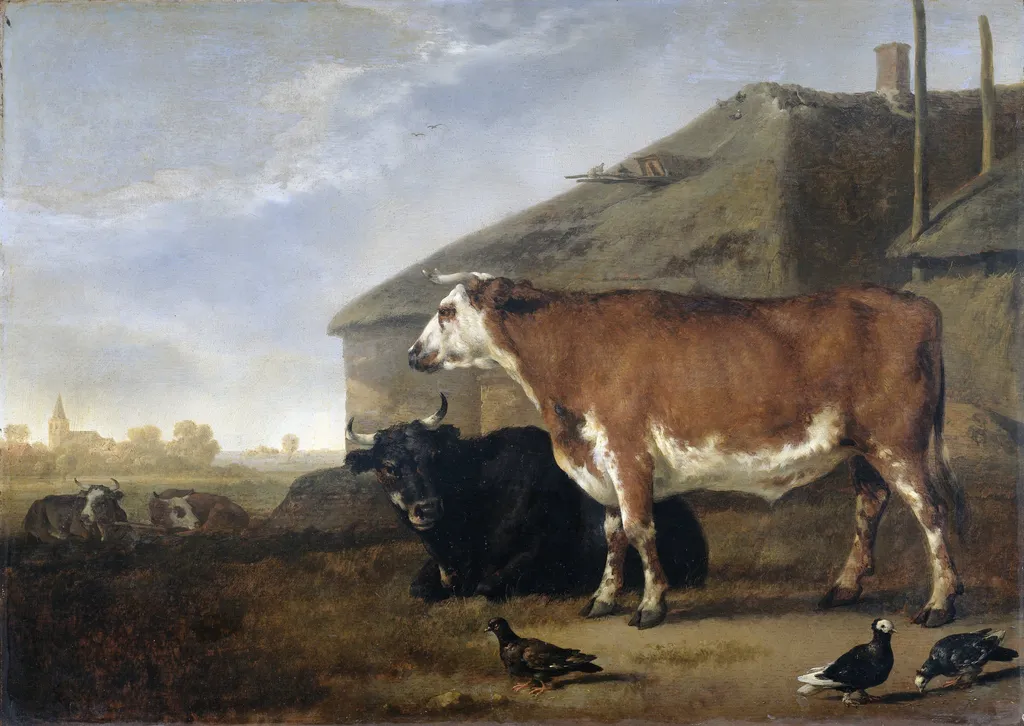
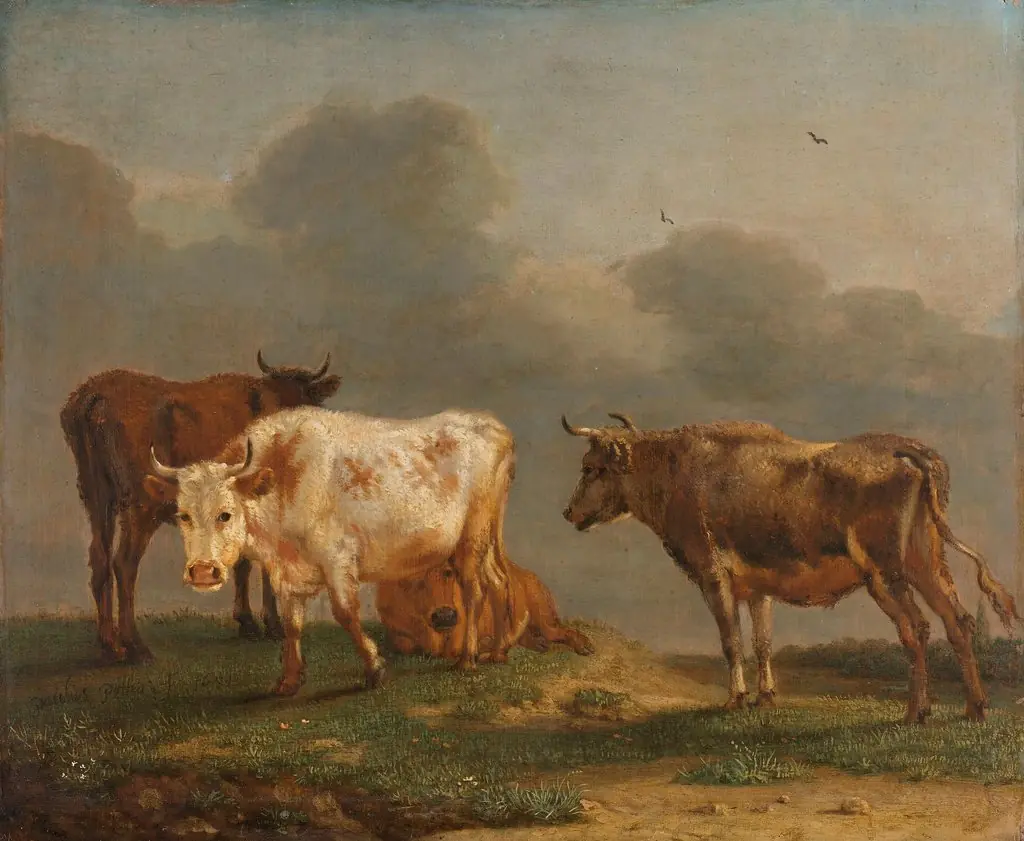
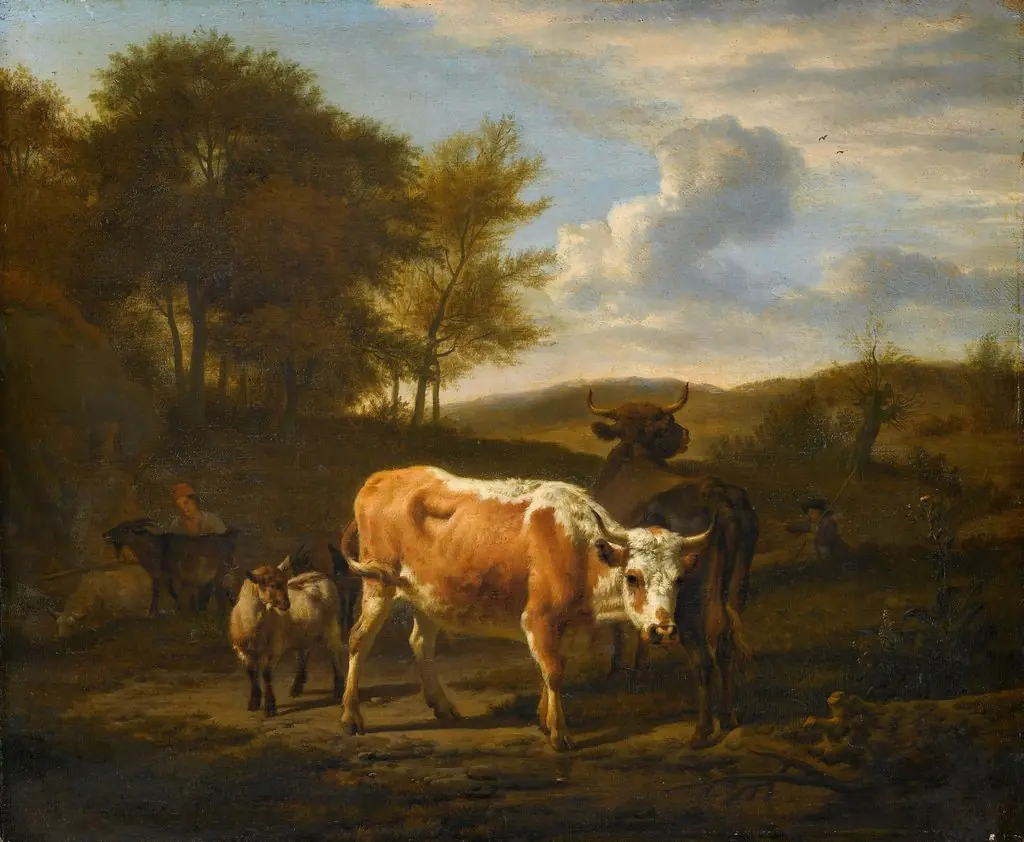
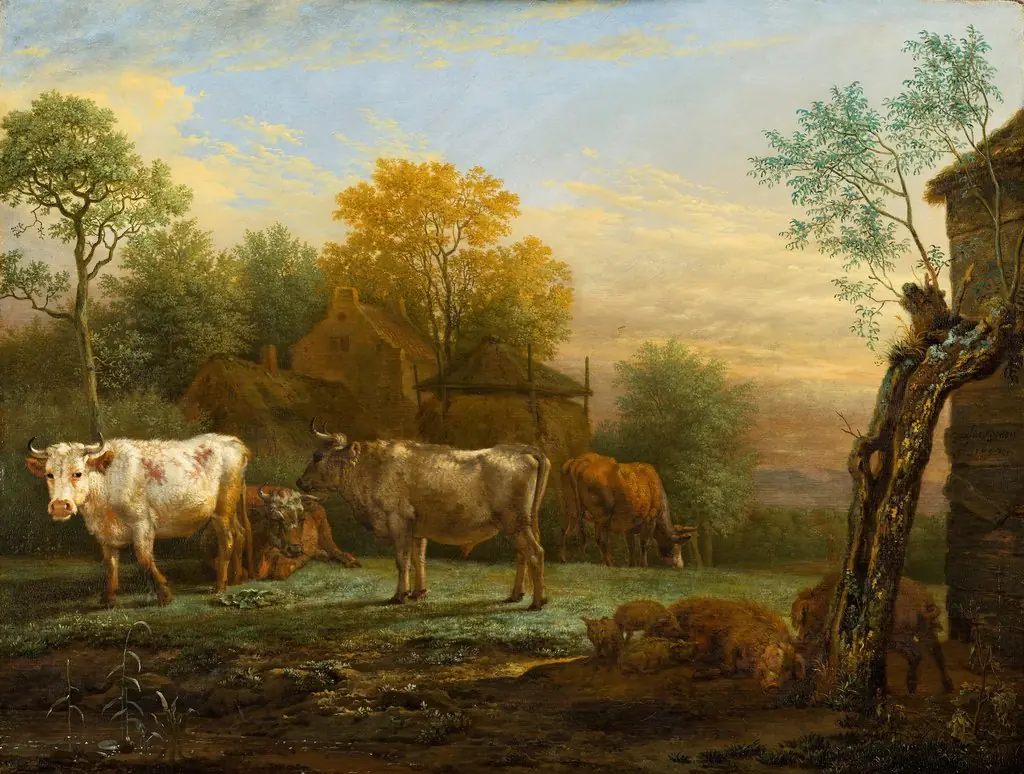
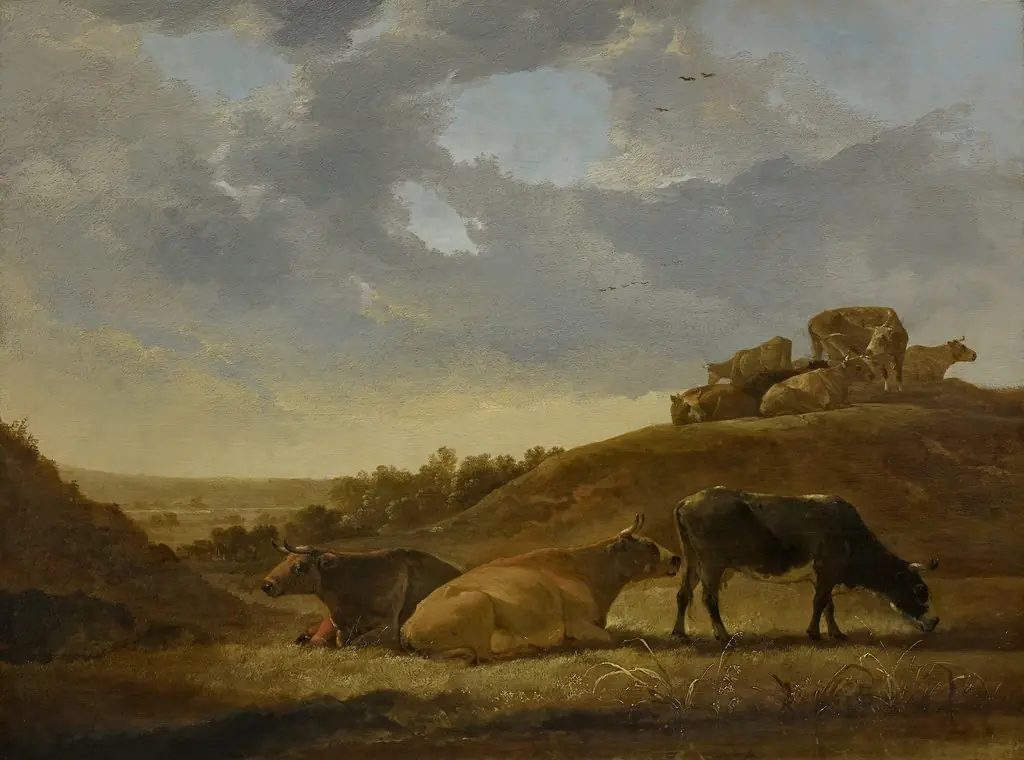
Cattle is an oil painting by the Dutch Golden Age artist Abraham van Calraet. It dates from 1696 and is held in the collection of the Rijksmuseum.
About this work
Subject & Meaning
The cow is rendered with a calm presence that conveys abundance and the pastoral prosperity associated with rural life in the late 17th century.
The painting shows a domestic cow and a pigeon, typical elements of animal genre scenes in Dutch art. The cow is rendered with a calm presence that conveys abundance and the pastoral prosperity associated with rural life in the late 17th century. A pigeon perched nearby adds a note of everyday observation, reinforcing the work’s focus on ordinary barnyard subjects.
The composition reflects the influence of Aelbert Cuyp’s subtle lighting and naturalistic detail, linking van Calraet’s practice to the broader tradition of Dutch animal painting.
Technique & Style
Executed in oil paint on a wooden panel in 1691, the work exemplifies the refined handling typical of late seventeenth-century Dutch animal painting. The artist applied thin, translucent glazes to build up luminous effects on the cow’s hide and the soft plumage of the pigeon, while the background remains more thinly painted to preserve focus on the animals. Stylistically, the composition balances naturalistic observation with idealized form, evident in the cow’s smoothly modeled contours and the pigeon’s gently feathered detail, which together convey both anatomical precision and pastoral tranquility.
The panel’s dimensions (39 × 55 cm) align with small-scale cabinet pictures intended for intimate display, and its condition appears stable, with no signs of major paint loss or significant craquelure reported in the source.
History & Provenance
The painting titled Cattle was created in 1691 by Abraham van Calraet, with attribution also noted for Aelbert Cuyp. Executed in oil paint on a panel, the work depicts a cow and a pigeon. Regarding its ownership history, the piece was part of the collection of Adriaan van der Hoop.
It is currently held in the collections of the Rijksmuseum and the Amsterdam Museum in Amsterdam, having entered these institutions through the Adriaan van der Hoop collection.
Overview
Abraham van Calraet’s 1696 oil painting Cattle presents a tranquil rural tableau. A brown‑and‑white cow dominates the foreground while two smaller cows recline nearby, and two pigeons forage at their feet. Beyond a stone wall and a thatched roof, a modest village with a church steeple recedes into a pale sky, situating the scene within a typical Dutch countryside.
Context
During the Dutch Golden Age, artists frequently depicted pastoral scenes that celebrated the prosperity of the Republic’s agricultural sector. Van Calraet’s focus on livestock aligns with contemporary interests in realism and the moral virtue of honest labor, situating the painting within a broader cultural narrative that valued both aesthetic beauty and social commentary.
Own this work as a print
Artist & collection
Artist
Abraham van Calraet, or Kalraat (7–12 October 1642, Dordrecht – 11 June 1722, Dordrecht) was a Dutch Golden Age still-life, portrait- and landscape painter.