Artwork
Horses
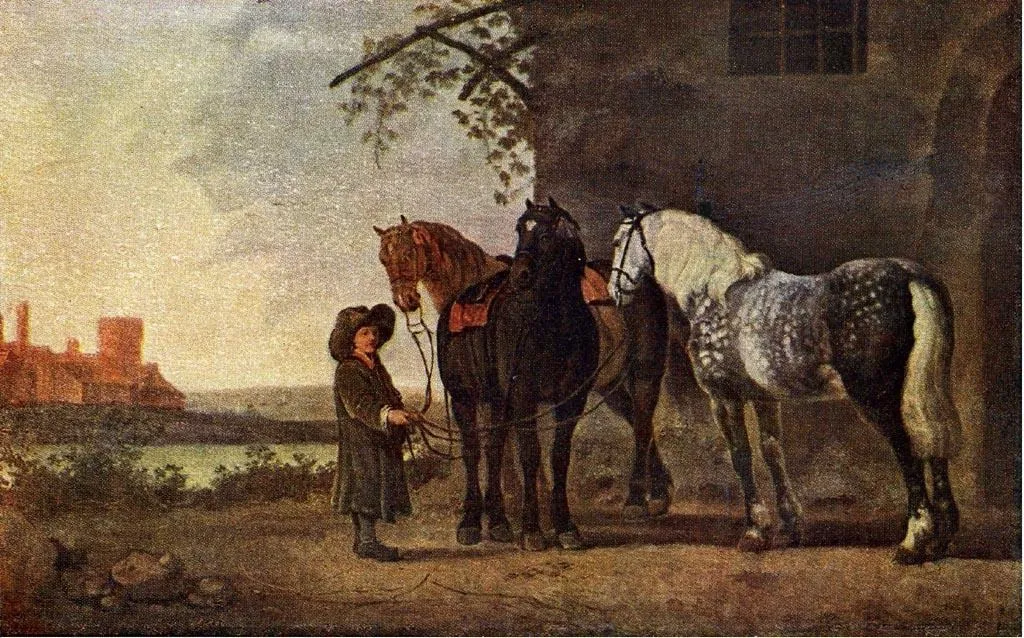
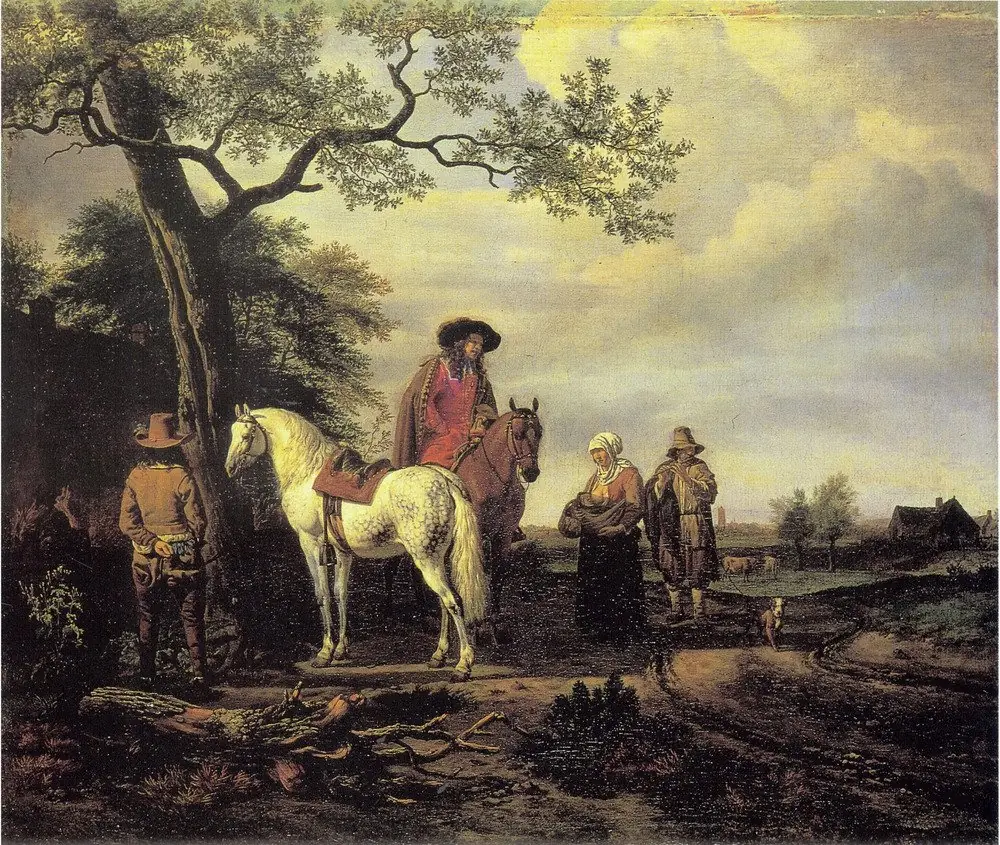
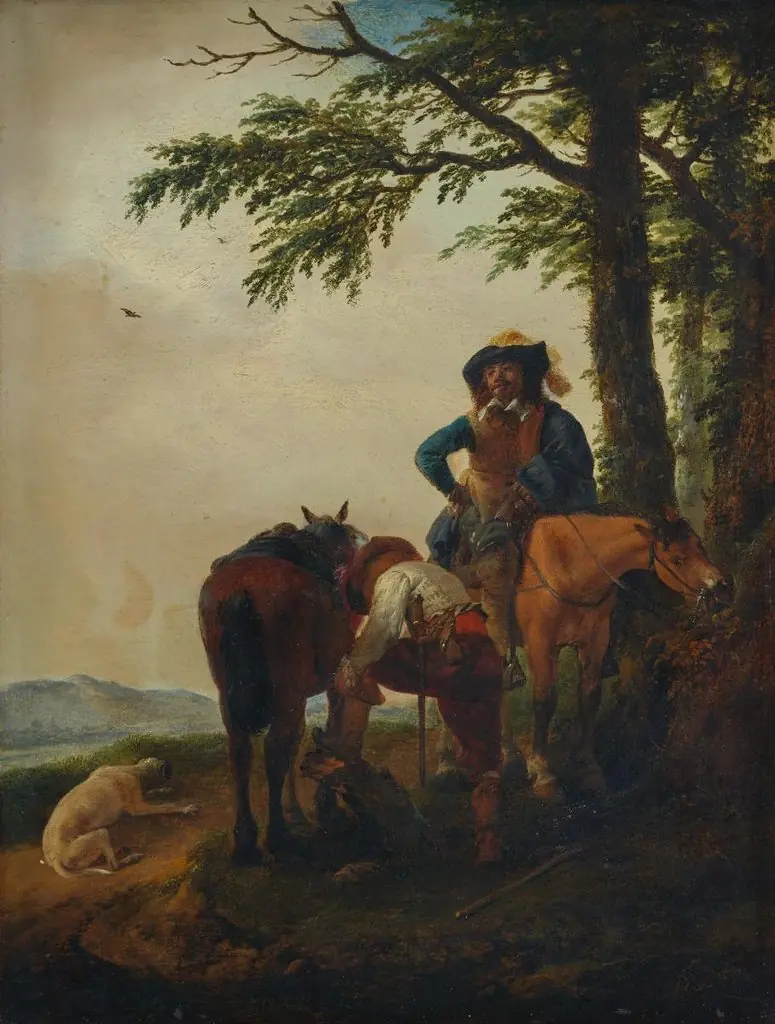
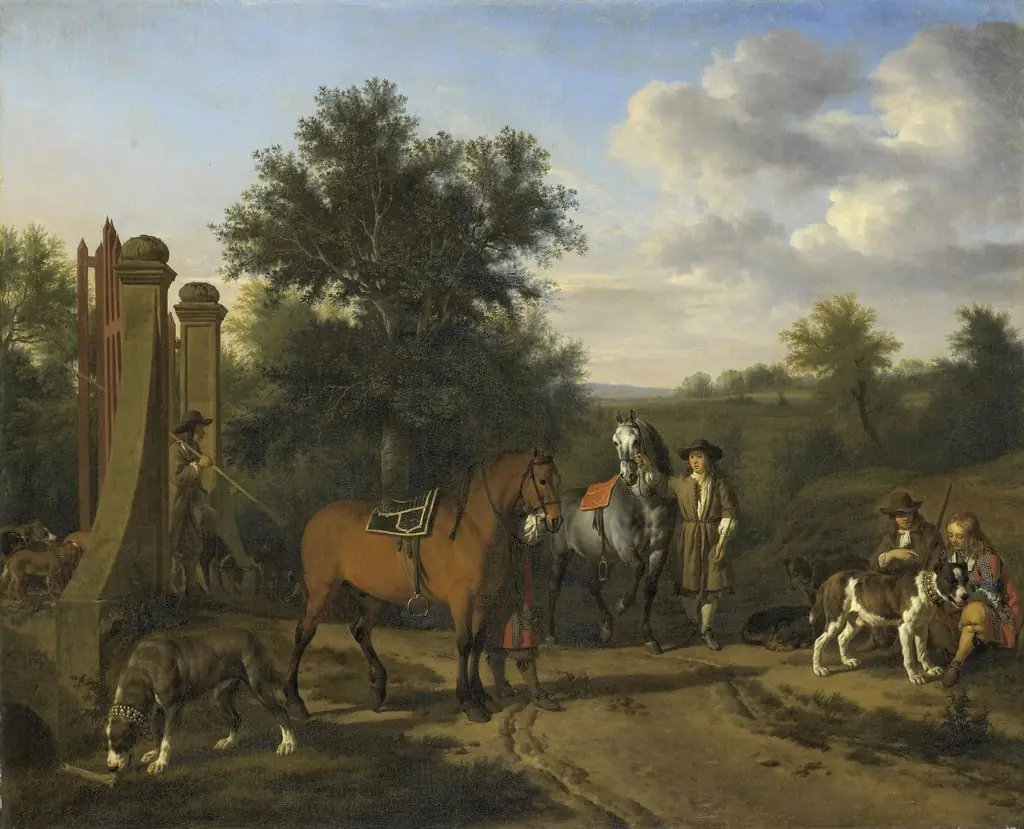
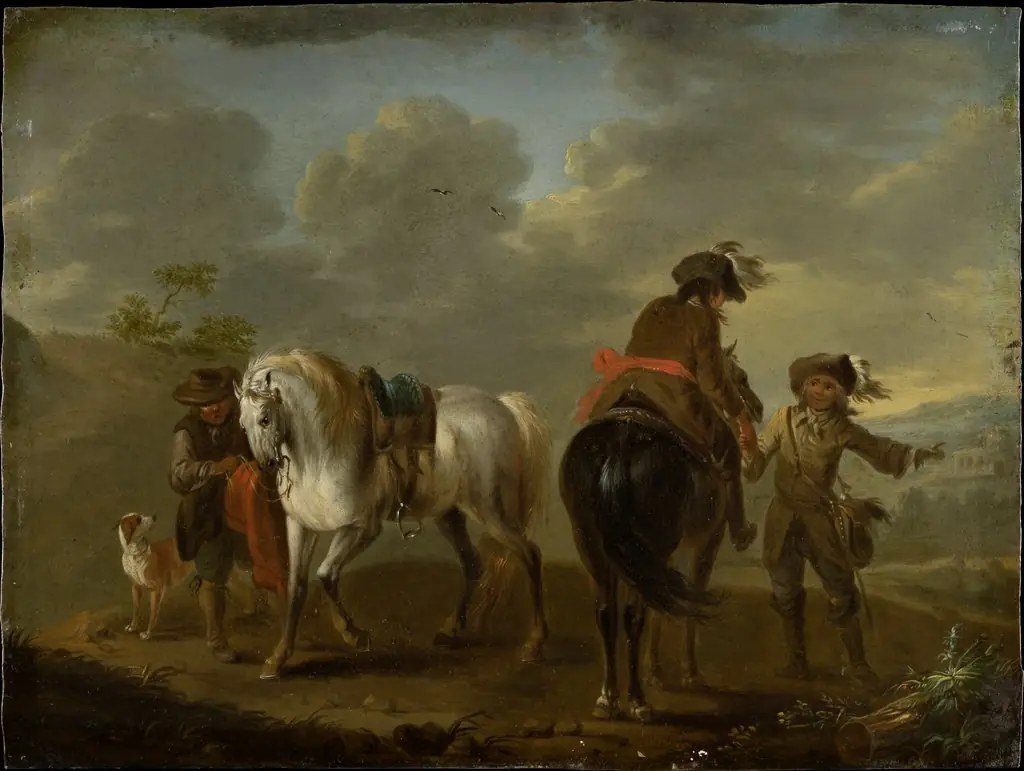
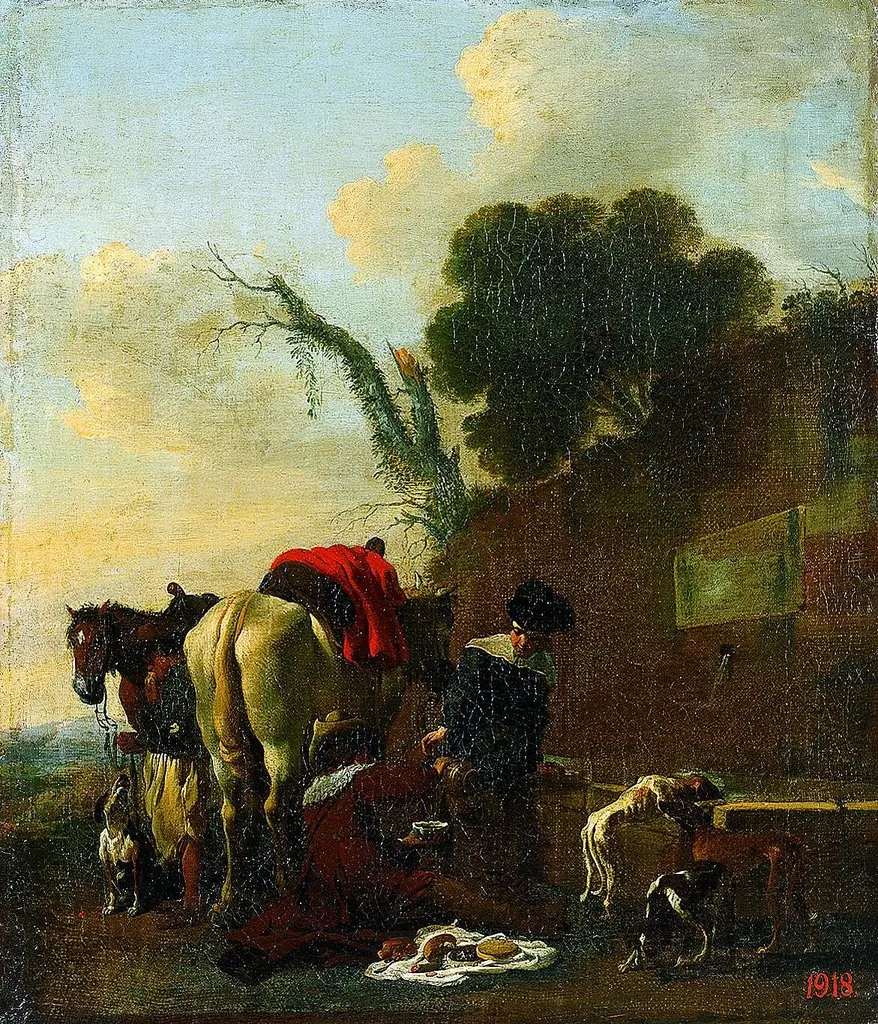
Horses is an oil painting by the Dutch Golden Age artist Abraham van Calraet. It dates from 1700 and is held in the collection of the Hermitage Museum.
About this work
Subject & Meaning
Iconographically, it draws on the traditional motif of the groom accompanied by equine companions, suggesting themes of youthful leisure and pastoral harmony.
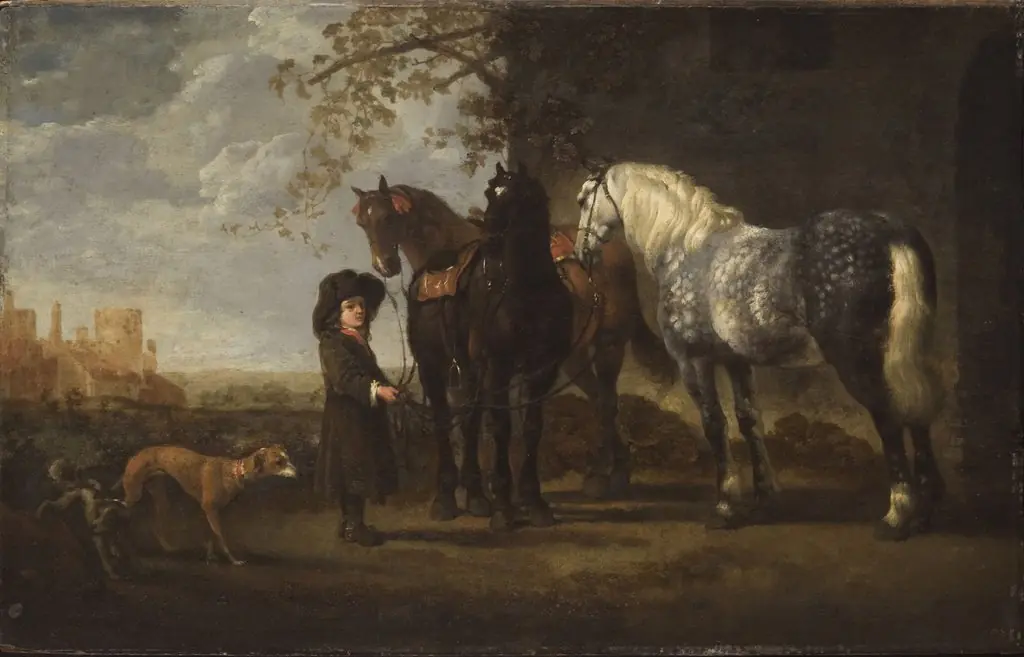
The painting depicts a boy with a horse and dog, rendered in oil on panel in 1700 Netherlands and housed in the Hermitage Museum. Iconographically, it draws on the traditional motif of the groom accompanied by equine companions, suggesting themes of youthful leisure and pastoral harmony. The composition reflects the broader Dutch landscape tradition, emphasizing naturalistic detail and serene narrative scenes.
Symbolically, the horse conveys status and vitality, while the dog adds a note of fidelity, together enriching the work's pastoral narrative. This interpretation aligns with scholarly analyses of Dutch Golden Age genre scenes, where such elements underscore social aspiration and countryside idylls.
The piece is directly linked to Abraham van Calraet's workshop practice, particularly his adaptation of earlier compositions like "Groom with Three Horses and Two Dogs," underscoring its role in the transmission of visual motifs within 18th‑century Dutch art.
History & Provenance
The painting titled 'Horses' was created by Abraham van Calraet in 1700 as a landscape work on panel using oil paint. It depicts a boy with a horse and dog and was inspired by the composition 'Groom with Three Horses and Two Dogs'. The work is associated with the Hermitage Museum in Saint Petersburg, Russia, where it is part of the collection and currently displayed.
Its creation took place in the Netherlands, reflecting the artistic environment of the period. The piece measures 37 cm in height and 58.5 cm in width, consistent with its classification as a 18th-century Dutch landscape painting.
Context
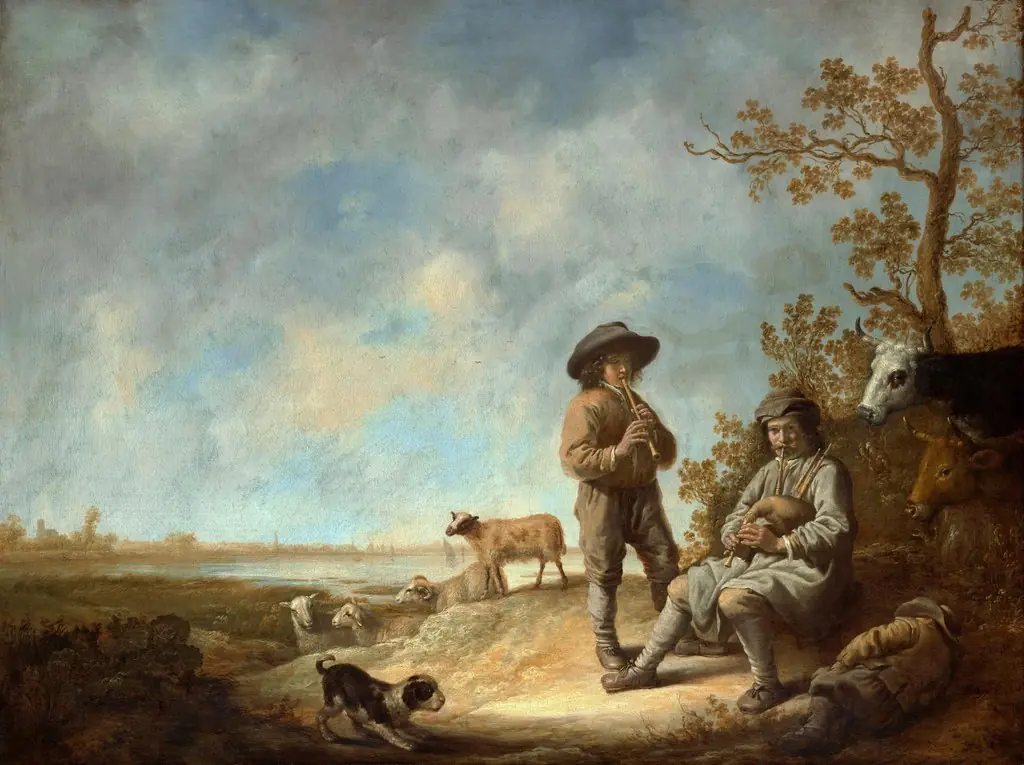
Abraham van Calraet's 1700 panel painting Horses, depicting a boy with a horse and dog, was created in the Netherlands and draws compositional inspiration from a work by Aelbert Cuyp. The Hermitage Museum holds the piece, which measures 37 cm by 58.5 cm and exemplifies Dutch Golden Age landscape painting through its meticulous rendering of animal subjects and pastoral themes. Scholarship contextualizes it within van Calraet's specialized focus on animal scenes, contrasting with Cuyp's broader genre works while highlighting shared compositional strategies in the depiction of rural life.
Overview
Created in 1700, Horses is a panel painting by Dutch artist Abraham van Calraet, whose oeuvre spans still lifes, portraits and landscapes. The composition presents a quiet rural scene in which a young boy, a dog and three horses are gathered beside a stone structure, under a muted sky. The work belongs to the State Hermitage Museum’s collection.
Technique & Style
Van Calraet employs a restrained palette and careful modeling of light to convey the stillness of the scene. The red cloth draped over the saddles provides a focal accent, and the subtle gradations of tone give the stone building and sky a sense of atmospheric depth. The painting reflects the Dutch Golden Age’s attention to detail and naturalistic representation.
Artist & collection
Artist
Abraham van Calraet, or Kalraat (7–12 October 1642, Dordrecht – 11 June 1722, Dordrecht) was a Dutch Golden Age still-life, portrait- and landscape painter.