Artwork
Marie-Adélaïde of France, known as Madame Adélaïde
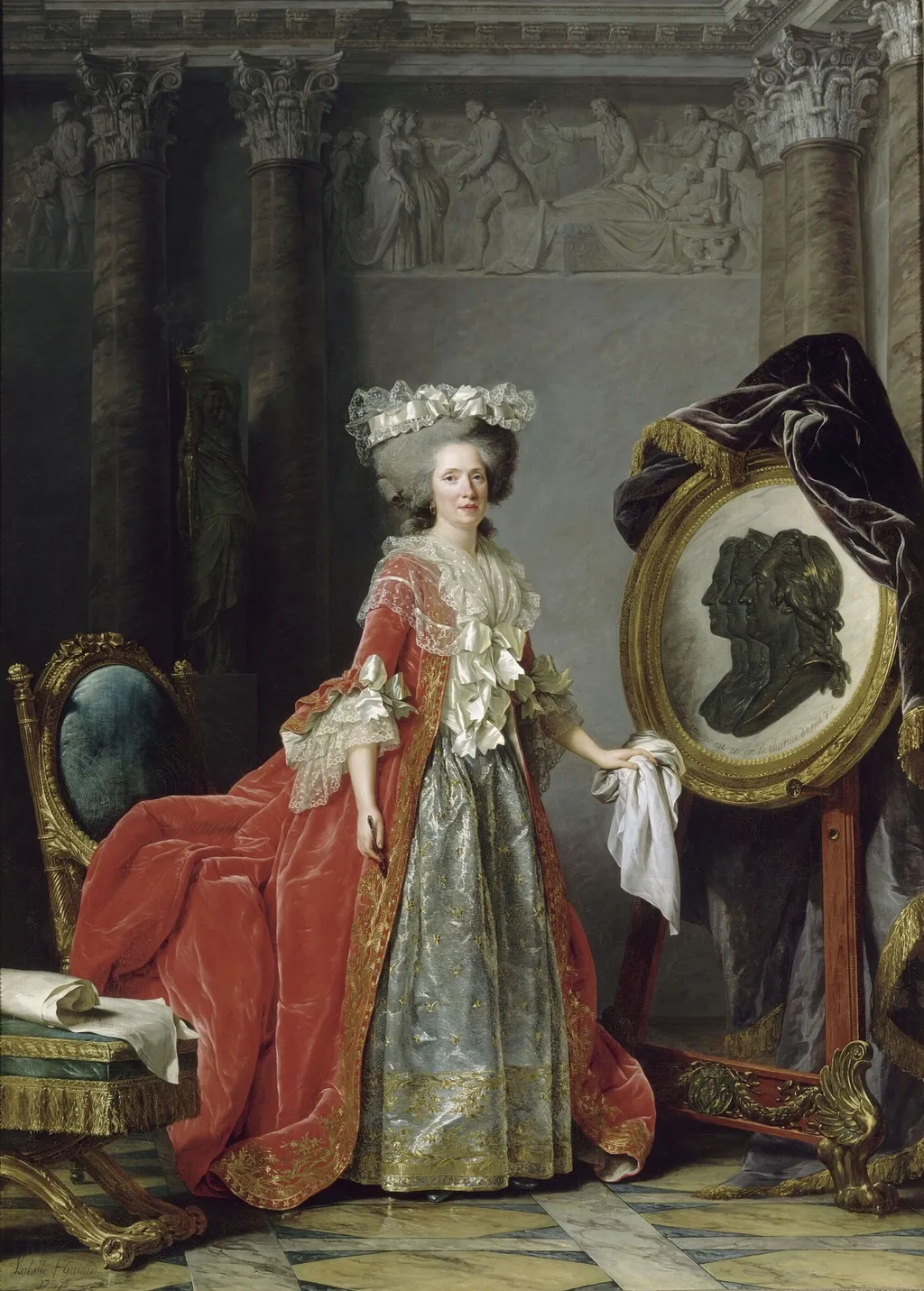
Marie-Adélaïde of France, known as Madame Adélaïde is an oil painting by the Rococo painting artist Adélaïde Labille-Guiard. It dates from 1794 and is held in the collection of the Palace of Versailles. In 1794 Adélaïde Labille‑Guiard completed an oil portrait of Marie‑Adélaïde, the youngest daughter of Louis XV.
About this work
Subject & Meaning
The portrait depicts Marie-Adélaïde of France (1732–1799), a princess of the royal house and one of the daughters of Louis XV, shown as a dignified adult woman.
The portrait depicts Marie-Adélaïde of France (1732–1799), a princess of the royal house and one of the daughters of Louis XV, shown as a dignified adult woman. The composition situates her within the setting of Versailles, anchoring her identity to the seat of the French monarchy.
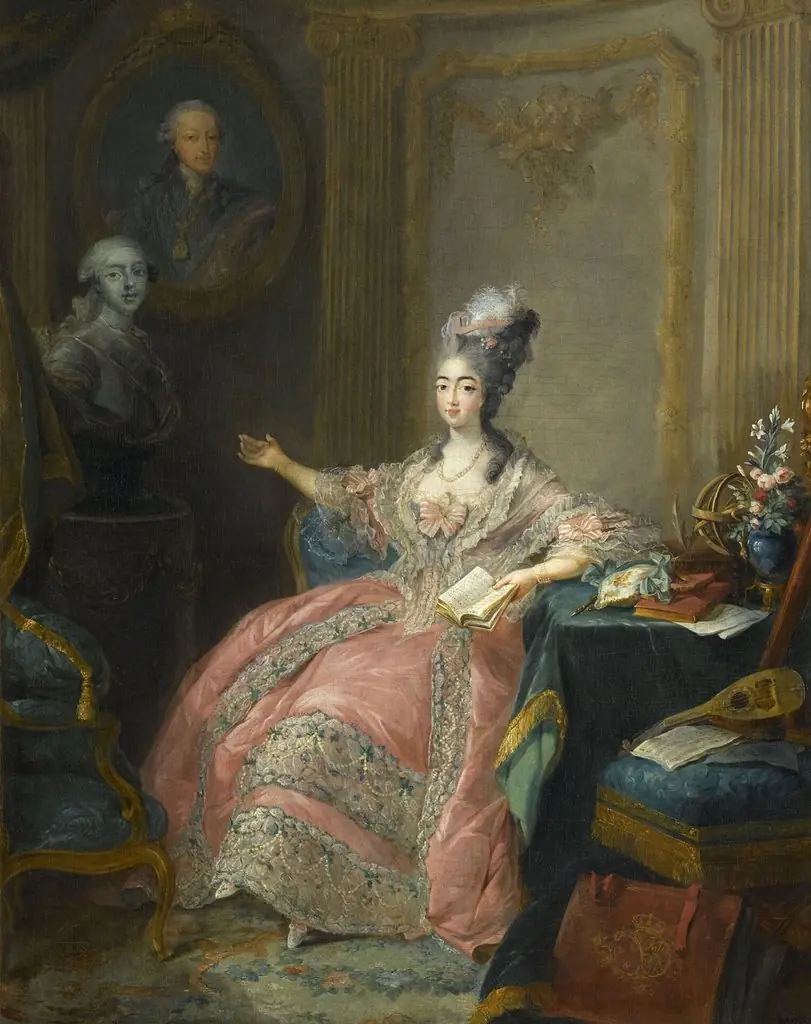
The iconographic elements surrounding the sitter carry symbolic weight tied to dynastic legitimacy and royal patronage. A crown prince appears among the depicted motifs, evoking the Bourbon line of succession and the continuation of the royal family. The presence of a convent and a sculpture gestures toward Marie-Adélaïde's well-known religious devotions and her role as a patron of religious institutions, while a painting within the scene signals her engagement with the arts. A cornice and her formal dress further frame her as a figure of rank and ceremonial presence.
Together, these elements present the princess not simply as an individual likeness but as a representative of royal authority, piety, and cultural patronage within the Bourbon court.
Technique & Style
Created in 1787, this portrait is executed in oil paint on canvas. The work measures 271 cm in height and 194 cm in width, presenting a grand scale typical of royal portraiture of the era. As a formal portrait, the composition depicts the sitter, Marie-Adélaïde of France, alongside various allegorical and contextual elements including a crown prince, a convent, and sculptural details.
The inclusion of these specific figures and architectural features, such as a cornice, situates the subject within her historical and familial context at Versailles. The painting was first presented to the public at the Salon of 1787.
History & Provenance
Adélaïde Labille-Guiard created the oil-on-canvas portrait of Marie-Adélaïde of France in 1787. The work was exhibited at the Salon of 1787, marking its public debut during the artist's lifetime. The painting measures 271 cm in height and 194 cm in width.
It is currently held by the Museum of the History of France at the Palace of Versailles, where it remains part of the national collection. The piece carries multiple inventory designations, including MV 3958, INV 5243, and AC 1799, reflecting its integration into the French state museums system. While the specific commissioning details are not explicitly recorded in the available records, the work's presentation at the Salon suggests official or high-profile patronage consistent with the sitter's status as a daughter of King Louis XV.
The portrait is held in the collection of the Museum of the History of France, located within the Palace of Versailles. It is cataloged under multiple inventory numbers, including MV 3958, INV 5243, and AC 1799. The work was publicly exhibited at the Salon of 1787 shortly after its completion.
Context
Madame Adélaïde, painted by Adélaïde Labille-Guiard in 1787, was exhibited at the Salon of 1787 and later entered the collection of the Museum of the History of France at Versailles.
The portrait captures Marie-Adélaïde of France within the royal sphere, reflecting both her aristocratic status and the cultural milieu of pre-revolutionary France.
Scholarship emphasizes its technical mastery and its role in documenting the visibility of royal women through portraiture, situating it within the broader discourse of 18th-century French art and the evolving role of women in public representation.
The work remains part of the permanent display at the Palace of Versailles, continuing to inform studies of royal iconography and female agency in Enlightenment-era visual culture.
Legacy
Madame Adélaïde's legacy is anchored in her representation as a symbol of Bourbon familial harmony, with the painting frequently cited in scholarly analyses of 18th-century French court portraiture and gendered patronage. Its inclusion in the Salon of 1787 established a precedent for royal family portrait commissions within the neoclassical framework, influencing later depictions of Bourbon descendants in institutional collections. The work's presence in the Museum of the History of France at Versailles ensures continued public engagement with the narrative of the Ancien Régime, while its technical execution, documented in multiple sources, remains a reference point for studies of Labille-Guiard's mastery of group portraiture and her role as a pioneering female artist in a male-dominated academy.
Overview
In 1794 Adélaïde Labille‑Guiard completed an oil portrait of Marie‑Adélaïde, the youngest daughter of Louis XV. The work presents the princess in an elaborate red and silver costume, holding a white drape, against a richly modeled interior of columns and carved stone. The painting is part of the permanent collection at the Palace of Versailles.
Own this work as a print
Artist & collection
Artist
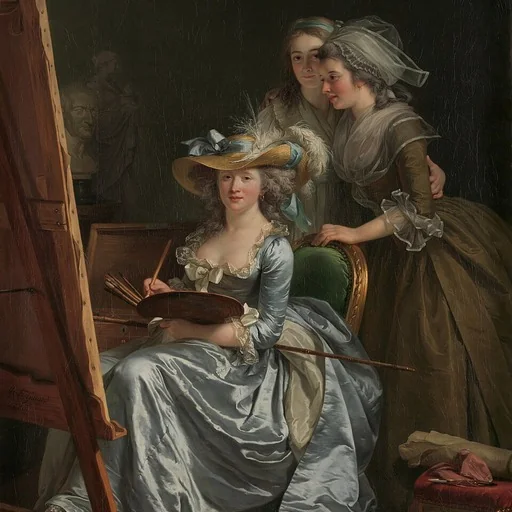
Adélaïde Labille-Guiard (née Labille; 11 April 1749 – 24 April 1803), also known as Adélaïde Labille-Guiard des Vertus, was a French miniaturist and portrait painter.