Artwork
Self-Portrait with Two Pupils
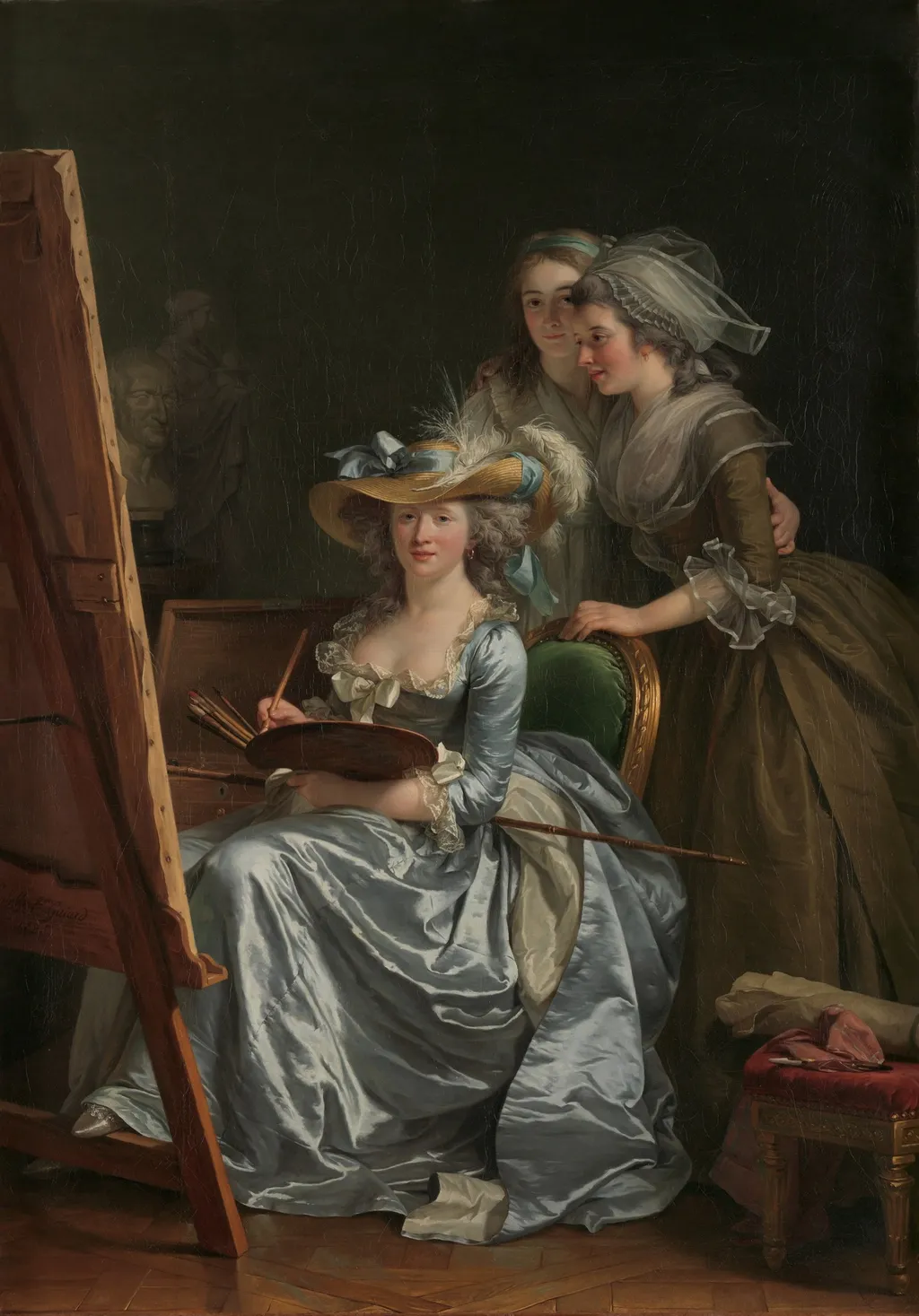
Self-Portrait with Two Pupils is an oil painting by the Academic Art artist Adélaïde Labille-Guiard. It dates from 1793 and is held in the collection of the Metropolitan Museum of Art.
About this work
Adélaïde Labille-Guiard sits at her easel in a silk gown, turning to the viewer as two students, Marie Gabrielle Capet and Marie Marguerite Carraux de Rosemond, lean in to study the canvas. The life-size oil, shown at the Paris Salon, asserts her standing as a professional artist when the Royal Academy capped women members at four. The Metropolitan Museum of Art acquired it in 1953.
Subject & Meaning
It is recognized as the earliest known painting of a woman artist with her female pupils, thus asserting a lineage of professional women painters.
The self-portrait depicts Adélaïde Labille-Guiard seated at her easel, brush in hand, flanked by her two pupils Marie-Gabrielle Capet and Marie-Marguerite Carreaux de Rosemond. The composition’s iconography, the artist’s gown and straw hat, the parquet floor reflecting her dress, and the background bust of her father alongside a statue of a vestal virgin, establishes her dual identity as a fashionable professional and a learned master. Most significantly, the work is widely read as a calculated political statement.
Painted for the 1785 Salon while Labille-Guiard sought admission to the Académie Royale, which at the time limited female members to four annually, the portrait argues for expanded women’s artistic education by prominently featuring two female students. It is recognized as the earliest known painting of a woman artist with her female pupils, thus asserting a lineage of professional women painters.
Technique & Style
Executed in oil on canvas, the painting measures 210.8 by 151.1 cm, nearly life-size. The composition places Labille-Guiard at an easel on the left, a structure possibly inspired by Antoine Coypel's portrait with his son. She renders her own gown and straw hat with intricate material complexity, notably capturing the reflection of the dress on the polished parquet floor.
The two pupils are depicted in less formal attire, their heads arranged to demonstrate a subtle interplay of light across their faces, an effect Labille-Guiard studied in a preparatory chalk drawing. In the background, a statue of a vestal virgin and a bust of the artist's father add symbolic depth. The artist and one pupil appear to gaze outward, possibly at a mirror, suggesting she paints the very scene the viewer observes.
History & Provenance
Painted in 1785, the work was first exhibited at the Salon of that year. Labille-Guiard planned the composition extensively, executing a preparatory chalk study of her pupils’ heads. Though not formally commissioned, the self-portrait is often interpreted as a plea to the Académie Royale for greater female membership.
After the artist’s death in 1803, the painting passed to her husband, François-André Vincent; he later bequeathed it to his brother-in-law, Marie François Griois. It remained with the Griois family until 1905, then moved through various private collections before being donated to the Metropolitan Museum of Art in 1953 by Julia Berwind.
The painting is held in the collection of the Metropolitan Museum of Art in New York, to which it was donated in 1953 by Julia Berwind. Its earliest recorded exhibition was at the Salon of 1785 in Paris, where it was first presented. Before entering the Met, the work remained with the artist's family until 1905, then passed through several private collections.
Context
Since its debut at the Salon of 1785, the painting has been interpreted as a deliberate political statement advocating for greater female membership in the Académie Royale, which then limited women to four new members annually. Art historians such as Laura Auricchio have analyzed the work as a strategic self-promotion and a manifesto for women’s participation in the arts. It is recognized as the earliest known depiction of a woman painter with her female pupils, securing its place in art history as a pioneering image.
The work established Labille-Guiard’s reputation and influenced later artists, including Jean-Laurent Mosnier’s self-portrait with his daughters. Today it is a standard image in art-history surveys, frequently reproduced on book covers.
Legacy
The painting has become a canonical image in art history, frequently reproduced on book covers and used as a standard illustration in surveys of Western art. It is recognized as the earliest known depiction of a woman painter with female pupils. Art historians often interpret the work as a feminist statement, arguing that it served as a plea for greater female admission to the Académie Royale, which limited new women members to four per year.
The composition also influenced later artists; it is thought to have inspired Jean-Laurent Mosnier's self-portrait with his daughters. Its continued presence in the Metropolitan Museum of Art ensures ongoing scholarly and public attention.
Overview
Adélaïde Labille-Guiard's 1785 oil painting, "Self-Portrait with Two Pupils, Marie-Gabrielle Capet and Marie Marguerite Carreaux de Rosemond," presents the artist alongside two of her students. This life-size composition serves as both a personal depiction and a professional statement. It showcases Labille-Guiard's role as an instructor and her presence within the artistic community of 18th-century France, asserting her professional identity through her work and her mentorship.
Own this work as a print
Artist & collection
Artist
Adélaïde Labille-Guiard (née Labille; 11 April 1749 – 24 April 1803), also known as Adélaïde Labille-Guiard des Vertus, was a French miniaturist and portrait painter.

- The Interior of an Atelier of a Woman Painter
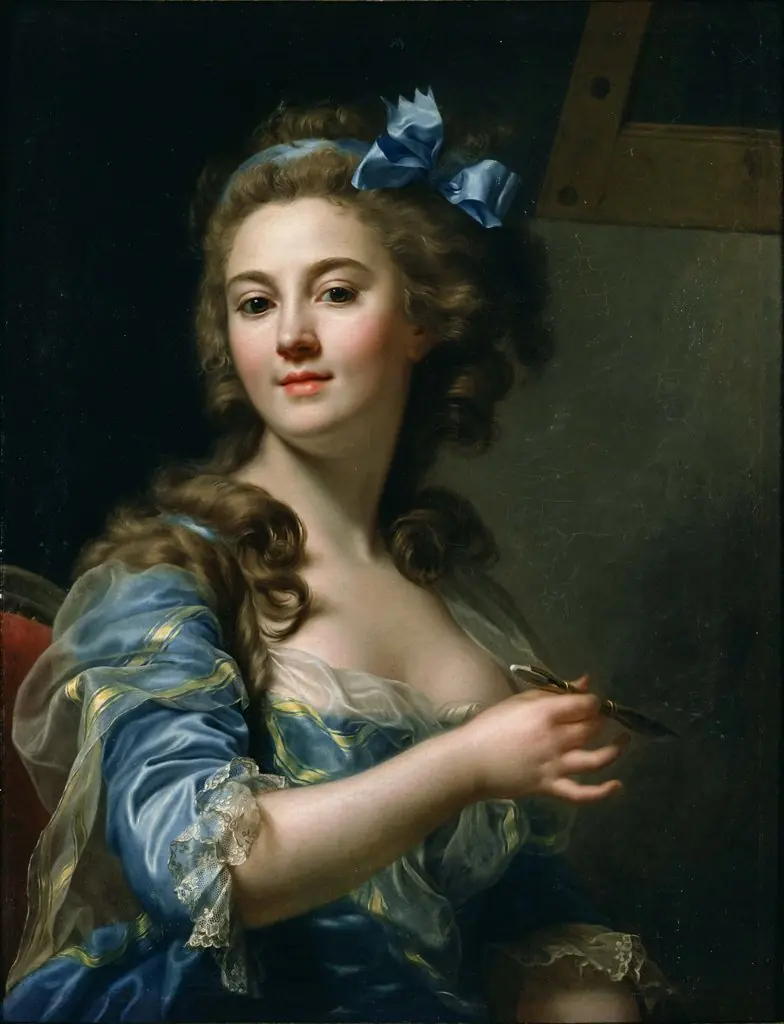 Self-portrait
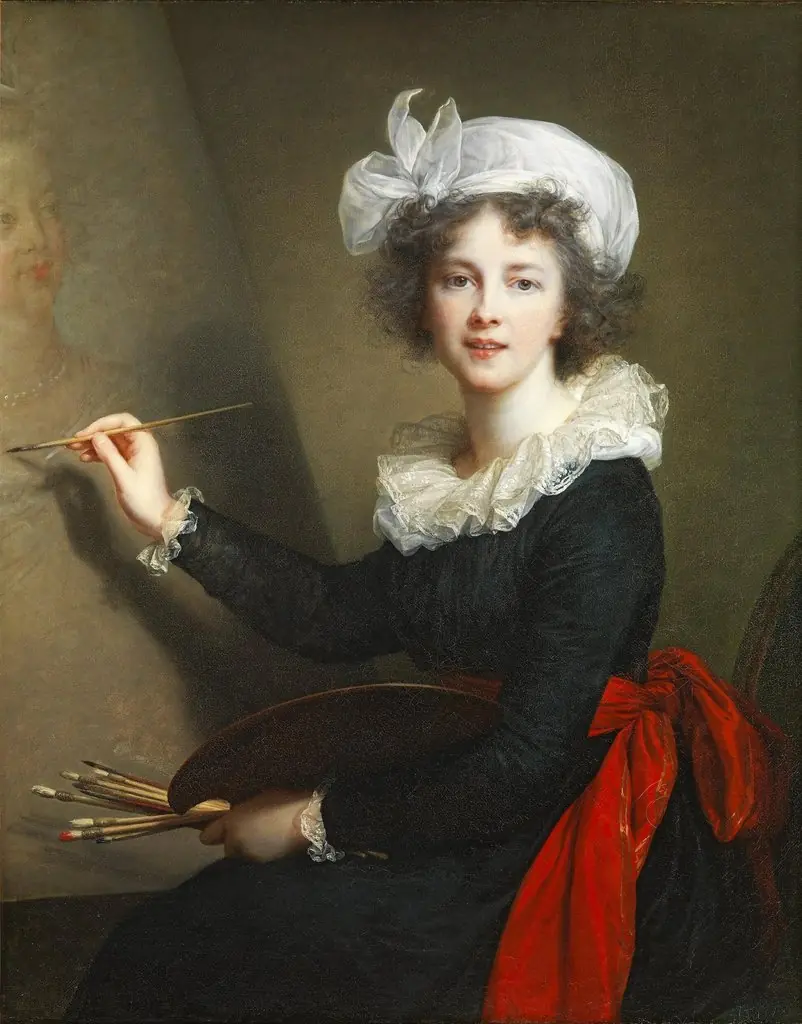 Self-portrait of Élisabeth Louise Vigée Le Brun
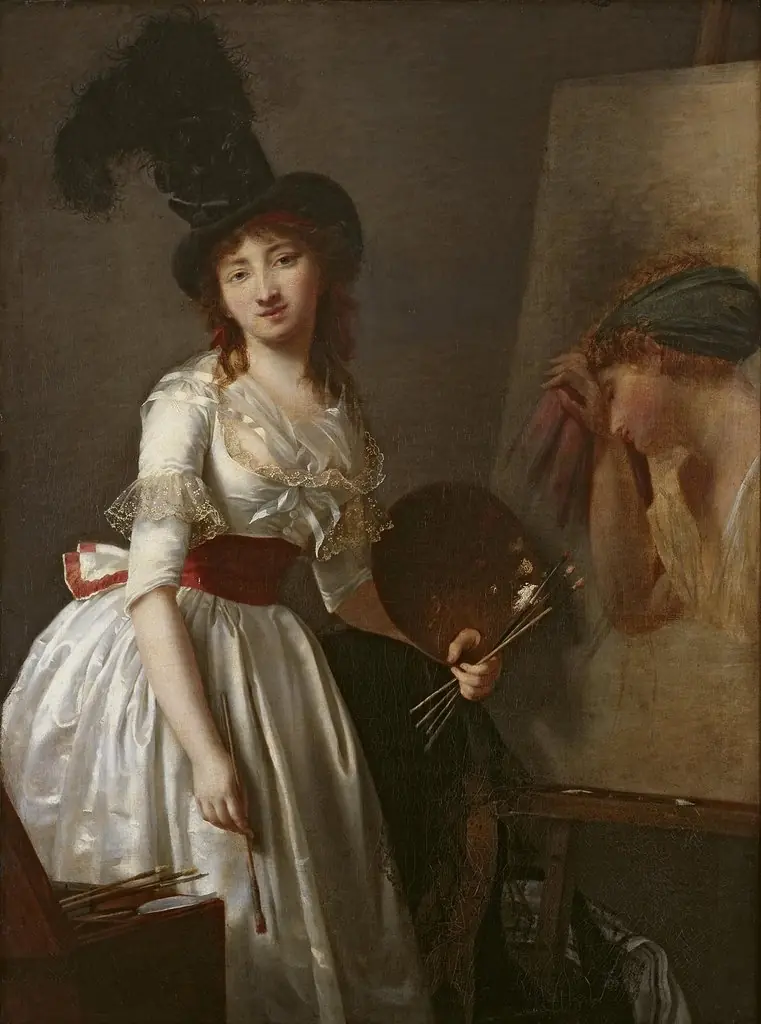 Portrait of a Female Painter, Pupil of David
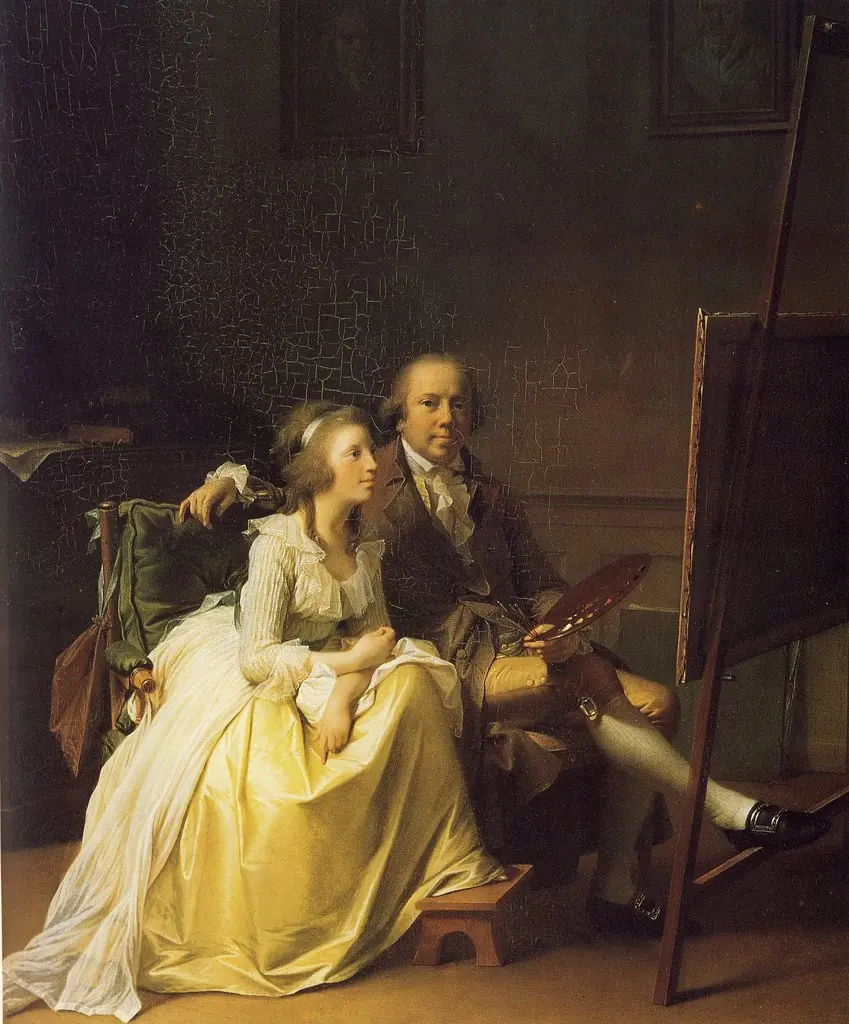 The Artist and his Wife Rosine, née Dørschel
 Woman Reading
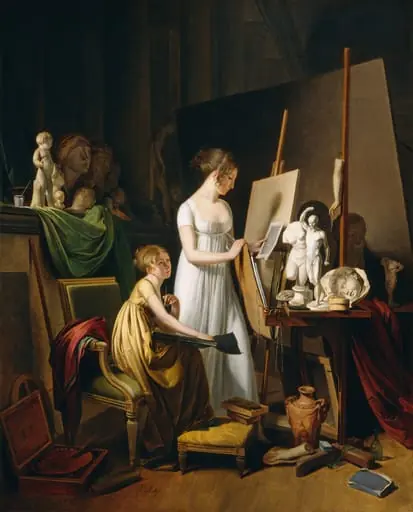 A Painter's Studio
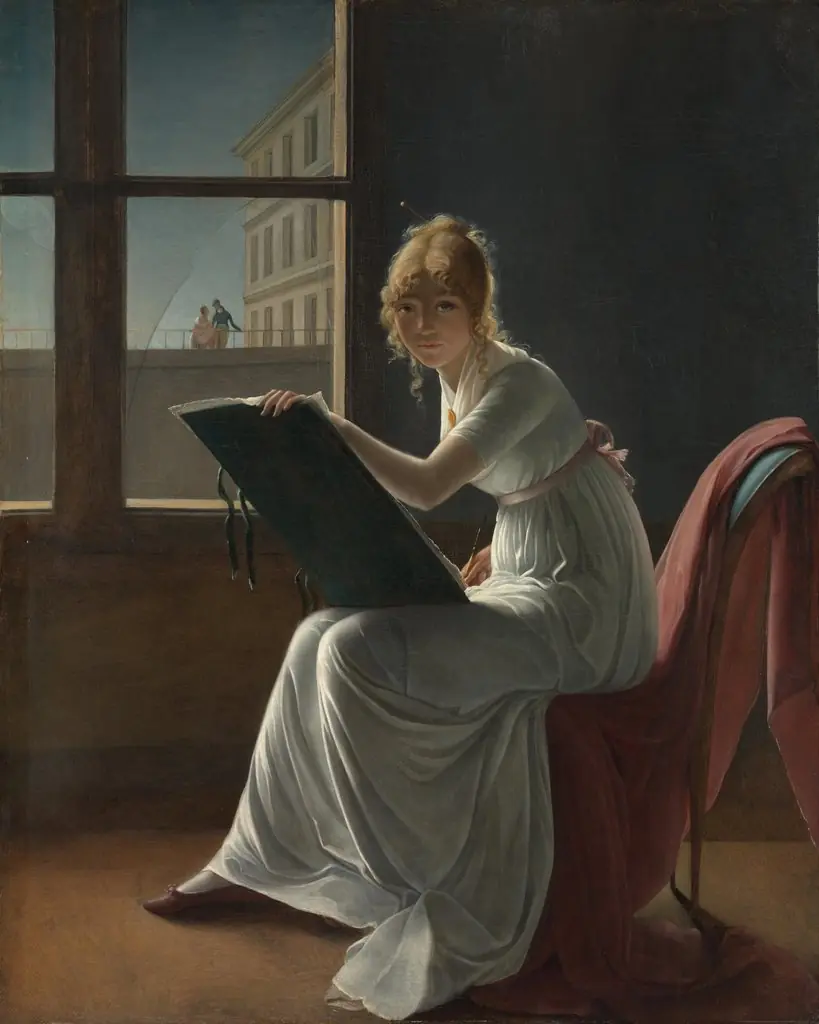 Portrait of Charlotte du Val d'Ognes
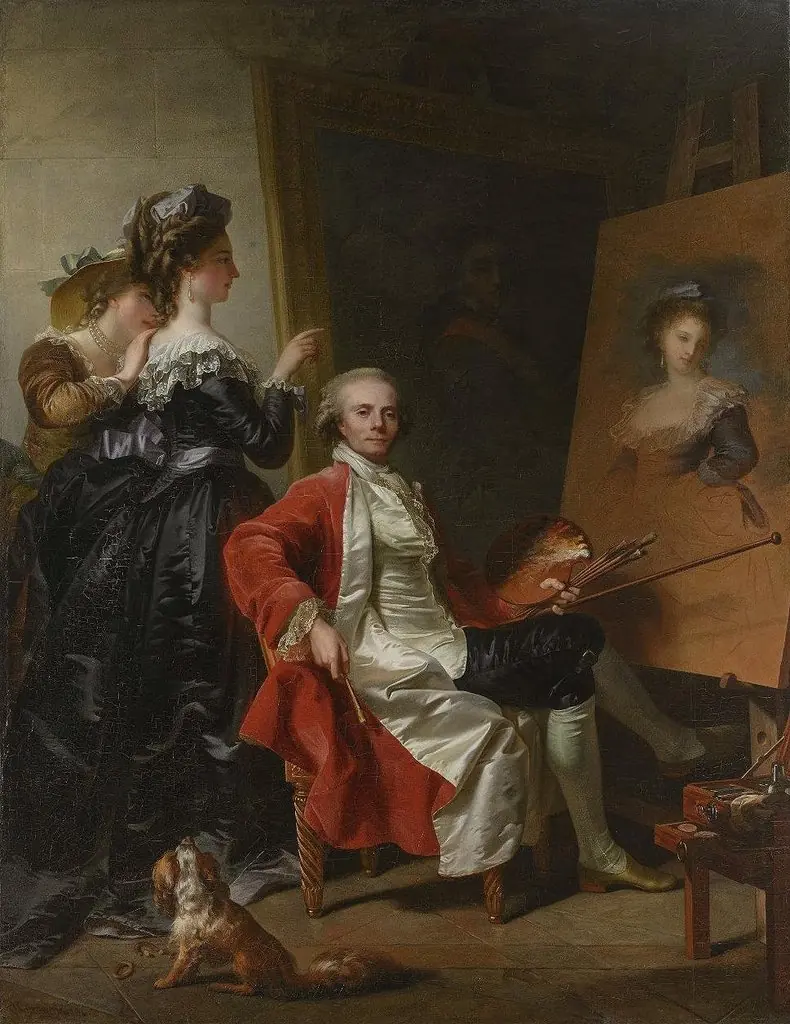 Self-Portrait with His Daughters
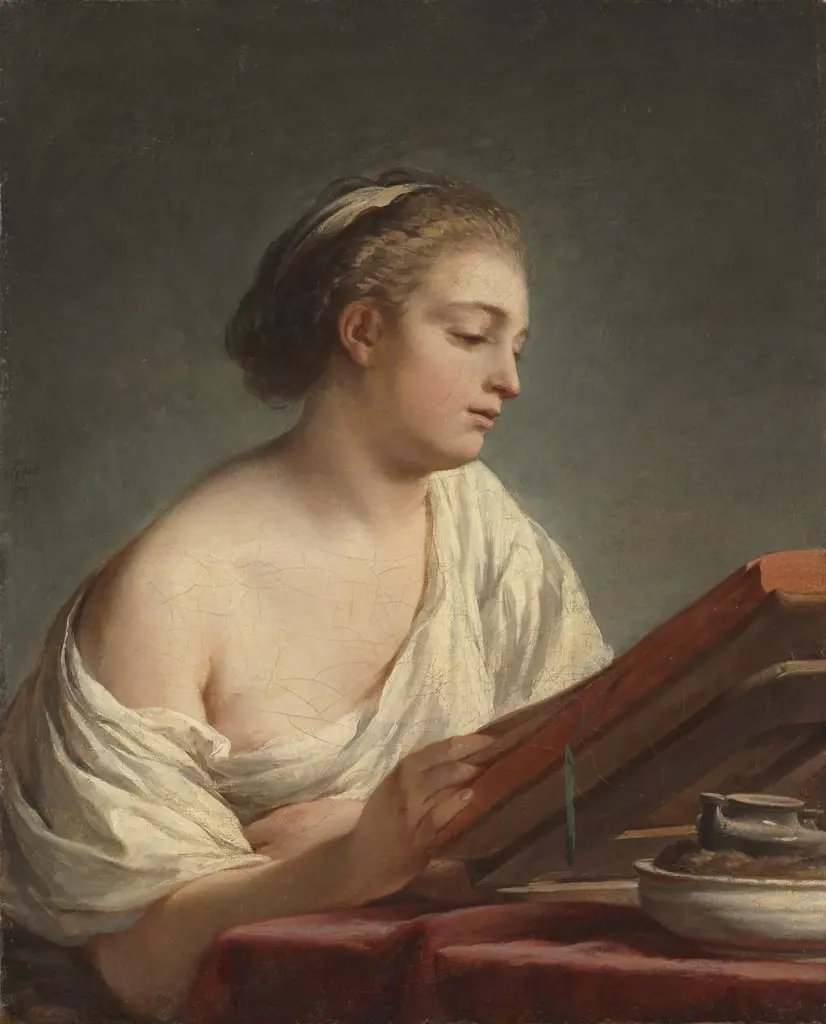 Woman Reading
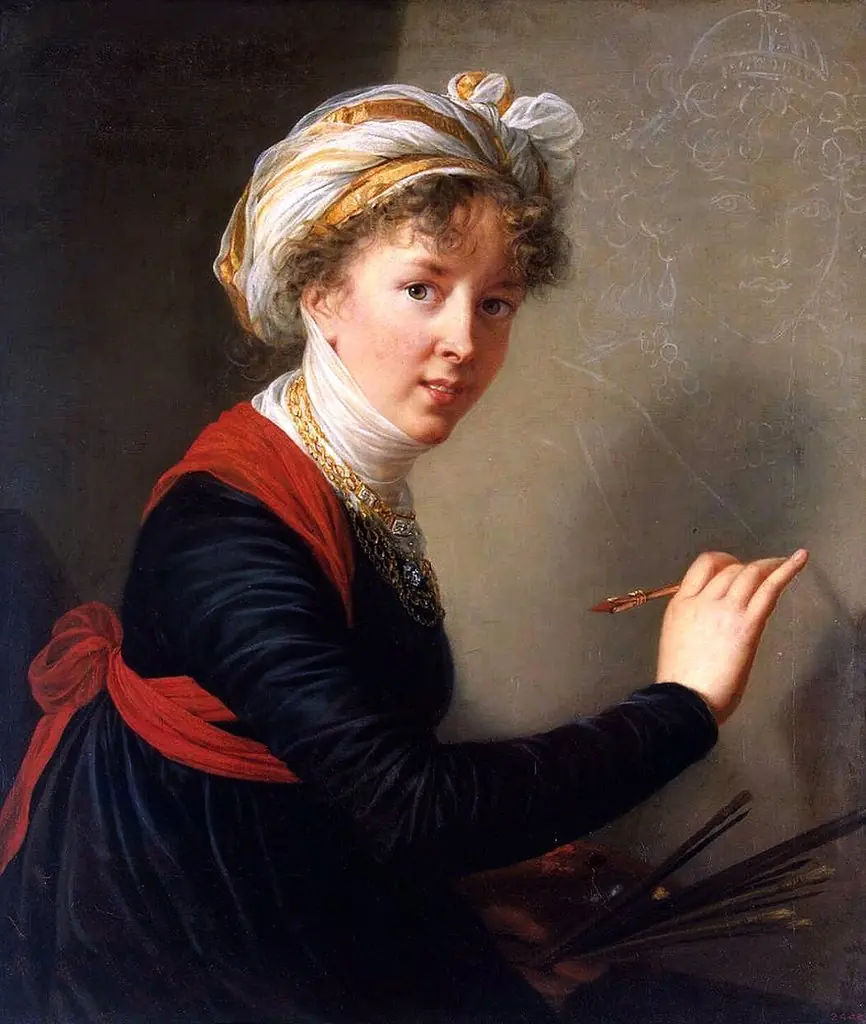 Self-portrait
 Antoinette-Elisabeth-Marie d'Aguesseau, Countess of Ségur