Artwork
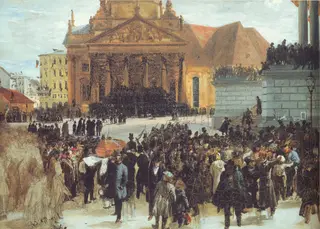
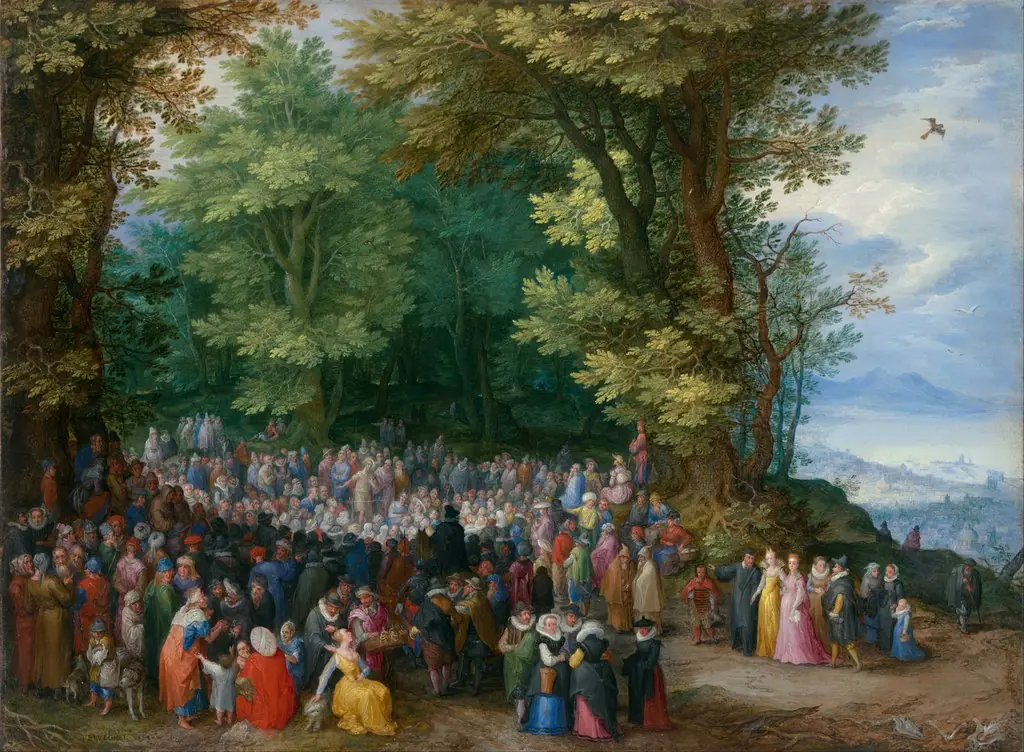
Sermon in the Beech Grove near Kösen
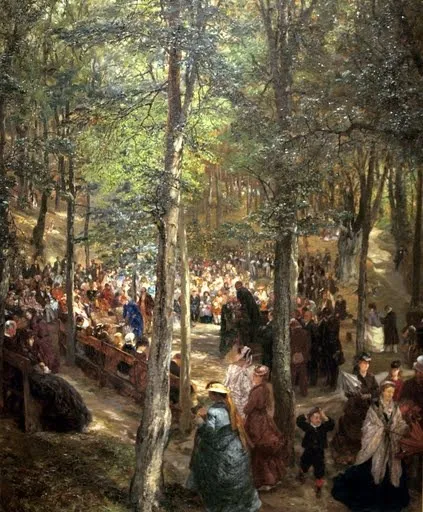
Sermon in the Beech Grove near Kösen is an oil painting by the Realist artist Adolph Menzel. It dates from 1868 and is held in the collection of the Hungarian National Gallery.
About this work
Overview
It resides today in the Hungarian National Gallery, having been acquired through private collections in the early 20th century.
Adolph von Menzel painted Sermon in the Beech Grove near Kösen in 1868 using oil on canvas. The work depicts a rural religious gathering beneath a canopy of beech trees. It resides today in the Hungarian National Gallery, having been acquired through private collections in the early 20th century.
The scene captures a moment of quiet communal focus, rendered with careful attention to natural light and atmospheric detail.
Subject & Meaning
The painting portrays a Protestant sermon delivered in an open-air forest setting near Kösen, a village in Saxony-Anhalt. A central preacher stands on a wooden platform, addressing a diverse group of listeners dressed in 18th- or early 19th-century rural attire. The composition emphasizes collective attention and spiritual stillness, reflecting the cultural importance of outdoor religious gatherings in Protestant communities of the time.
Technique & Style
Menzel employed chiaroscuro to model figures and foliage with subtle gradations of light and shadow, enhancing spatial depth without theatrical contrast. Warm, muted tones dominate the palette, with dappled sunlight filtering through dense canopy to illuminate faces and garments. Brushwork is precise yet unobtrusive, favoring observational realism over idealization, characteristic of his commitment to documenting everyday life with quiet fidelity.
History & Provenance
Commissioned by a private patron, the painting entered a German collection shortly after completion. It passed through several hands before being acquired by the Hungarian National Gallery in the 1920s, likely as part of a broader acquisition of Central European art. Its presence in Budapest reflects post-war redistribution of cultural property, though its origins remain firmly rooted in German regional tradition.
Context
Outdoor sermons were common in Protestant rural communities during the 18th and 19th centuries, especially where church infrastructure was limited. Menzel, known for documenting German social life, chose this subject to honor vernacular piety rather than institutional religion. The painting aligns with broader 19th-century European trends favoring naturalism and the depiction of ordinary religious practice over grand ecclesiastical scenes.
Legacy
Though less celebrated than Menzel’s industrial or court scenes, this work exemplifies his ability to convey quiet human moments with dignity. It influenced later German realists who sought to portray rural spirituality without sentimentality. The painting remains a key reference for understanding how 19th-century artists engaged with regional religious customs through direct observation.
Artist & collection
Artist
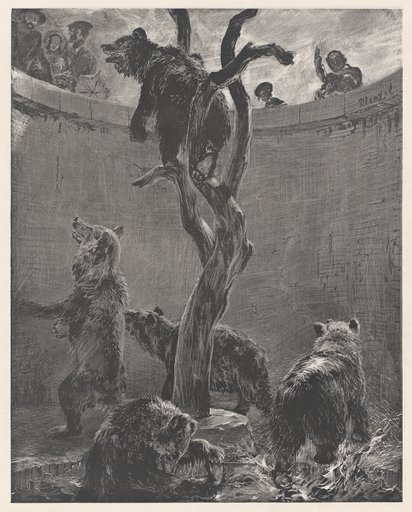
Adolph Friedrich Erdmann von Menzel (8 December 1815 – 9 February 1905) was a German Realist artist noted for drawings, etchings, and paintings.

 The Sermon on the Mount
 An English Merrymaking a Hundred Years Ago
 An English Merry-Making, a Hundred Years Ago
 The 16th, 17th (St Patrick’s Day), and 18th March
 Baptism of Lithuania, from the series “History of Civilization in Poland”
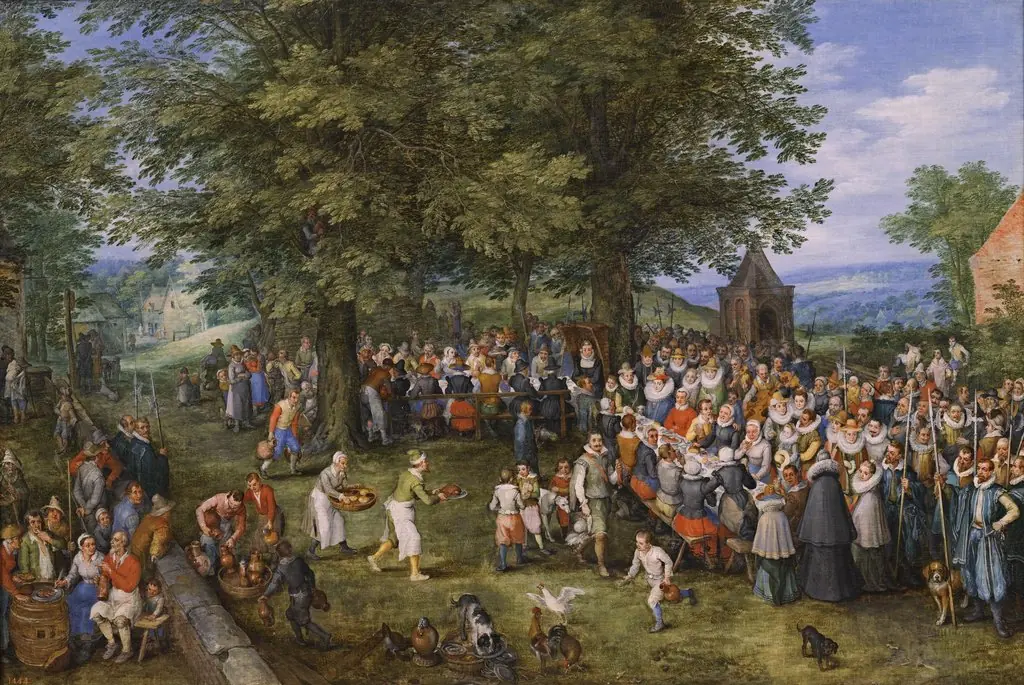 Wedding Banquet with the Archduke Albert and the Archduchess Isabel Clara Eugenia
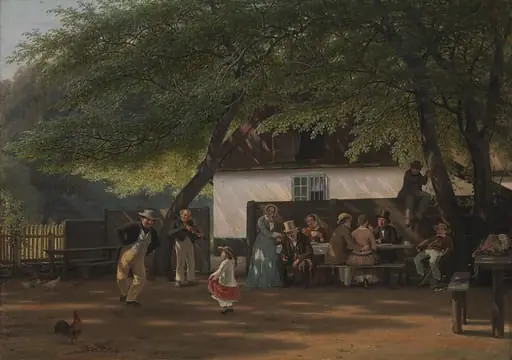 A Coffee Party at a Gamekeeper's House
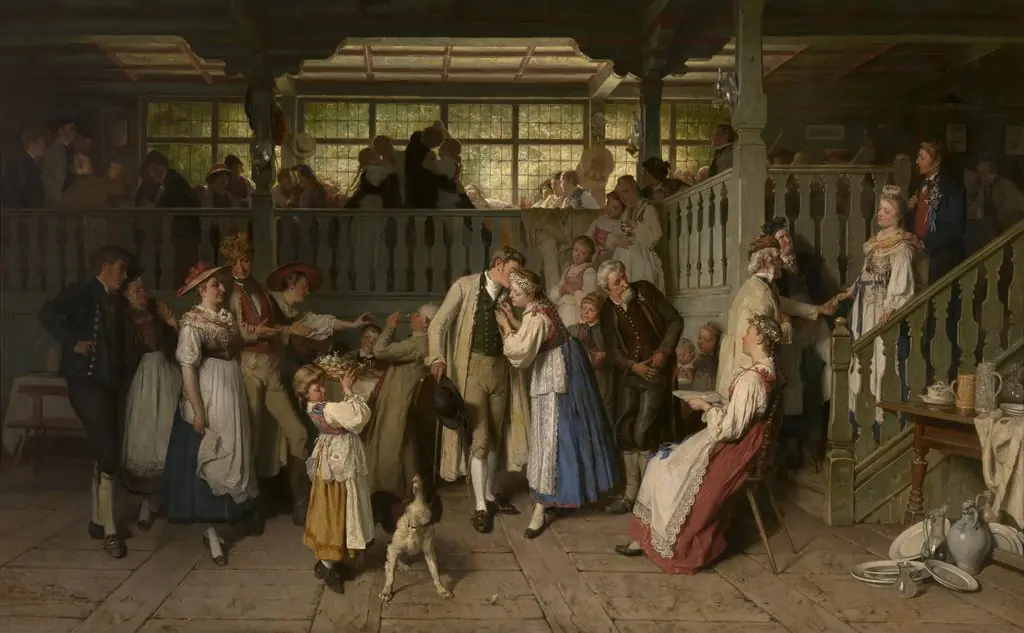 Guests at a Wedding
 Jagershalte in een bos.
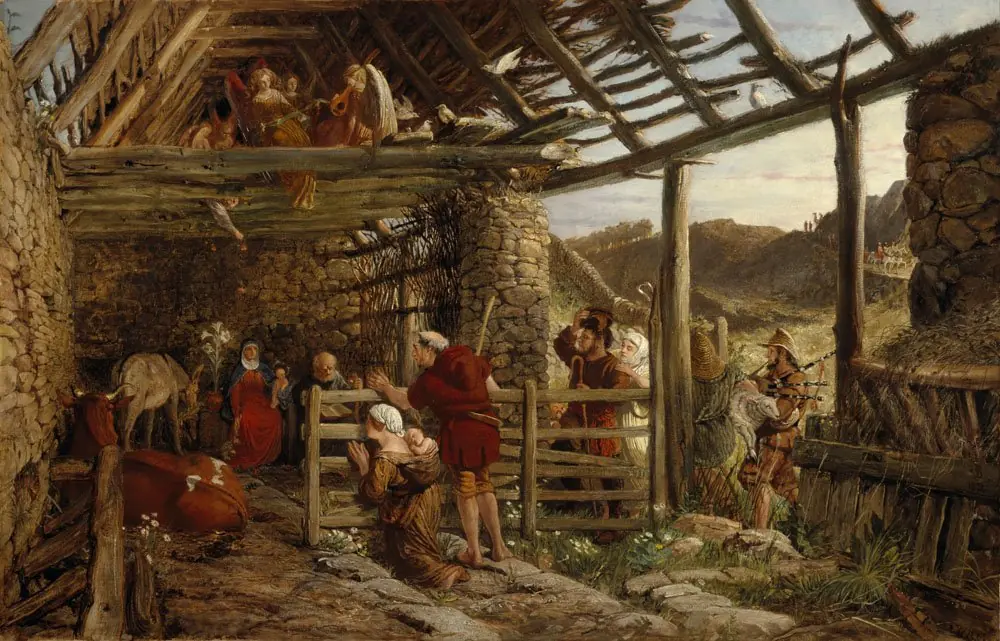 The Nativity
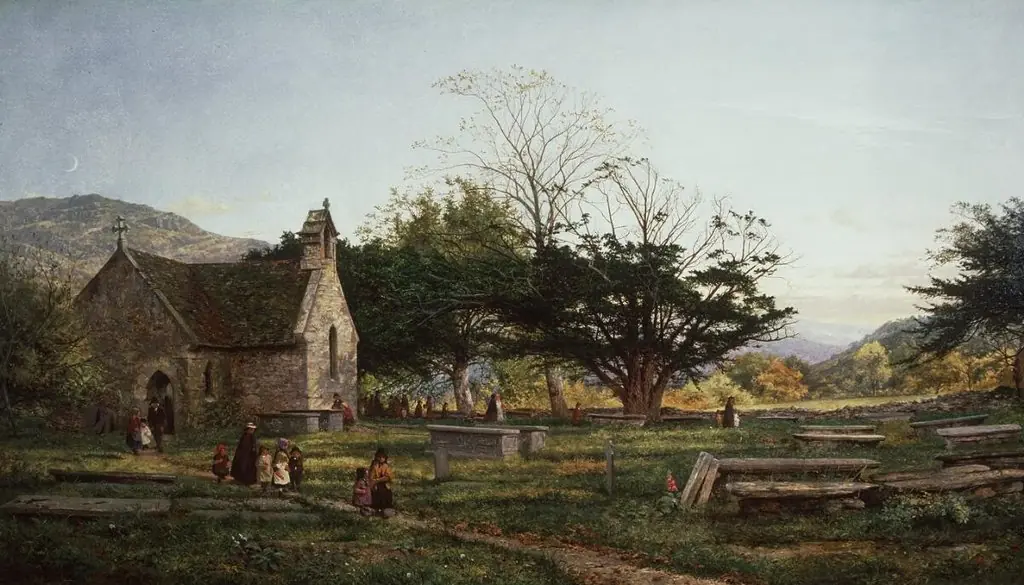 Bettws y Coed Church
- Sermon at the Church Fair at Kalwaria