Artwork
A Peasant Woman Picking Fleas off a Dog
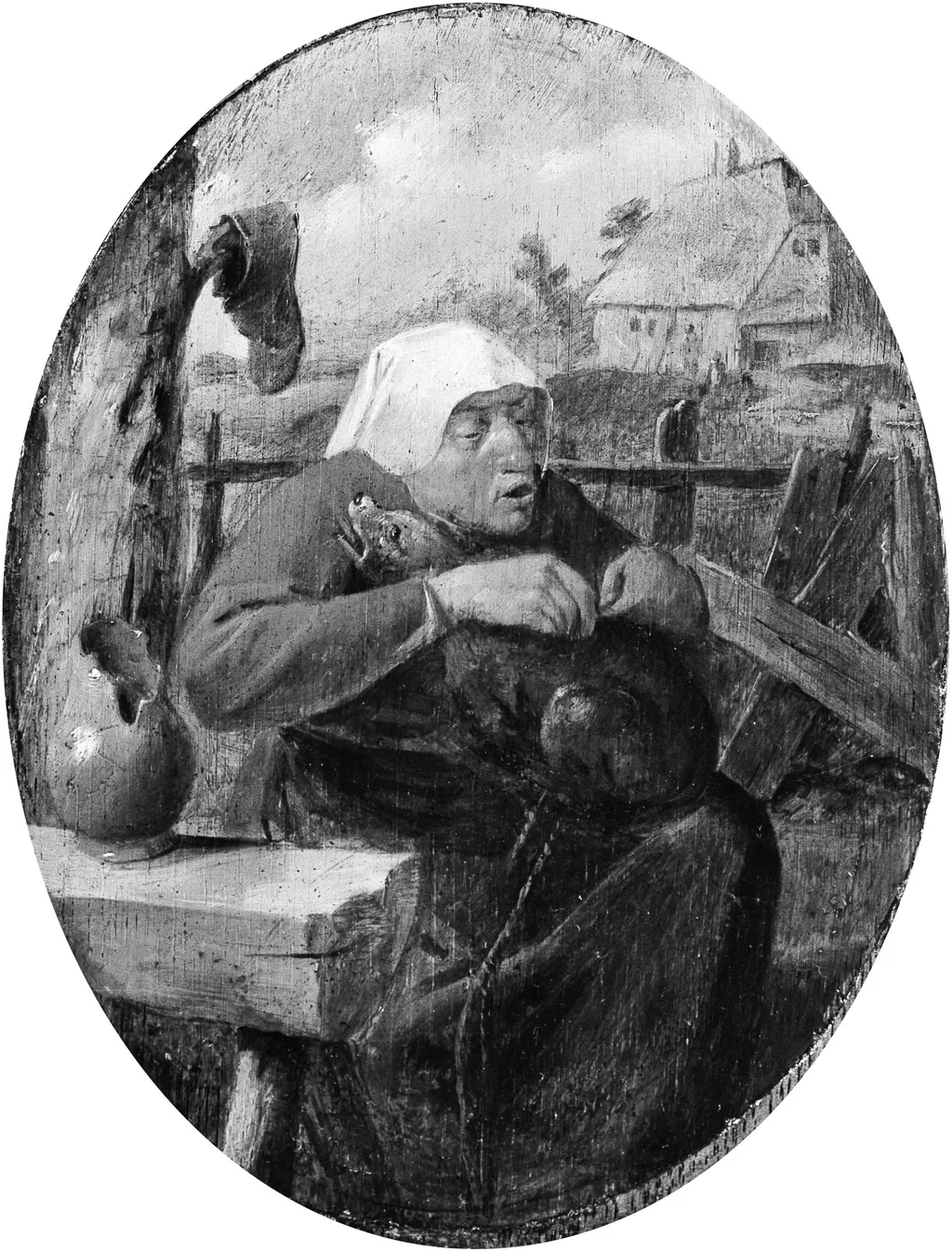
A Peasant Woman Picking Fleas off a Dog is an oil painting by the Dutch Golden Age artist Adriaen Brouwer. It dates from 1626 and is held in the collection of the Metropolitan Museum of Art.
About this work
Technique & Style
Executed in oil on a single oak panel, the work measures 20.
Executed in oil on a single oak panel, the work measures 20.3 cm in height and 15.9 cm in width. Brouwer employs a restrained, closely observed realism, rendering the peasant woman and the dog with precise yet spontaneous brushwork that captures tactile surfaces and fleeting expressions.
The composition centers on the woman’s focused gesture as she lifts the dog’s ear to inspect for fleas, while the animal’s relaxed posture contrasts with her concentrated activity. Subtle shifts in light and shadow articulate the wrinkled skin of the woman’s hands and the dog’s fur, while earthy, muted tones dominate the palette, punctuated by small accents of white and red in the woman’s cap and collar.
History & Provenance
The painting was created in 1626 by Adriaen Brouwer, as indicated by the dated inscription on the work.
By 1931, it had entered the collection of Michael Friedsam, whose bequest in that year transferred it to the Metropolitan Museum of Art in New York. The painting has remained in the museum’s holdings since then.
Overview
Adriaen Brouwer's oil painting, A Peasant Woman Picking Fleas off a Dog, created in 1626, exemplifies the artist's focus on quotidian life. This work from the Dutch Golden Age captures a seemingly simple, intimate moment between a woman and her animal companion. Brouwer, a Flemish painter, was recognized for his innovative approach to genre scenes, often portraying the lives of common people with directness and expressive detail.
Subject & Meaning
The painting depicts a woman, dressed simply with a white headscarf, absorbed in the task of grooming her dog. The animal rests comfortably on her lap, eyes closed in apparent contentment, as she meticulously attends to its fur. This candid portrayal highlights a moment of quiet domesticity and mutual connection, reflecting Brouwer's interest in the unvarnished realities of peasant life. The scene conveys a sense of focused intimacy between the two figures.
Context
Adriaen Brouwer was a significant figure in early 17th-century Flemish art, known for his departure from traditional subjects. His genre paintings, including this work, offered a fresh perspective on the lives of ordinary people, often set in rural environments or taverns. This focus on everyday activities and the unvarnished portrayal of common folk was characteristic of the Dutch Golden Age, where such scenes gained increasing popularity.
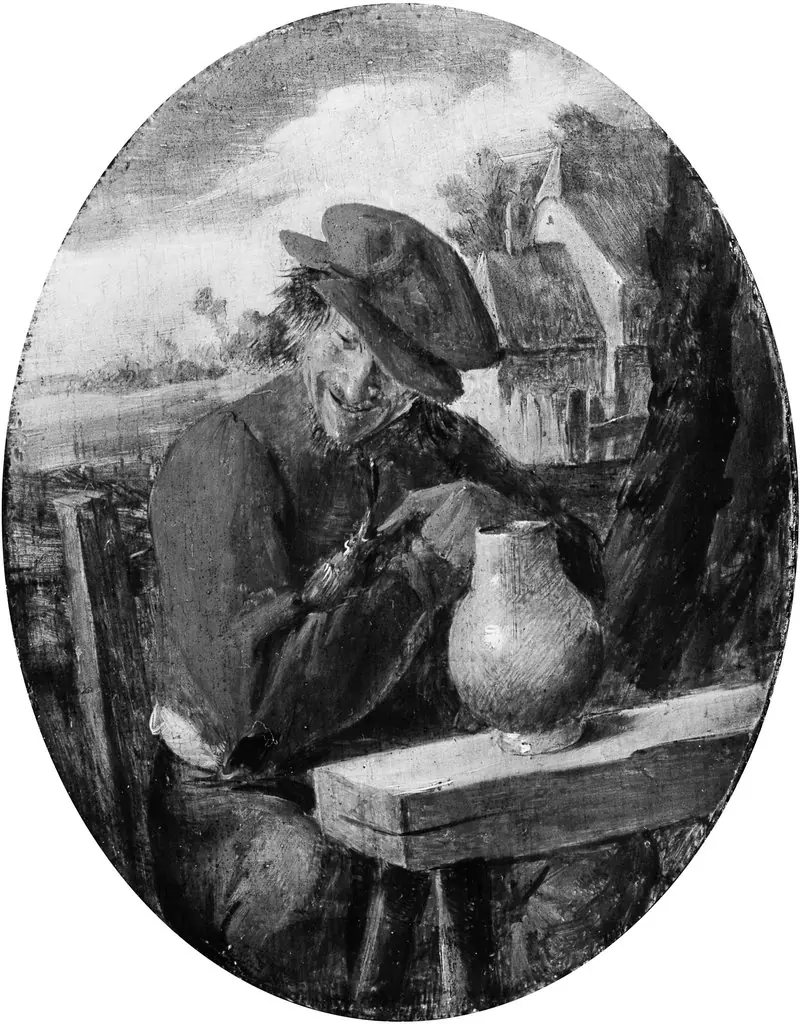
Own this work as a print
Artist & collection
Artist
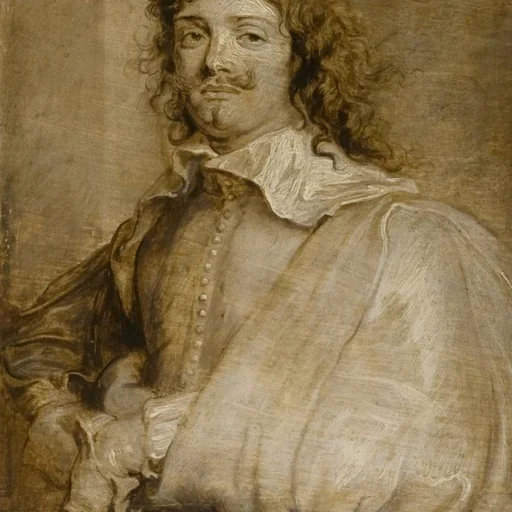
Adriaen Brouwer (c. 1605 – January 1638) was a Flemish painter active in Flanders and the Dutch Republic in the first half of the 17th century. Brouwer was an important innovator of genre painting through his vivid…

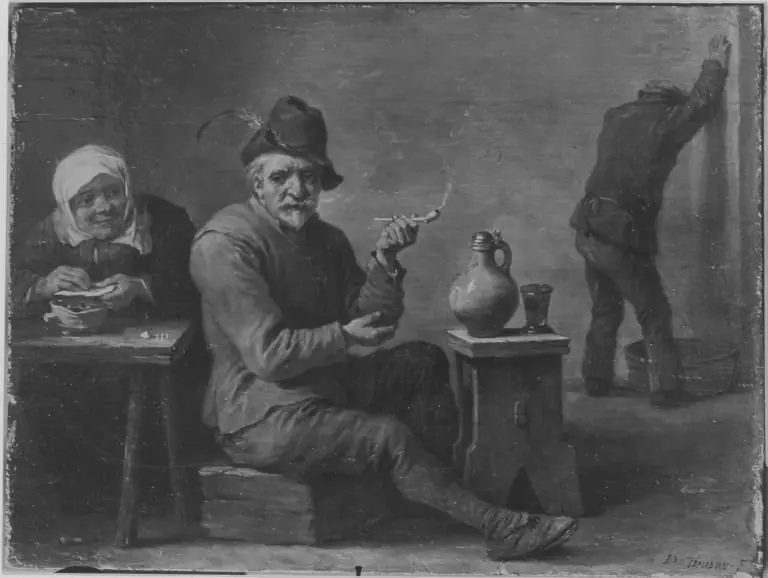 Zwei Bauern und ein altes Weib in der Schenke
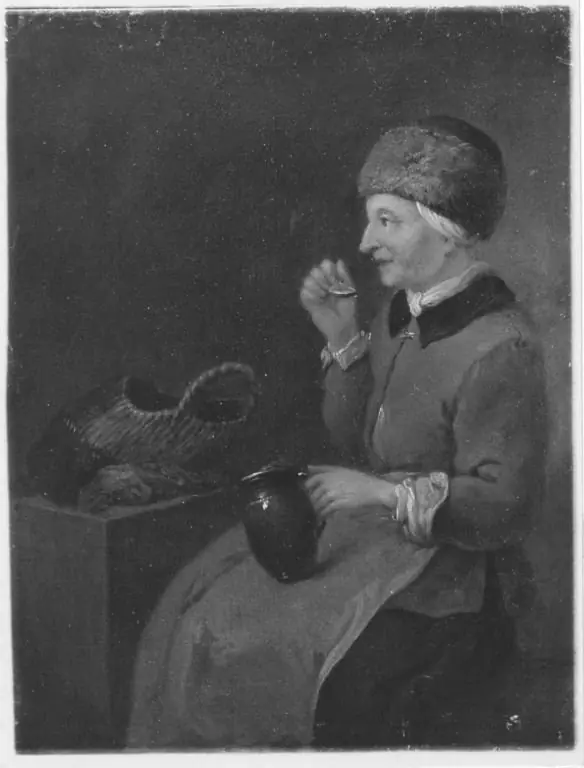 Die Suppenesserin
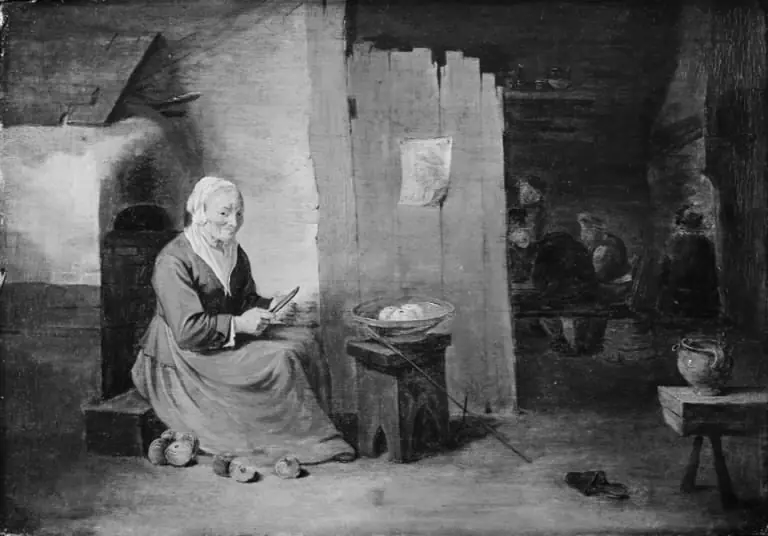 Interior of a Peasant's Cottage with an Old Woman Peeling Apples
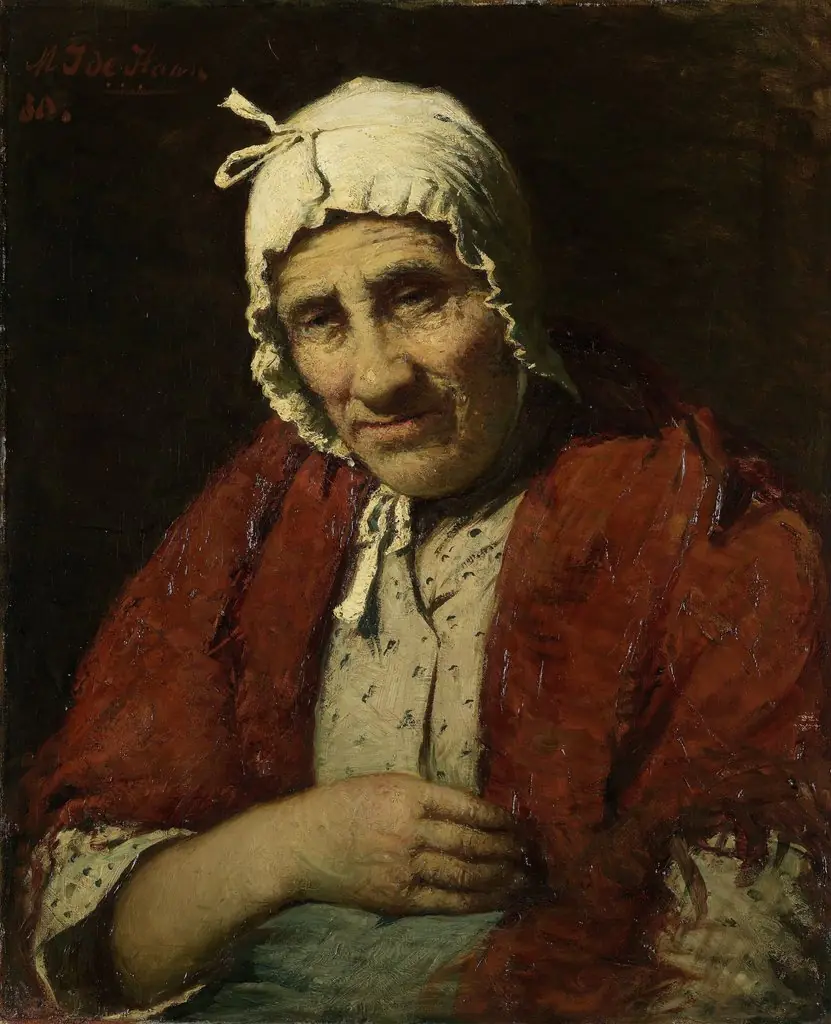 Old Jewish woman
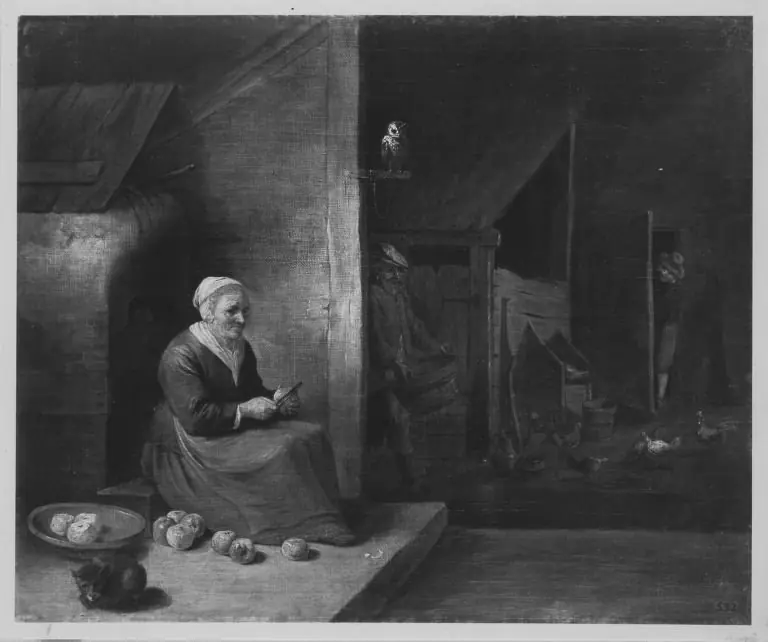 Apfelschälende Frau
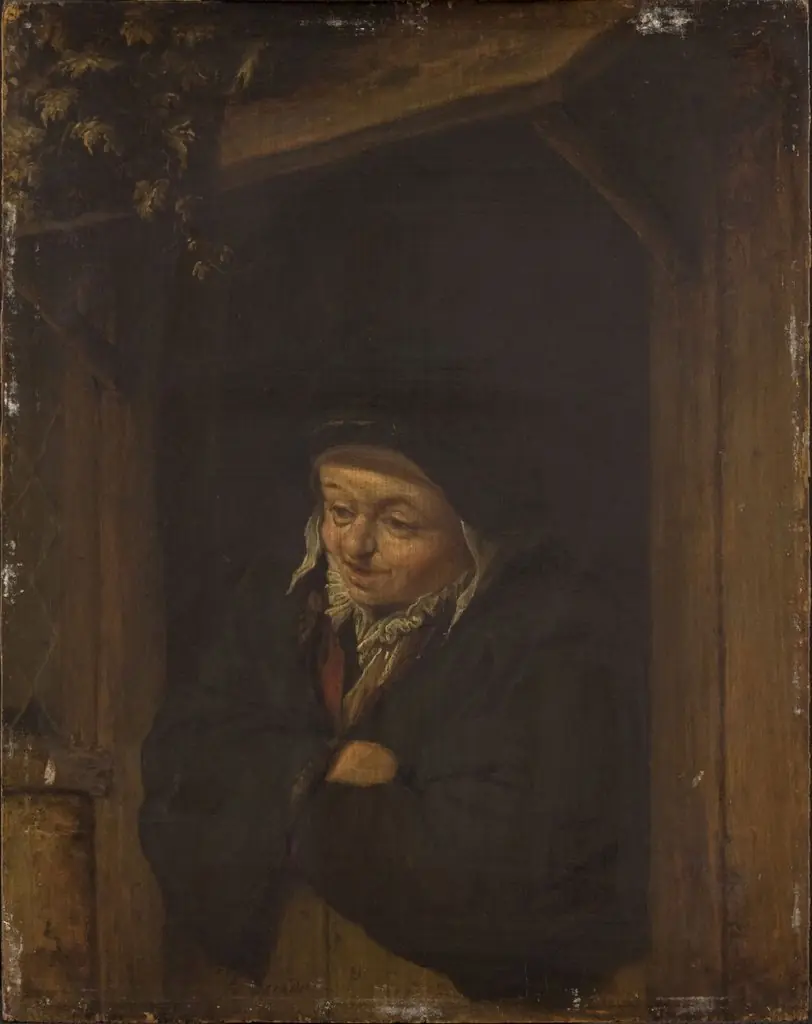 Woman Leaning out a Half-Door
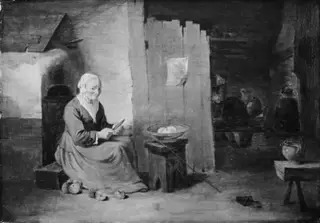 Interior of a Peasant's Cottage with an Old Woman Peeling Apples
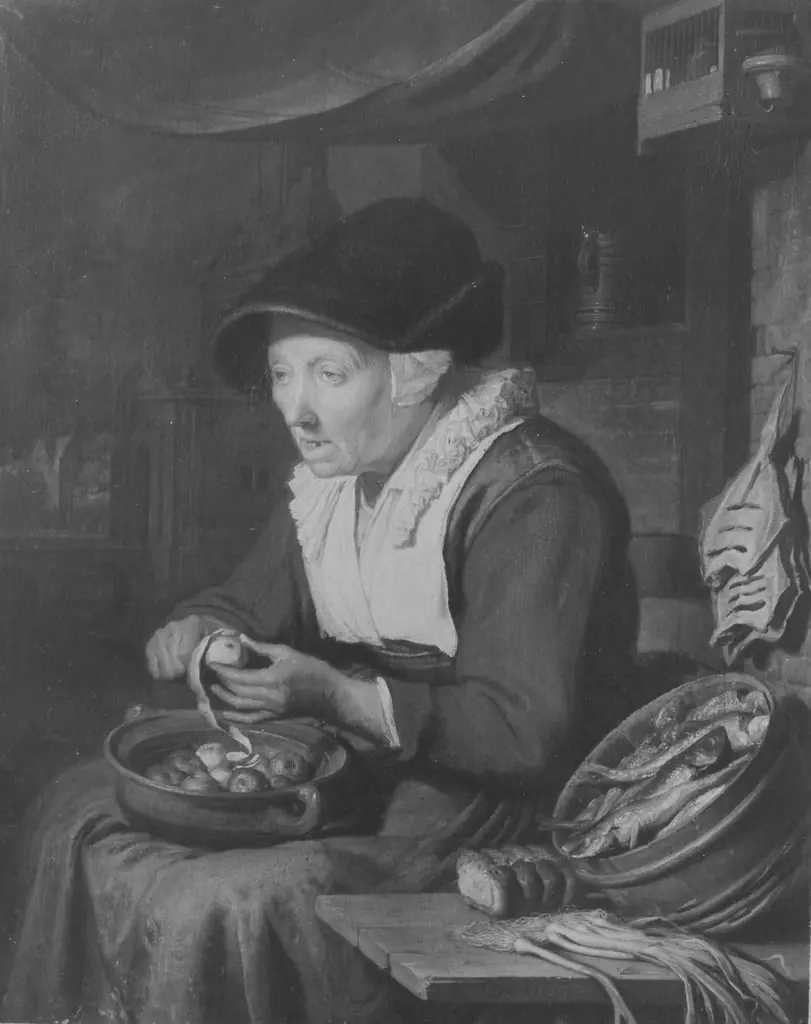 Heringsverkäuferin
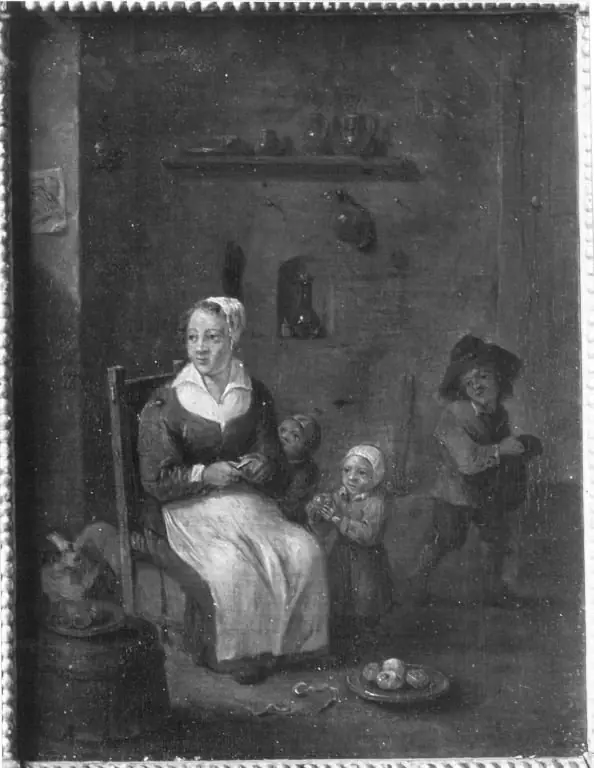 Farmhouse Parlor
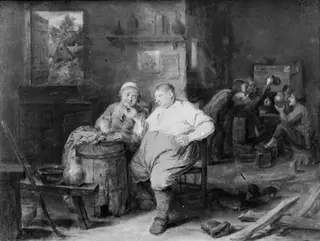 Tavern Scene
 Tavern Scene