Artwork
Untitled
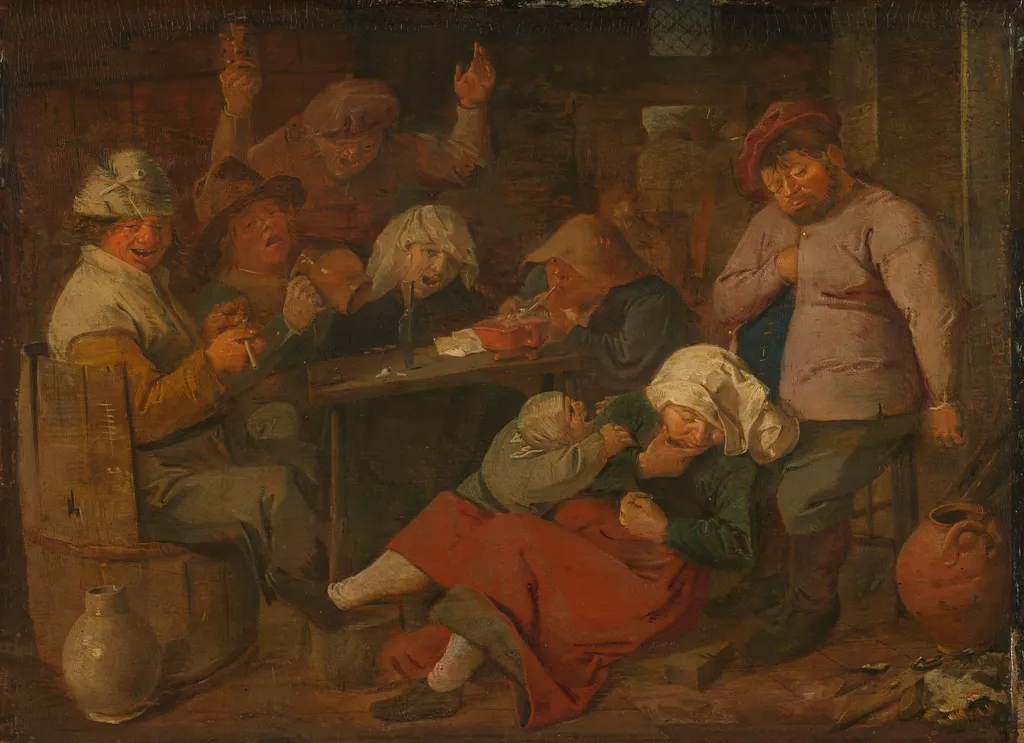
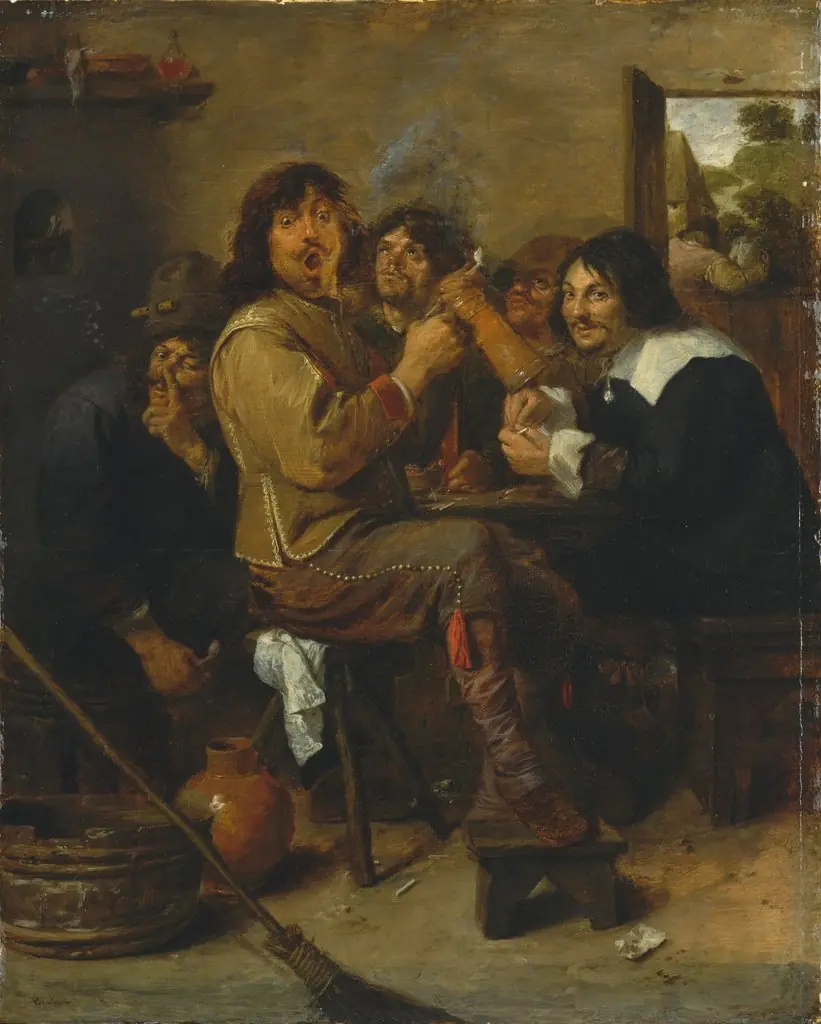
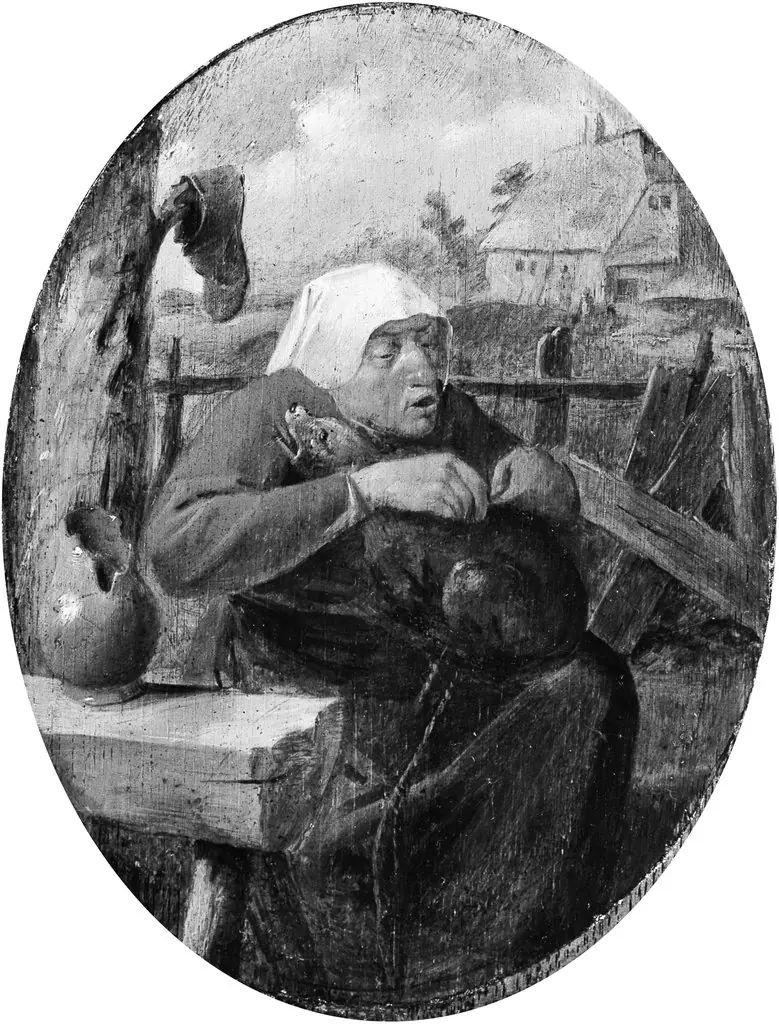
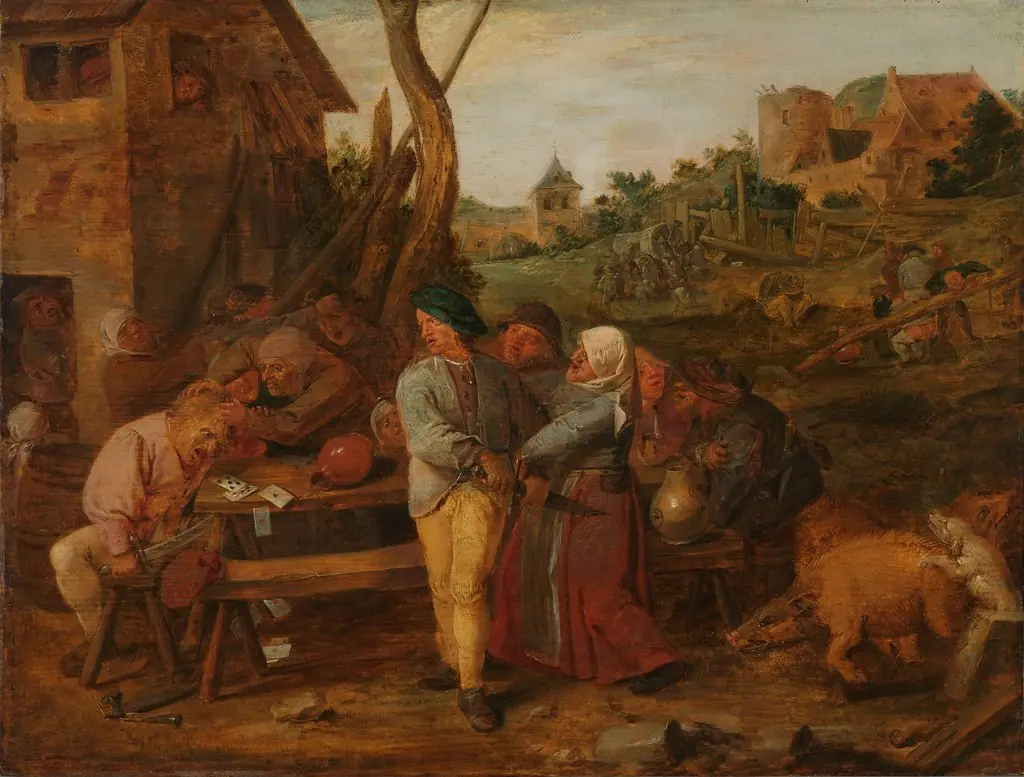
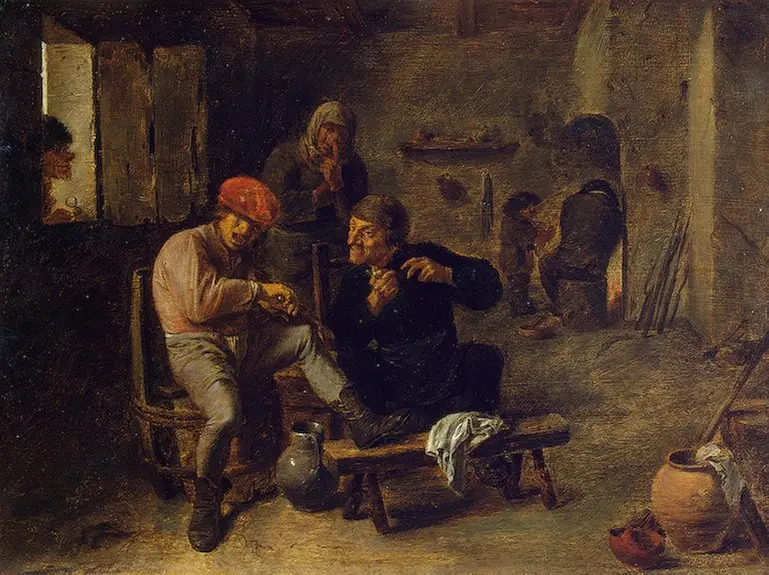
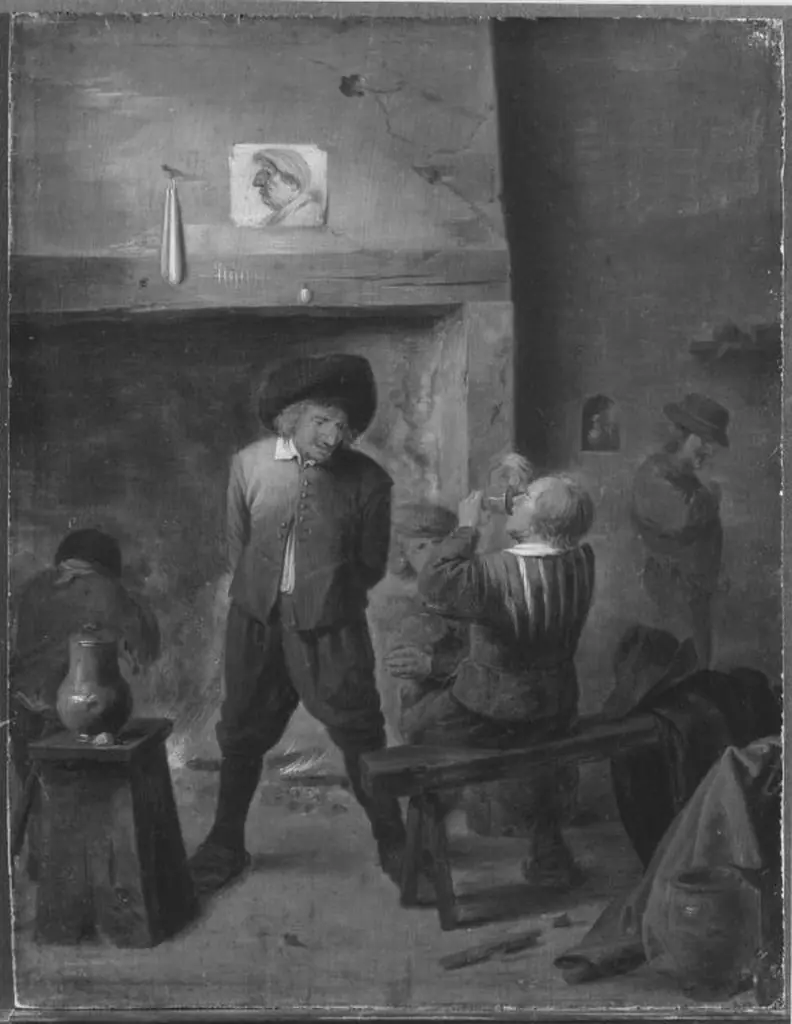
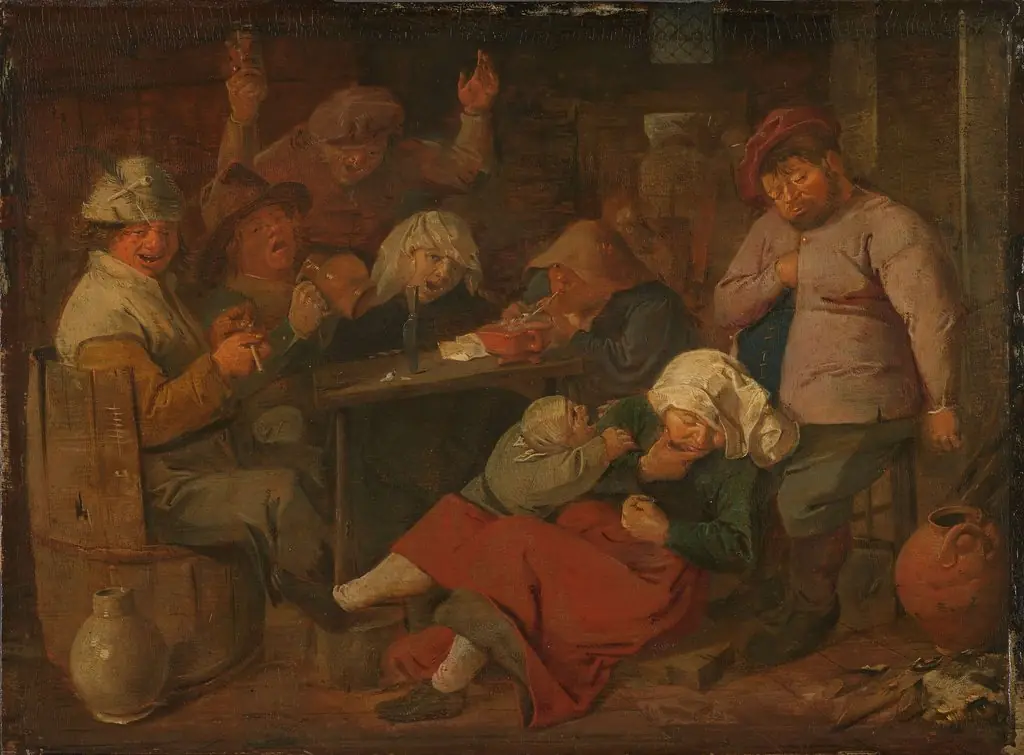
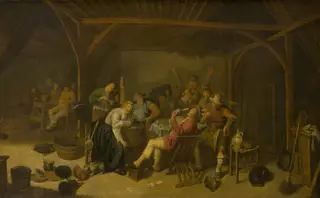
Untitled is an unspecified painting by the Baroque artist Adriaen Brouwer. It dates from 1625 and is held in the collection of the Rijksmuseum. The canvas presents a cramped interior where a group of peasants engage in heavy drinking and smoking.
About this work
Subject & Meaning
The composition functions as a personification of the sense of taste, a common motif in Dutch genre painting of the 1620s‑30s.
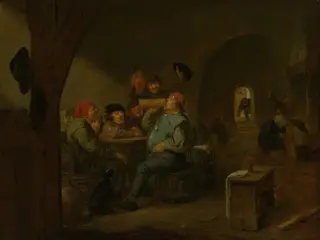
The painting, an untitled tavern scene attributed to Adriaen Brouwer, shows a small group of figures gathered around a table, one of whom turns toward the viewer while holding a pipe. The composition functions as a personification of the sense of taste, a common motif in Dutch genre painting of the 1620s‑30s. Brouwer’s depiction emphasizes everyday lower‑class activities, drinking, smoking, and card play, rendering them with vivid expression and a sense of moral transience.
By integrating a self‑portrait within the group, the work comments on the artist’s own participation in this social world. The iconography thus reflects both the celebratory and cautionary aspects of genre painting, illustrating the fleeting pleasures and moral ambiguities of the period.
Context
Adriaen Brouwer is regarded as a key innovator of early‑17th‑century genre painting, using vivid realism to portray peasants, soldiers and tavern life. His tavern scenes and tronies influenced later Flemish and Dutch painters such as Joos van Craesbeeck, David Teniers and the Ostade brothers, shaping the development of the genre. His stylistic impact persisted through later artists who adopted his loose brushwork and expressive character studies.
Scholarship situates him as a bridge between Northern and Southern Netherlands and highlights his role in the emergence of low‑life subjects in art history.
Legacy
Adriaen Brouwer's work exerted a significant influence on the subsequent generation of Flemish and Dutch genre painters. His vivid depictions of lower-class life and expressive character studies inspired artists such as David Teniers the Younger, the brothers Adriaen and Isaac van Ostade, and Joos van Craesbeeck, who was likely his pupil. The popularity of his style was so profound during the 17th century that small paintings in his manner were colloquially termed "brouwerkens."
Despite producing a limited body of work, Brouwer was highly esteemed by his contemporaries; Peter Paul Rubens owned seventeen of his paintings at the time of his death, and Rembrandt collected six of his works alongside a sketchbook. His legacy is further complicated by the fact that his unsigned and undated paintings were widely copied and imitated, leading to ongoing scholarly debates regarding the attribution of many works within the approximately sixty pieces ascribed to him.
Overview
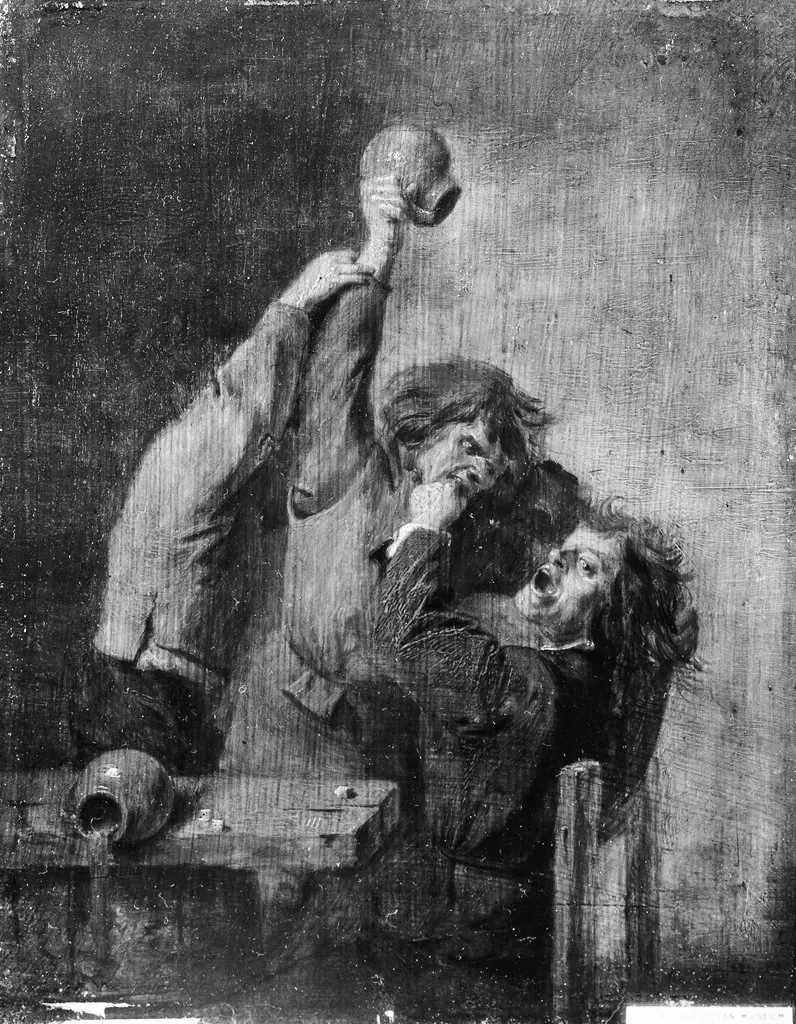
The canvas presents a cramped interior where a group of peasants engage in heavy drinking and smoking. Figures are caught in various states of inebriation: some shout loudly, a woman lies unconscious on the floor, and a infant wails nearby. The scene conveys the disordered atmosphere of a tavern‑like gathering in the early seventeenth century.
Technique & Style
The artist applied a muted brown ground before building the image with swift, light strokes of gray, reddish‑brown and pink. Limited, vivid hues appear only as accents, highlighting details such as the glowing ember of a pipe or the flushed cheeks of a drunkard. This restrained palette and loose handling typify the genre‑painting approach of the period.
History & Provenance
The work entered the Van Heteren‑Gevers collection, which was acquired in The Hague‑Rotterdam in 1809. From 1948 until 2002 it was loaned to the Mauritshuis in The Hague, where it was displayed alongside other Dutch Baroque pieces.
Own this work as a print
Artist & collection
Artist
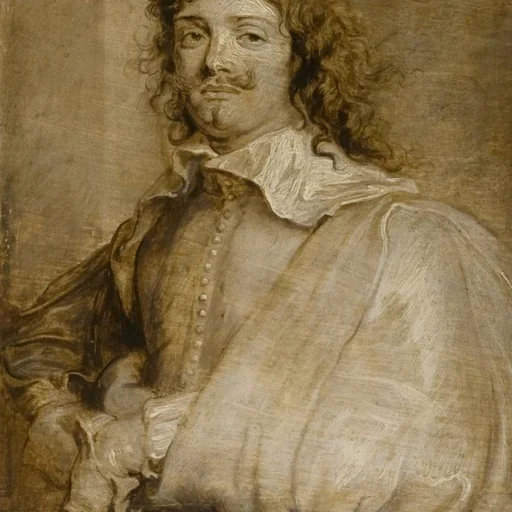
Adriaen Brouwer (c. 1605 – January 1638) was a Flemish painter active in Flanders and the Dutch Republic in the first half of the 17th century. Brouwer was an important innovator of genre painting through his vivid…