Artwork
Peasant Brawl
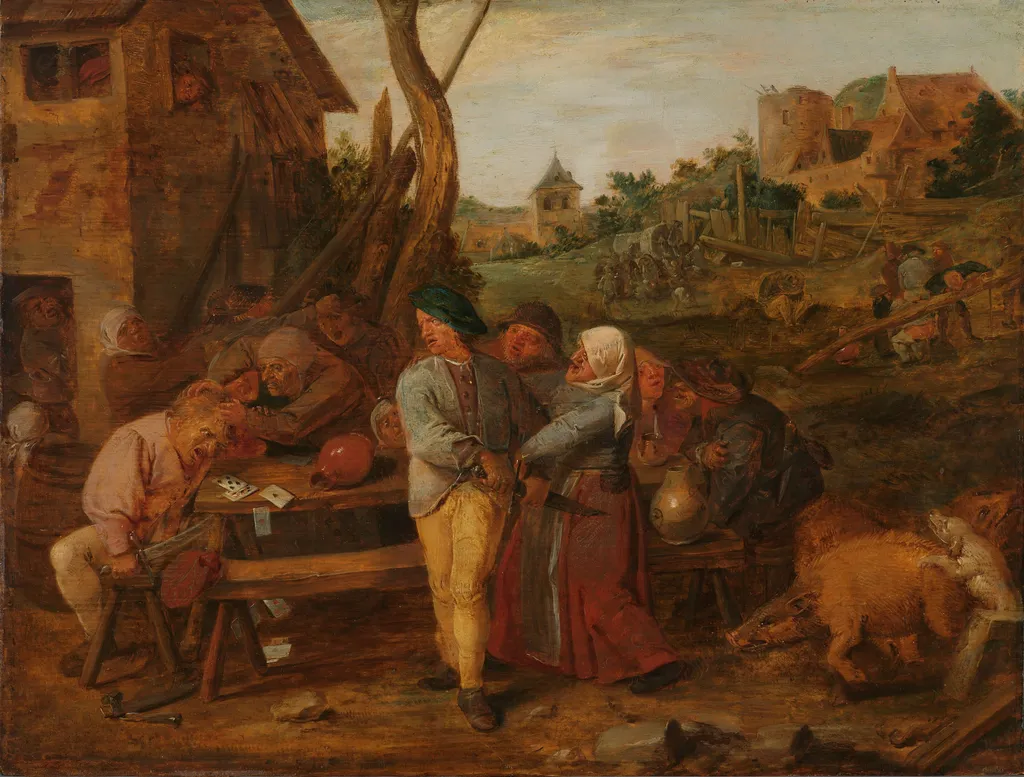
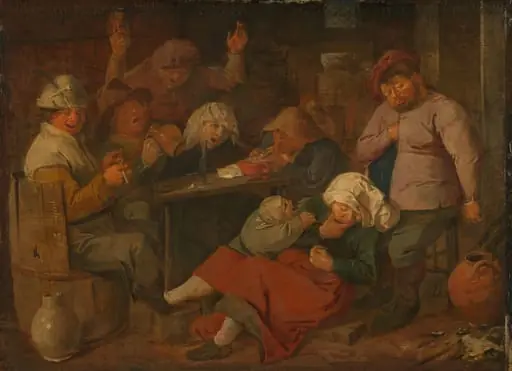
Peasant Brawl is an oil painting by the Flemish Baroque painting artist Adriaen Brouwer. It dates from 1620 and is held in the collection of the Rijksmuseum.
About this work
Subject & Meaning
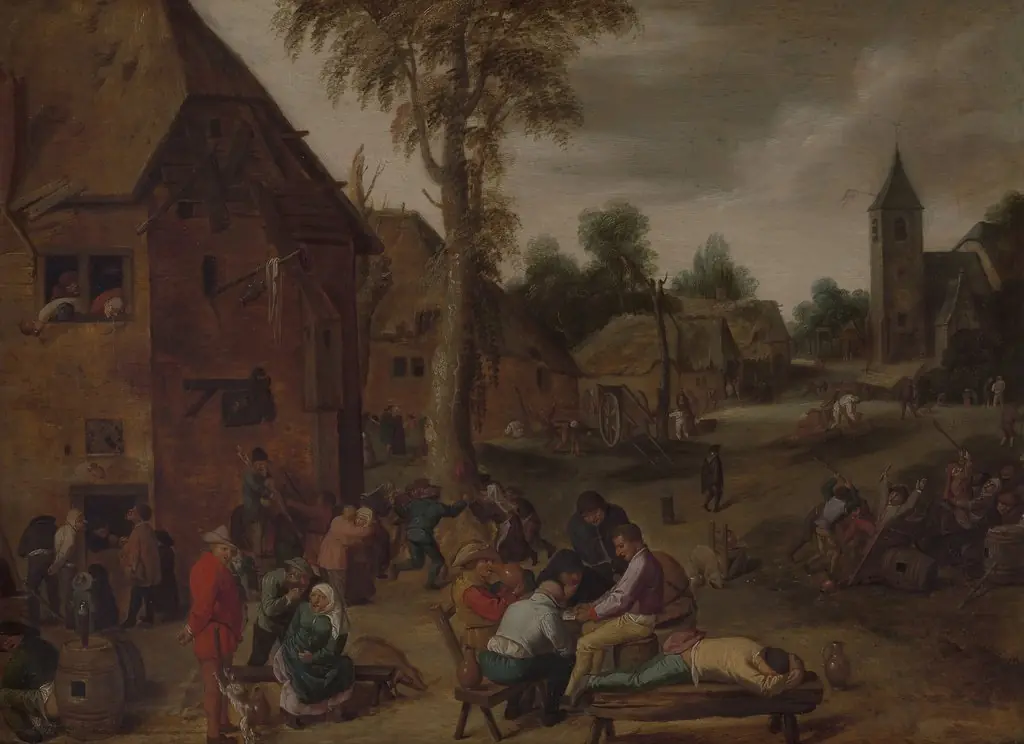
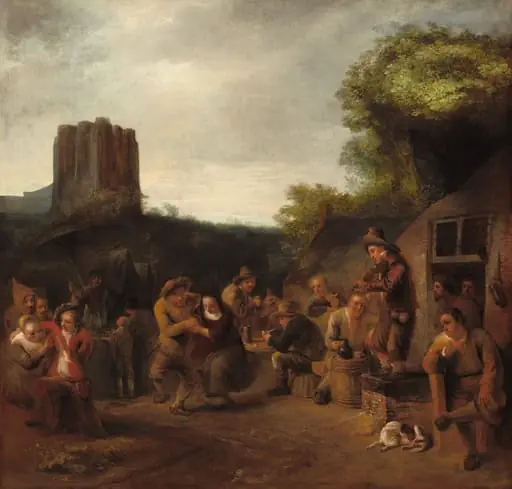
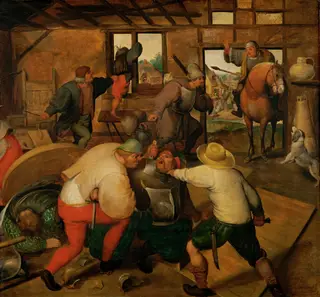
The painting depicts a chaotic village brawl centered on a card game that has escalated into violence, indicated by playing cards falling to the ground.
The painting depicts a chaotic village brawl centered on a card game that has escalated into violence, indicated by playing cards falling to the ground. In the foreground, two peasants have drawn swords while women attempt to restrain them, and another man pulls a woman by her hair. The composition includes grotesque and satirical elements typical of the genre, such as a dog mounting a pig on the right and figures in the background defecating and vomiting.
Stylistically and thematically, the work aligns with the tradition of Pieter Bruegel the Elder, reflecting the continued popularity of his influence in the early seventeenth century. The scene serves as a moralizing commentary on the unruly behavior and baseness of peasant life.
Technique & Style
Executed in oil paint on a wooden panel, this small-format work measures 25.8 by 34.2 cm. The composition depicts a chaotic village scene where falling playing cards suggest a dispute over a card game has escalated into violence, with two peasants drawing swords while women attempt to intervene. The background features additional figures engaged in vulgar acts, including defecation and vomiting, alongside a dog mounting a pig. Stylistically, the painting aligns with the tradition of Pieter Bruegel the Elder, reflecting the continued popularity of that master's approach to peasant life in the early seventeenth century.
Although once dismissed by critics as a mere copy of Bruegel's school, the work bears traces of the artist's monogram on a piece of wood in the lower right corner.
History & Provenance
Peasant Brawl is an oil painting on panel created around 1620–1625, attributed to Adriaen Brouwer. It originated in Haarlem and entered the collection of Willem Lormier after being spotted in a 1738 auction in Brussels. After Lormier's death it passed to Adriaan Leonard van Heteren in 1763, who later bequeathed it to his son.
The work was sold by the son in 1809 to the Rijksmuseum as part of the Cabinet Van Heteren Gevers collection, paired as a pendant with Brouwer's Peasant Feast. In 1954 it was permanently loaned to the Mauritshuis in The Hague. The painting was first recorded in the 1738 sale catalogue of Thomas de Fraula, and later catalogues from 1763, 1809, and 1858 document its changing ownership and attribution history.
Peasant Brawl is held at the Mauritshuis in The Hague, where it has been on permanent loan from the Rijksmuseum since 1954. It entered the Rijksmuseum's collection on 8 June 1809 as part of the Cabinet Van Heteren Gevers, a group of 135 paintings sold by Adriaan Leonard van Heteren Gevers, who had inherited it from his father, Adriaan Leonard van Heteren. Van Heteren had acquired the painting at the auction of Willem Lormier's collection in The Hague on 4 July 1763 for 60 guilders.
Its earliest documented appearance was at the estate sale of Thomas de Fraula in Brussels on 21 July 1738, where Lormier purchased it.
The work has been catalogued under the name of Adriaen Brouwer since the Rijksmuseum catalogue of 1872, after earlier entries in 1858 had listed it, with its pendant, as an anonymous work of the Dutch school.
Context
Peasant Brawl belongs to Adriaen Brouwer's early career output, aligning stylistically and thematically with his small-scale genre scenes of rural discord that drew on the popular idiom of Pieter Bruegel the Elder. The work's compositional structure and coarse, expressive figuration were long read through Bruegel's shadow, leading to early attributions that questioned Brouwer's originality; Théophile Thoré-Bürger dismissed the painting and its supposed pendant as mere copies of the Bruegel tradition in 1858. By 1872, however, the Rijksmuseum reattributed the works to Brouwer, a shift consolidated by Wilhelm Adolf Schmidt's 1873 rebuttal of Thoré-Bürger's skepticism.
This critical rehabilitation situated Brouwer within the Dutch and Flemish canon as a pivotal interpreter of peasant life, distinct from Bruegel's moralizing mode.
Scholarly consensus now positions Peasant Brawl within Brouwer's oeuvre of the 1620s, a period in which he developed a satirical, almost theatrical approach to tavern brawls and village quarrels. The painting's inclusion in the Van Heteren Gevers cabinet, donated to the Rijksmuseum in 1809 and transferred to the Mauritshuis in 1954, anchors its reception history in Dutch collecting practices and later museum display.
Legacy
The legacy of Peasant Brawl is defined by a significant shift in critical attribution and its enduring stylistic connection to earlier masters. Initially, the work was viewed as an anonymous piece from the Dutch school in the 1858 Rijksmuseum catalog, leading critic Théophile Thoré-Bürger to dismiss it as a miserable copy of Pieter Bruegel the Elder's school. This negative assessment was corrected in 1873 when Wilhelm Adolf Schmidt argued that such criticism was exaggerated, a view solidified when the 1872 museum catalog reattributed the painting to Adriaen Brouwer.
Stylistically, the work remains recognized for aligning with the subject matter and approach of Bruegel the Elder, a painter who remained highly influential in the early 17th century. The piece also historically served as a pendant to Brouwer's Peasant Feast, a pairing established by collector Adriaan Leonard van Heteren in 1763 based on his assumption of their complementary nature.
Overview
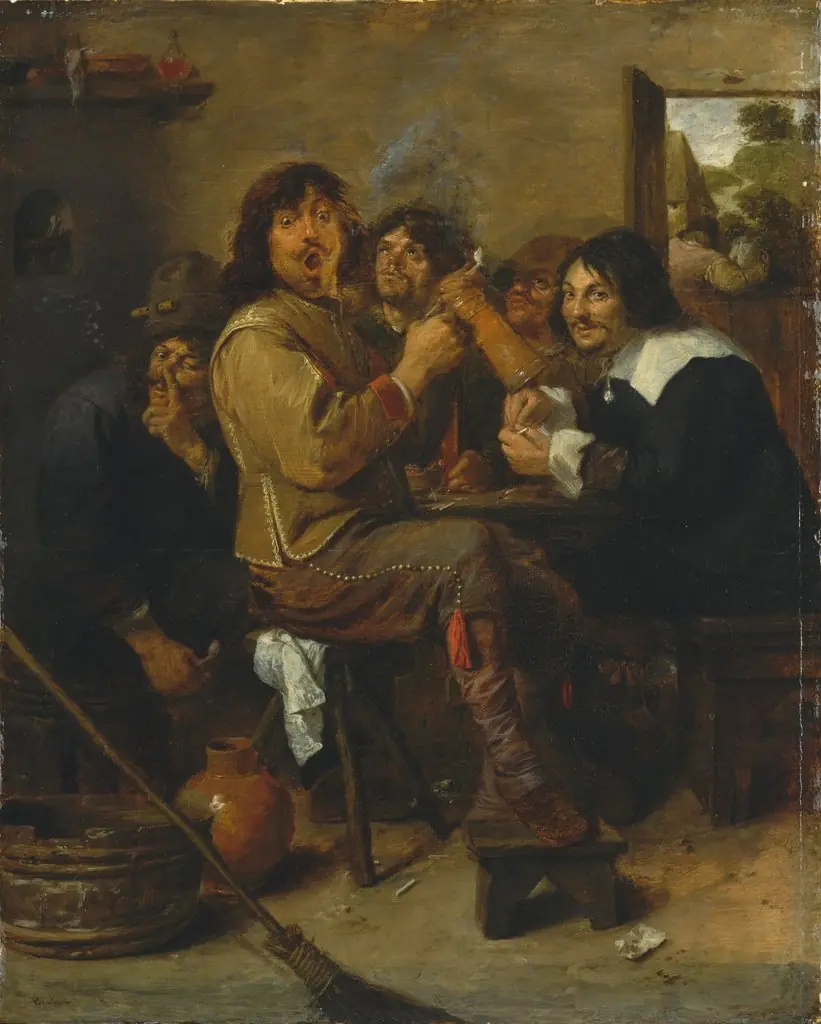
Adriaen Brouwer’s Peasant Brawl, executed in oil around 1620, captures a moment of disorder inside a modest inn. The composition centers on a group of rough‑shod figures, some slumped, others upright, caught in a heated dispute. A dog lies at the feet of a man in a dark hat, while scattered jugs, plates and a half‑filled tankard litter the table, and a muted sky and distant church tower glimpse through the doorway.
Own this work as a print
Artist & collection
Artist
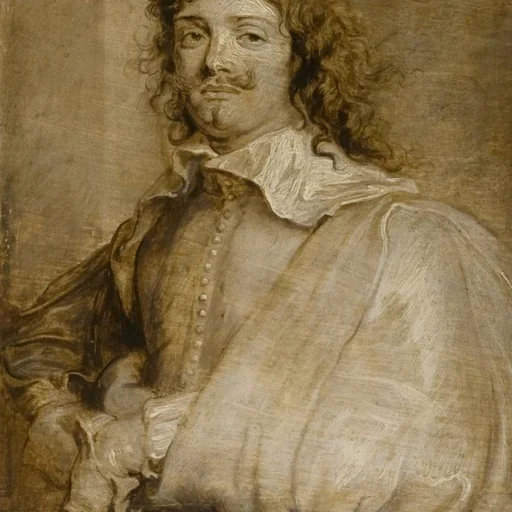
Adriaen Brouwer (c. 1605 – January 1638) was a Flemish painter active in Flanders and the Dutch Republic in the first half of the 17th century. Brouwer was an important innovator of genre painting through his vivid…