Artwork
Alphabet
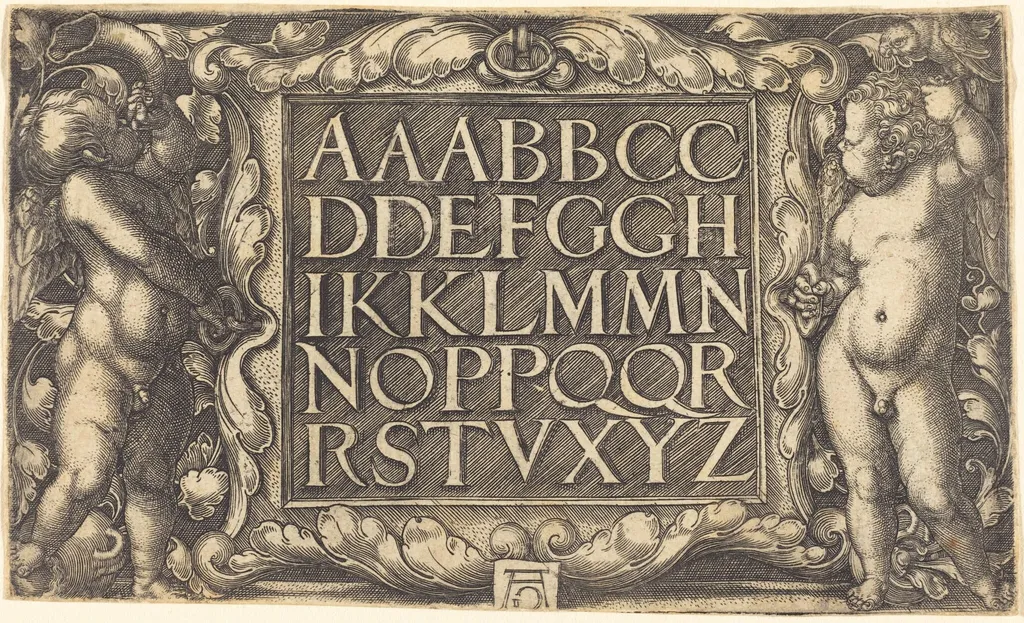
Alphabet is an ink print by the Northern Renaissance artist Heinrich Aldegrever. It dates from 1525 and is held in the collection of the National Gallery of Art.
About this work
Overview
Alphabet is a 1525 engraving by the German artist Heinrich Aldegrever. Executed as a small-format print, the work exemplifies the meticulous detail characteristic of early‑Renaissance German printmaking. Its title indicates a focus on letterforms, a subject that allowed the engraver to display both technical skill and decorative interest.
Context
Heinrich Aldegrever (c.1502–1555) belonged to the group of artists later termed the "Little Masters," known for producing finely executed prints on a modest scale. Working in the generation after Albrecht Dürer, Aldegrever combined Dürer’s compositional rigor with a personal penchant for intricate ornamentation, contributing to the spread of print culture in the Holy Roman Empire.
Technique & Style
The piece was created using copperplate engraving, a process that involves incising lines into a metal surface with a burin before inking and pressing onto paper. Aldegrever’s hand is evident in the crisp, controlled strokes that render each letter with uniform weight, while the overall composition balances symmetry with subtle decorative motifs.
History & Provenance
First issued in the early 1520s, Alphabet circulated among collectors of printed ephemera and served both as a didactic tool and a decorative object. Surviving impressions are found in several European museum collections, indicating that the print was widely disseminated during Aldegrever’s lifetime and continued to be valued by connoisseurs of early German engraving.
Own this work as a print
Artist & collection
Artist
Heinrich Aldegrever or Aldegraf (1502–1555, 1558 or 1561) was a German painter and engraver. He was one of the "Little Masters", the group of German artists making small old master prints in the generation after Albrecht Dürer.


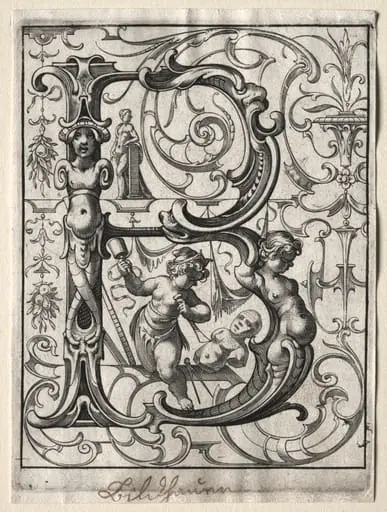 New ABC Booklet: B
 Ornament Panel: Four Children Playing
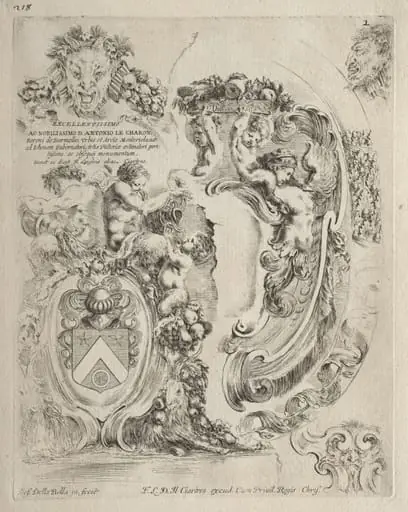 Collection of Various Caprices and New Designs of Cartouches and Ornaments: No. 2, Dedication Page
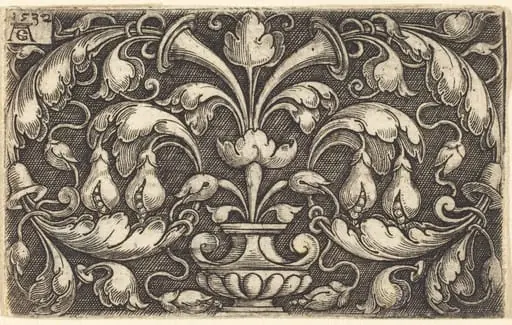 Ornament
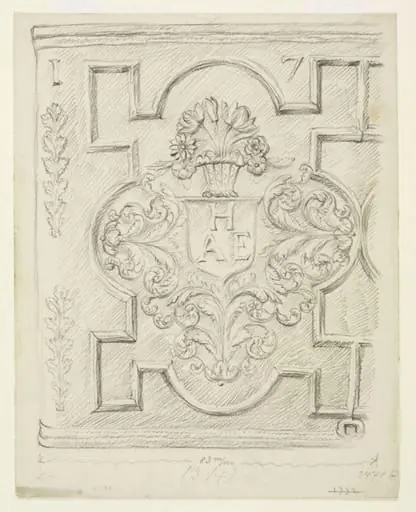 Untitled
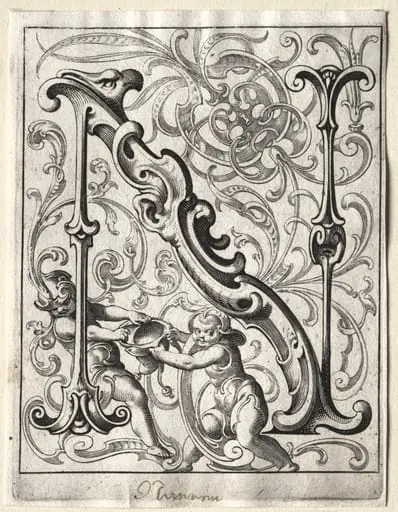 New ABC Booklet: N
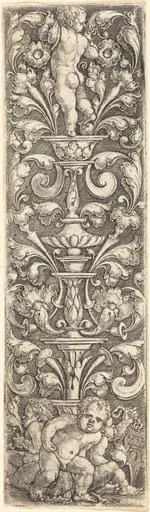 High Ornament
 Three Children Blowing Horns
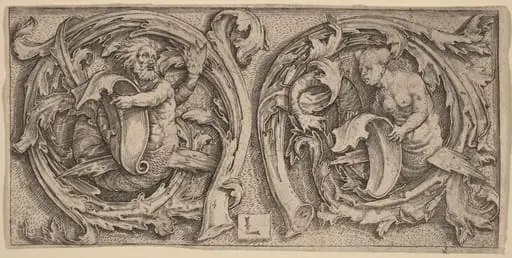 Triton and Siren in Tendrils
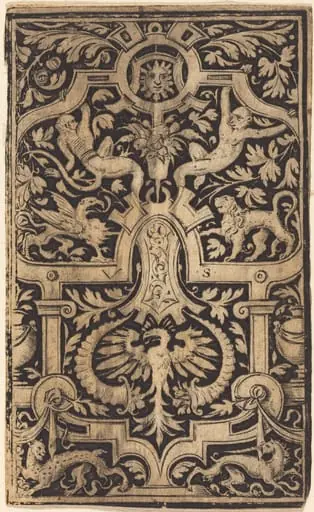 Strapwork and Foliage Ornament on Dark Ground with Monkeys and other Animals