Artwork
Untitled
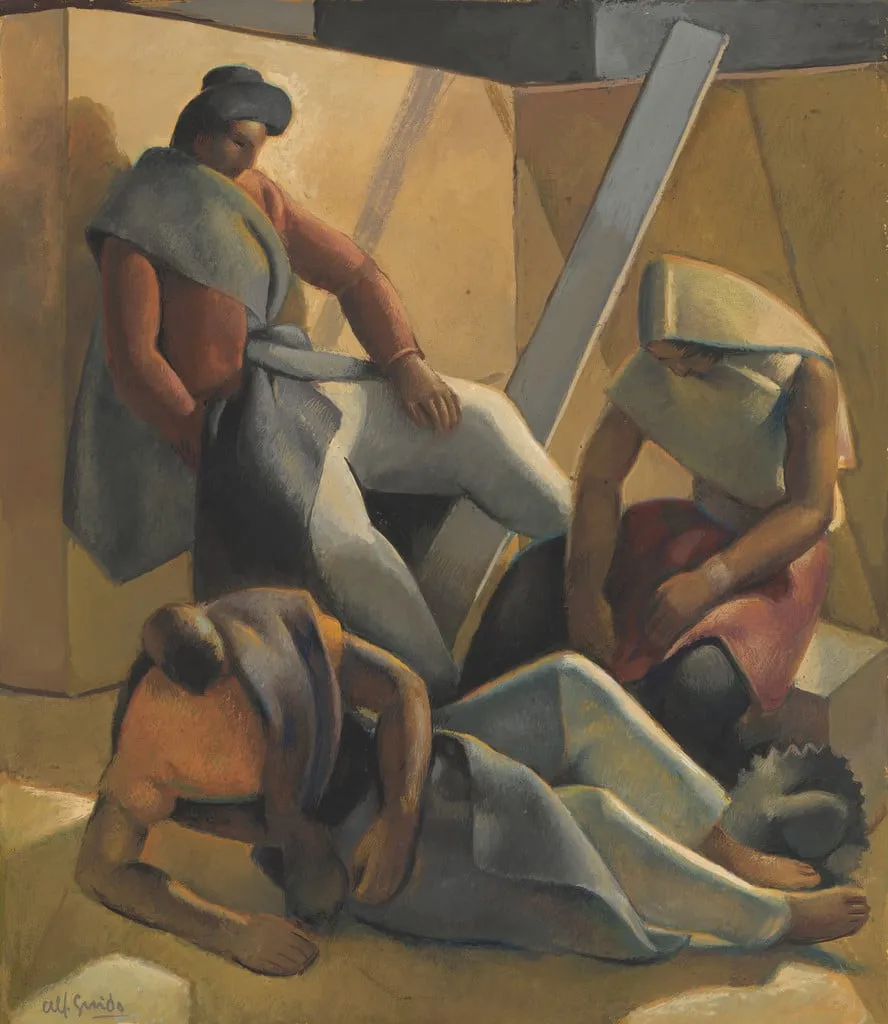
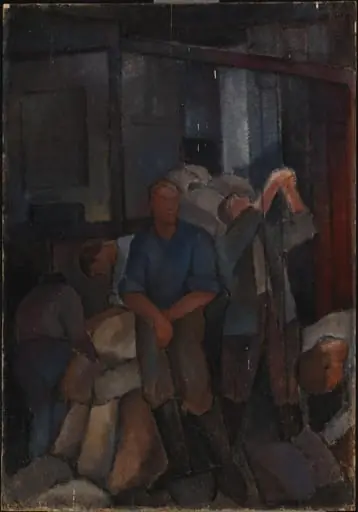
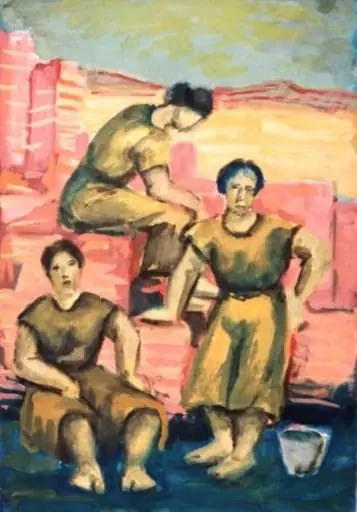
Untitled is a tempera painting by the Social Realist artist Alfredo Guido. It dates from 1938 and is held in the collection of the Museum of Modern Art.
About this work
Overview
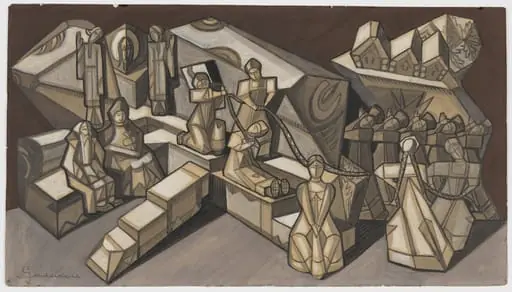
Created in 1938, this tempera painting on wood by Alfredo Guido depicts a quiet, labor-focused moment with three figures. The work is part of The Museum of Modern Art’s collection and reflects a regional aesthetic rooted in everyday rural life. Its restrained palette and simplified forms suggest an interest in elemental human experience rather than narrative detail.
Subject & Meaning
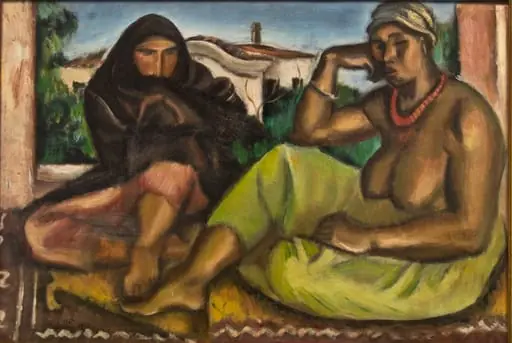
The painting presents three individuals in postures of fatigue or contemplation: one stooped under a heavy beam, another seated with head bowed, and a third reclined, gazing upward. Their gestures imply physical strain and quiet resignation. No clear story is told, but the arrangement evokes themes of labor, rest, and shared endurance, stripped of sentimentality.
Technique & Style
Guido applied tempera in thick, flat planes of color, avoiding gradation or modeling. The figures appear angular and geometric, resembling carved forms rather than modeled bodies. Earthy browns and grays dominate, punctuated by small areas of red and blue fabric. The medium’s matte finish and rigid contours enhance the sense of stillness and material solidity.
History & Provenance
The painting entered The Museum of Modern Art’s collection in the mid-20th century, likely through acquisitions focused on Latin American modernism. While little is documented about its early ownership, its inclusion in the museum’s holdings signals recognition of Guido’s contribution to regional modernist practices during the 1930s.
Context
Made during a period of social and political change in Latin America, the work aligns with broader artistic movements that turned to indigenous and working-class subjects. Guido’s approach echoes the influence of folk art and early 20th-century primitivism, rejecting academic realism in favor of expressive simplification and cultural authenticity.
Legacy
Though not widely known outside regional art circles, this painting remains a quiet example of how tempera and stylized form were used to convey dignity in ordinary life. It contributes to a broader understanding of modernist experimentation beyond European centers, highlighting how local materials and visual languages shaped artistic expression in Latin America.
Artist & collection