Artwork
Art of the Lithograph: Toning Samples, Plate XVI
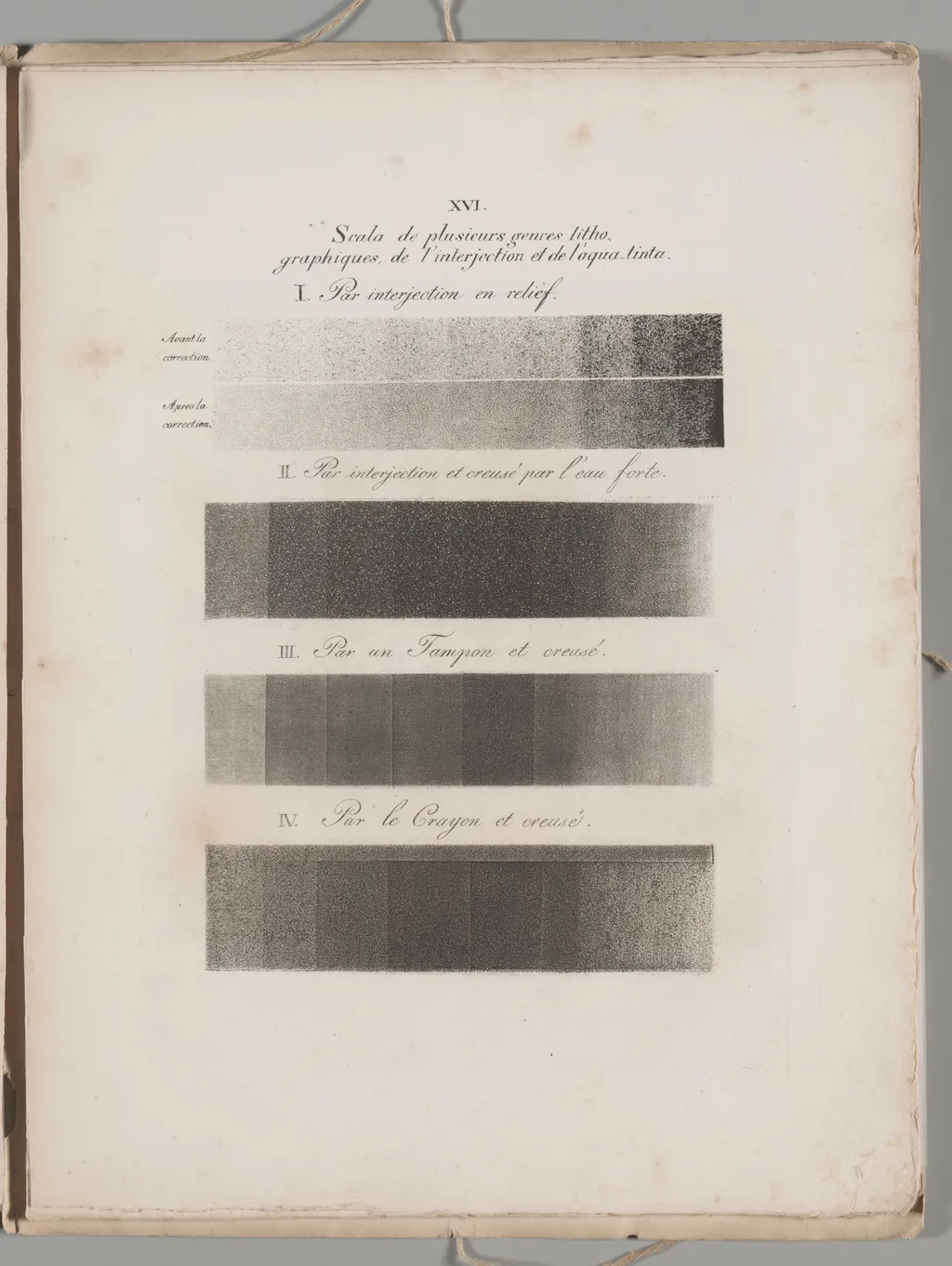
Art of the Lithograph: Toning Samples, Plate XVI is a work on paper by the Romanticist artist Alois Senefelder. It dates from 1819 and is held in the collection of the Cleveland Museum of Art.
- Accession no.
- 2006.194.12
- Credit line
- Gift of Susan Schulman Printseller and Carolyn Bullard Fine Prints in honor of Jane Glaubinger
About this work
Overview
Art of the Lithograph: Toning Samples, Plate XVI is a lithographic portfolio created in 1819 by Alois Senefelder, the inventor of the lithographic process. The work consists of four narrow black‑and‑white strips that demonstrate variations in ink density. It is part of the collection of the Cleveland Museum of Art.
Subject & Meaning
The four strips function as practical experiments in tonal control, illustrating how a lithographer can achieve a range of light to dark values on a flat stone surface. The top pair includes French annotations indicating a lighter tone before correction and a darker tone after adjustment, highlighting the iterative nature of the medium.
Technique & Style
Each strip presents a series of graduated shading bands, showing the effect of subtle changes in ink application and pressure. The samples exemplify the precision possible in early lithography, where the artist manipulates the greasy drawing medium and the stone’s absorbency to modulate tonal depth without resorting to color.
History & Provenance
Prepared by Senefelder as part of a instructional volume on lithography, the plate reflects his efforts to codify the technical aspects of the process he pioneered. The portfolio entered the Cleveland Museum of Art’s holdings through acquisition in the early twentieth century, where it remains a reference for scholars of printmaking.
Context
Created shortly after Senefelder’s 1796 patent for lithography, the samples belong to a period of rapid experimentation aimed at standardizing the new print medium. The inclusion of French labels underscores the international diffusion of lithographic knowledge during the Napoleonic era, when the technique spread across Europe.
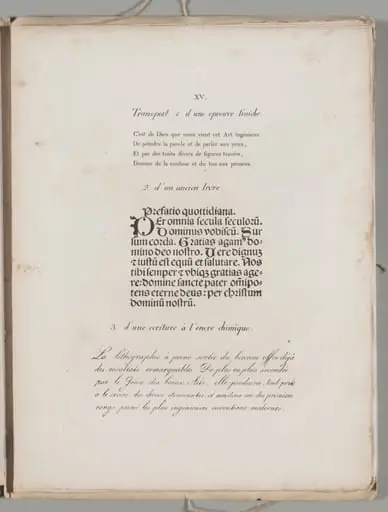
Own this work as a print
Artist & collection

Artist
Johann Alois Senefelder was a German actor and playwright who invented the printing technique of lithography in the 1790s.

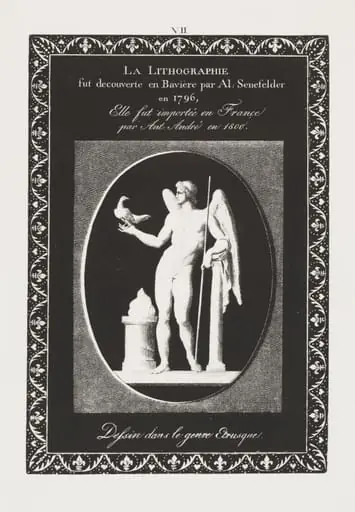 Art of the Lithograph: Dedication Sheet, Plate VII
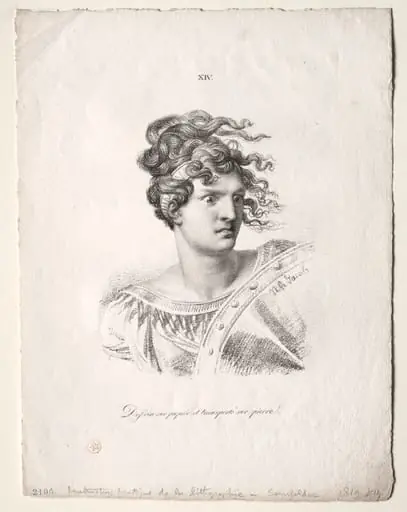 L'art de la lithographie: Head of an Amazon
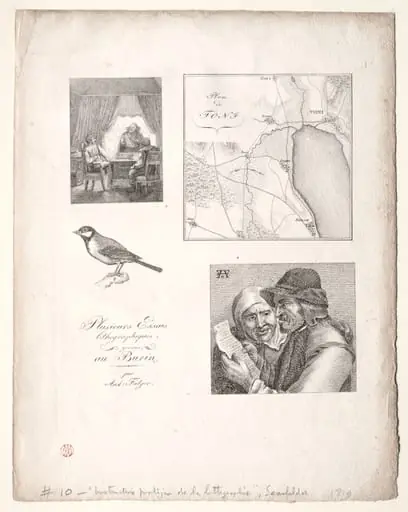 L'art de la litographie:Four Subjects after Falger
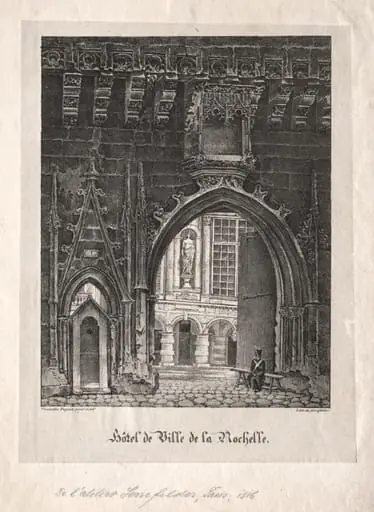 Hotel da Ville de la Rochelle, France
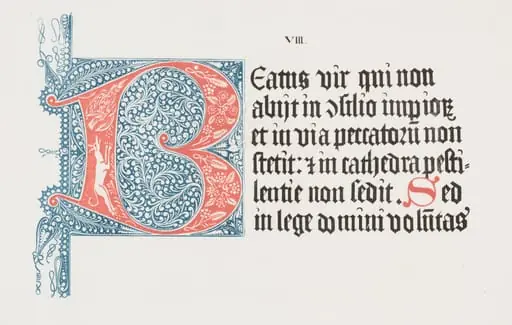 Art of the Lithograph: Psalter- Initial B, Plate VIII
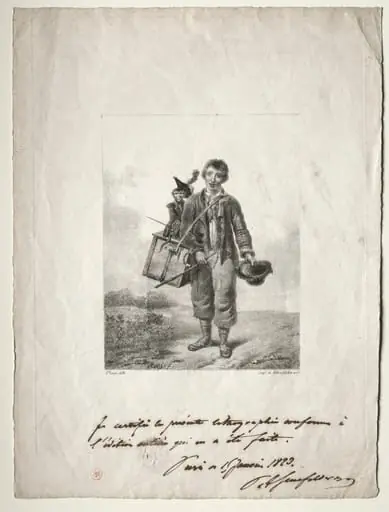 Organ-Grinder Boy
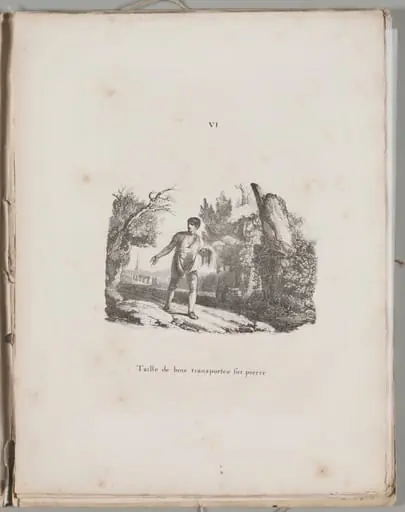 Art of the Lithograph: Transfer of a Wood Engraving, Plate VI
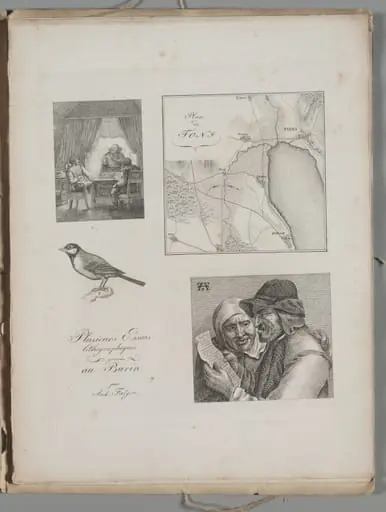 Art of the Lithograph: Four Engraving Samples, War Tent, Map of Toni, Bird, Dutch Farmer and Woman