Artwork
Mass in a Connemara Cabin
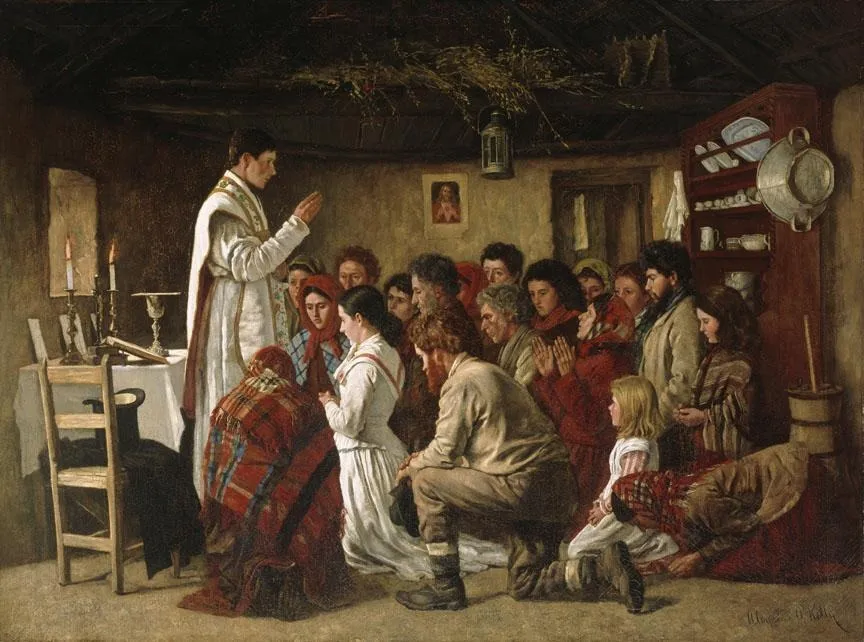
Mass in a Connemara Cabin is an oil painting by the Post-Impressionist artist Aloysius O'Kelly. It dates from 1892 and is held in the collection of the National Gallery of Ireland.
About this work
Overview
The painting avoids romanticization, presenting the scene with a straightforward, observational dignity that characterizes his mature style.
Mass in a Connemara Cabin, painted by Aloysius O'Kelly in 1892, captures a solemn religious ceremony within a rustic Irish dwelling. The composition centers on a priest clad in white vestments, standing before a simple altar with hands raised in consecration. Surrounding him, a congregation of local inhabitants kneels in prayer, their heads bowed and hands clasped, filling the cramped interior.
O'Kelly employs a chiaroscuro effect, where the dimly lit cabin is illuminated primarily by the flickering light of a few candles, casting deep shadows that emphasize the intimacy and spiritual gravity of the moment. Executed in oil paint, the work reflects O'Kelly's commitment to Realism and his dedication to documenting the lives of the Irish peasantry during a period of significant social change. As one of his final works completed shortly before his death, it stands as a poignant testament to his artistic focus on the intersection of faith and daily existence in the Connemara region. The painting avoids romanticization, presenting the scene with a straightforward, observational dignity that characterizes his mature style.
Subject & Meaning
At the centre of the composition stands a priest in white vestments, his hands raised in a gesture of prayer. Surrounding him, the congregants kneel with bowed heads and clasped hands, conveying a collective atmosphere of reverence and quiet devotion within the rustic cabin setting.
Technique & Style
O’Kelly employs a restrained palette of muted tones, allowing the candlelight to create a soft chiaroscuro effect that models the figures and deepens the sense of intimacy. The delicate handling of light and shadow emphasizes the spiritual focus of the scene while maintaining a naturalistic representation of the interior.
History & Provenance
Painted in 1892, the work reflects O’Kelly’s interest in Irish rural life and religious practice. It entered the National Gallery of Ireland’s holdings at an unspecified date, where it remains on display as an example of late‑19th‑century Irish genre painting.
Artist & collection

- Don Quixote Disputing with the Priest and the Barber (from Cervantes' novel)
 Home and the Homeless
 The Nativity
 A Highland Sportsman
 After the Battle
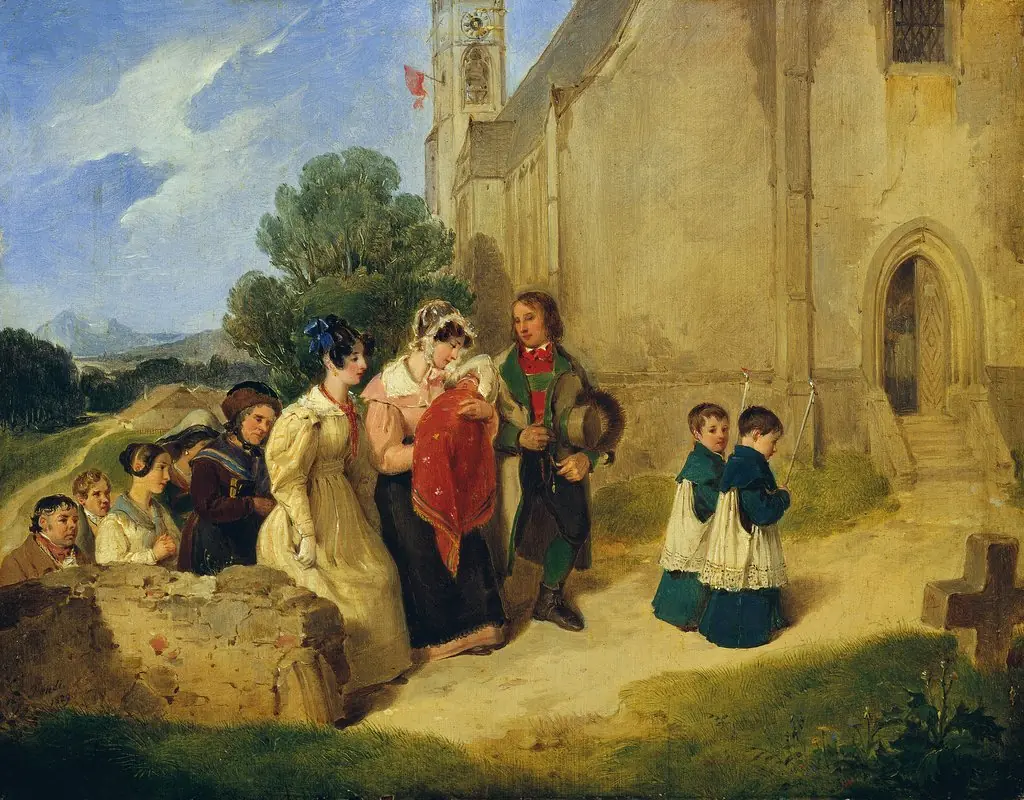 The Baptism Procession
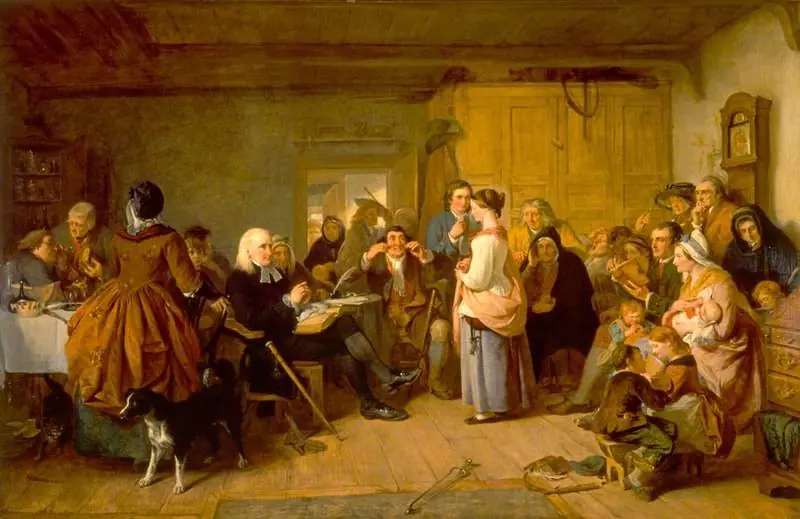 Presbyterian Catechising
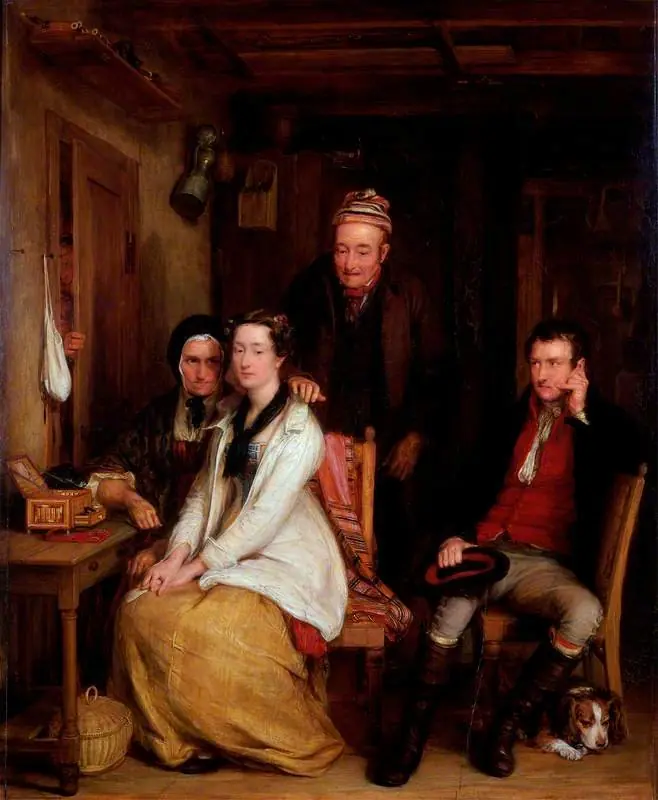 The Refusal
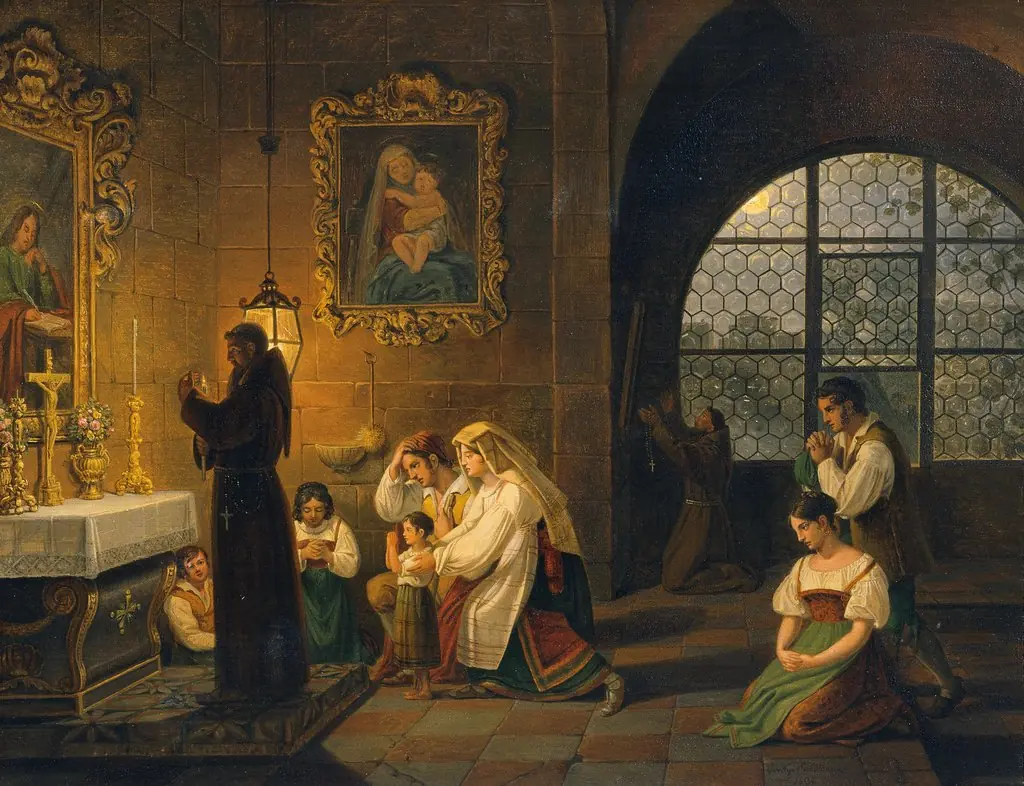 Das Innere einer italienischen Kirche
 Taking the Census
 The Distribution of Rosaries
 Reading of the manifesto of February 19, 1861