Artwork
Taking the Census
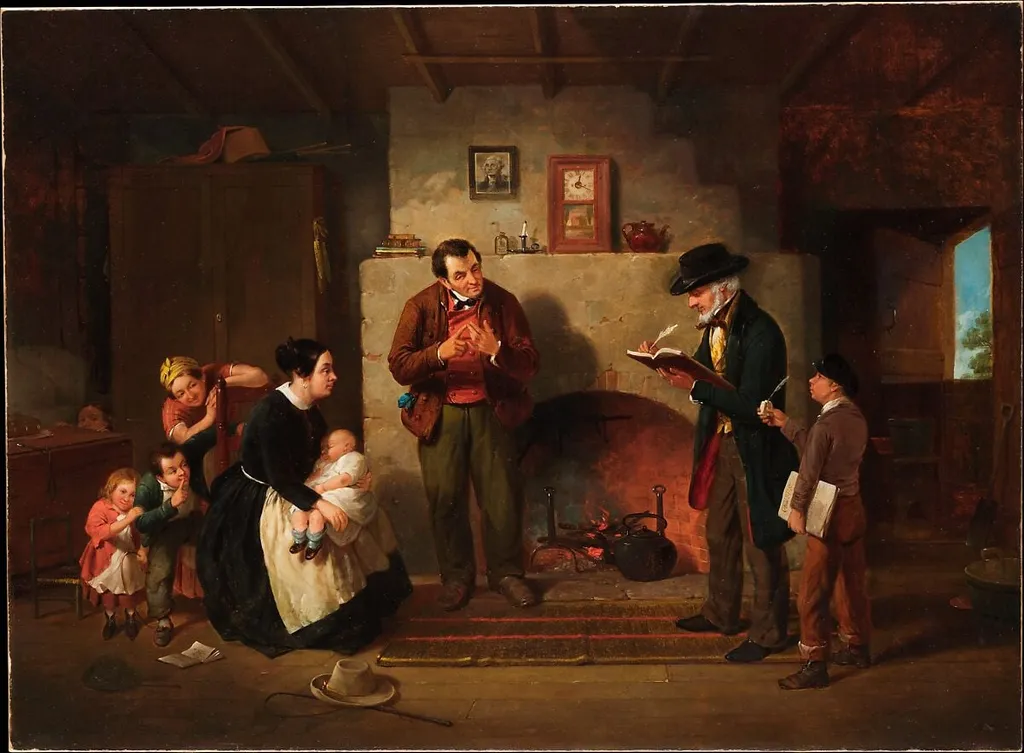
Taking the Census is an oil painting by the Impressionist artist Francis William Edmonds. It dates from 1854 and is held in the collection of the Metropolitan Museum of Art.
About this work
In a plain room a man in a suit writes at a table while a woman holds a baby and a small girl stands close by; a boy reads in the corner, ignoring it all. Francis William Edmonds gives faces and objects close attention, and the 1854 domestic moment feels real.
Subject & Meaning
The inclusion of the writing implement and the figures' engagement suggests the formal documentation of the household.
Painted in 1854, Francis William Edmonds' Taking the Census is a genre scene set within a domestic interior. The composition depicts a man and a woman accompanied by a child or infant, centered around the act of writing. While the specific narrative details of the census-taking process are not elaborated in the provided records, the work visually represents the intersection of private family life with a public governmental duty.
The inclusion of the writing implement and the figures' engagement suggests the formal documentation of the household. As a genre painting, the work captures a moment of everyday American life, illustrating how civic responsibilities permeated the domestic sphere during the mid-nineteenth century.
Technique & Style
Created in 1854, Francis William Edmonds's Taking the Census is executed in oil paint on a canvas support. The work measures 71.1 centimeters in height and 96.5 centimeters in width, serving as a genre scene that depicts an interior setting populated by men, women, and children engaged in writing activities. As a product of the American School, the painting utilizes the traditional oil-on-canvas medium common to mid-19th-century American genre painting.
The composition focuses on the formal arrangement of figures within a domestic space, capturing a specific moment of civic interaction. The physical construction relies on the standard materials of the period, with the canvas providing the structural base for the oil application that renders the narrative details of the census-taking process.
History & Provenance
Taking the Census was painted in 1854 by the American genre artist Francis William Edmonds. Executed in oil on canvas, the work measures approximately 71.1 cm in height and 96.5 cm in width. It is held by the Metropolitan Museum of Art, New York, where it belongs to the collection of American paintings catalogued within the American Wing.
The specific accession number is not provided in the cited records, and no detailed provenance or exhibition history is documented in the available sources.
Overview
Taking the Census, painted by Francis William Edmonds in 1854, is a genre scene depicting a domestic interior where a census taker records household information. The composition centers on a man in a dark suit seated at a table, diligently writing in a ledger. Beside him, a woman holds an infant while a young girl stands close, observing the official.
In the background corner, a boy sits absorbed in a book, visually separated from the central interaction. Edmonds, a key figure in the Hudson River School who frequently explored moral and social themes, utilizes precise brushwork and careful attention to period details to render the room's furnishings and the figures' expressions. The work reflects the artist's interest in everyday American life and the social structures of the mid-nineteenth century.
Created during a period of national expansion and demographic change, the painting captures the intersection of civic duty and private family life. Edmonds employs a restrained palette and balanced arrangement to emphasize the quiet gravity of the moment, distinguishing this piece from his earlier, more allegorical works while maintaining his characteristic focus on narrative clarity and psychological depth.
Context
This painting exemplifies the genre of American art from the mid-19th century, which frequently depicted scenes of daily life, domesticity, and social interactions. Such works often served to reflect and reinforce contemporary societal values, presenting relatable narratives to a broad audience. The focus on a specific, ordinary event like a census highlights a common interest in documenting the fabric of American society during this period.
Artist & collection

Artist
Francis William Edmonds was born November 22, 1806, in Hudson, New York, into a large Quaker family.

- Vægteren på nytårsvisit. Køkkenscene
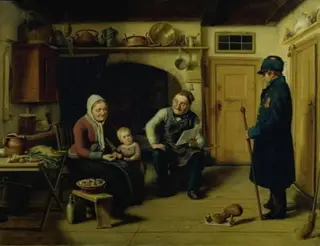 Vægteren på nytårsvisit. Køkkenscene
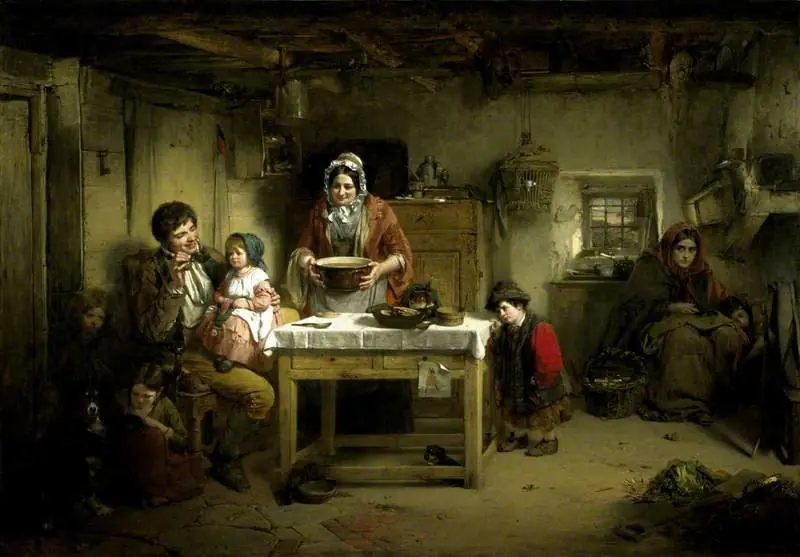 Home and the Homeless
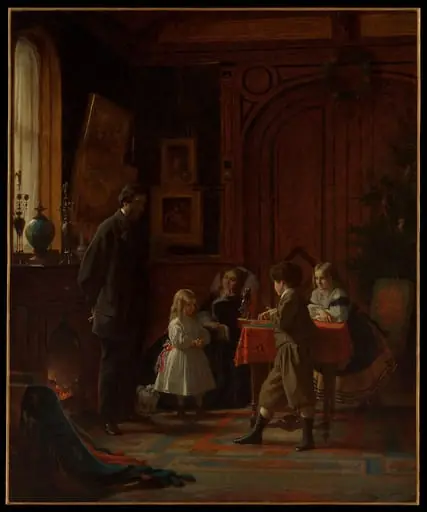 Christmas-Time, The Blodgett Family
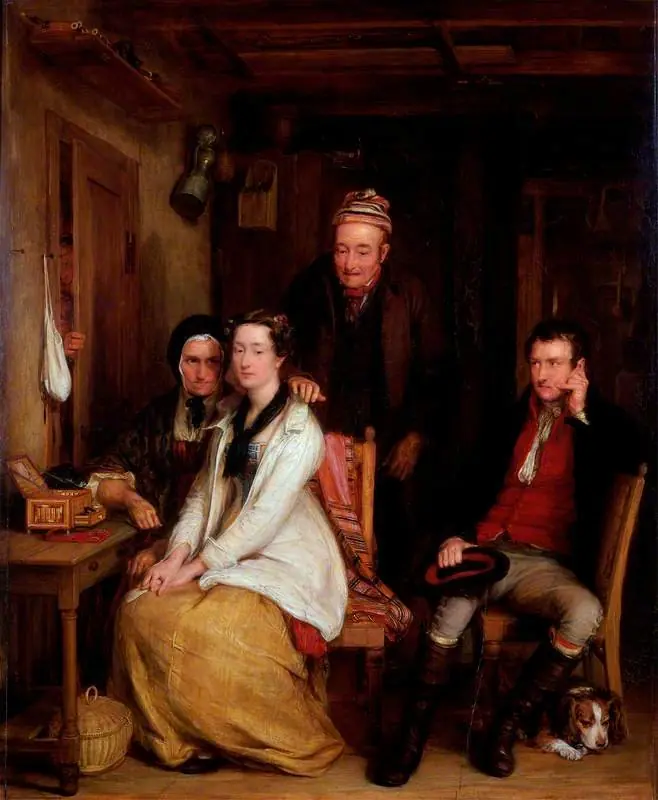 The Refusal
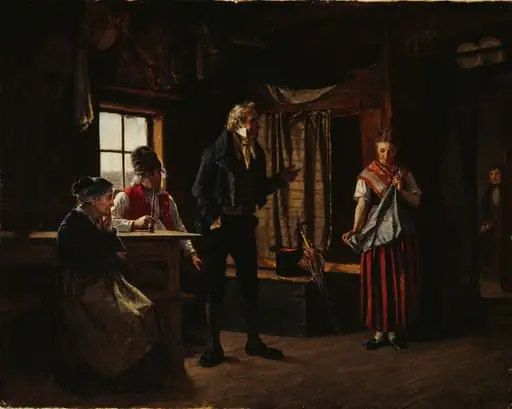 Kosinta Ahvenanmaalla
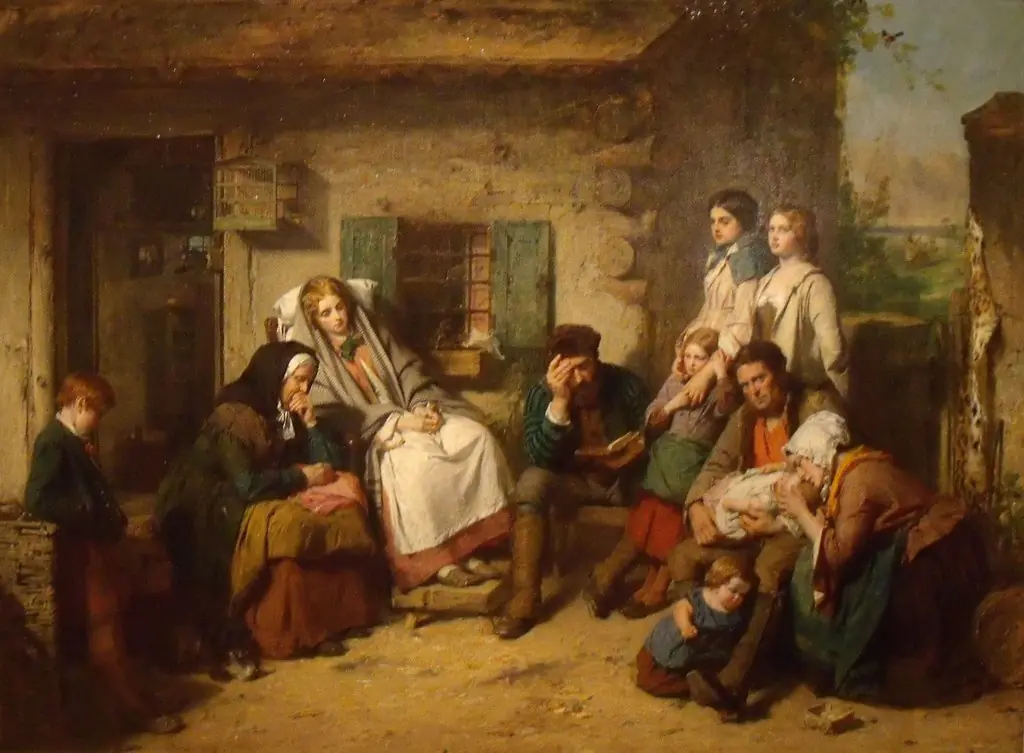 Sunday in the Backwoods of Canada
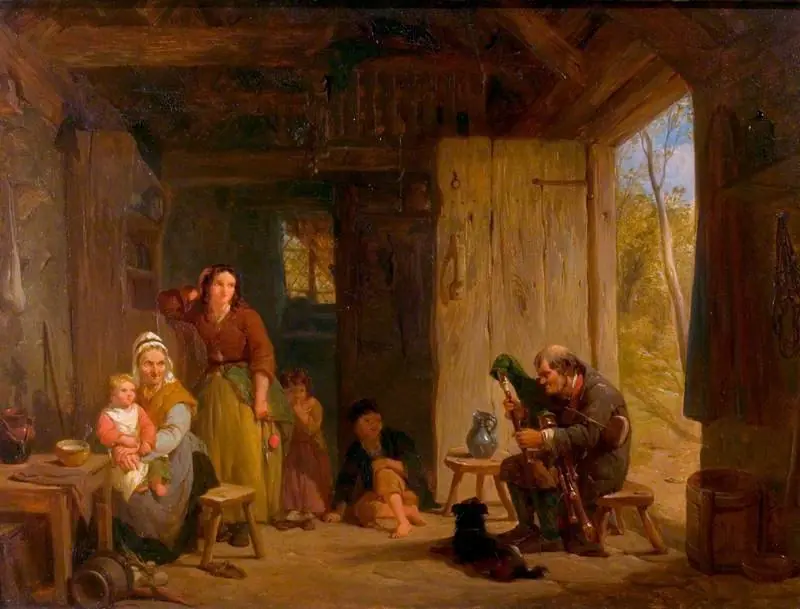 The Irish Piper
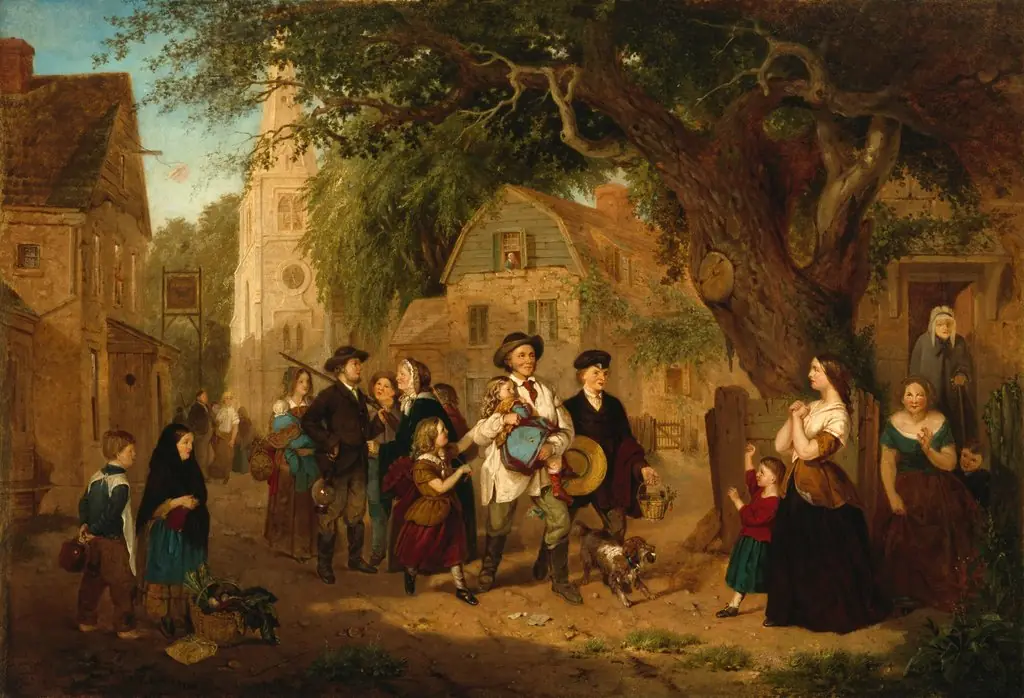 The Lost Child Returned
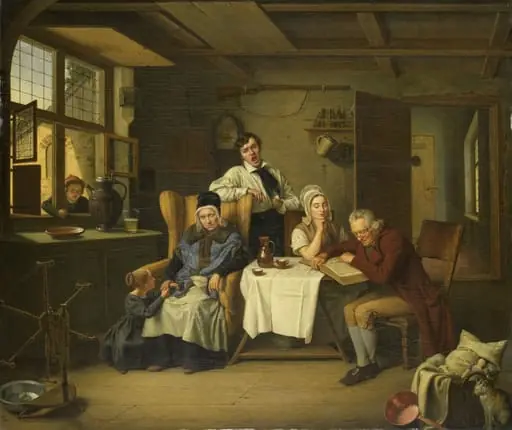 Bible Reading
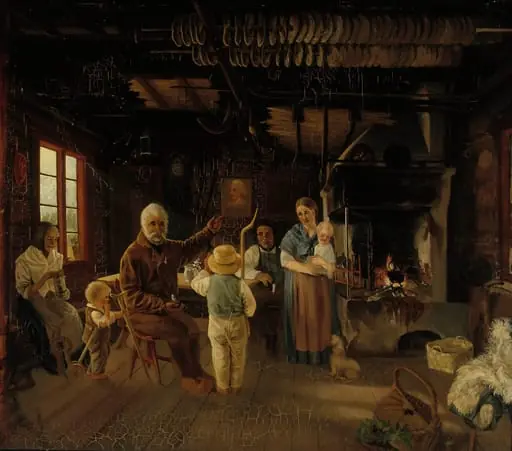 Talonpoikaistupa Nauvossa (Sotaveteraani kertoo)
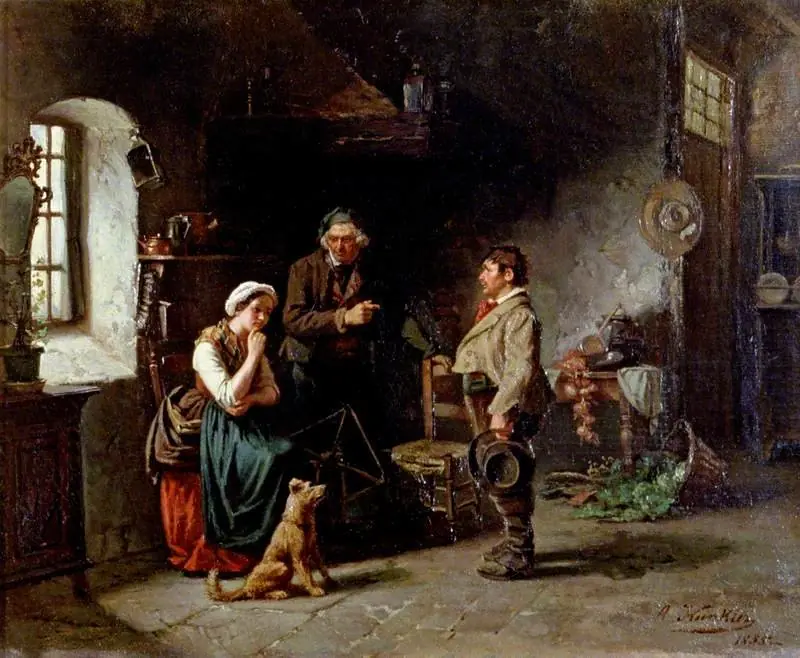 An Offer of Marriage