Artwork
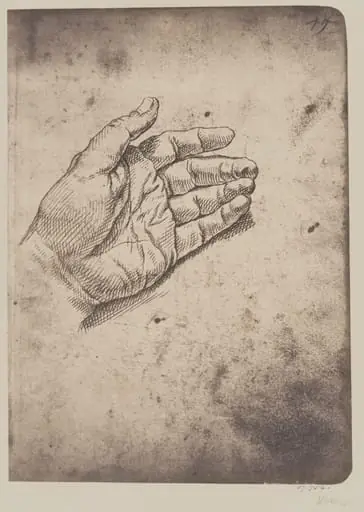
The Hand of Nora E. Legros
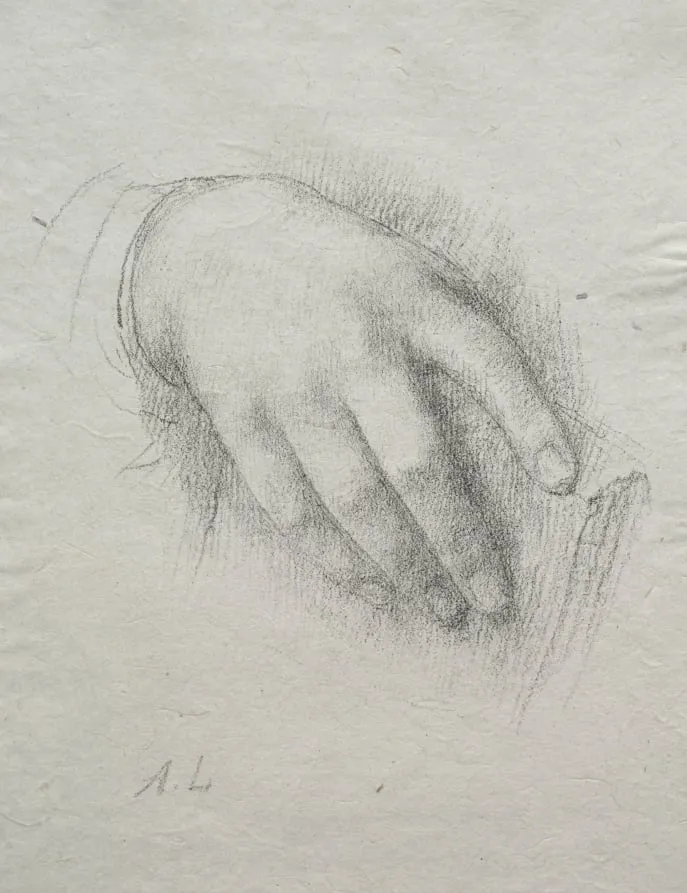
The Hand of Nora E. Legros is a print by the Impressionist artist Alphonse Legros. It dates from 1897 and is held in the collection of the Cleveland Museum of Art.
- Accession no.
- 1945.318
- Credit line
- Mr. and Mrs. Lewis B. Williams Collection
About this work
The drawing is loose and quick, with shading that suggests light falling on the hand from the side.
This sketch shows a single hand resting on a surface. The fingers are slightly curled, and the thumb is pressed against the palm. The drawing is loose and quick, with shading that suggests light falling on the hand from the side.
The artist focused on simple shapes and texture, notice how the skin looks rough in some spots. This kind of study was common for artists practicing anatomy and form.
If you like this style, look up Alphonse Legros (French, 1837–1911).
Overview
Created around 1897 by Alphonse Legros, this ink and graphite drawing captures a single human hand resting on a flat surface. Executed with swift, economical strokes, the work functions as an anatomical study rather than a finished portrait. Its modest scale and unadorned composition reflect the artist’s commitment to observing the human form in quiet, unidealized detail.
Subject & Meaning
The hand, slightly curled with the thumb pressed against the palm, is rendered without context or identity, no wrist, arm, or background. This deliberate omission shifts focus to the hand’s physicality: its weight, tension, and texture. The absence of narrative invites contemplation of the body as a vessel of gesture and presence, a recurring theme in Legros’s observational practice.
Technique & Style
Legros employed loose, rapid linework and subtle tonal gradations to suggest form and light. Shading is applied with minimal strokes, emphasizing the hand’s contours and the roughness of skin without idealization. The drawing’s immediacy reflects a direct, on-the-spot approach, typical of academic life studies, where capturing the essence of form outweighed polished finish.
History & Provenance
The drawing entered the collection of The Cleveland Museum of Art as part of a broader acquisition of Legros’s works, likely sourced from his estate or a private collection following his death in 1911. Its preservation reflects early 20th-century interest in European academic drawing practices, particularly those of artists who bridged French and British artistic traditions.
Context
In the late 19th century, artists like Legros maintained rigorous drawing habits as part of formal training, even as modernism emerged. This study aligns with the tradition of anatomical sketches used in ateliers to refine understanding of the body. Legros, trained in Paris and later active in England, remained committed to such disciplined observation amid shifting artistic currents.
Legacy
Though not widely exhibited, this drawing exemplifies Legros’s enduring influence on drawing pedagogy. His emphasis on truthful, unembellished representation informed generations of students at the Slade School of Art. The work stands as a quiet testament to the value of sustained, humble observation in an era increasingly drawn to spectacle.
Artist & collection

Artist
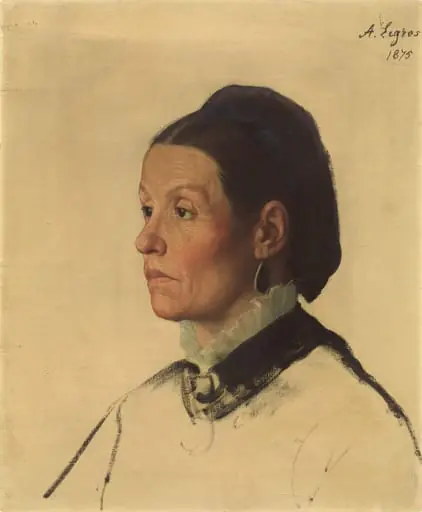
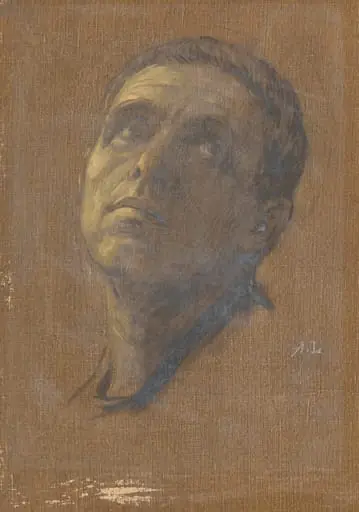
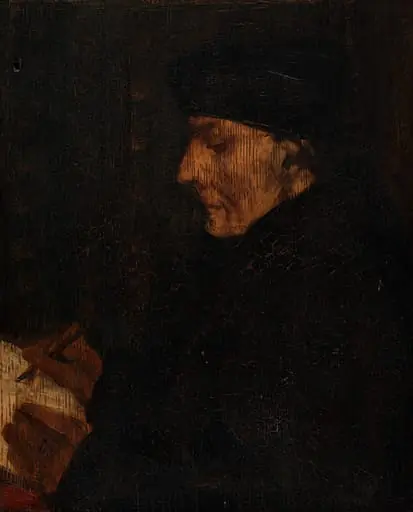
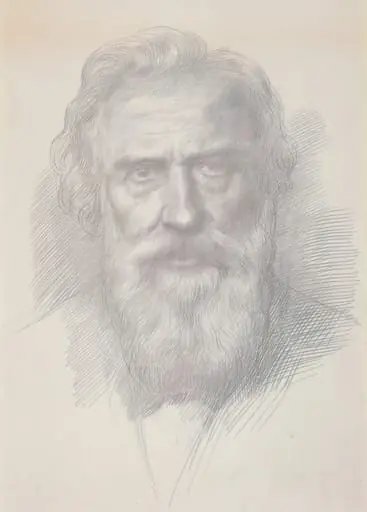
Alphonse Legros (French pronunciation:; 8 May 1837 – 8 December 1911) was a French, later British, painter, etcher, sculptor, and medallist.



![Hand Studies [verso], by Allan Ramsay](https://artifactworldgallery.com/img/allan-ramsay--hand-studies-verso--f6c634d33f170fe2-w320.webp)
![Study of a Right Hand [recto], by Benjamin Robert Haydon](https://artifactworldgallery.com/img/benjamin-robert-haydon--study-of-a-right-hand-recto--88b544f65d3eb1a7-w320.webp)