Artwork
Two Young Men of Fashion (Standing)
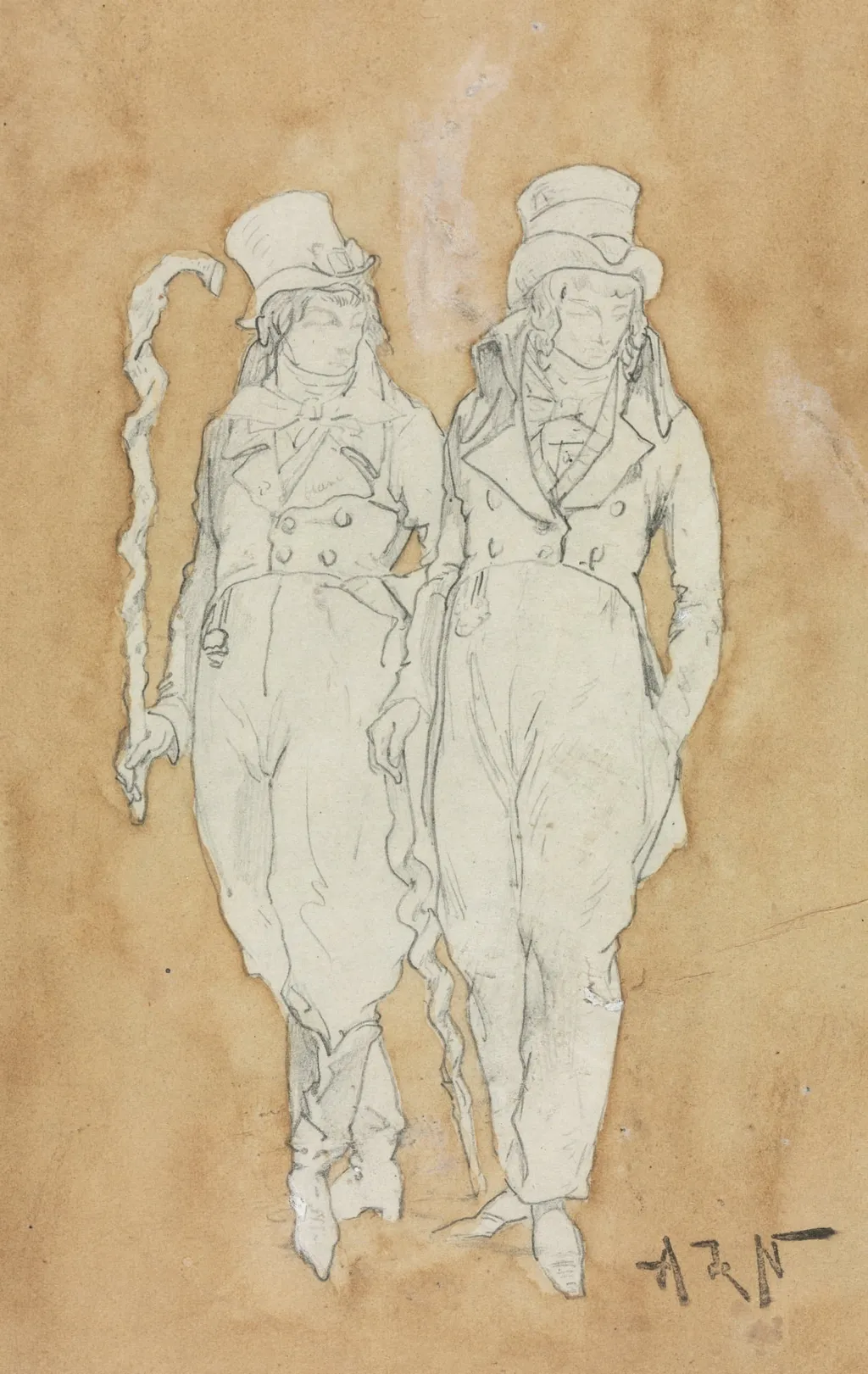
Two Young Men of Fashion (Standing) is a drawing by the Romanticist artist Alphonse de Neuville. It dates from 1860 and is held in the collection of the Cleveland Museum of Art.
- Accession no.
- 1942.882
- Credit line
- Gift of Robert Hays Gries
About this work
The overall style of the painting suggests that it is from the Romanticism movement, which was popular during the 19th century.
This image depicts two young men dressed in 19th-century attire, standing side by side. They wear top hats, coats, and pants, with one holding a cane in his right hand. The men are shown in a full-body portrait, with their faces blurred and not clearly visible.
The background of the image is a light brown color, which may be a wall or a piece of paper. The overall style of the painting suggests that it is from the Romanticism movement, which was popular during the 19th century.
The image appears to be a sketch or study for a larger painting, rather than a finished work of art. The use of simple lines and minimal detail suggests that the artist was focused on capturing the overall pose and attitude of the two men, rather than creating a highly realistic portrait. Look up Romanticism for more information.
Overview
Created in 1860 by French artist Alphonse de Neuville, this drawing captures two young men in formal 19th-century dress. Though best known for military subjects, de Neuville also explored portraiture, and this work reflects his interest in contemporary urban life. Executed in pencil or ink on paper, the piece is a preparatory study, not a finished painting, and is now part of The Cleveland Museum of Art’s collection.
Subject & Meaning
The two figures represent fashionable young men of the era, their identities left anonymous. Their upright posture, top hats, and canes signal social standing and urban refinement. The lack of facial detail shifts focus from individual character to the broader cultural archetype of the dandy, suggesting an interest in social types rather than personal likeness.
Technique & Style
De Neuville employed loose, economical lines to suggest form and movement, avoiding fine detail. The figures emerge from a plain, light-brown background with minimal shading, emphasizing silhouette and posture. This restrained approach reflects a working sketch’s function, capturing composition and gesture quickly, likely as a foundation for a larger, more polished work.
History & Provenance
The drawing entered The Cleveland Museum of Art’s collection through documented acquisition, though its earlier ownership history remains unrecorded. Its survival as a study rather than a finished piece offers insight into de Neuville’s creative process. It was likely kept by the artist or passed through private hands before institutional acquisition in the 20th century.
Context
In 1860s Paris, depictions of fashionable men reflected growing interest in bourgeois identity and urban manners. While de Neuville’s large-scale works often celebrated military heroism, this drawing reveals his engagement with civilian life. The Romantic era’s emphasis on individual expression and social observation influenced such intimate studies, even among artists known for grand themes.
Legacy
This drawing contributes to understanding de Neuville’s range beyond battle scenes. As a surviving sketch, it illuminates how academic artists approached portraiture through gesture and costume rather than psychological depth. It remains a quiet but valuable record of how 19th-century artists observed and recorded the everyday rituals of social class.
Own this work as a print
Artist & collection
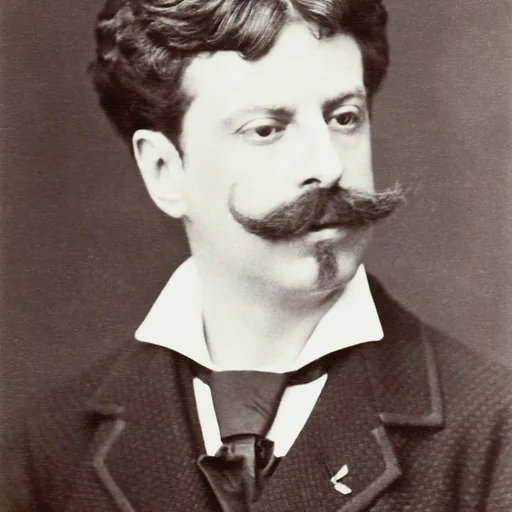
Artist
Alphonse-Marie-Adolphe de Neuville (French pronunciation:; 31 May 1835 – 18 May 1885) was a French academic painter who studied under Eugène Delacroix.

![Study for "Mary Cassatt at the Louvre" [verso], by Edgar Degas](https://artifactworldgallery.com/img/edgar-degas--study-for-mary-cassatt-at-the-louvre-verso--48b899a9ba46f7cc-w320.webp) Study for "Mary Cassatt at the Louvre" [verso]
Study for "Mary Cassatt at the Louvre" [verso]![Sketch of a Couple Seated with Cloud Studies [verso], by Walter Crane](https://artifactworldgallery.com/img/walter-crane--sketch-of-a-couple-seated-with-cloud-studies-verso--bd0c5f7cb1d389b6-w320.webp) Sketch of a Couple Seated with Cloud Studies [verso]
Sketch of a Couple Seated with Cloud Studies [verso] Mlle. Lender in "Madame Satan" (Mlle. Lender dans "Madame Satan")
![Study of Two Young Women [recto], by Valentine Cameron Prinsep](https://artifactworldgallery.com/img/valentine-cameron-prinsep--study-of-two-young-women-recto--3dfeb354d436ea17-w320.webp) Study of Two Young Women [recto]
Study of Two Young Women [recto]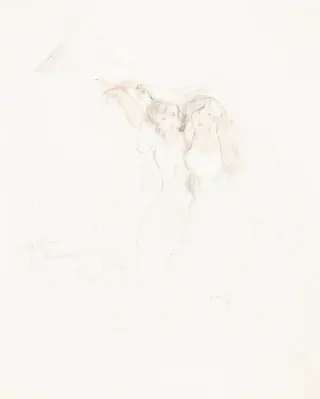 Two Girls under a Cloak
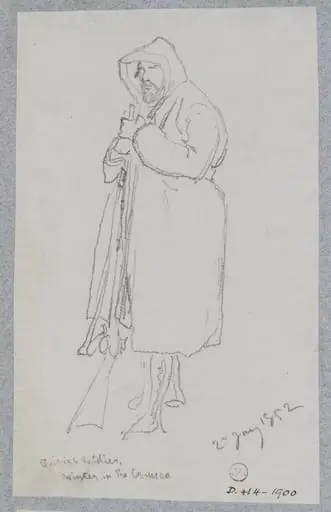 Sketches made during the Campaign of 1854-55 in the Crimea, Circassia and Constantinople
 Untitled
 Drawing of a man
 drawing from Ionides Album
 Juliet
 Illustration to Knightley's 'Westward Ho!'
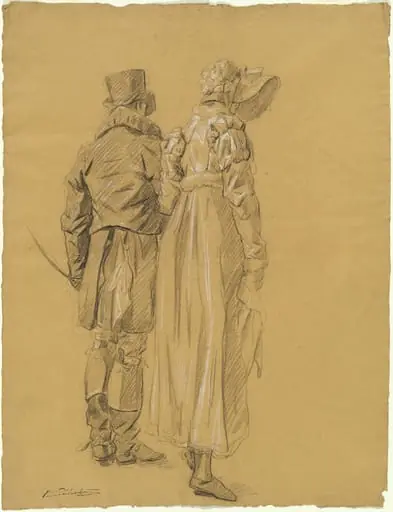
- A Fashionable Couple Seen from Behind