Artwork
Baby in Blue Cradle
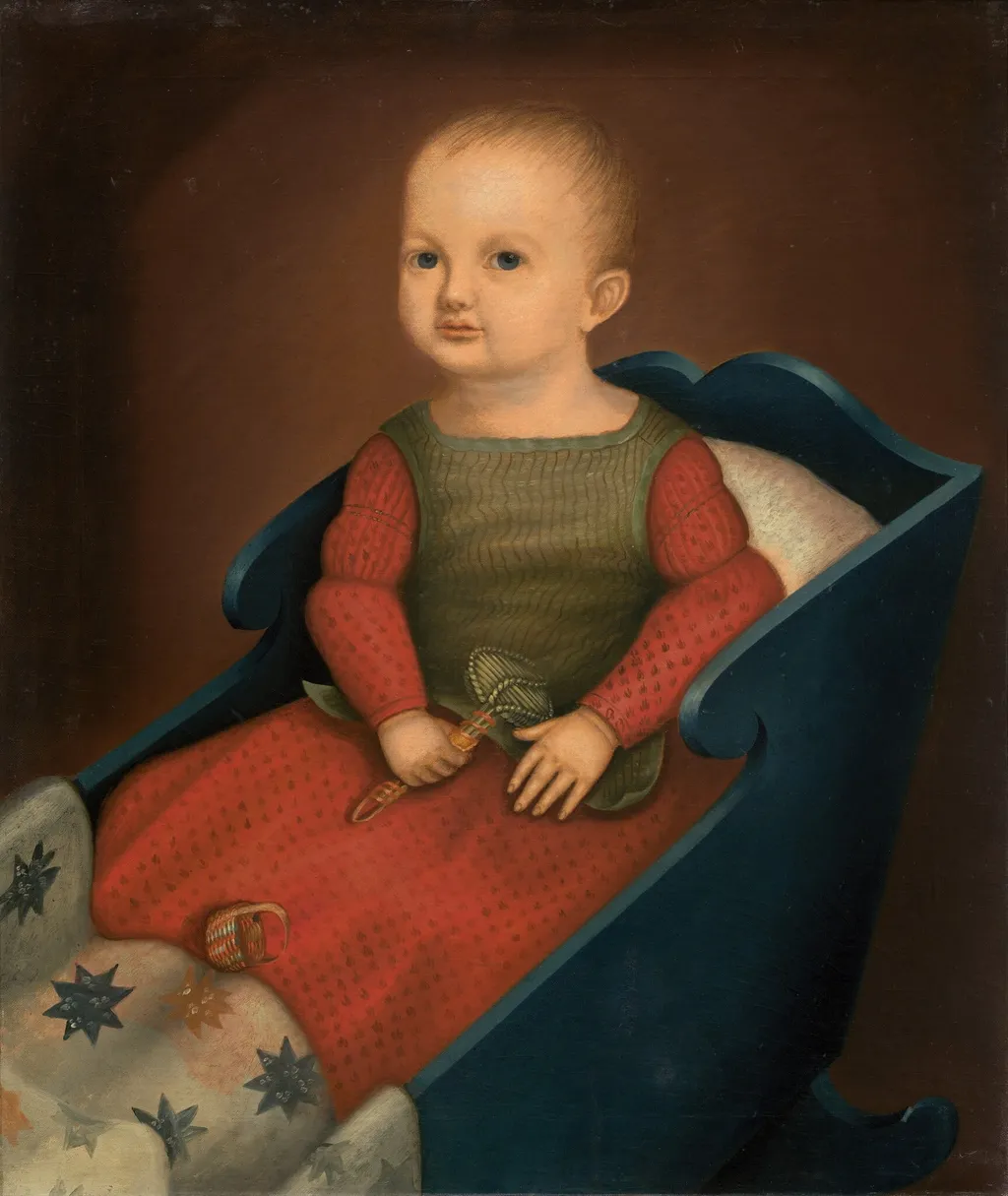
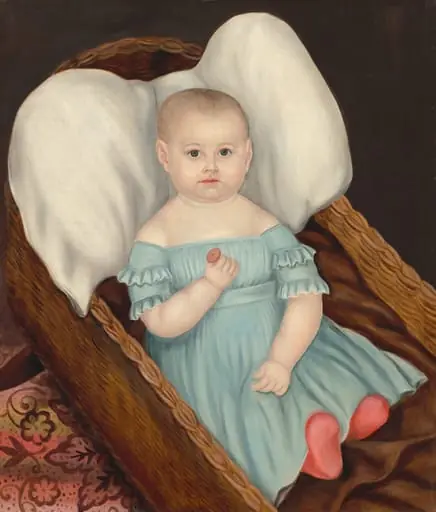
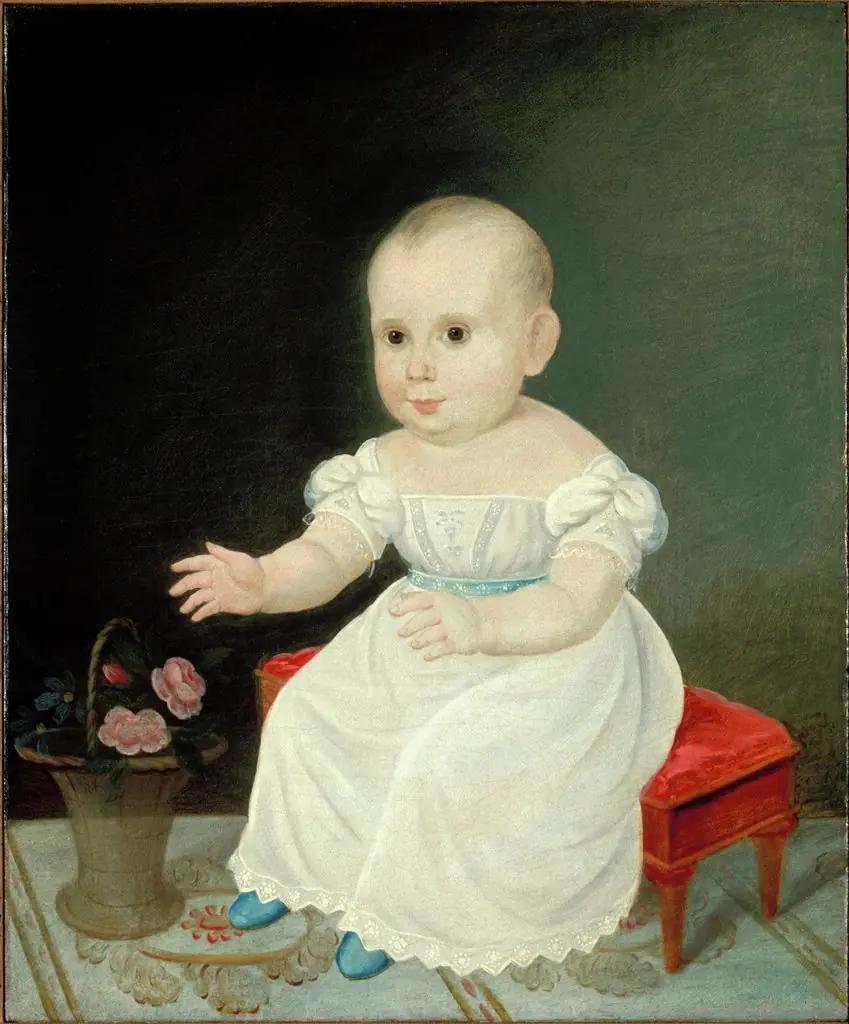
Baby in Blue Cradle is an oil painting. It dates from 1840 and is held in the collection of the National Gallery of Art. The work is an oil painting on canvas that depicts a newborn infant asleep in a blue cradle.
About this work
Subject & Meaning
The composition emphasizes innocence and domestic tranquillity, reflecting nineteenth-century American portraiture's interest in familial affection.
The painting shows an infant in a simple cradle, rendered with attention to the child's delicate features and the soft folds of the blue garment. The composition emphasizes innocence and domestic tranquillity, reflecting nineteenth-century American portraiture's interest in familial affection. The blue cradle reads as a motif of protection and care, reinforcing themes of nurture within the home. The work belongs to the portrait genre and exemplifies the American interest in intimate family subjects.
Technique & Style
Created in 1840, Baby in Blue Cradle is an oil painting on a canvas support measuring 69 cm in height by 58 cm in width. Classified as a portrait, the piece reflects the conventions of an American artist working in the nineteenth century. It is held in the collection of the National Gallery of Art, Washington, D.C.
History & Provenance
Baby in Blue Cradle is recorded as dating to 1840 and painted in oil on canvas. According to the corpus record, the work originates from Connecticut. It was purchased in 1950 by Edgar William and Bernice Chrysler Garbisch, who gave it to the National Gallery of Art in 1959, where it remains. The available sources do not list a specific exhibition history or an accession number for the work.
Overview
The work is an oil painting on canvas that depicts a newborn infant asleep in a blue cradle. The composition is simple, with the child centrally placed and a plain background that eliminates any extraneous detail, focusing attention on the quiet scene.
Context
Executed in a period when domestic genre scenes were common, the work reflects a focus on everyday intimacy rather than grand historical narratives. Its restrained composition aligns with a broader artistic interest in quiet, private moments.
Artist & collection