Artwork
Baby in Wicker Basket
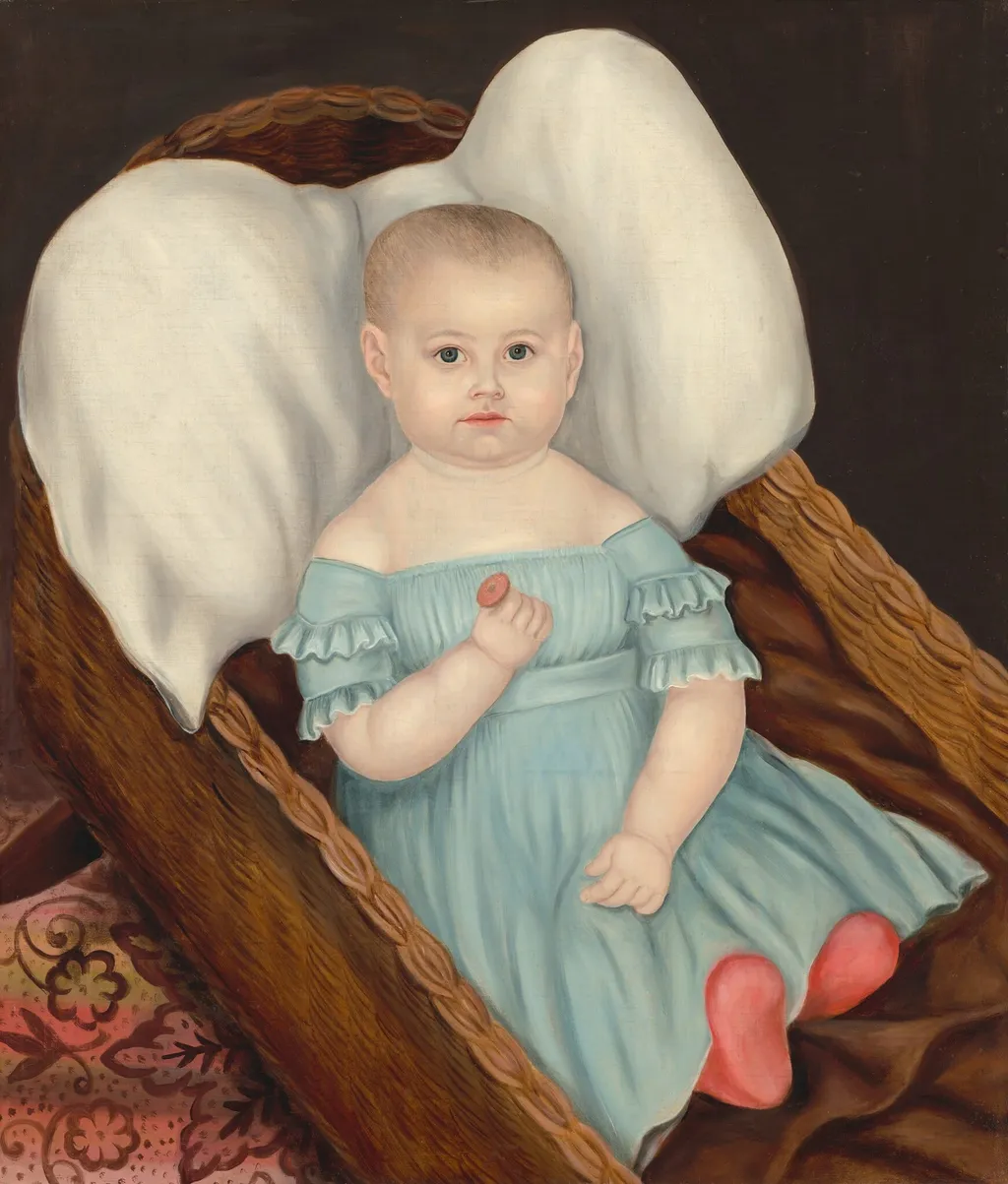
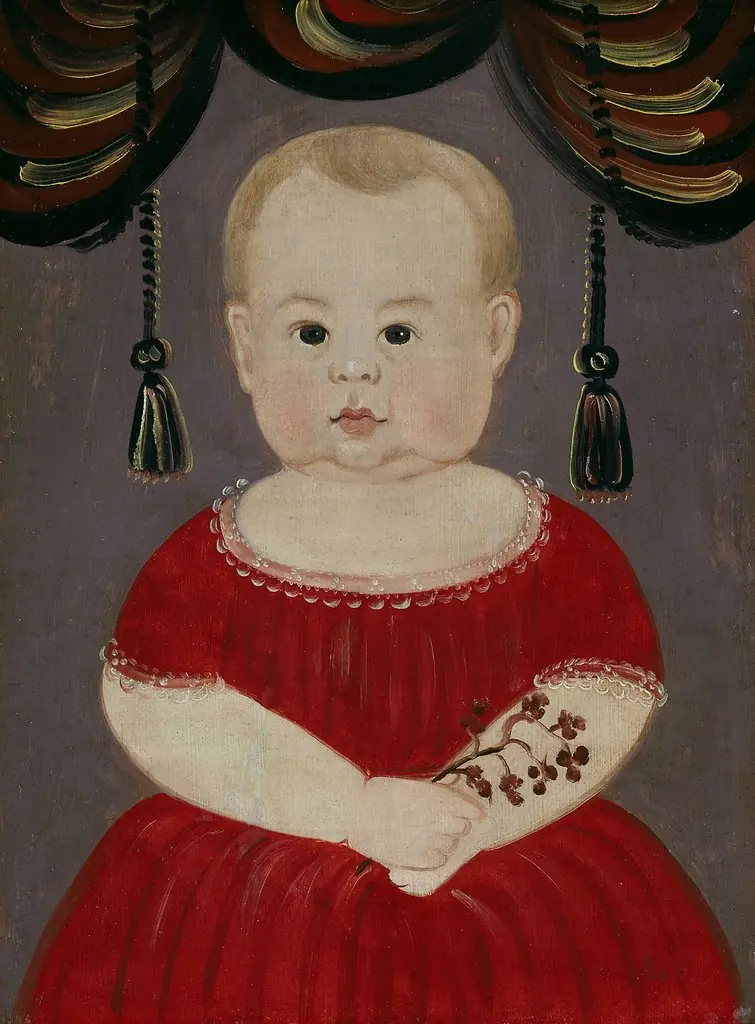
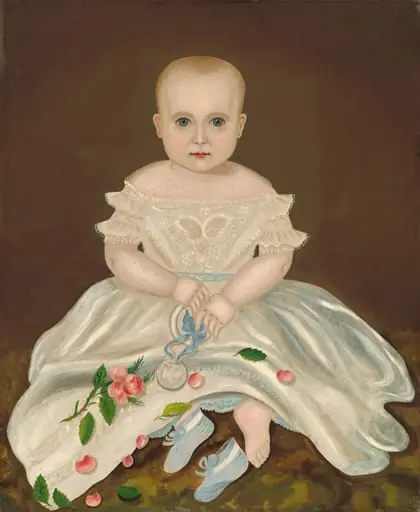
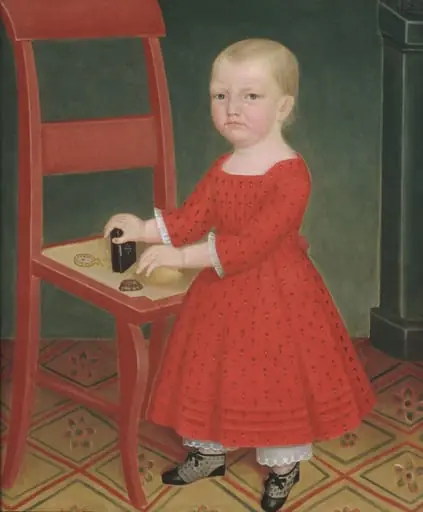
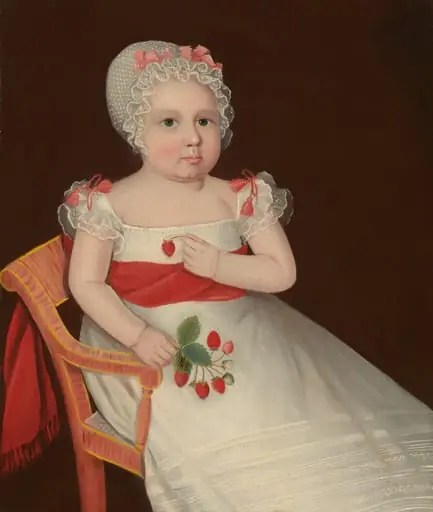
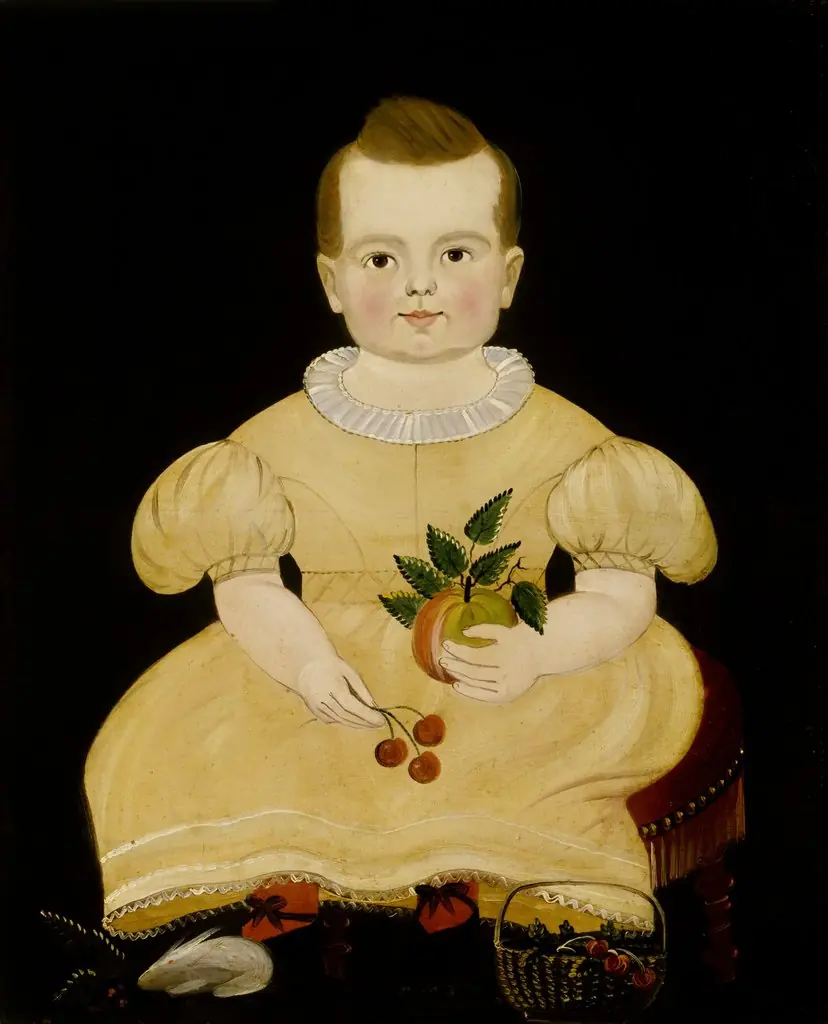
Baby in Wicker Basket is an oil painting by the American Folk Art artist Joseph Whiting Stock. It dates from 1840 and is held in the collection of the National Gallery of Art.
About this work
Subject & Meaning
The painting depicts a cherubic infant seated in a woven wicker cradle, a motif that evokes themes of innocence and domestic tranquility.
The painting depicts a cherubic infant seated in a woven wicker cradle, a motif that evokes themes of innocence and domestic tranquility. The soft rendering of the child's flesh and the gentle, diffused lighting underscore a sentimental idealization of childhood common in mid-nineteenth-century American genre painting. As part of Joseph Whiting Stock's oeuvre, the work reflects the artist's interest in everyday domestic subjects.
Its domestic setting resonates with the American emphasis on family during the antebellum period, and its provenance traces a journey from a Massachusetts dealer to the National Gallery of Art, underscoring its standing as a representative example of 19th-century American sentimental portraiture.
Technique & Style
Baby in Wicker Basket is an oil painting on canvas executed in 1840 by Joseph Whiting Stock. The work measures 77.4 by 66.3 cm. The medium and support align with standard practices of American portrait painting of the period, though the specific stylistic treatment of the subject, a baby posed in a wicker basket, reflects the sentimental, domestic focus common in mid-19th-century American genre and portrait traditions.
History & Provenance
Joseph Whiting Stock executed the oil-on-canvas painting Baby in Wicker Basket in 1840. The documented ownership chain begins in May 1940, when a dealer in Springfield, Massachusetts, likely Peter Kostoff, held the piece and sold it that same year to the Downtown Gallery in New York. In 1949, the gallery transferred the work to the collection of Edgar William and Bernice Chrysler Garbisch, who bequeathed it to the National Gallery of Art in Washington, D.C., in 1980.
It has remained in the National Gallery's collection since and has not been documented in major traveling exhibitions according to the available provenance records.
Context
Joseph Whiting Stock's 1840 oil on canvas Baby in Wicker Basket was acquired in 1949 by Edgar William and Bernice Chrysler Garbisch, who bequeathed their collection to the National Gallery of Art in 1980. The work's provenance traces back to a 1940 transaction involving a Springfield, Massachusetts dealer. As a product of the mid-19th-century American art scene, Stock's oeuvre occupies a transitional space between folk realism and emerging academic conventions, situating this piece within broader discussions of domestic genre painting in antebellum America.
Legacy
The painting's inclusion in the National Gallery of Art collection underscores its enduring presence in American art history. Its clear chain of ownership from early 20th-century dealers through the Garbisch bequest to the NGA in 1980 contributed to its institutional recognition. As part of the NGA's permanent holdings, it remains accessible for study and exhibition, representing the development of domestic themes in 19th-century American genre painting.
Overview
Joseph Whiting Stock’s oil on canvas, dated around 1840, depicts an infant reclined within a wicker basket. The composition is straightforward, centering the child against an unadorned backdrop that emphasizes the figure. The work’s modest scale and domestic subject align with the artist’s focus on everyday American life in the early nineteenth century.
Own this work as a print
Artist & collection

Artist
Joseph Whiting Stock (January 30, 1815 – 1855) was an American painter known for his portraits, miniatures, and landscape paintings, many of which he did on commission.