Artwork
Elephants in a circus
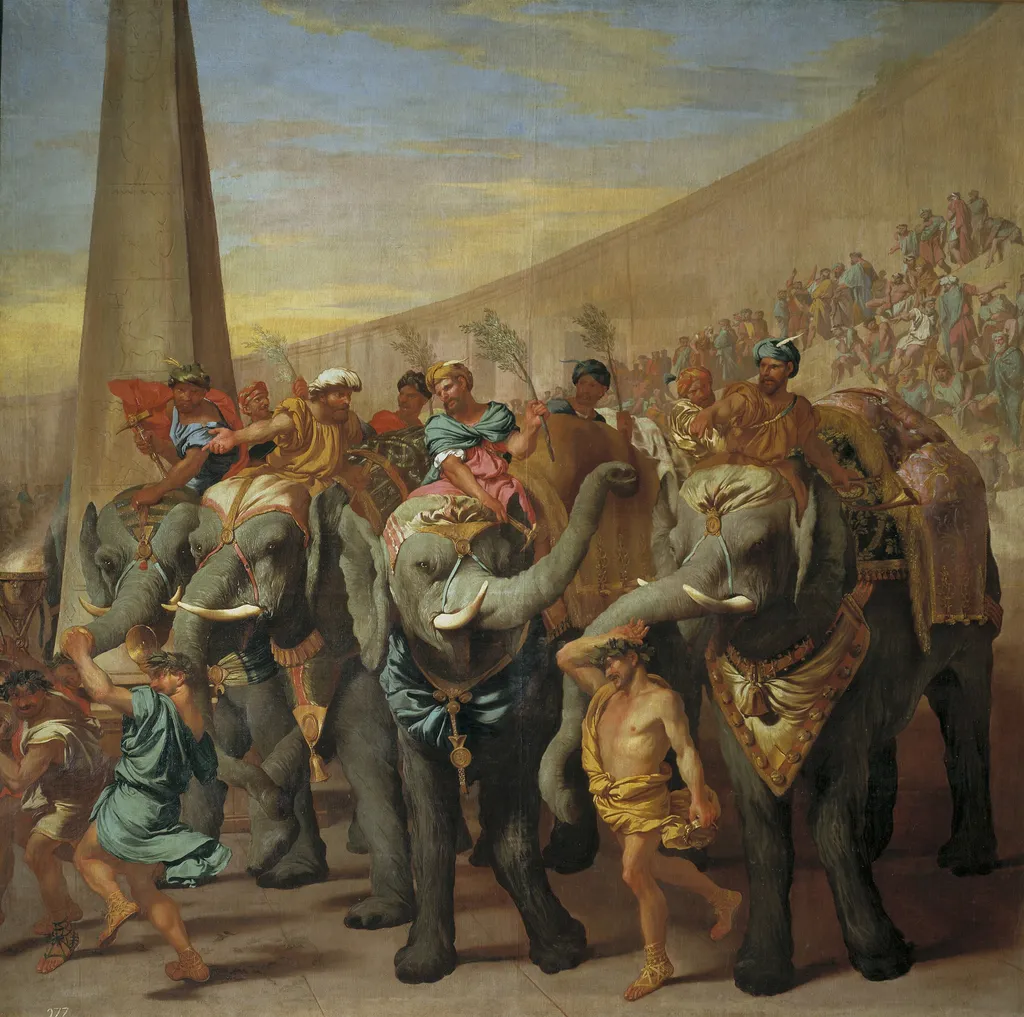
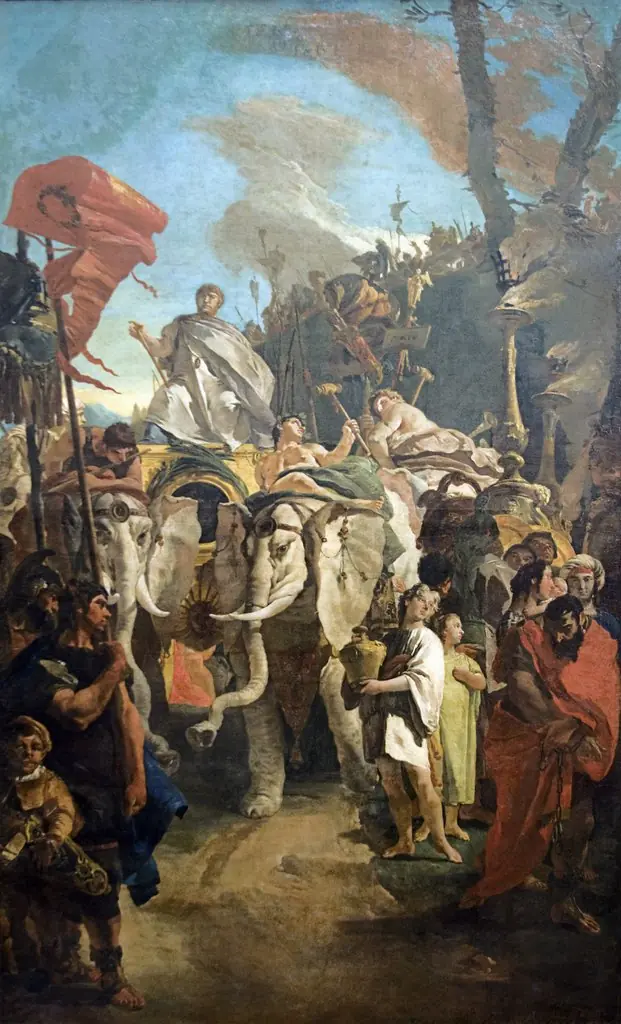
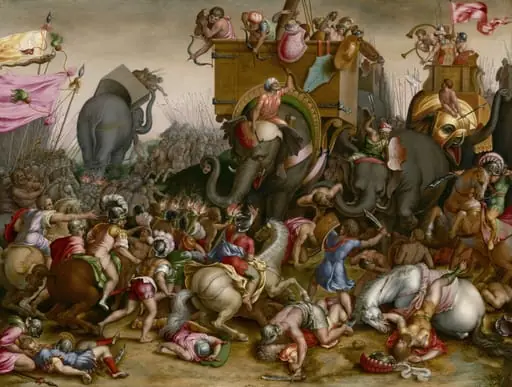
Elephants in a circus is an oil painting by the Early Baroque Italian artist Andrea di Leone. It dates from 1640 and is held in the collection of the Museo del Prado.
About this work
Subject & Meaning
The inclusion of a human handler with a trumpet underscores the orchestrated nature of the scene, emphasizing entertainment over symbolic meaning.
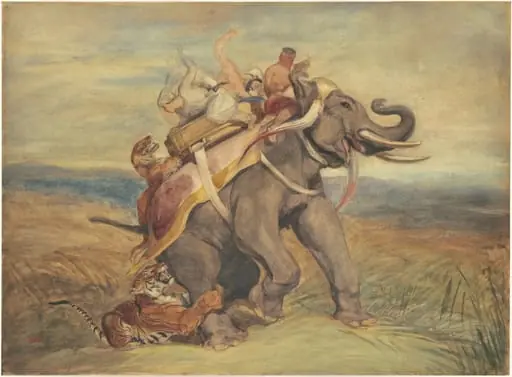
The painting depicts performing elephants in a circus setting, a theme rare in seventeenth-century European art. The animals are shown in dynamic poses, one raising its trunk and another with a rattle, suggesting trained behavior and spectacle. The inclusion of a human handler with a trumpet underscores the orchestrated nature of the scene, emphasizing entertainment over symbolic meaning.
The composition centers on the elephants’ physical presence and the theatrical context, reflecting contemporary interest in exotic animals and public displays rather than deeper allegory.
Technique & Style
Andrea di Leone's Elephants in a circus is executed in oil paint on a canvas support. Created in 1640, the work presents a large-scale composition measuring 229 cm in height and 231 cm in width. The painting depicts circus elephants alongside props such as a trumpet and a rattle, utilizing the oil medium to render these figures within a dynamic scene.
The substantial dimensions and the choice of canvas align with the grand narrative style typical of the artist's period.
History & Provenance
The painting Elephants in a circus was created by the artist Andrea di Leone in 1640. Executed in oil on canvas, the work measures 229 cm in height and 231 cm in width. The piece is currently held in the collection of the Museo del Prado, where it remains part of the museum's holdings.
No further details regarding specific commissions, prior ownership chains, or the circumstances of its creation are provided in the available records.
Elephants in a circus is an oil painting by Andrea di Leone dated 1640. It measures 229 cm in height and 231 cm in width and belongs to the collection of the Museo del Prado, where it has been exhibited as part of the museum's holdings.
The work was created in 1640 and depicts a circus elephant alongside a trumpet and a rattle, reflecting contemporary circus iconography.
Overview
Created in 1640 by the Neapolitan Baroque painter Andrea di Leone, this oil on canvas presents a bustling circus tableau centered on two elaborately adorned elephants. The composition is filled with figures on horseback and on foot, each engaged with musical instruments or props, set against a warm, hazy backdrop that emphasizes the festive atmosphere.
Context
The piece belongs to the early Italian Baroque movement, a period marked by heightened emotional expression and theatricality. Naples, Di Leone’s native city, was a vibrant cultural hub where exotic animal exhibitions were popular, providing artists with subject matter that combined local festivity with the allure of the foreign.
Own this work as a print
Artist & collection
Artist
Andrea di Leone (8 September 1610 – 12 February 1685) was an Italian painter of the Baroque period, active in his native city of Naples.