Artwork
The Triumph of Marius
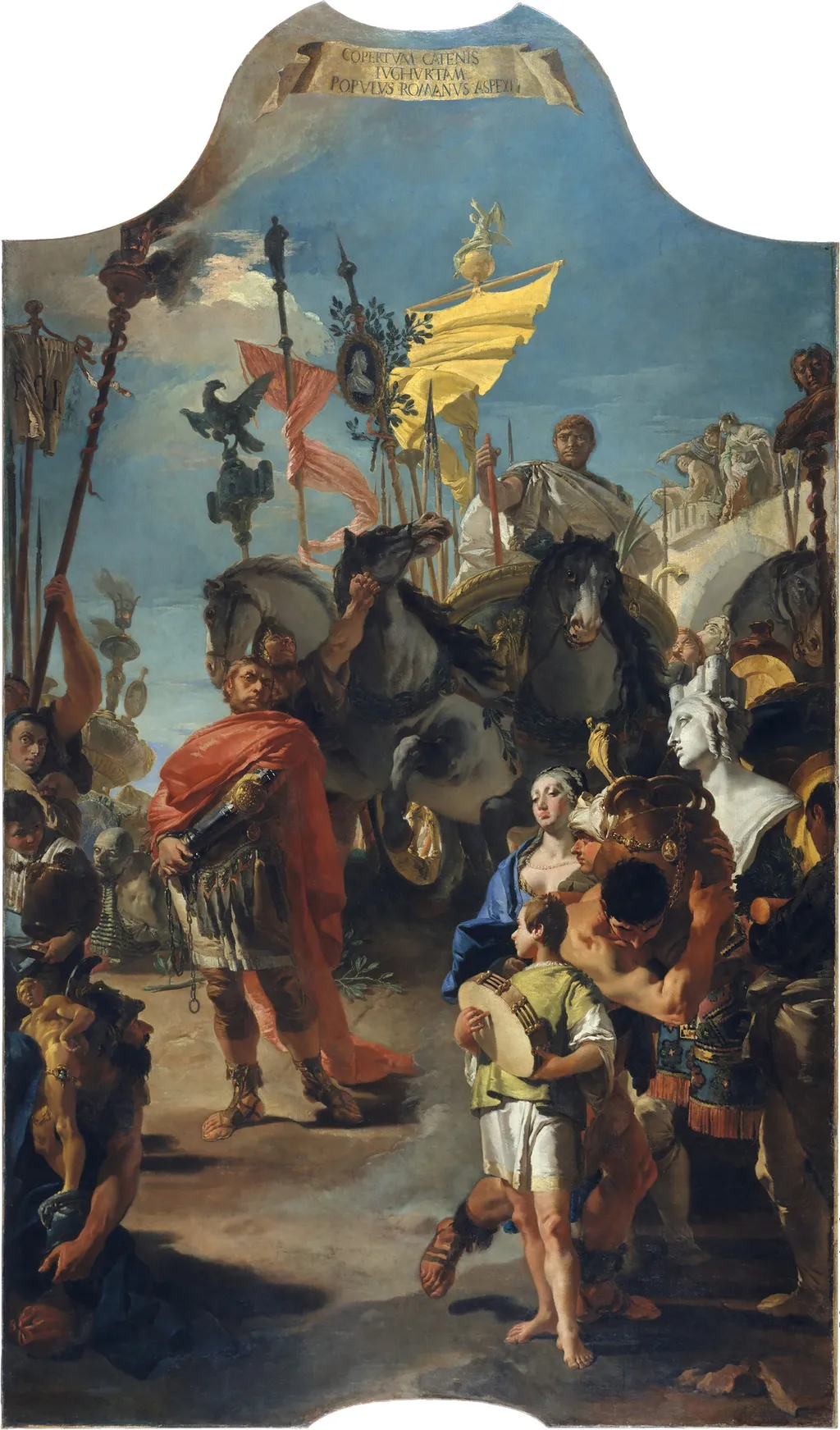
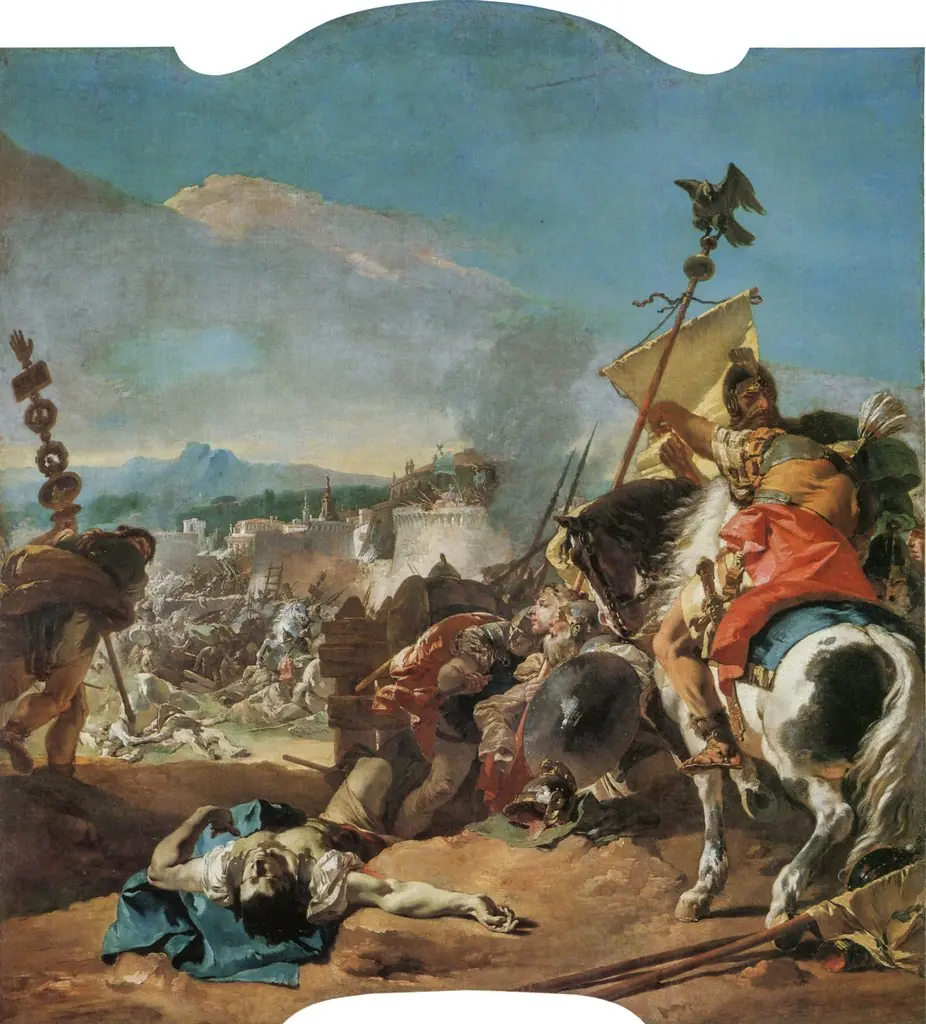
The Triumph of Marius is an oil painting by the Rococo painting artist Giovanni Battista Tiepolo. It dates from 1729 and is held in the collection of the Metropolitan Museum of Art.
About this work
Subject & Meaning
The Triumph of Marius depicts the Roman general Gaius Marius's victory over the Numidian king Jugurtha in 104 BCE, a historical event recounted by Sallust and celebrated in Roman iconography as a triumph of civic virtue and military prowess. In Tiepolo's composition, Marius appears in a triumphal chariot, flanked by allegorical figures and Roman soldiers, while Jugurtha, bound and humbled, kneels before him. The inclusion of a female figure, possibly Victory or Fame, emphasizes the moral and political significance of the triumph, reinforcing Roman ideals of order and glory.
The scene's Rococo style, marked by dynamic movement and luminous color, conveys the celebratory and propagandistic purpose of such historical narratives in eighteenth-century art.
Technique & Style
Executed in 1729, Giovanni Battista Tiepolo's The Triumph of Marius is a large-scale oil painting on canvas, measuring approximately 559 by 327 centimeters.
Executed in 1729, Giovanni Battista Tiepolo's The Triumph of Marius is a large-scale oil painting on canvas, measuring approximately 559 by 327 centimeters. The work exemplifies the Rococo movement through its dynamic composition and vibrant handling. Tiepolo depicts a complex historical narrative featuring figures such as Gaius Marius and Jugurtha alongside horses and a chariot, arranging these elements with the theatrical flair characteristic of his style.
The sheer dimensions of the support allow for an expansive depiction of the triumphal procession, with fluid brushwork and a luminous color palette typical of Tiepolo's technique during this period.
History & Provenance
Giovanni Battista Tiepolo executed The Triumph of Marius in 1729. Created as an oil painting on canvas, the work measures approximately 559 by 327 centimeters. Today, the painting is held in the collection of the Metropolitan Museum of Art, where it is installed in Gallery 600 as part of the display titled 'Tiepolo Paintings in Context.'
The provided records confirm the artist, date, medium, and current institutional ownership, though specific details regarding the original commissioner or the intermediate ownership chain prior to its museum acquisition are not available.
Context
Created in 1729 by Giovanni Battista Tiepolo, The Triumph of Marius stands as a significant early work within the Rococo movement. The painting is currently held by the Metropolitan Museum of Art, where it is displayed in Gallery 600 alongside other Tiepolo works to provide historical context. The canvas depicts the historical figures Gaius Marius and Jugurtha alongside a chariot, horse, and other figures.
Its inclusion in a dedicated gallery at a major institution underscores its recognized place in art history as an exemplar of the artist's early narrative style and the broader Rococo aesthetic.
Overview
Giovanni Battista Tiepolo's The Triumph of Marius, executed in 1729, is a significant early work that demonstrates the artist's mastery of dynamic composition and theatrical lighting. The painting depicts the Roman general Gaius Marius returning to Rome in triumph after his victory over the Cimbri. The scene is organized around a central figure in a bright red cloak, identified as Marius, who stands with a commanding presence, his hand resting on a sword.
Behind him, a procession of cavalry advances, their movement emphasized by flowing flags and banners that create diagonal lines across the canvas. A woman in blue, likely representing a captive or allegorical figure, rides a horse while holding a child, adding a human element to the military spectacle. The background is populated with classical statues and architectural ruins, grounding the narrative in antiquity while showcasing Tiepolo's skill in rendering depth and atmosphere.
This work marks a pivotal moment in Tiepolo's career, bridging the late Baroque traditions of his training with the emerging Rococo sensibility that would define his later frescoes. The painting exemplifies his ability to combine historical narrative with vibrant color and energetic movement, establishing his reputation as a leading history painter in Venice.
Own this work as a print
Artist & collection

Artist
Giovanni Battista Tiepolo, also known as Giambattista Tiepolo, was an Italian painter and printmaker from the Republic of Venice who painted in the Rococo style, considered an important member of the 18th-century Venetian school.

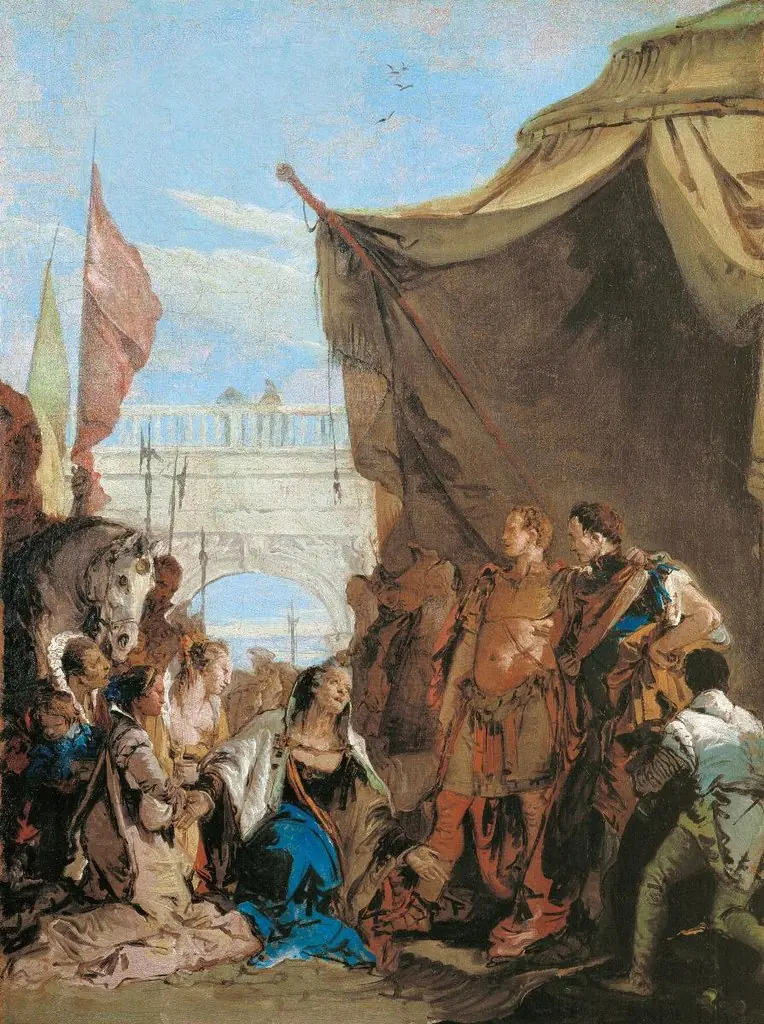 La famiglia di Dario dinanzi ad Alessandro
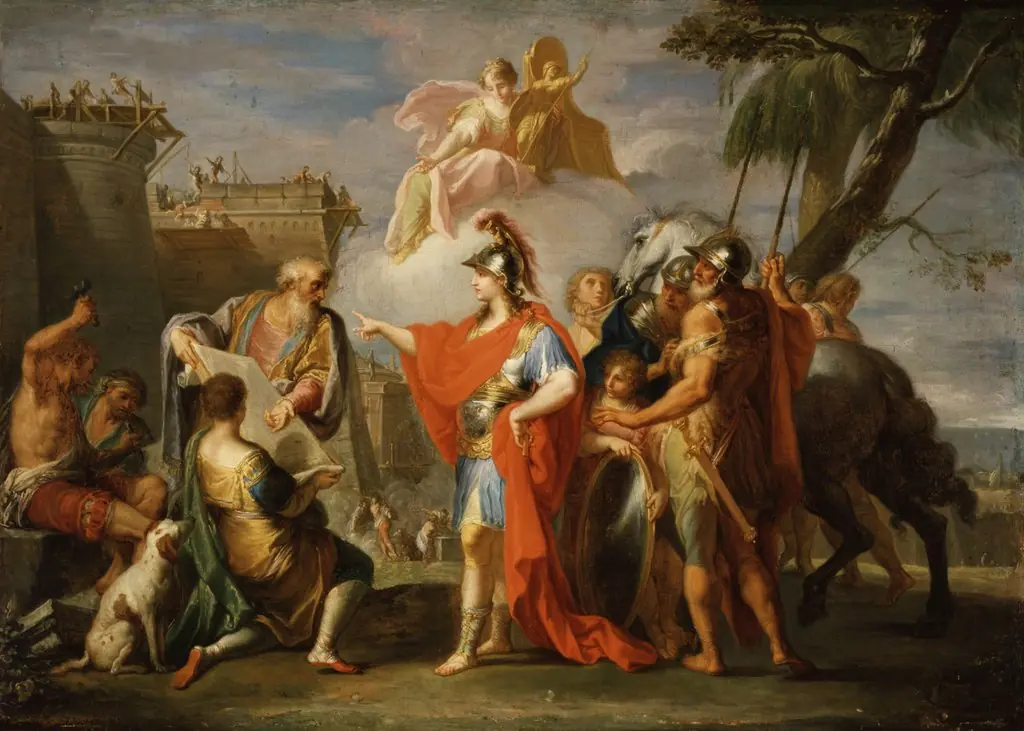 Alexander the Great Founding Alexandria
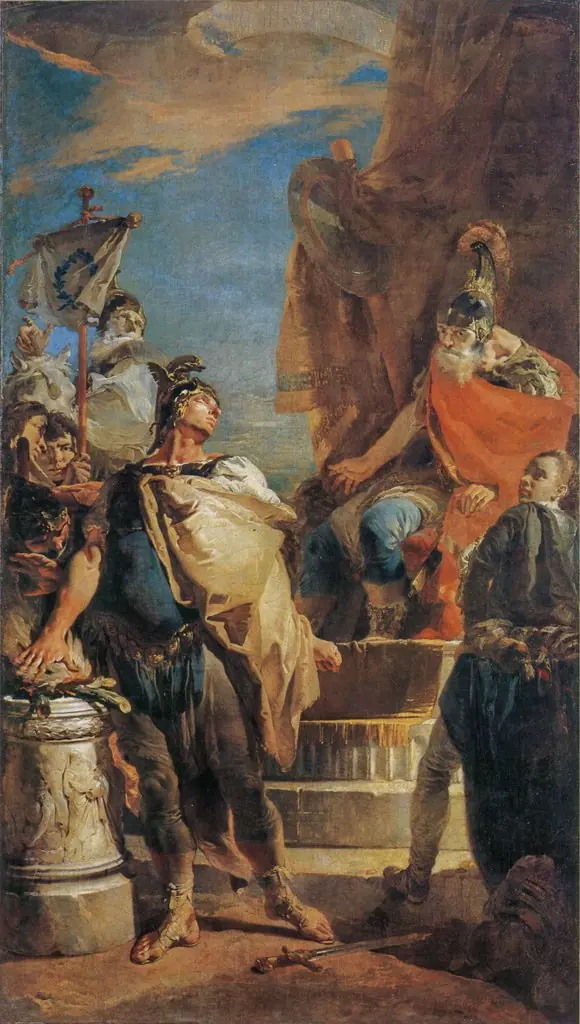 Mucius Scaevola before Porsenna
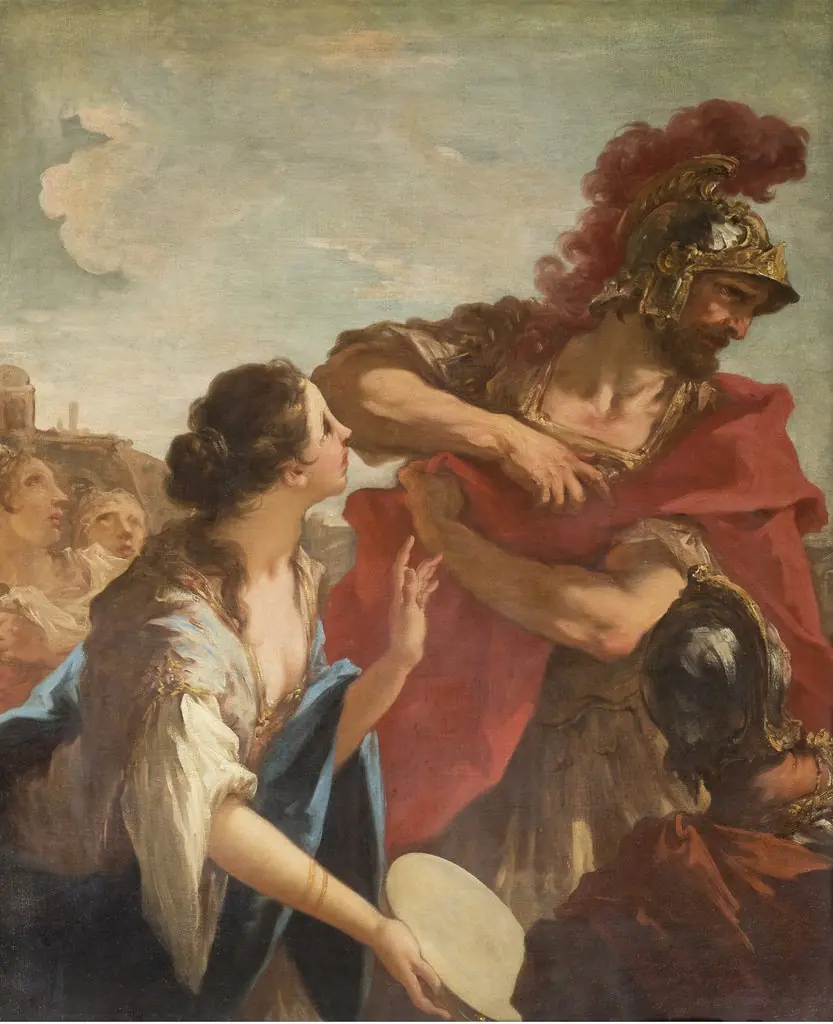 Jephthah returning from Battle is greeted by his Daughter
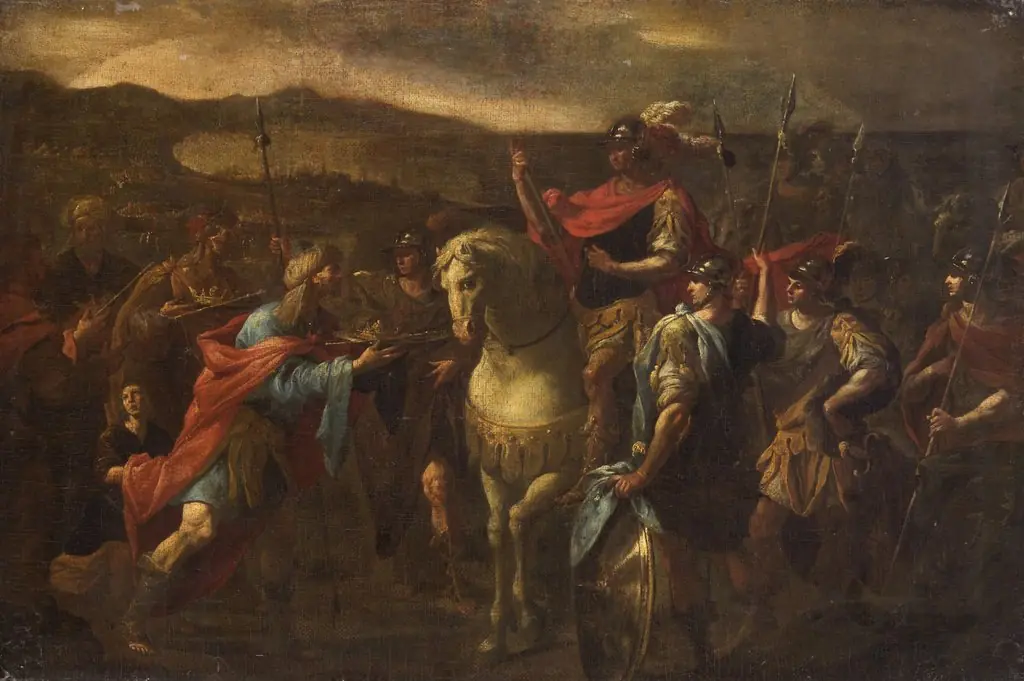 Indische Könige huldigen Alexander dem Großen
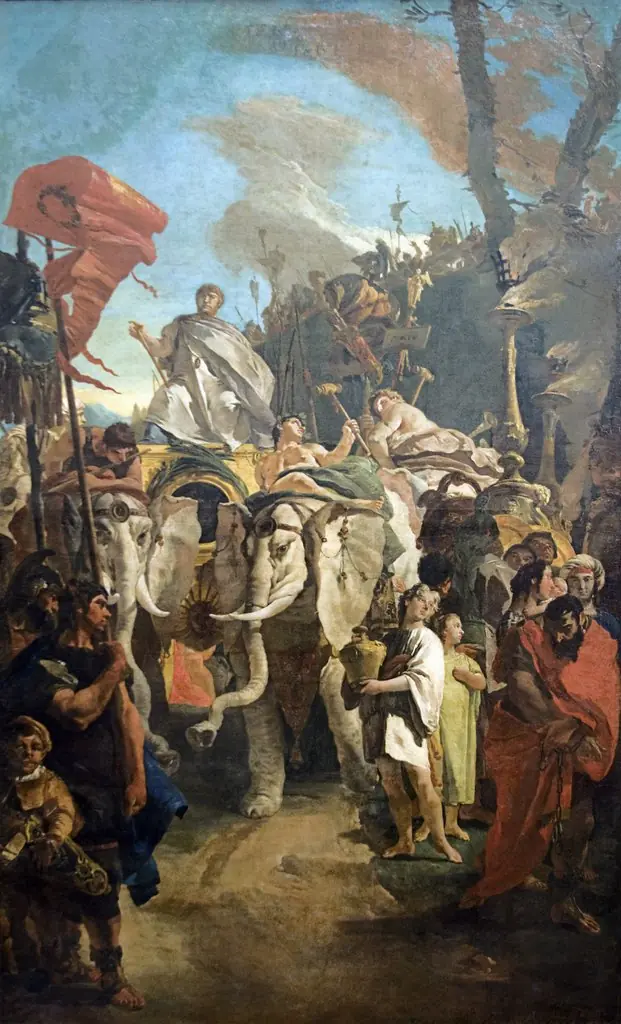 Triumph of Manius Curius Dentatus
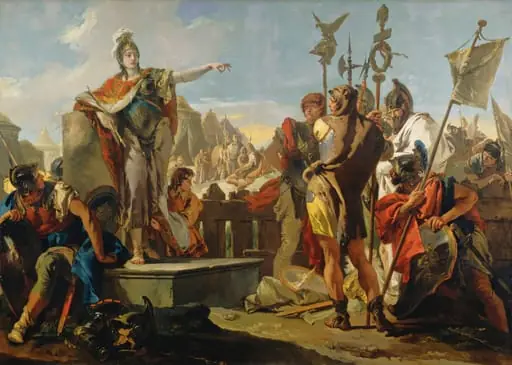 Queen Zenobia Addressing Her Soldiers
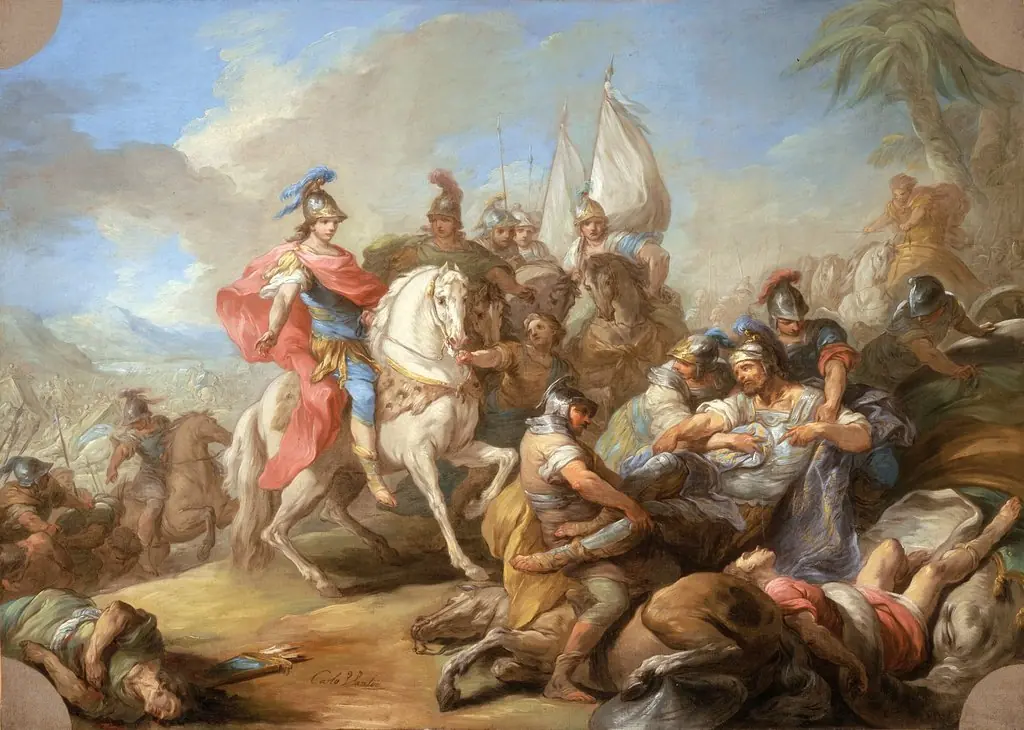 The Victory of Alexander over Porus
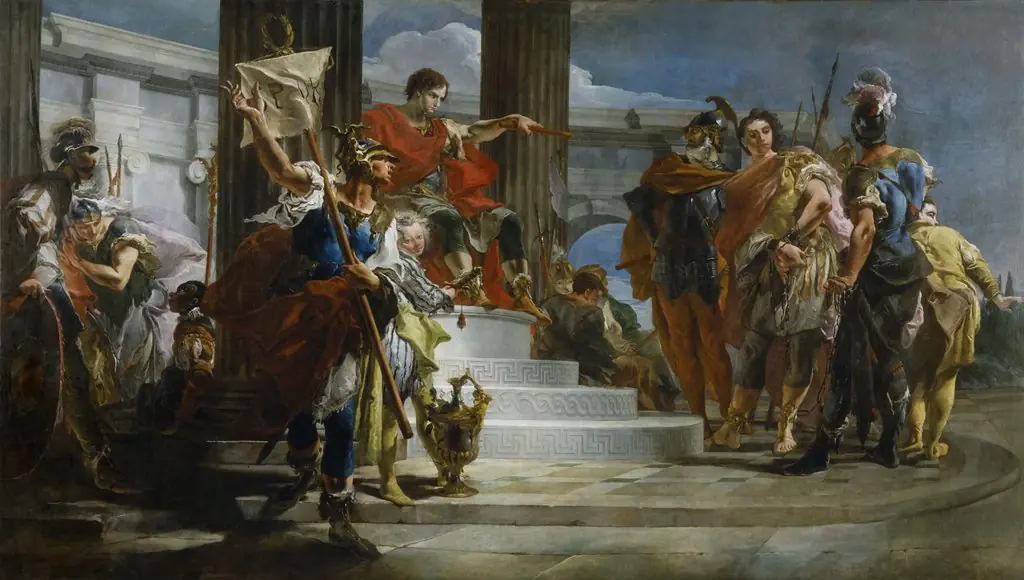 Scipio Africanus Freeing Massiva
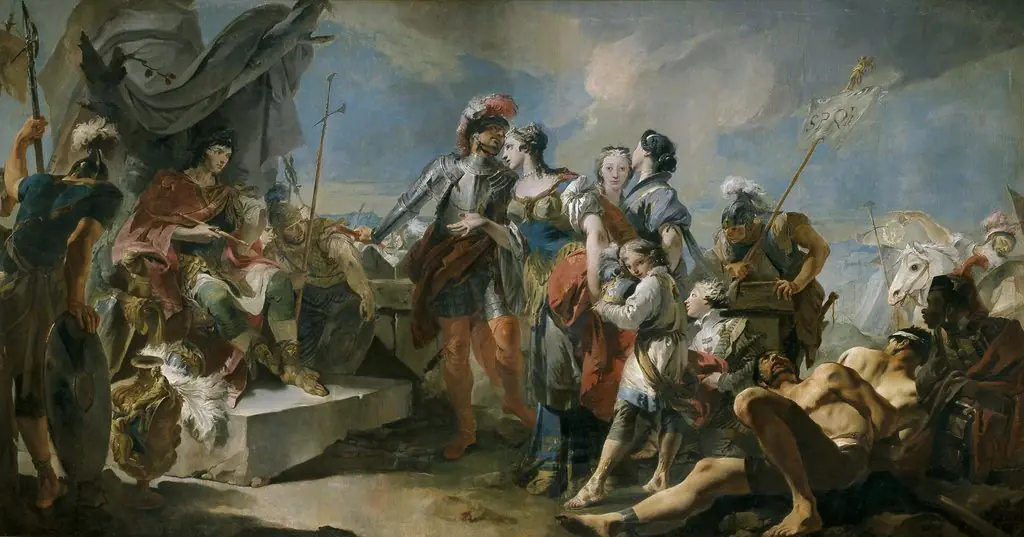 Queen Zenobia before the Emperor Aurelian
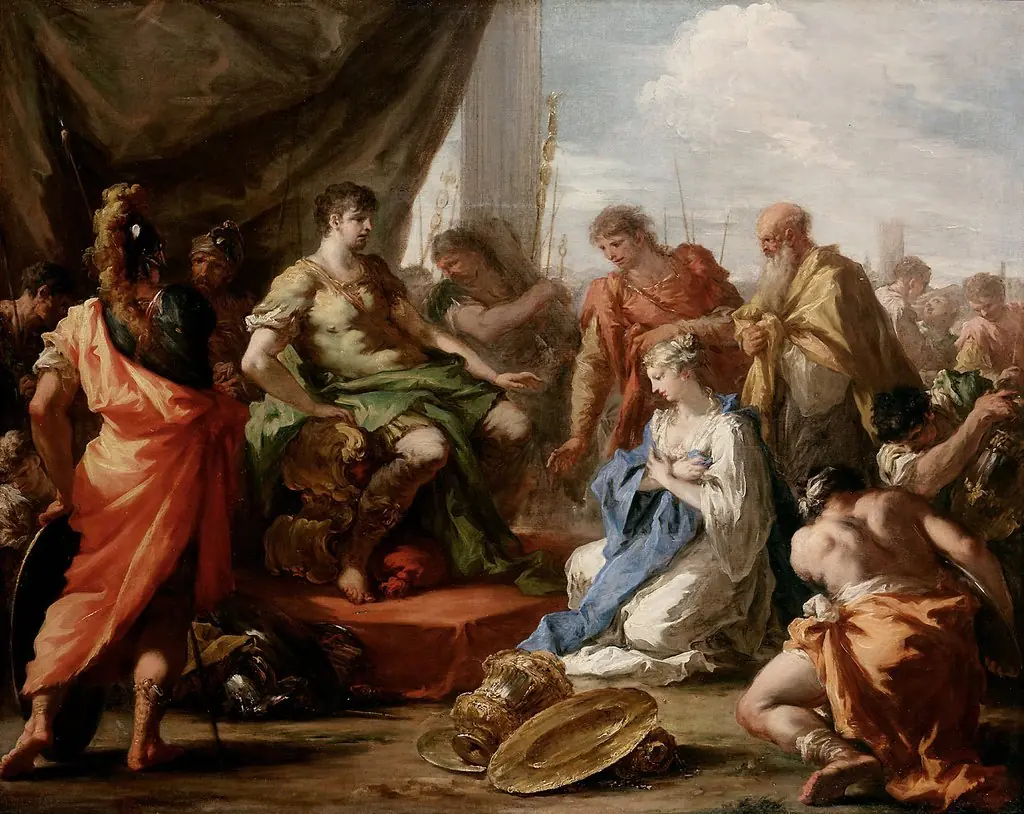 Enthaltsamkeit des Scipio
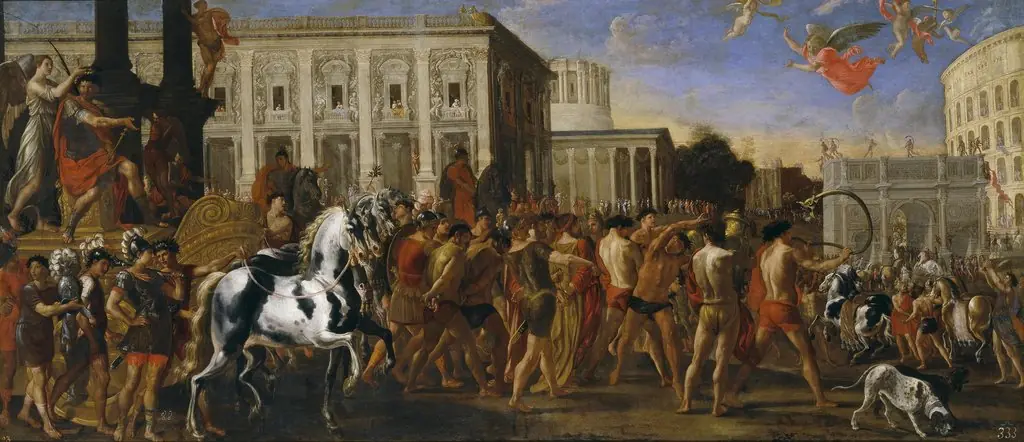
- Triumphal Entry of Constantine in Rome