Artwork
Joseph Revealing Himself to His Brothers in Egypt
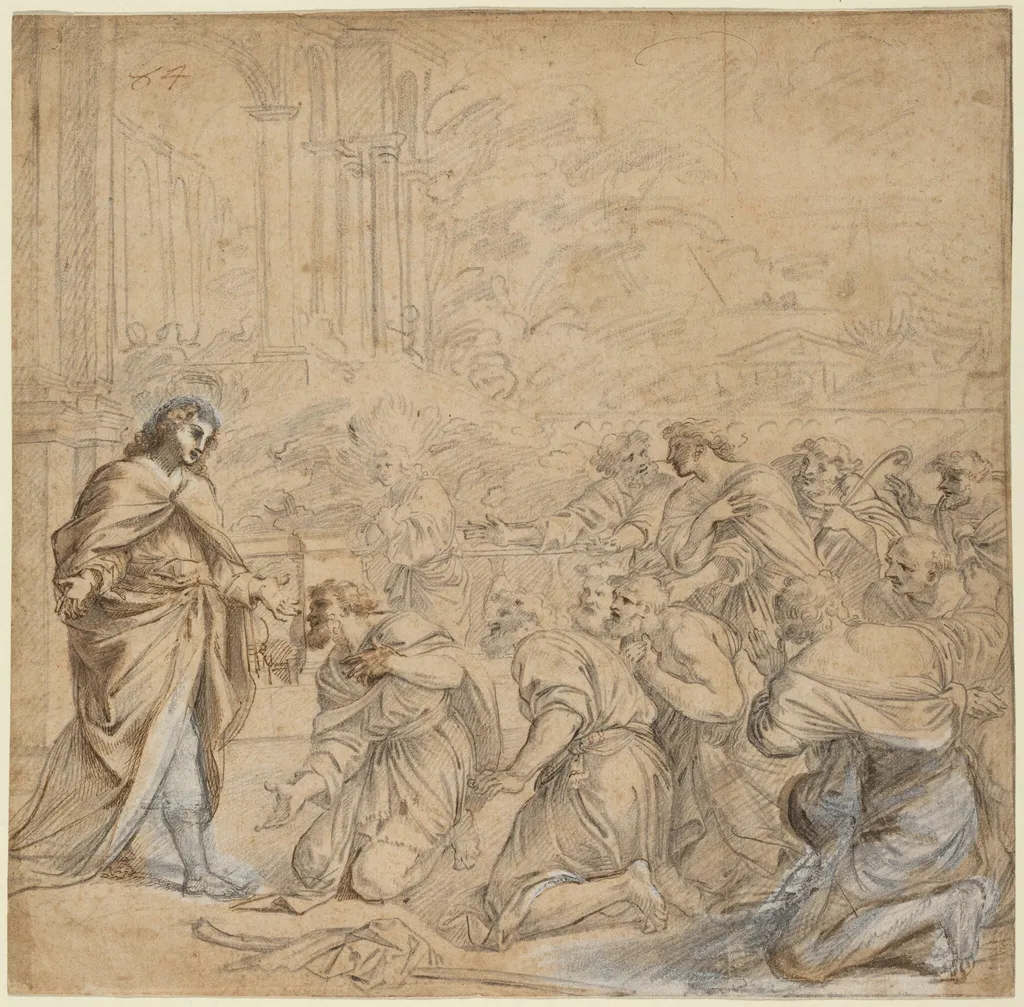
Joseph Revealing Himself to His Brothers in Egypt is a chalk drawing by the Baroque artist Studio of Pier Francesco Mola. It dates from 1655 and is held in the collection of the National Gallery of Art. This drawing depicts the biblical moment when Joseph discloses his identity to his brothers in Egypt.
- Inscription
- Inscribed:in later hand, upper left in brown ink: 84; upper center verso in graphite: 211; across center verso: Joseph und Seine Bruder / nel Palazzo [Quirinale] / Franc Mola
About this work
Overview
This drawing depicts the biblical moment when Joseph discloses his identity to his brothers in Egypt. Executed in black chalk, pen and brown ink, with brown wash and white highlights on laid paper, it is a refined study in monochrome. The artist employs minimal materials to convey emotional intensity and spatial depth, demonstrating mastery over subtle tonal gradations without color.
Subject & Meaning
The scene captures the emotional climax of Genesis 45, as Joseph, now a powerful Egyptian official, reveals himself to the brothers who once sold him into slavery. Their stunned expressions and varied postures reflect shock, guilt, and dawning recognition. The moment is rendered with psychological nuance, emphasizing reconciliation over vengeance, and the quiet gravity of familial reunion.
Technique & Style
The artist uses cross-hatching and controlled washes to model form and suggest volume, while white highlights accentuate key facial features and fabric folds. Lines are deliberate yet fluid, avoiding ornamental excess. The limited palette of browns and off-whites creates a restrained, intimate atmosphere, focusing attention on gesture and expression rather than decorative detail.
History & Provenance
The drawing’s origin is attributed to a 17th-century Northern European artist, likely influenced by Italian draftsmanship. It entered a private collection in the 18th century and was later acquired by a public institution. No definitive record of its commission survives, but its quality suggests it was intended as a finished work, not merely a preparatory sketch.
Context
During the 1600s, biblical narratives were frequently explored in drawings as studies for larger compositions or as independent devotional works. Artists favored chalk and ink for their immediacy and expressive potential. This piece aligns with a broader trend of emphasizing human emotion in religious subjects, reflecting contemporary theological interest in personal redemption.
Legacy
The drawing exemplifies how restrained media could convey complex narratives with emotional precision. Its technique influenced later draftsmen interested in psychological realism. Though not widely reproduced, it remains a significant example of Baroque-era graphic art, valued for its quiet power and technical economy.
![Joseph and His Brother in Egypt [verso]](https://artifactworldgallery.com/img/italian-17th-century--joseph-and-his-brother-in-egypt-verso--86cfb4fbb2662a76-w320.webp)
Artist & collection

 Scenes from the Life of Saint Peter
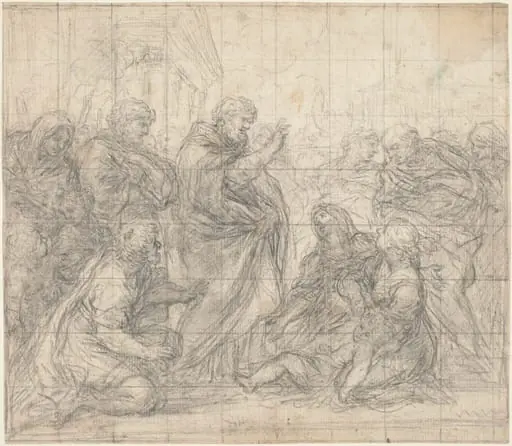 Saint Zenobius Resuscitating a Child
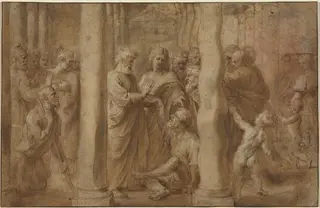 The Miracle of the Lame Man Healed by Saint Peter and Saint John
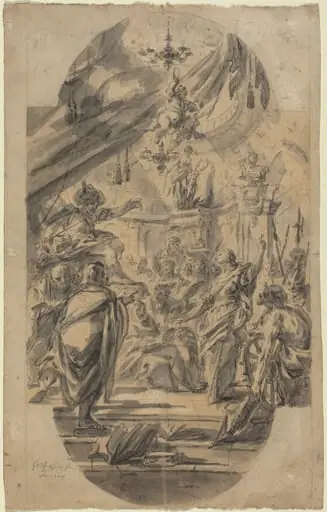 The Disputation of Saint Catherine of Alexandria
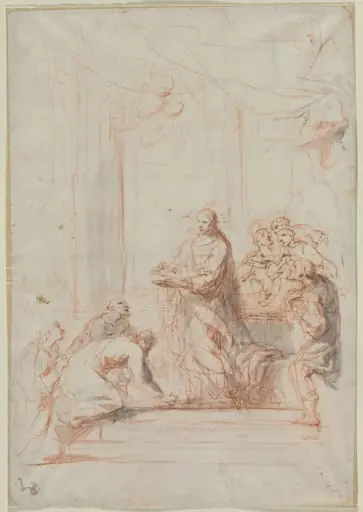 Christ Administering the Host
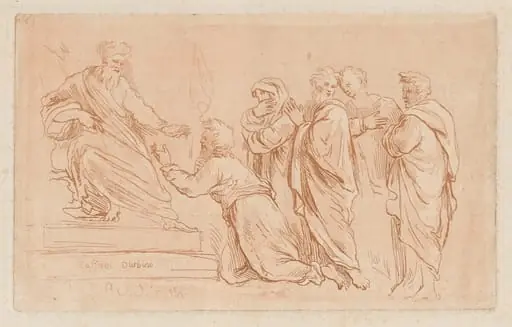 Adonias Imploring the Grace of Solomon or Jeroboam Kneeling before Rehoboam
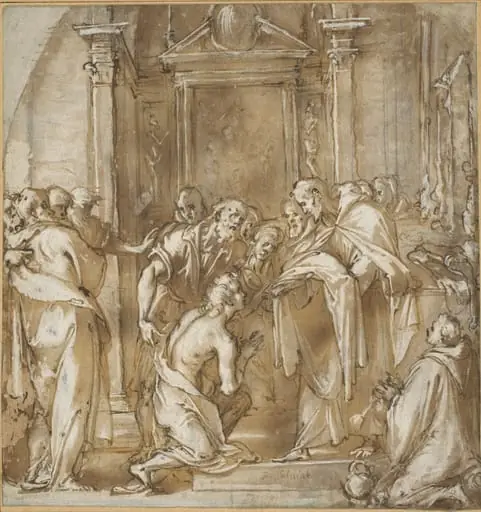 Saint Vincent Ferrer Taking His Vestments
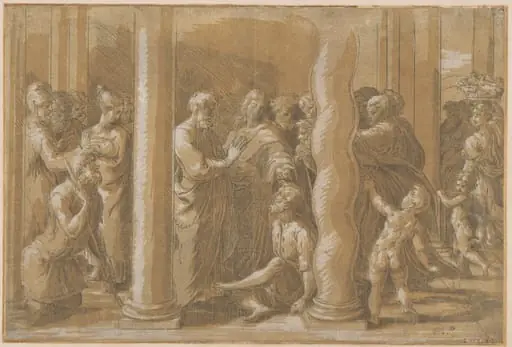 Saints Peter and John Healing the Lame Man at the Golden Gate
![Jacob and Rebecca before Isaac [recto], by French 18th Century](https://artifactworldgallery.com/img/french-18th-century--jacob-and-rebecca-before-isaac-recto--5393ee8d0dceb48c-w320.webp) Jacob and Rebecca before Isaac [recto]
Jacob and Rebecca before Isaac [recto]