Artwork
The Miracle of the Lame Man Healed by Saint Peter and Saint John
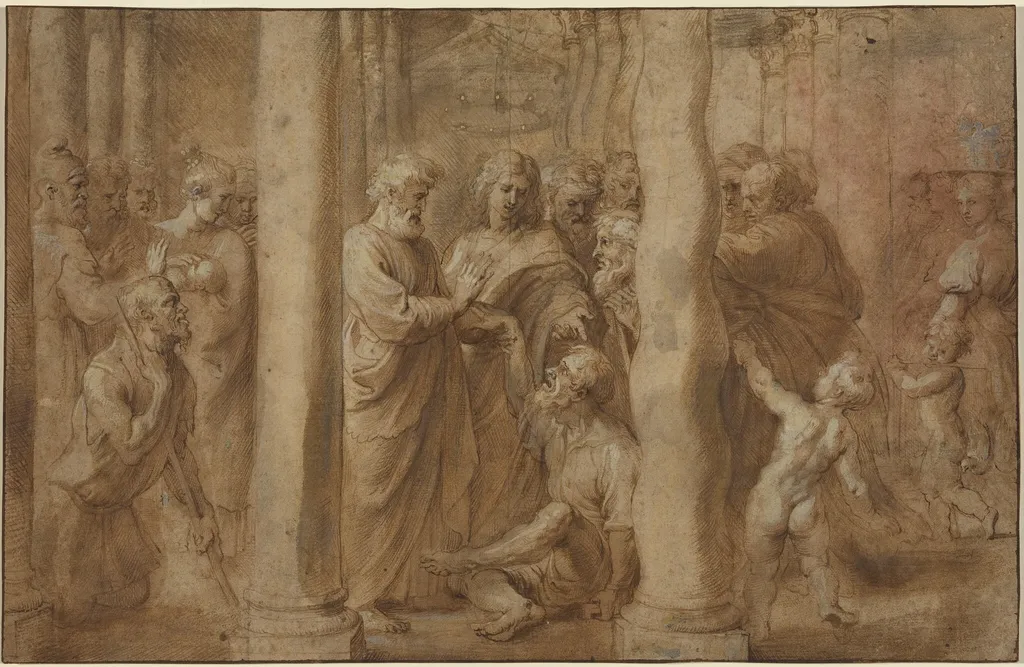
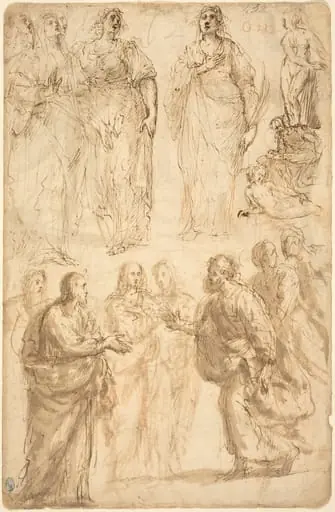
The Miracle of the Lame Man Healed by Saint Peter and Saint John is an ink drawing by the Baroque artist Peter Paul Rubens. It dates from 1607 and is held in the collection of the National Gallery of Art.
About this work
Overview
Created around 1607, this pen-and-ink drawing by Peter Paul Rubens depicts the biblical episode in which Saint Peter and Saint John restore a crippled man to health. Executed on laid paper, the work combines brown ink with a brown wash intensified by buff highlights, offering a monochromatic yet richly layered composition.
Subject & Meaning
At the centre of the composition stand the two apostles, Saint Peter and Saint John, each extending a hand toward a kneeling figure whose limp posture signals his infirmity. The gesture underscores themes of divine intervention and the power of faith, central to Counter‑Reformation visual narratives.
Technique & Style
Rubens employs a fine pen line for the detailed rendering of the saints and the afflicted man, while the surrounding architecture is suggested with looser strokes. The contrast between precise figural modeling and a more atmospheric background creates depth, and the use of chiaroscuro in the ink wash adds a dramatic tonal range characteristic of early Baroque drawing.
History & Provenance
The drawing is attributed to Rubens during his early period in Antwerp, shortly after his return from Italy. It remains a study rather than a finished painting, reflecting the artist’s preparatory process for larger commissions. The work is presently held in a European collection, though its exact ownership lineage is not fully documented.
Context
The subject aligns with the Catholic Church’s emphasis on miraculous healings as evidence of saintly intercession, a theme frequently explored in Rubens’s religious output. The classical architectural setting, with columns and arches, situates the miracle within an idealized, timeless space, echoing the artist’s exposure to Italian Renaissance and Baroque architecture.
Legacy
As a preparatory drawing, the piece offers insight into Rubens’s compositional planning and his integration of narrative clarity with dynamic movement. Scholars reference it when studying his approach to religious storytelling and his development of a vigorous, emotionally charged visual language that would define his later, larger-scale works.
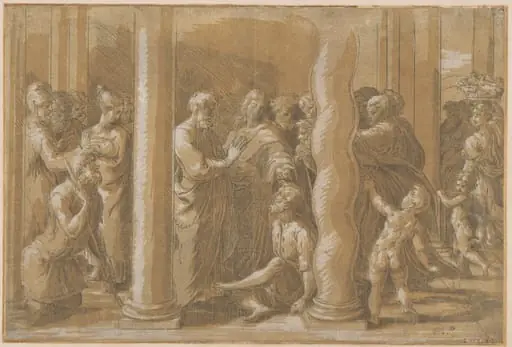
Own this work as a print
Artist & collection
Artist
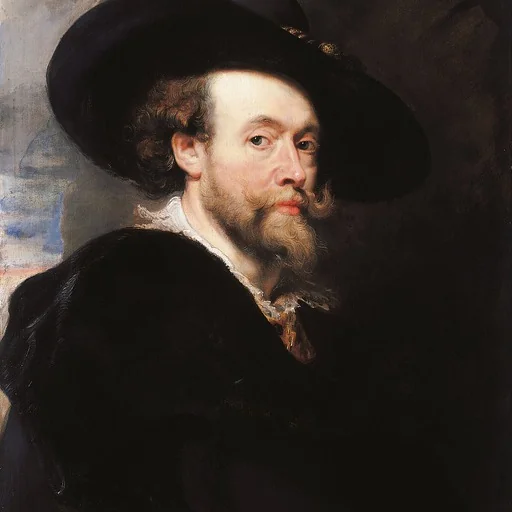
Sir Peter Paul Rubens ( ROO-bənz; Dutch:; 28 June 1577 – 30 May 1640) was a Flemish artist and diplomat.

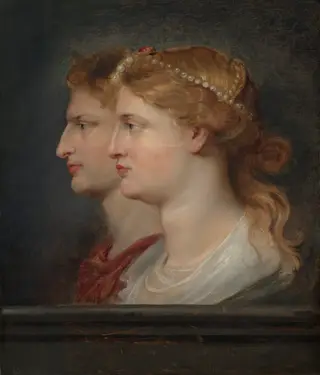
 Scenes from the Life of Saint Peter
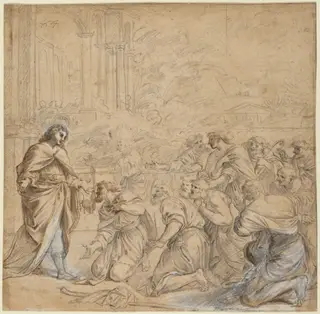 Joseph Revealing Himself to His Brothers in Egypt
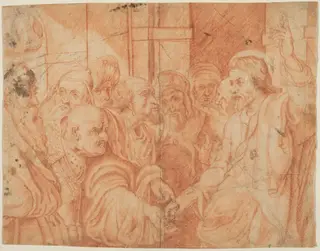 Tribute Money
![Joseph and His Brother in Egypt [verso], by Italian 17th Century](https://artifactworldgallery.com/img/italian-17th-century--joseph-and-his-brother-in-egypt-verso--86cfb4fbb2662a76-w320.webp) Joseph and His Brother in Egypt [verso]
Joseph and His Brother in Egypt [verso]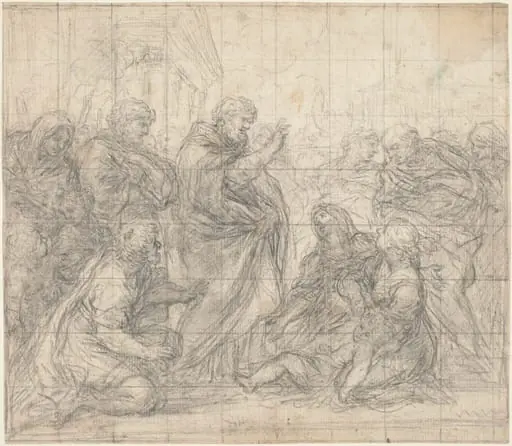 Saint Zenobius Resuscitating a Child
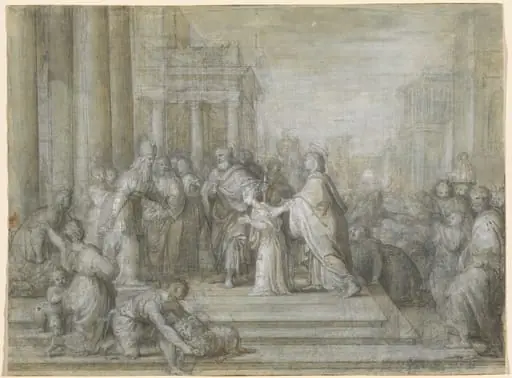 The Presentation of the Virgin in the Temple
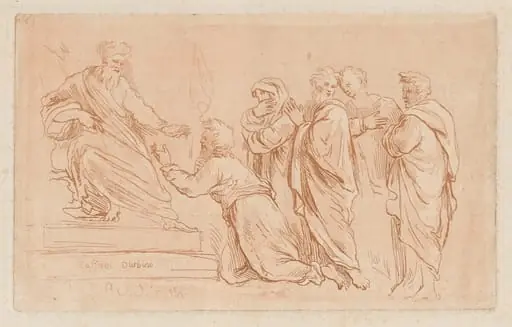 Adonias Imploring the Grace of Solomon or Jeroboam Kneeling before Rehoboam
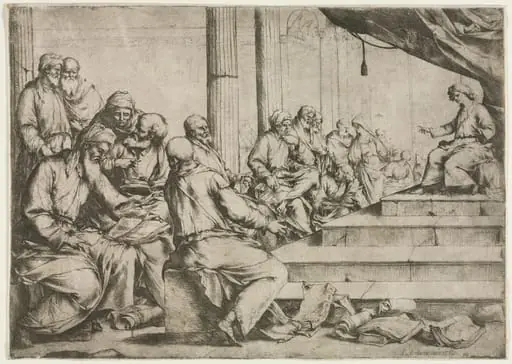 The Young Christ Teaching in the Temple
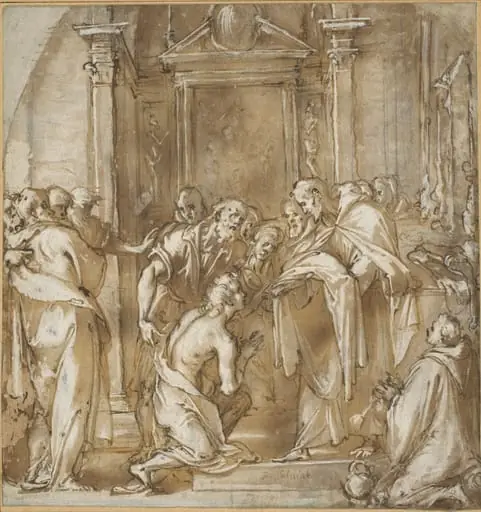 Saint Vincent Ferrer Taking His Vestments
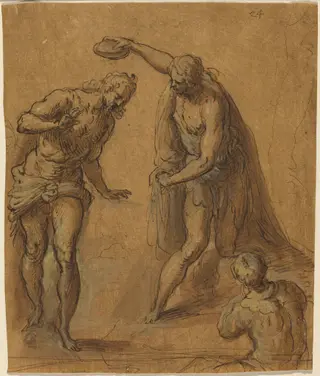 Sketch for a Baptism of Christ