Artwork
Portrait of a Young Lady
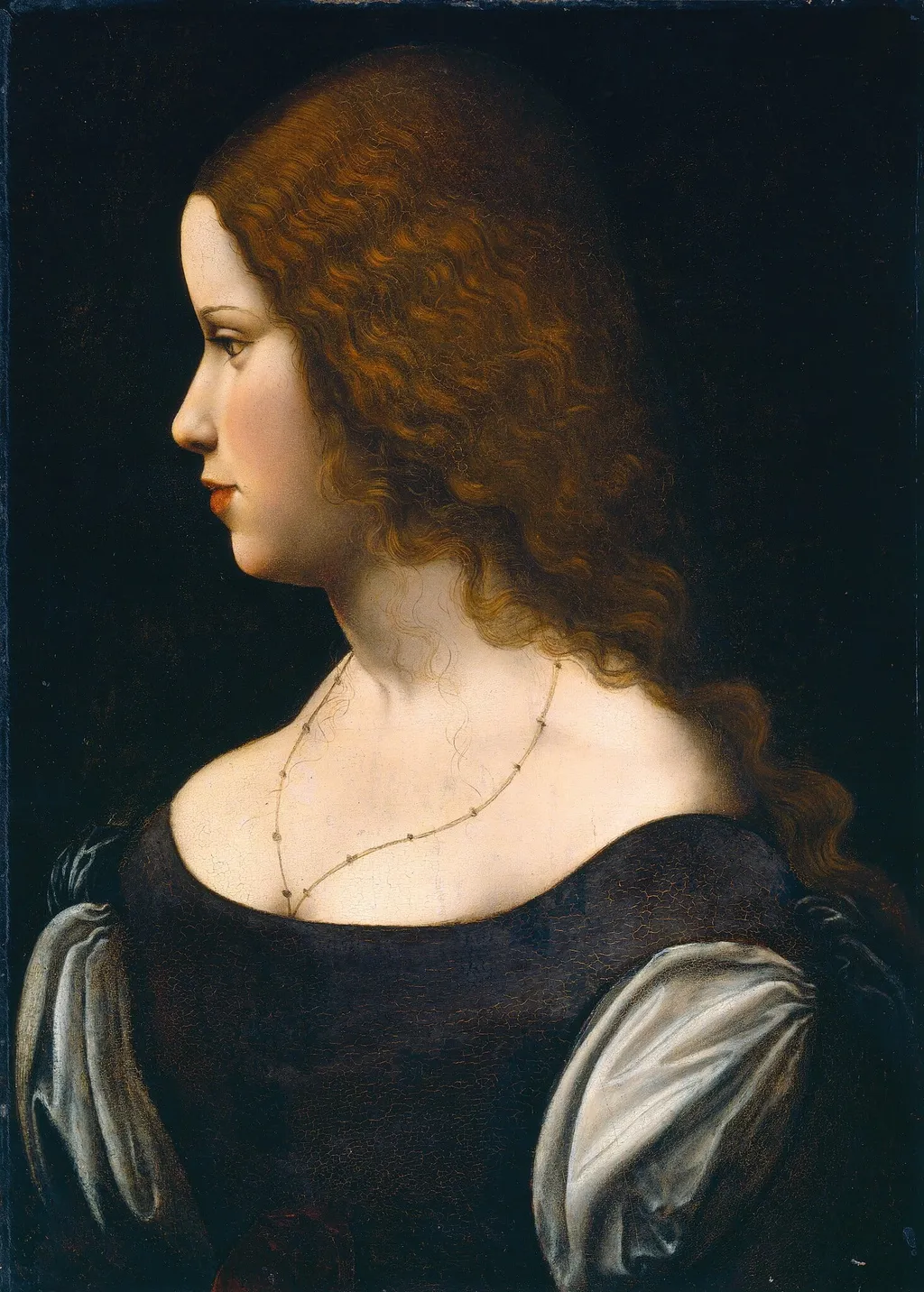
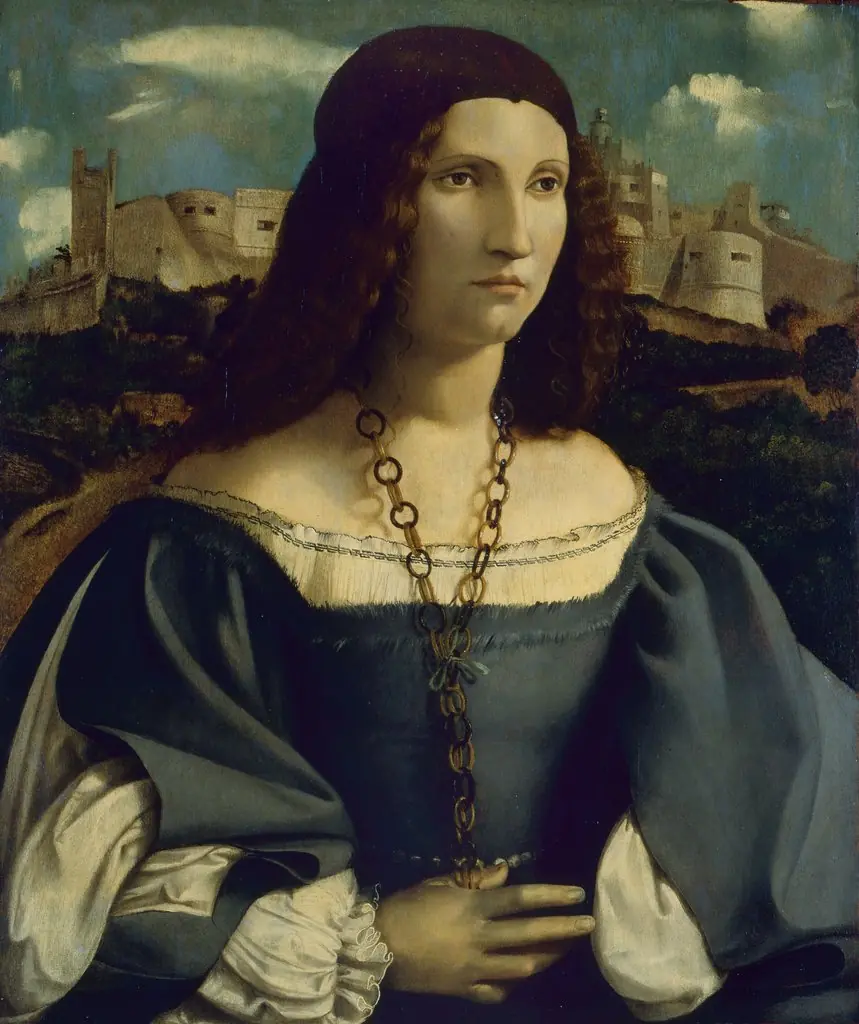
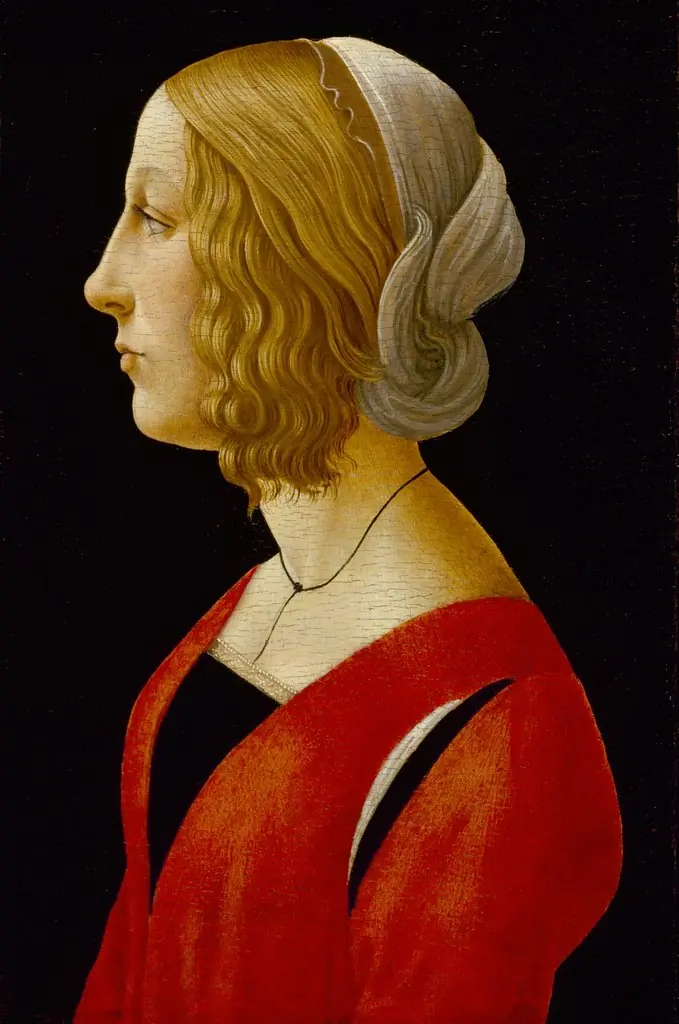
Portrait of a Young Lady is an oil painting by the Renaissance artist Follower of Leonardo da Vinci. It dates from 1500 and is held in the collection of the National Gallery of Art.
About this work
Subject & Meaning
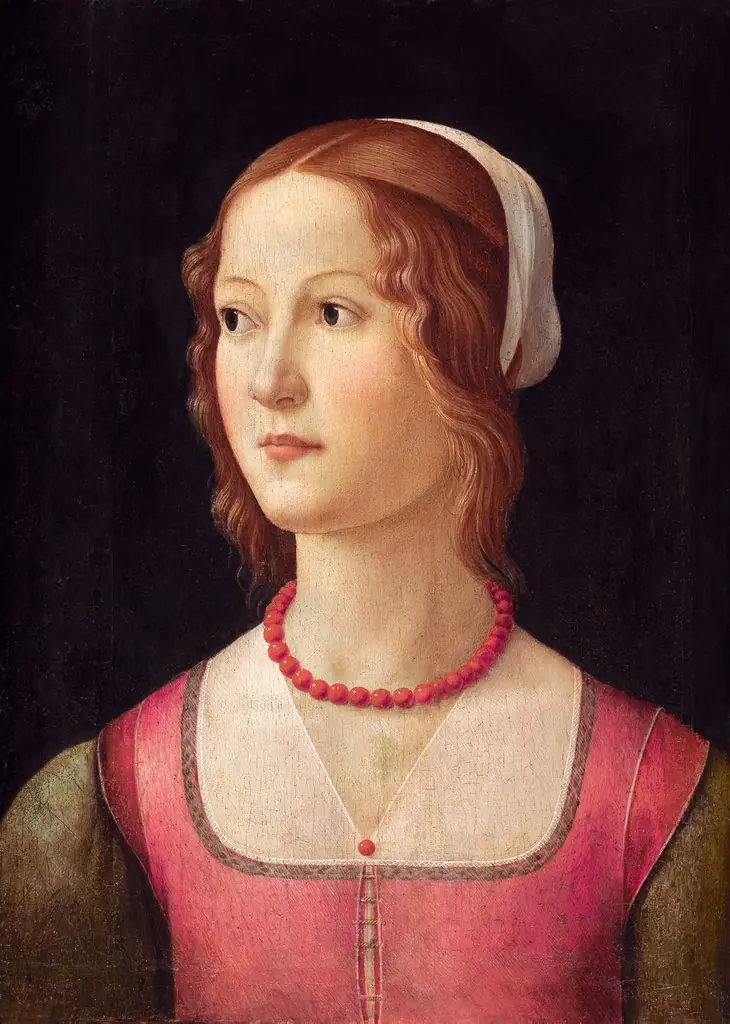
The painting depicts a young woman in early Renaissance attire, likely representing an idealized portrait rather than a specific individual.
The painting depicts a young woman in early Renaissance attire, likely representing an idealized portrait rather than a specific individual. Symbolic elements such as subtle jewelry and soft modeling align with contemporary conventions for portraying virtuous femininity, reflecting humanist ideals of beauty and virtue associated with Leonardo da Vinci's circle. The work's attribution to Bernardino de' Conti as a follower of Leonardo underscores its connection to High Renaissance aesthetics, blending technical innovation with devotional resonance within devotional portraiture.
The subject's identity remains ambiguous, though earlier attributions suggested Beatrice d'Este, Duchess of Milan, a theory now reconsidered based on provenance records and stylistic analysis within the National Gallery of Art's collection documentation.
Technique & Style
The work is executed in oil on panel, with the original wooden support subsequently transferred to hardboard. It is classified as a painting and falls within the portrait genre.
In terms of formal and stylistic qualities, the picture is attributed to a follower of Leonardo da Vinci and has historically been associated with the name of Bernardino de' Conti, reflecting the Leonardesque portrait tradition current in Lombardy around 1500. The painting measures 47.3 cm in height by 34.3 cm in width.
No information regarding the present condition of the work, conservation history, or specific handling of paint and ground is provided in the available sources.
History & Provenance
The painting’s documented chain begins with the Count of Castel-Pizzuto in Milan, after which it passed through the hands of E. & C. Canessa in Naples and then to Duveen Brothers in London and New York by 1916, when it was sold to New York collector William Salomon as a work by Bernardino de’Conti.
By the early 1930s Duveen Brothers held it again before selling it in October 1947 to the Samuel H. Kress Foundation, which in turn gifted the work to the National Gallery of Art, Washington, in 1952.
Portrait of a Young Lady has been held by the National Gallery of Art in Washington, D.C., since 1952, when it entered the institution as a gift from the Samuel H. Kress Foundation. It forms part of the Samuel H. Kress Collection of the National Gallery of Art and is catalogued as NGA 1952.5.66. The Kress Foundation had acquired the panel in October 1947 from Duveen Brothers, Inc., which had handled the work in both London and New York.
Earlier in its documented provenance, the painting passed through the Count of Castel-Pizzuto in Milan and the dealers E. & C. Canessa in Naples before being offered by Duveen, who in 1916 sold it to William Salomon in New York under the attribution to Bernardino de'Conti. No exhibition history beyond this institutional and collecting trajectory is recorded in the available sources.
Context
The Portrait of a Young Lady is recognized as a work by a follower of Leonardo da Vinci, often attributed to Bernardino de' Conti. Although early provenance records from the Duveen Brothers identified the piece as a depiction of Beatrice D'Este by Leonardo himself, subsequent scholarship has reclassified it as a follower's work created around 1500. This reattribution reflects the painting's role within the broader context of Lombard portraiture that emulated Leonardo's stylistic innovations without claiming his direct authorship.
Currently held in the National Gallery of Art as part of the Samuel H. Kress Collection, the painting serves as a specific example of the dissemination of Leonardesque techniques in early 16th-century Italy.
Overview
Portrait of a Young Lady is an oil painting originally executed on panel and later transferred to hardboard. The work presents a solitary figure whose calm demeanor dominates the composition. The subdued palette and minimal background keep attention on the sitter’s face, creating a quiet, introspective atmosphere.
Artist & collection