Artwork
Violante
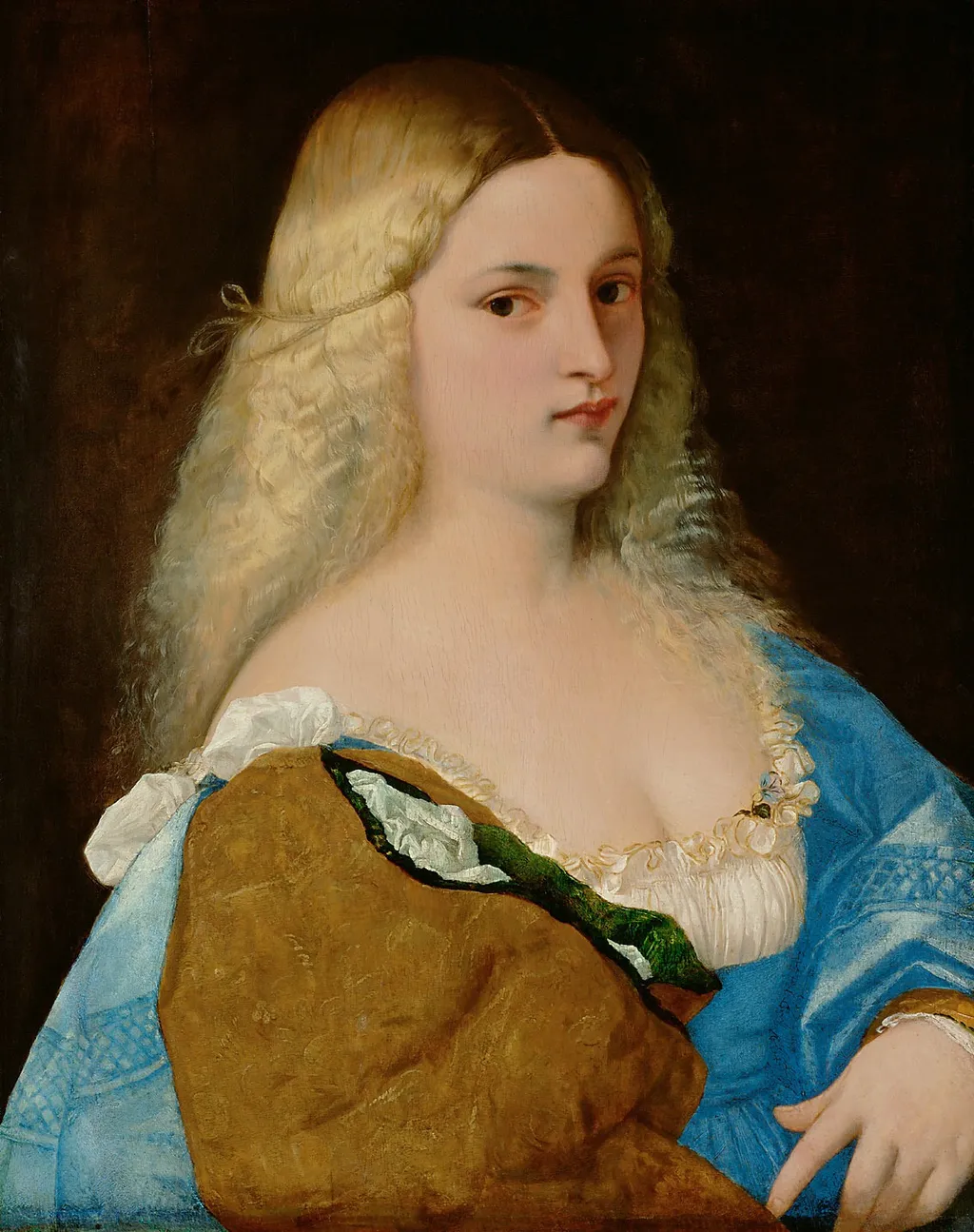
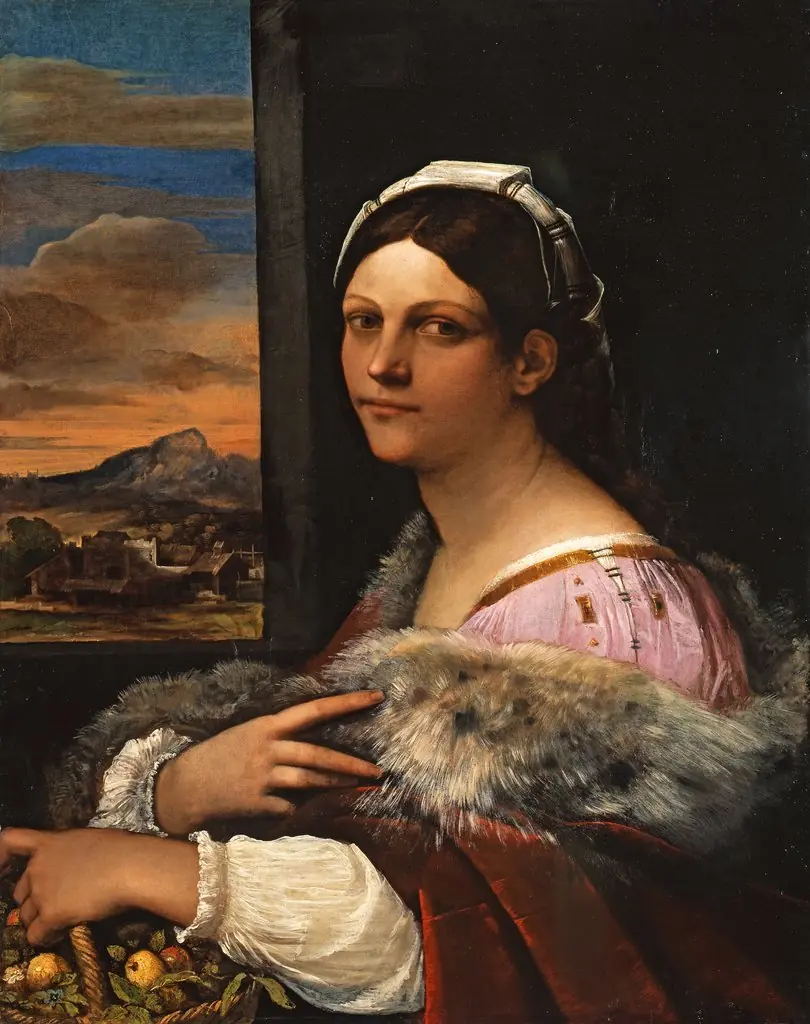
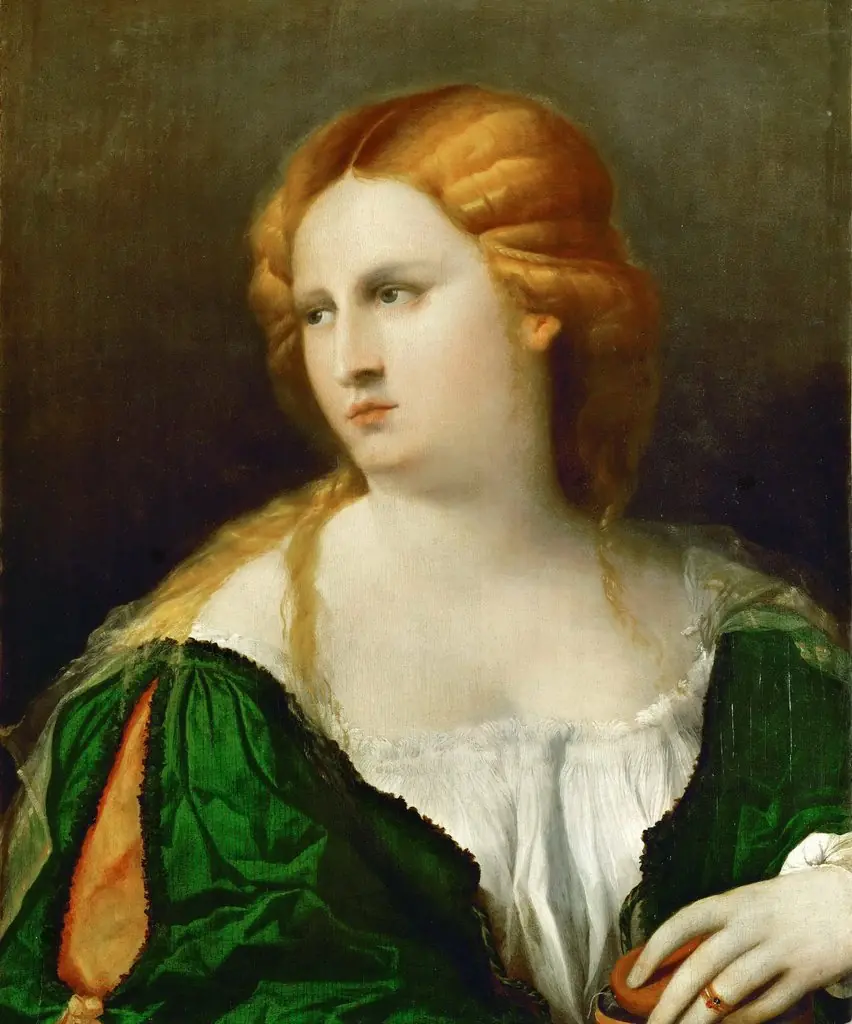
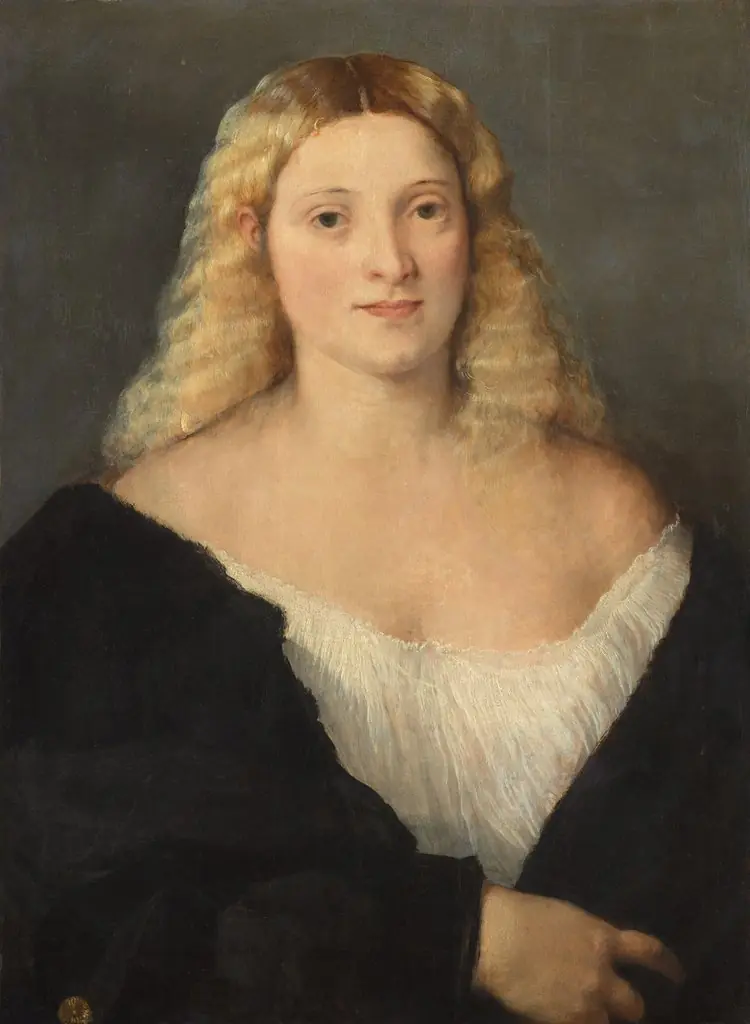
Violante is an oil painting by the High Renaissance artist Titian. It dates from 1515 and is held in the collection of the Kunsthistorisches Museum.
About this work
This is a portrait of a woman by Titian. It shows a half-length figure in oil paint from around 1515. The work hangs in Vienna’s Kunsthistorisches Museum.
Only one fact stands out: the painting dates to the early 1500s. It is one of Titian’s early works.
Look next at the work of Giorgione, another Venetian painter of the same time.
Subject & Meaning
The work represents the artist's early phase, utilizing a delicate sfumato technique derived from Giorgione to capture a sense of idealized feminine allure.
The painting depicts an idealized woman, traditionally identified as Violante Negretti, the daughter of the painter Palma Vecchio, though this specific identification lacks historical evidence. The subject is portrayed in a three-quarter view, leaning against an implied parapet with her gaze directed toward the viewer. She wears a sumptuous dress characteristic of Venetian nobility, featuring a generous neckline that accentuates her beauty and imparts a strong sensual value to the work.
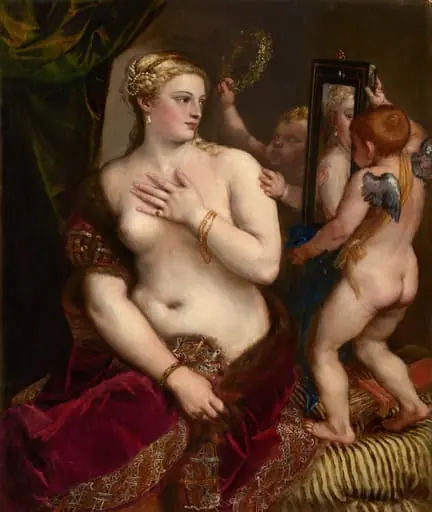
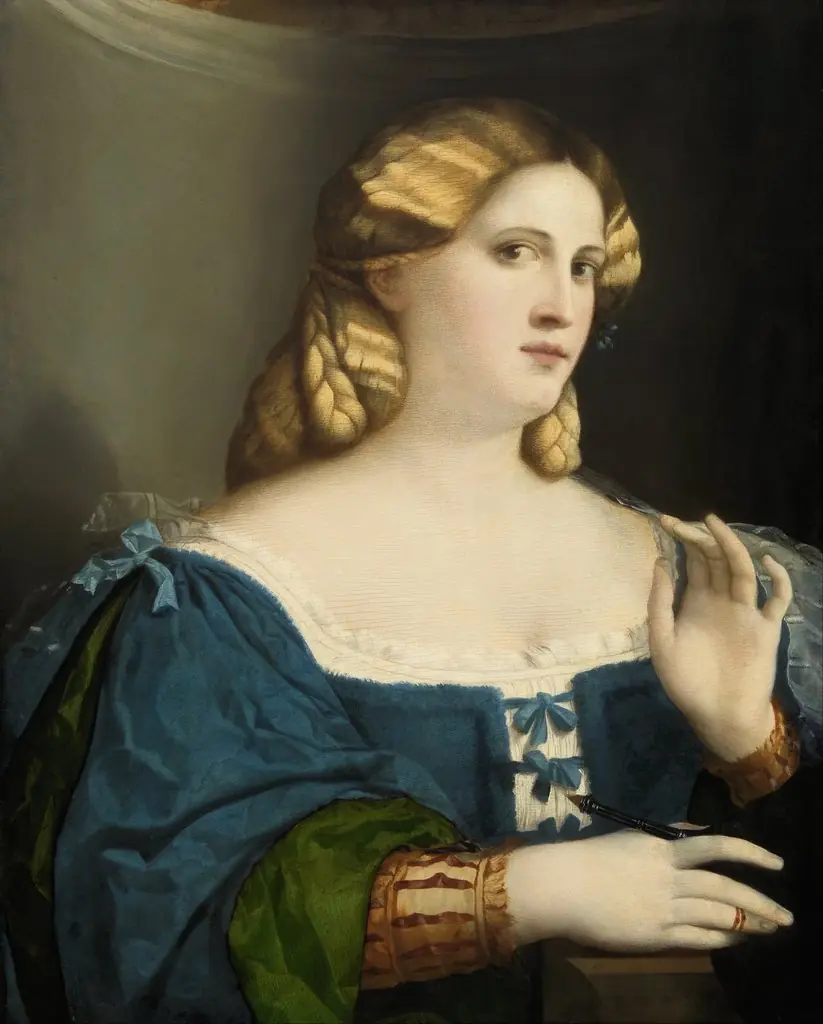
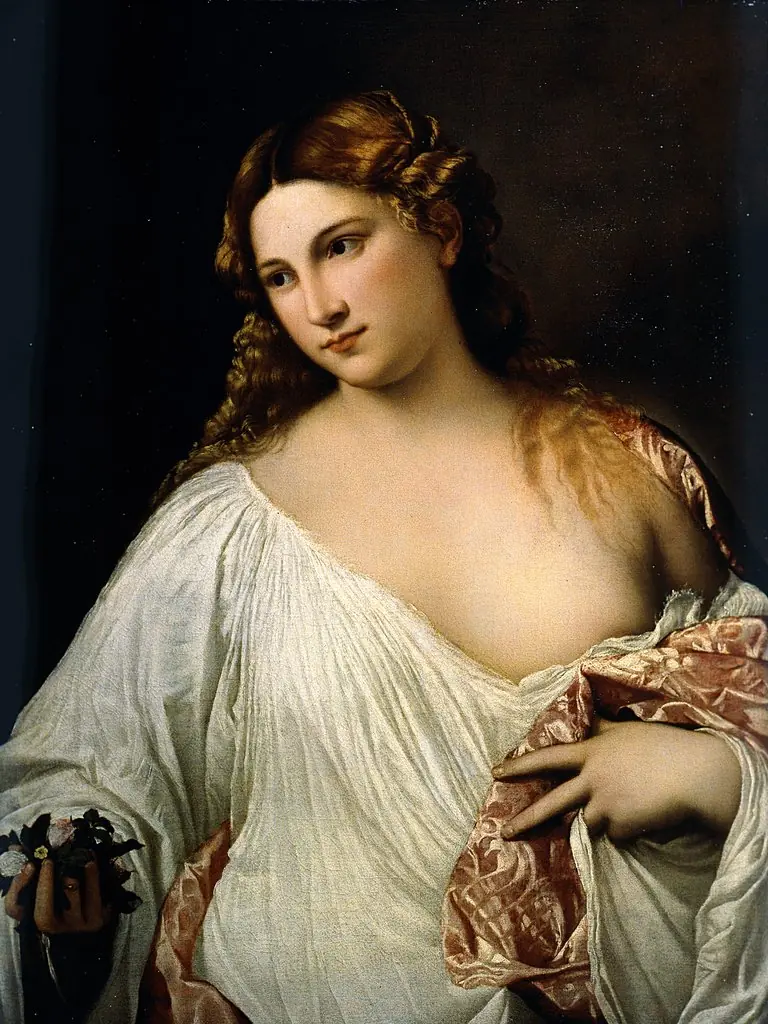
This figure is stylistically linked to a recurring series of portraits by the artist featuring blonde women with wavy hair, such as Flora and the Woman with a Mirror. The work represents the artist's early phase, utilizing a delicate sfumato technique derived from Giorgione to capture a sense of idealized feminine allure.
Technique & Style
The work is an oil painting on poplar panel, measuring 65 by 51 centimeters, created circa 1515 in Venice. It portrays Violante Negretti in a three-quarter view, turned slightly to the right, with her left arm resting on an imagined parapet; her gaze engages the viewer directly. The composition features a richly detailed Venetian noblewoman's attire with a pronounced neckline, rendered in a delicate tonal modeling derived from Giorgione that characterizes Titian's early period.
Stylistically, the piece aligns with the High Renaissance Venetian school, emphasizing sensuality and idealized beauty through soft transitions and refined brushwork.
History & Provenance
The painting was part of the Venetian collection of Bartolomeo della Nave and was sold in 1636 to the Duke of Hamilton, who brought it to London. In 1659 it entered the collection of Archduke Leopold Wilhelm of Austria, whose holdings later formed the core of the Kunsthistorisches Museum in Vienna. The work was displayed in the Archduke’s cabinet and featured in several gallery paintings from the 1650s, including two appearances in Theatrum Pictorium etchings (plate 194 by Lucas Vorsterman II and a frontispiece by Teniers), where it was recorded with dimensions in palm units and the caption “I. Palma Senior pinxit, 4 Alta 3 Lata, L. Vorsterman f.”
Subsequent scholarship, notably by Roberto Longhi, re‑attributed the portrait to Titian, identifying the sitter as a blonde, wavy‑haired woman reminiscent of other youthful portraits such as Woman with a Mirror and Flora. Contemporary descriptions emphasize the delicate Giorgionesque modeling and the idealized beauty typical of early‑16th‑century Venetian portraiture.
The title derives from the traditional identification of the sitter as Violante, daughter of Palma the Elder, though this attribution has been questioned because other women in the same series were also called Violante.
The painting is held in the Kunsthistorisches Museum, Vienna, accessioned as a work by Titian dated to 1515.
It entered the museum through the collections of Archduke Leopold Wilhelm of Austria, who acquired it in 1659 from the Hamilton ducal holdings; prior to this it had formed part of Bartolomeo della Nave’s Venetian collection and was sold to the Duke of Hamilton in 1636. The painting appears in David Teniers the Younger’s gallery representations and in plate 194 of the Theatrum Pictorium (1655–1660), confirming its presence in Leopold Wilhelm’s cabinet.
Context
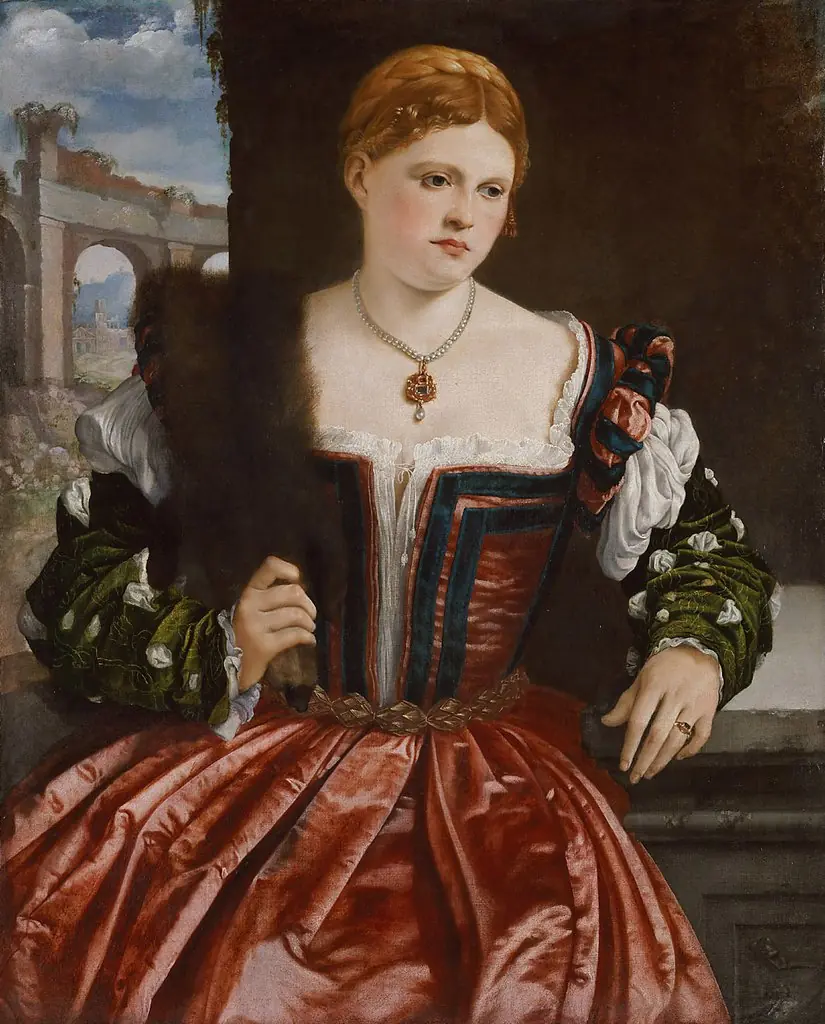
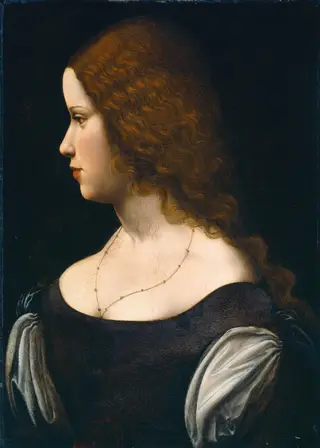
Long attributed to Palma Vecchio, the painting's identification as a work by Titian was established by art historian Roberto Longhi, a view subsequently supported by Wilhelm Suida. This reattribution situates the piece within the artist's early career, characterized by a delicate sfumato derived from Giorgione. The sitter is visually linked to a recurring series of idealized blonde women in Titian's oeuvre, sharing features with works such as the Balbi Holy Conversation, the Woman with a Mirror, Flora, and the Young Woman in a Black Dress.
Although the title references Violante Negretti, daughter of Palma, this specific identification lacks historical foundation and likely stems from the work's earlier misattribution. The painting remains a significant example of Venetian High Renaissance portraiture, reflecting the period's shift toward sensual, idealized female imagery.
Legacy
The painting's early reputation is evidenced by its prominent inclusion in the 1650s gallery paintings of Archduke Leopold Wilhelm's collection. It was featured twice in David Teniers the Younger's etching series Theatrum Pictorium, appearing as plate 194 engraved by Lucas Vorsterman II and again in the frontispiece. During this period, the work was traditionally attributed to Palma Vecchio, identified by the caption "I. Palma Senior pinxit" in the 1655–1660 illustrations.
Its modern legacy and critical standing were fundamentally altered by Italian art historian Roberto Longhi, who reattributed the piece to Titian. This reclassification linked the subject stylistically to Titian's series of blonde women, including the Woman with a Mirror and Flora, cementing its status as a youthful masterpiece of the Venetian school.
Overview
The work is an oil painting on panel, traditionally linked to the Venetian artist Titian and dated to around 1515. It depicts a half‑length portrait of a woman and forms part of the collection of the Kunsthistorisches Museum in Vienna.
Artist & collection
Artist
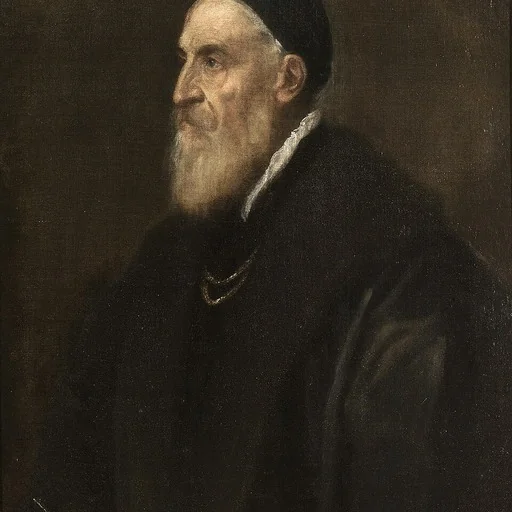
Tiziano Vecellio (Italian:; c. 1488/1490 – 27 August 1576), Latinized as Titianus, hence known in English as Titian ( TISH-ən), was an Italian Renaissance painter. The most important artist of Renaissance Venetian…