Artwork
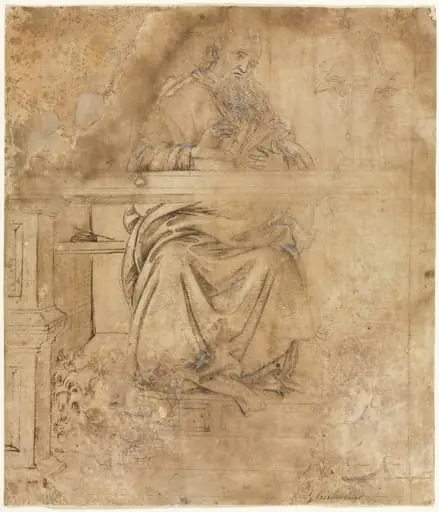
Rider and Standing Draped Man, after the Antique [verso]
![Rider and Standing Draped Man, after the Antique [verso], by Style of Pietro Perugino, ink, 1500](https://artifactworldgallery.com/img/style-of-pietro-perugino--rider-and-standing-draped-man-after-the-antique-verso--ae6c9bffcbedd3ec-w1024.webp)
Rider and Standing Draped Man, after the Antique [verso] is an ink drawing by the Renaissance artist Style of Pietro Perugino. It dates from 1500 and is held in the collection of the National Gallery of Art. This drawing, executed in pen and brown ink on laid paper, depicts two figures.
About this work
Overview
This drawing, executed in pen and brown ink on laid paper, depicts two figures. The work is a study of a draped male figure and a horse with a rider.
Subject & Meaning
The drawing features a man in a draped robe with crossed arms in the foreground, while a horse's head and its rider are visible behind him. The figures are rendered with attention to detail, suggesting a study from antique sources.
Technique & Style
The artist employed cross-hatching lines to achieve a detailed and realistic representation. The folds of the man's robe and the texture of the horse's mane are carefully rendered, demonstrating a focus on realism.
Context
The drawing reflects the Renaissance interest in classical antiquity, as indicated by its subject matter and style.
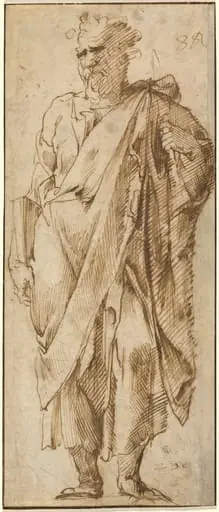
![Standing Draped Man [recto]](https://artifactworldgallery.com/img/jacopo-da-empoli--standing-draped-man-recto--b3cdc92a1134339d-w320.webp)
Artist & collection
Artist

![Figure of an Archer [recto], by Style of Pietro Perugino](https://artifactworldgallery.com/img/style-of-pietro-perugino--figure-of-an-archer-recto--8de8b4fd79de4a46-w320.webp)