Artwork
The Temptation of Saint Anthony
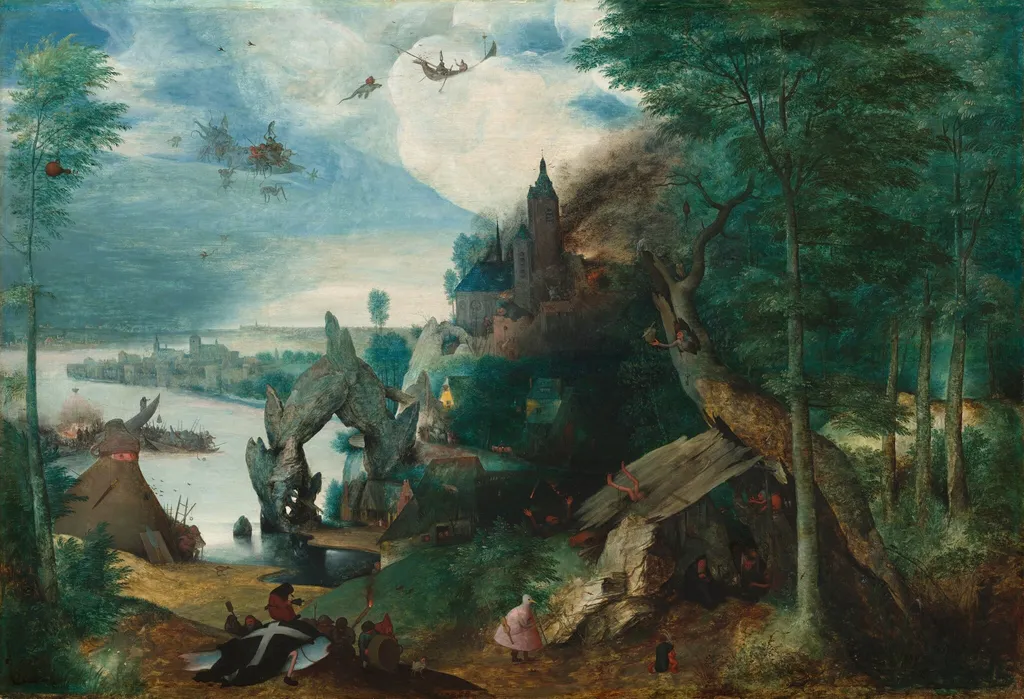
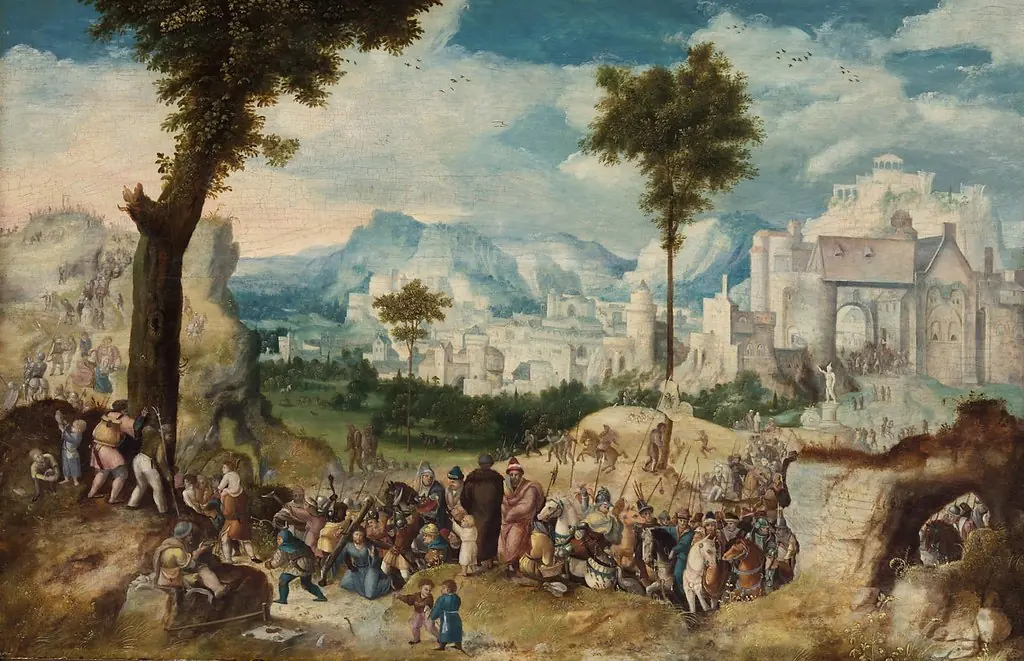
The Temptation of Saint Anthony is an oil painting by the Mannerist artist Follower of Pieter Bruegel the Elder. It dates from 1562 and is held in the collection of the National Gallery of Art.
About this work
Subject & Meaning
As a work of religious art created around 1550 by a follower of Pieter Bruegel the Elder, the piece visualizes the saint's spiritual trials.
The painting depicts the biblical narrative of the Temptations of Saint Anthony, focusing on Anthony the Great as the central figure. As a work of religious art created around 1550 by a follower of Pieter Bruegel the Elder, the piece visualizes the saint's spiritual trials. The composition illustrates the main subject of Anthony's resistance against demonic forces, a standard iconographic theme in Christian art representing the struggle between faith and worldly or diabolical allurements.
While the specific visual details of the temptations are not elaborated in the provided records, the work's classification as religious art and its attribution to a Bruegel follower place it within a tradition of Northern Renaissance interpretations of this hagiographic story. The subject matter serves to represent the enduring Christian theme of spiritual endurance against evil.
Technique & Style
The work is an oil painting executed on a wooden panel, measuring 58.5 cm in height and 85.7 cm in width. The medium and support align with Northern European panel-painting practices of the mid-16th century. Stylistically, the composition reflects the influence of Pieter Bruegel the Elder, though it is attributed to a follower rather than the master himself.
The handling shows careful layering of glazes to build atmospheric density and chiaroscuro, with densely packed figures rendered in a detailed, almost miniature-like manner. The condition appears stable based on institutional records, having undergone conservation treatment upon acquisition by the Samuel H. Kress Foundation and subsequent transfer to the National Gallery of Art, Washington.
History & Provenance
Created around 1550, this oil-on-panel painting is attributed to a follower of Pieter Brueghel the Elder, though it was previously ascribed to the master himself. The work's early history places it in an unnamed aristocrat's collection in Brussels prior to 1935. By 1935, it entered the possession of Robert Frank in London, having been exhibited at the Brussels International Exposition that year.
In 1937, the painting was consigned to M. Knoedler & Co. in New York, where it was jointly purchased in 1945 with Pinakos (Rudolf Heinemann). The Samuel H. Kress Foundation acquired the piece in 1950, and it was subsequently gifted to the National Gallery of Art in Washington, D.C., in 1952 via exchange. While some records list Countess Montblanc of Belgium as a former owner, this attribution remains unverified.
The painting is currently held in the collection of the National Gallery of Art in Washington, D.C., as part of the Samuel H. Kress Collection. Its acquisition history traces from a private collection in Brussels, owned by Robert Frank by 1935, to consignment with M. Knoedler & Co. in New York starting in 1937. In 1945, the work was jointly purchased by Knoedler and Rudolf Heinemann (Pinakos).
The Samuel H. Kress Foundation acquired the piece in 1950, subsequently gifting it to the National Gallery of Art in 1952 via exchange. Regarding exhibition history, the work was displayed at the Cinq Siècles d'Art exposition in Brussels in 1935, where it was attributed to Pieter Brueghel the Elder. It also appeared in An Exhibition of Paintings by Living Masters of the Past at The Baltimore Museum of Art in 1943.
Context
The painting is now classified as the work of a follower of Pieter Bruegel the Elder rather than by the master himself, reflecting a long-standing shift in attribution that once placed it within Bruegel's oeuvre. It was exhibited in Brussels in 1935 under the name of Pieter Bruegel the Elder, and was subsequently handled by Robert Frank in London, the New York firm M. Knoedler & Co., and Rudolf Heinemann's Pinakos before entering the Samuel H. Kress Foundation in 1950 and being gifted to the National Gallery of Art in 1952. Scholarly literature, including Colin Eisler's 1977 catalogue of the Kress Collection's European holdings, has discussed the panel in this Bruegel-follower context, while the Kress Collection Digital Archive documents its provenance and current attribution.
The work situates the artist within the broader sixteenth-century Netherlandish tradition of depicting the Temptation of Saint Anthony, a subject popularized by Bruegel and his circle.
Overview
This oil painting on panel, titled The Temptation of Saint Anthony, presents a dramatic narrative from the life of the ascetic saint. It portrays Saint Anthony amidst a desolate, nocturnal landscape, assailed by a host of grotesque and demonic entities. The artwork visually manifests the intense spiritual and psychological trials the saint endured, a recurring theme in religious art that explores the boundaries between the sacred and the profane.
Artist & collection

- Landscape with the Penitent Saint Jerome
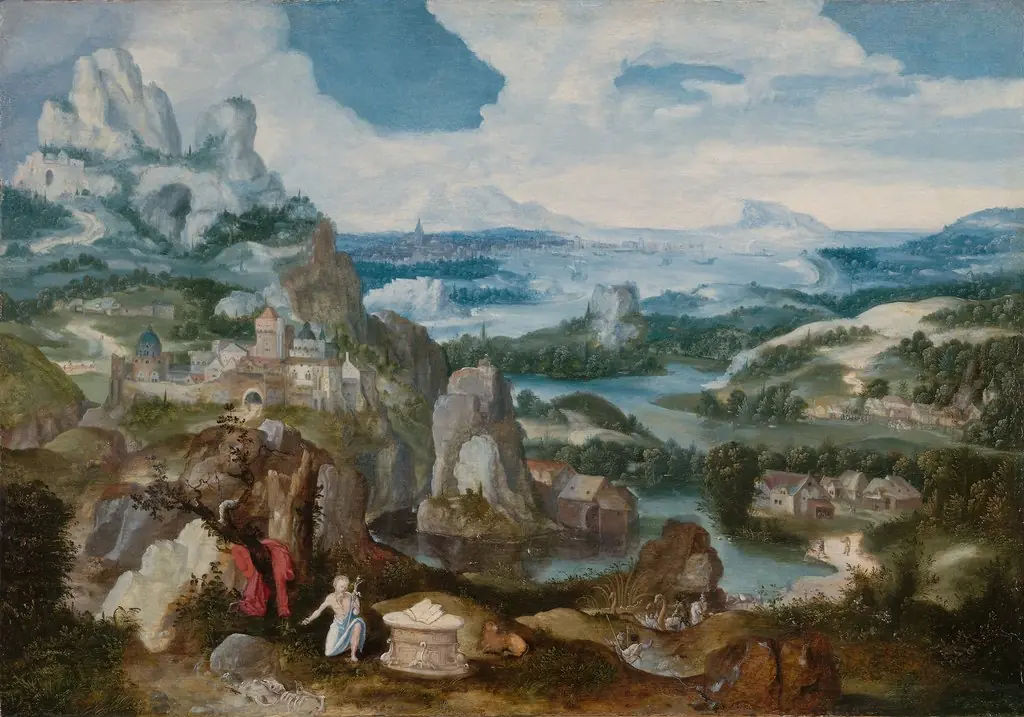 Landscape with the Penitent Saint Jerome
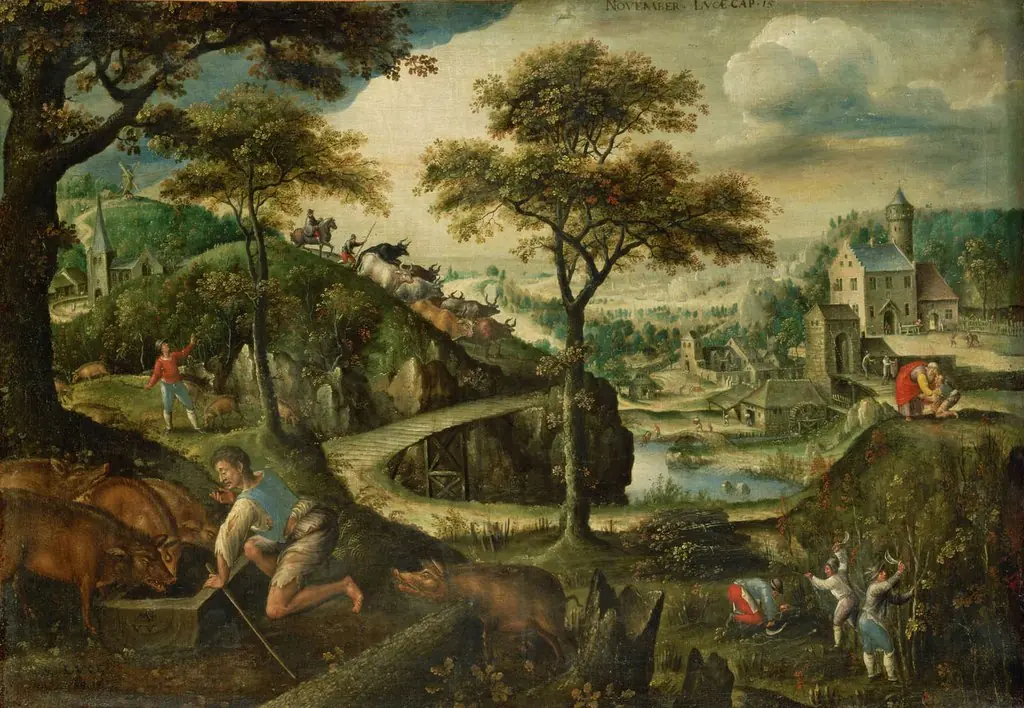 Parable of the prodigal son (November)
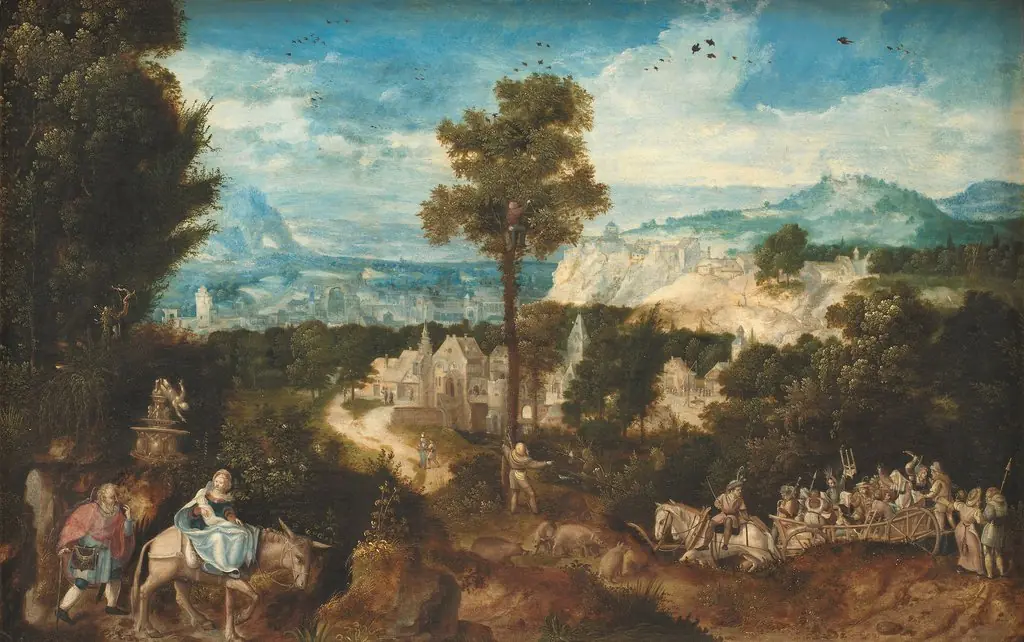 Landscape with the Flight into Egypt
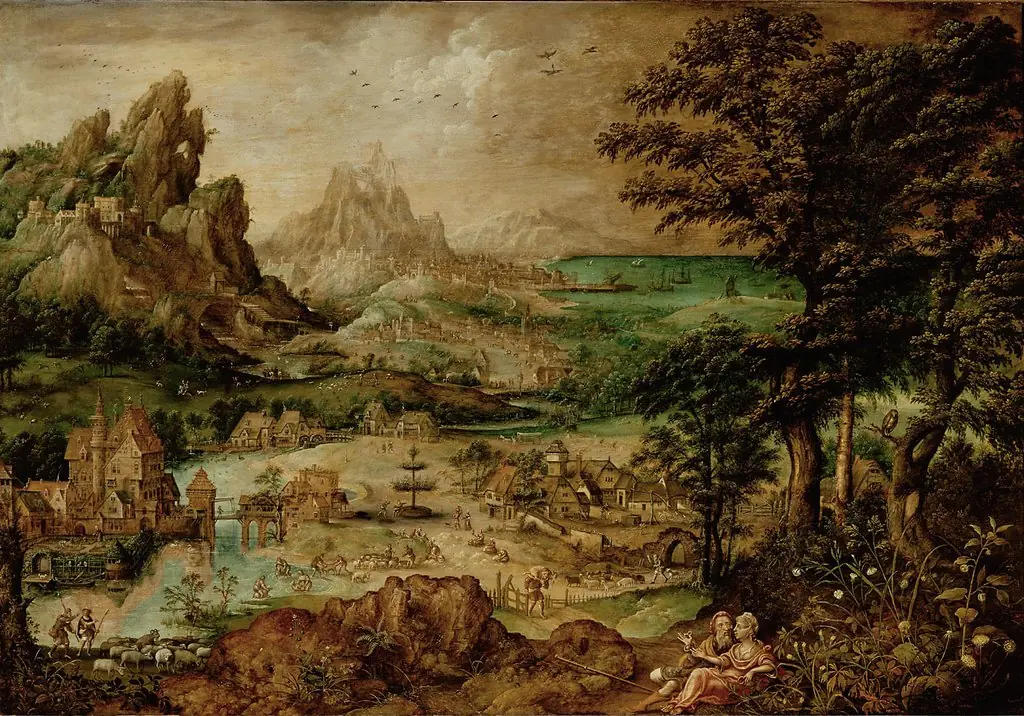 Landscape with Judah and Thamar
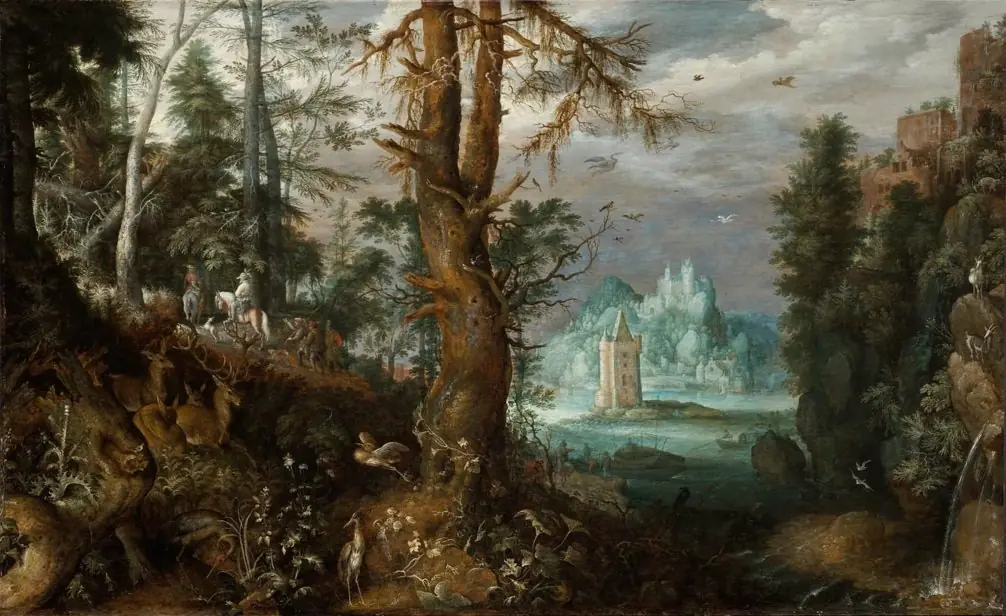 Forest Scene with Hunters
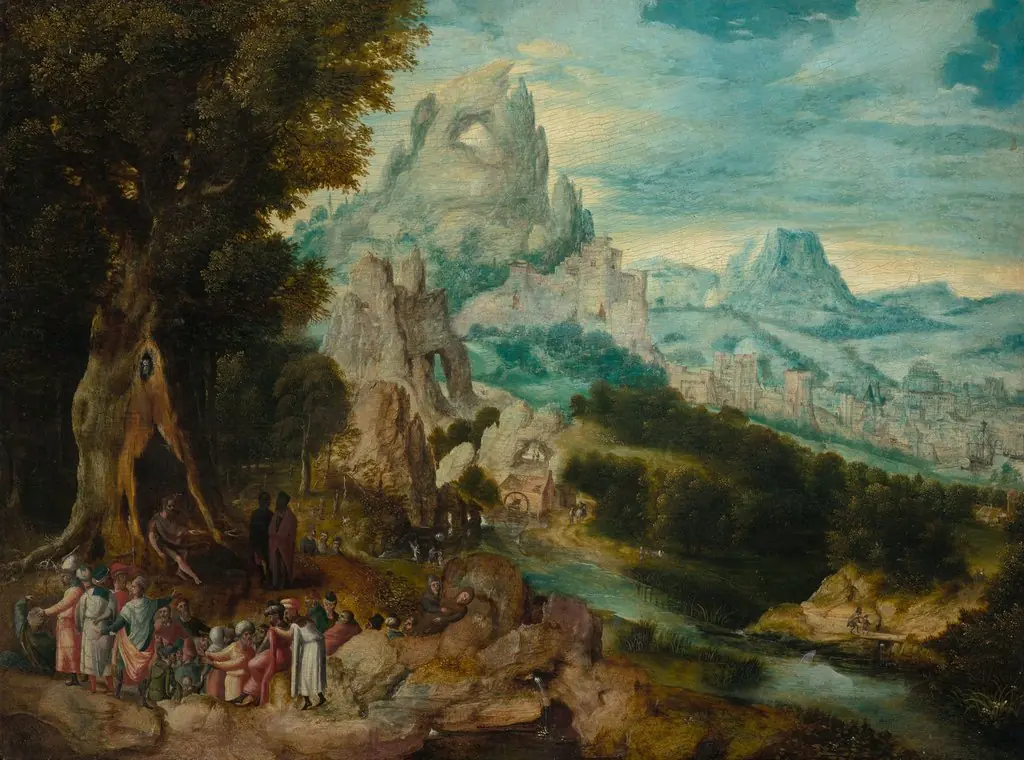 Landschaft mit der Predigt Johannes d. Täufers
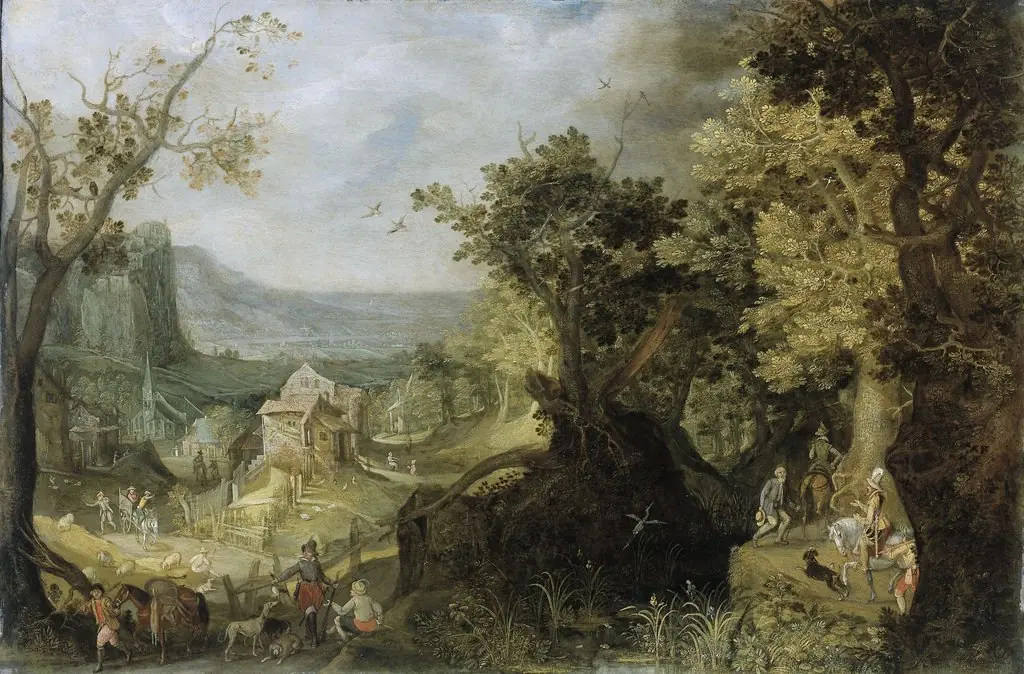 Wooded Landscape
 Landscape with Orpheus
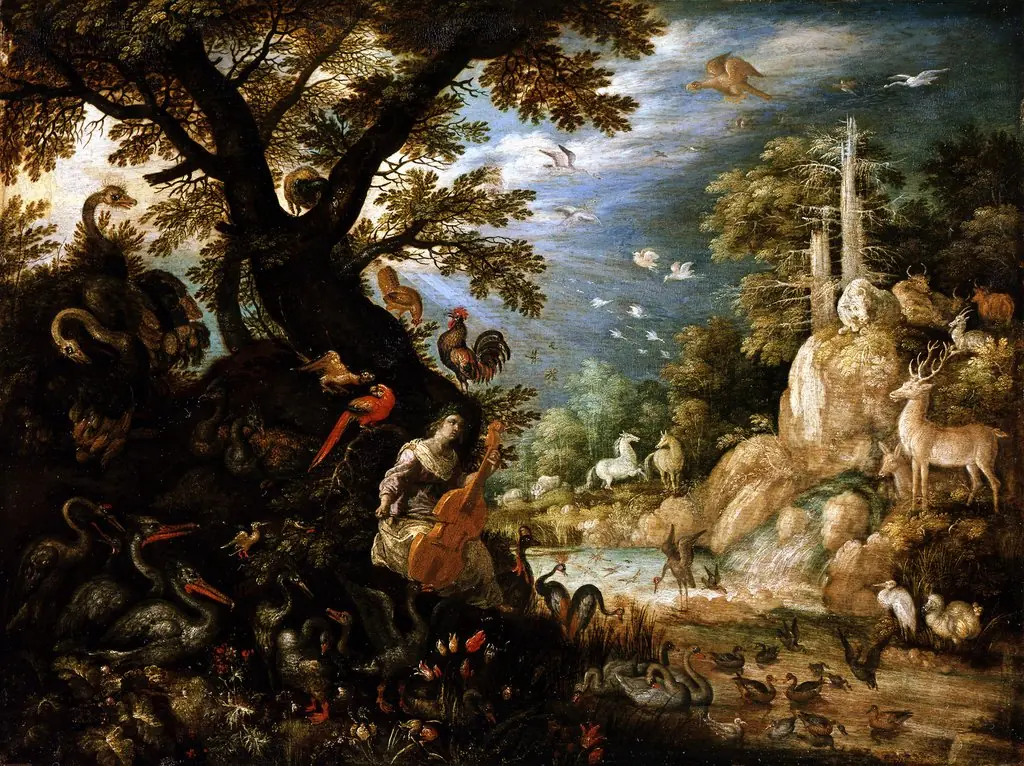 Landscape with Orpheus and the Animals
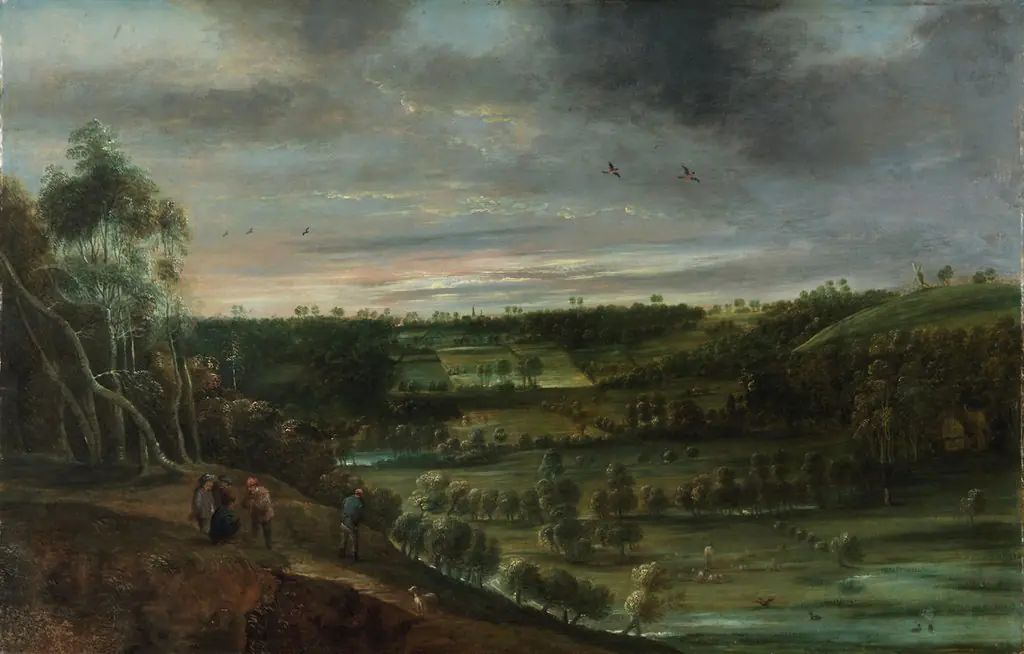 Evening Landscape
 Kreuztragung Christi