Artwork
Animals and plants
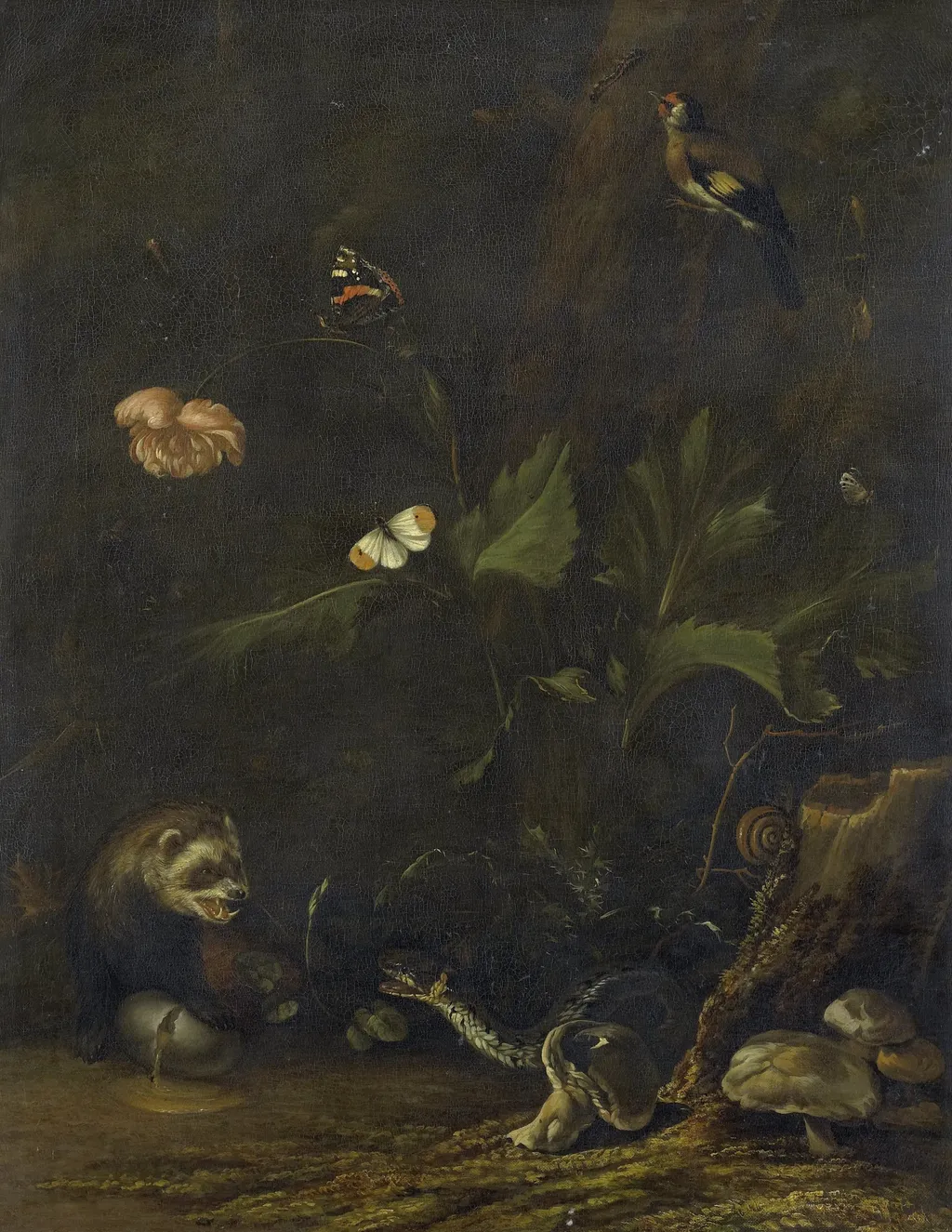
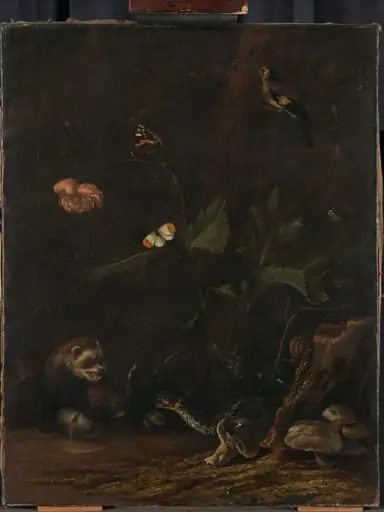
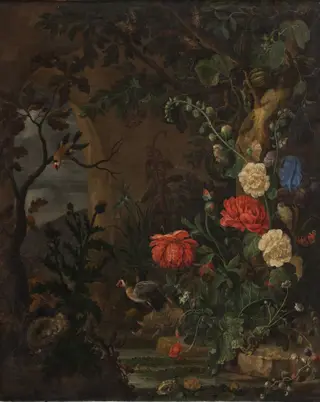
Animals and plants is an oil painting by the Dutch Golden Age artist Anthonie van Borssom. It dates from 1650 and is held in the collection of the Rijksmuseum.
About this work
Technique & Style
Stylistically, the composition focuses on natural history subjects, specifically depicting birds alongside botanical elements characteristic of the genre.
Executed in 1650, this still life by Anthonie van Borssom is an oil painting on canvas. The work measures 62 cm in height and 49 cm in width. Stylistically, the composition focuses on natural history subjects, specifically depicting birds alongside botanical elements characteristic of the genre.
The application of oil paint on a woven canvas support reflects standard Dutch Golden Age practices for cabinet-sized works intended for close inspection.
History & Provenance
Anthonie van Borssom created the oil painting Animals and plants in 1650. Executed on canvas, the work depicts birds within a still life composition. The painting's ownership history includes possession by Abraham Bredius. It is currently held in the collection of the Rijksmuseum.
The painting Animals and Plants by Anthonie van Borssom is held in the collection of the Rijksmuseum. Created in 1650, the work was previously owned by Abraham Bredius before entering the museum's holdings. The provided sources do not list a specific inventory or accession number, nor do they detail any exhibitions where the piece has been displayed.
Overview
An oil painting dated around 1650 by Dutch artist Anthonie van Borssom presents a compact still‑life arrangement of fauna and flora. Executed in a relatively small format, the work is now part of the collection of the Rijksmuseum in Amsterdam. The composition centers on a bird, a badger and a snake, each rendered with careful attention to surface detail.
Subject & Meaning
The tableau juxtaposes three distinct creatures: a bird perched on a slender branch, a badger curled in the lower left, and a coiled snake occupying the central space. By assembling these animals together, van Borssom invites contemplation of the natural world’s diversity, while the quiet, almost scientific observation reflects the 17th‑century Dutch interest in cataloguing nature.
Own this work as a print
Artist & collection

 Flowers
 Forest Floor with a Snake, Lizards, Butterflies and other Insects
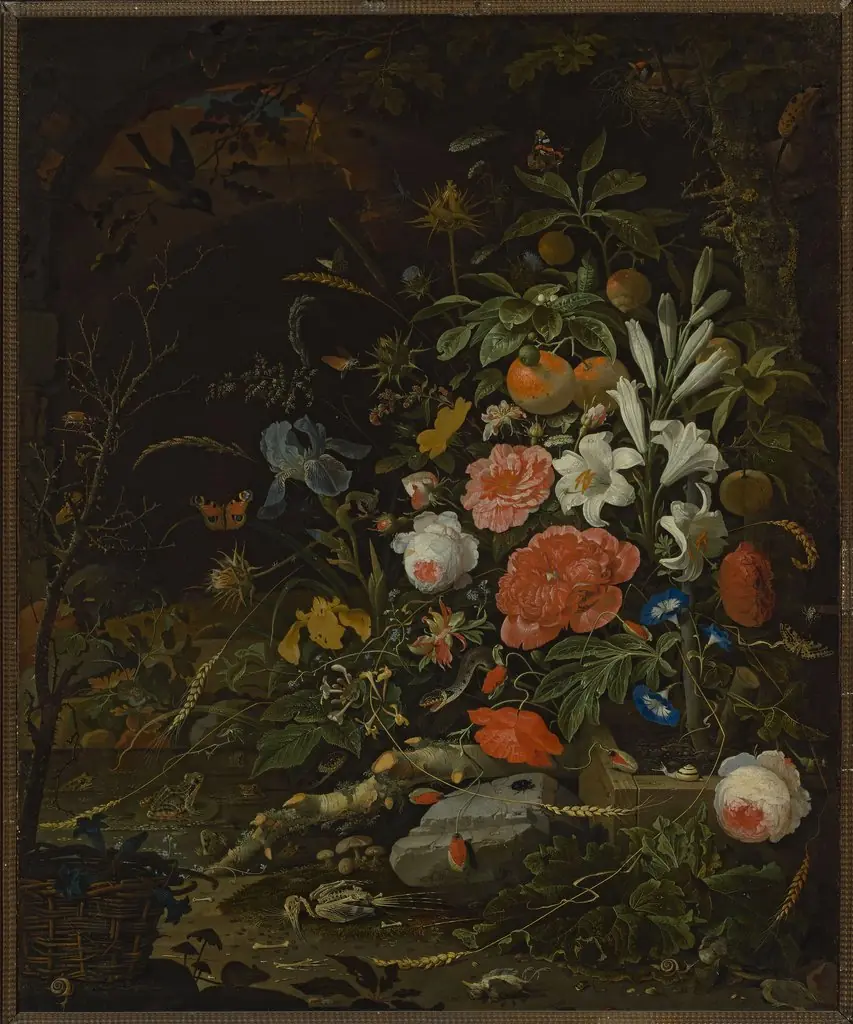 Flowers and tiny creatures – Vanitas
 Still-life with a thistle, boletus, snail, lizard, butterflies and a bee in a landscape
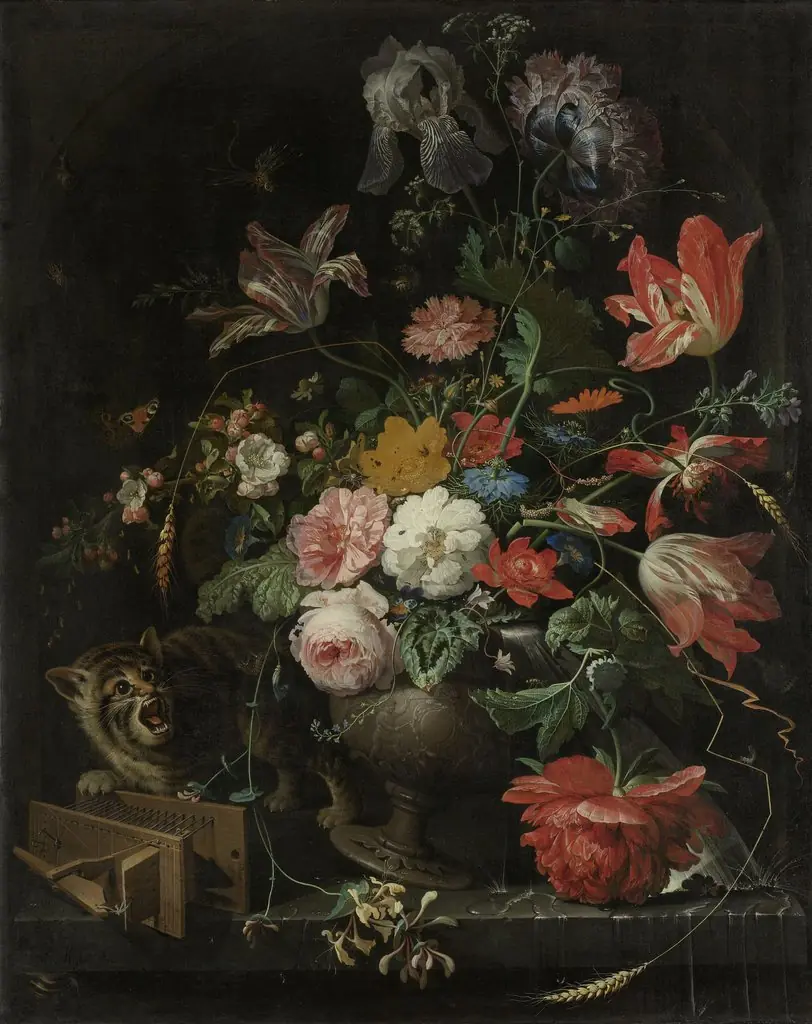 The Overturned Bouquet
 A Forest Floor with a Thistle, a Snake, a Lizard and Butterflies
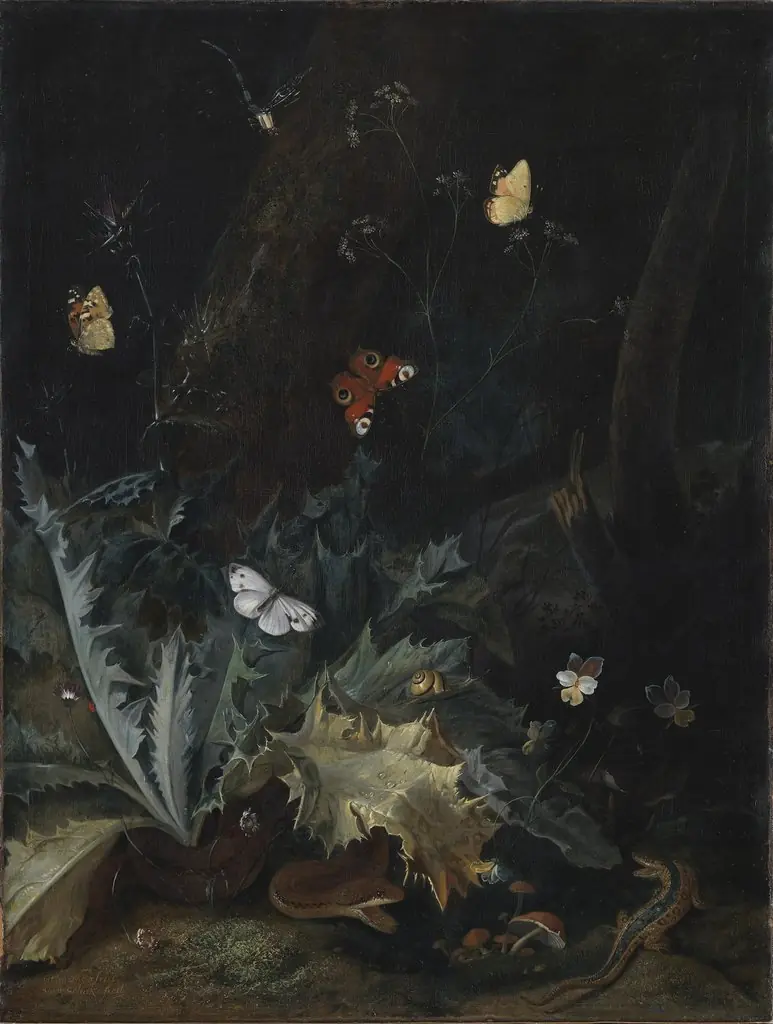 A Forest Floor with a Thistle, a Snake, a Lizard and Butterflies
 Flowers
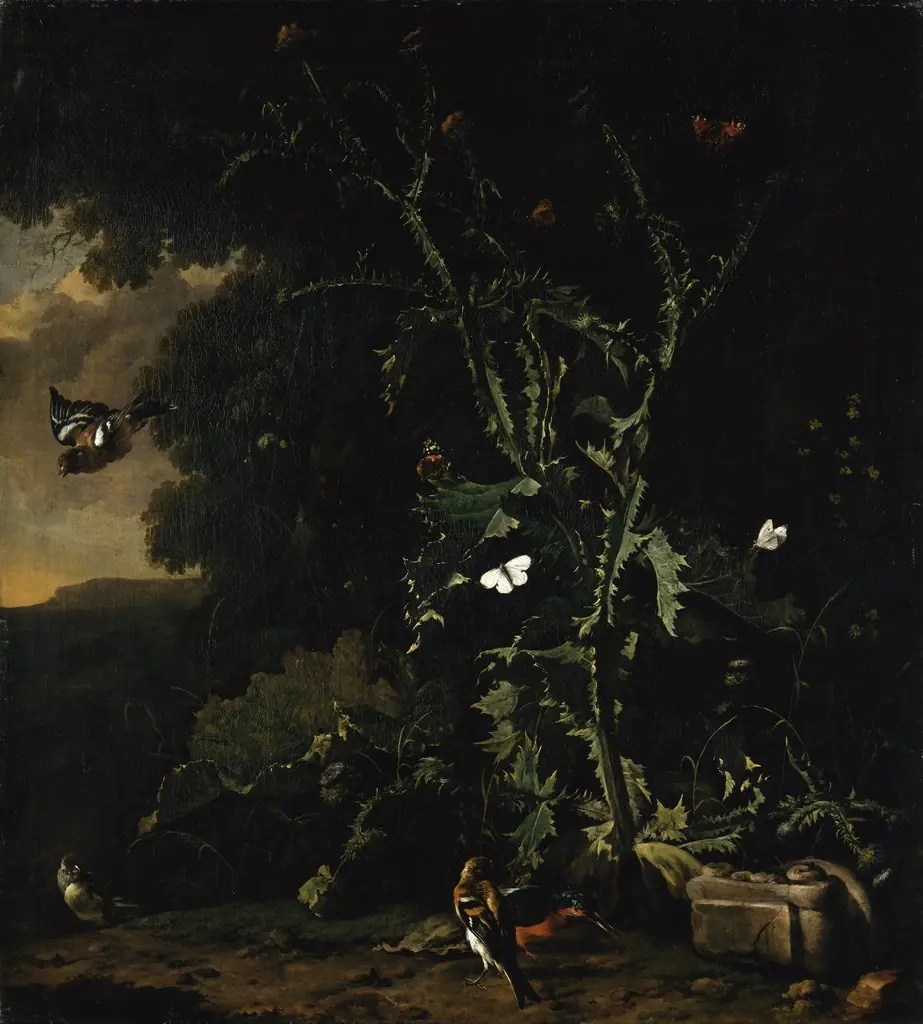 Still Life with Thistles and Birds