Artwork
Animals and Plants
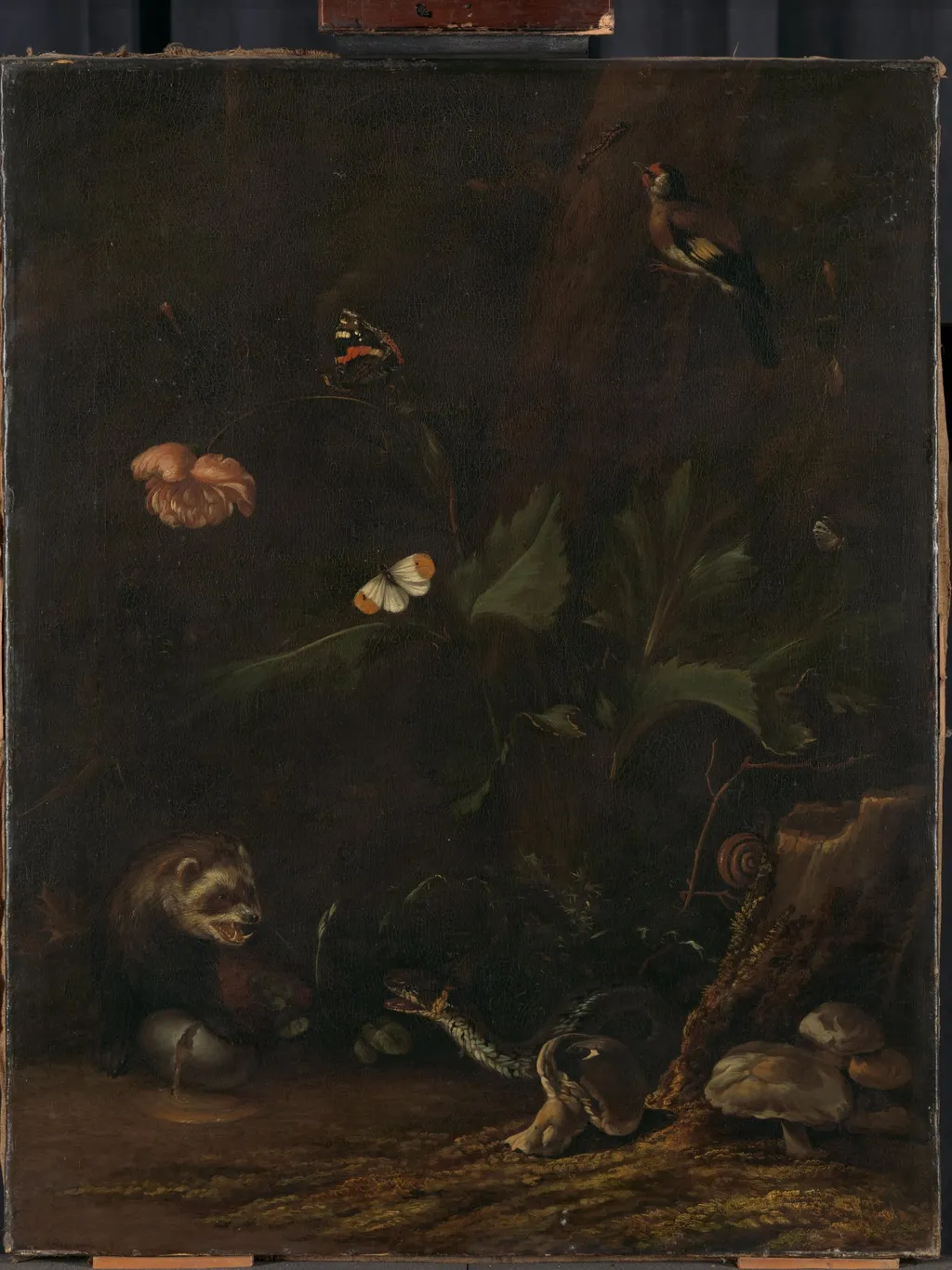
Animals and Plants is an unspecified painting by the Baroque artist Anthonie van Borssom. It dates from 1664 and is held in the collection of the Rijksmuseum.
About this work
Technique & Style
The work is executed in pen and brown ink wash, with some sheets employing gray washes as seen in surviving drawings.
The work is executed in pen and brown ink wash, with some sheets employing gray washes as seen in surviving drawings. These drawings typically feature a foreground waterway, a central farmhouse or windmill, and subordinate structures beneath a low horizon line, reflecting a consistent compositional structure characteristic of Van Borssom's landscape drawings. The handling of animals such as swans and ducks in park settings demonstrates his frequent use of loose, freely sketched studies, often without subsequent reuse in finished compositions.
The medium aligns with the drawing practices documented in museum collections and scholarly references, including the Beaux-Arts de Paris holdings and the Rijksmuseum's archival records.
History & Provenance
Anthonie van Borssom painted Animals and Plants between 1650 and 1677. The work was created during his mature period in Amsterdam when he copied popular landscape painters such as Jacob van Ruisdael and Paulus Potter. He likely trained in Rembrandt’s circle between 1645 and 1650 and worked primarily in Amsterdam throughout his career.
His drawings of animals and plants reflect the Dutch Golden Age landscape tradition and show a consistent compositional structure with water foregrounds, central farmsteads, and distant buildings beneath low horizons. The dating of 1650–1677 aligns with the period documented in the Netherlands Institute for Art History and corroborated by multiple biographical sources.
Context
Anthonie van Borssom's Animals and Plants situates the work within the Dutch Golden Age landscape tradition, reflecting Baroque-era interest in naturalistic observation and topographical detail. Scholarship emphasizes his role in advancing the genre through meticulous study of flora and fauna, often integrating them into compositional frameworks influenced by contemporaries like Jacob van Ruisdael and Paulus Potter. His technique of rendering animals and plants with pen-and-ink precision, seen in surviving drawings at the Beaux-Arts de Paris and Fogg Art Museum, demonstrates a bridge between observational draftsmanship and painterly execution, contributing to the development of 18th-century Dutch landscape aesthetics.
The work's reception was initially modest, gaining renewed attention in 19th- and 20th-century collections, including holdings at Art UK and the Rijksmuseum, which contextualize his legacy within broader European art historical narratives.
Overview
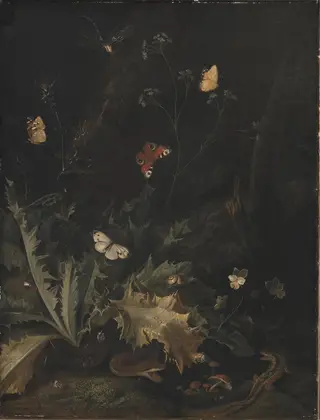
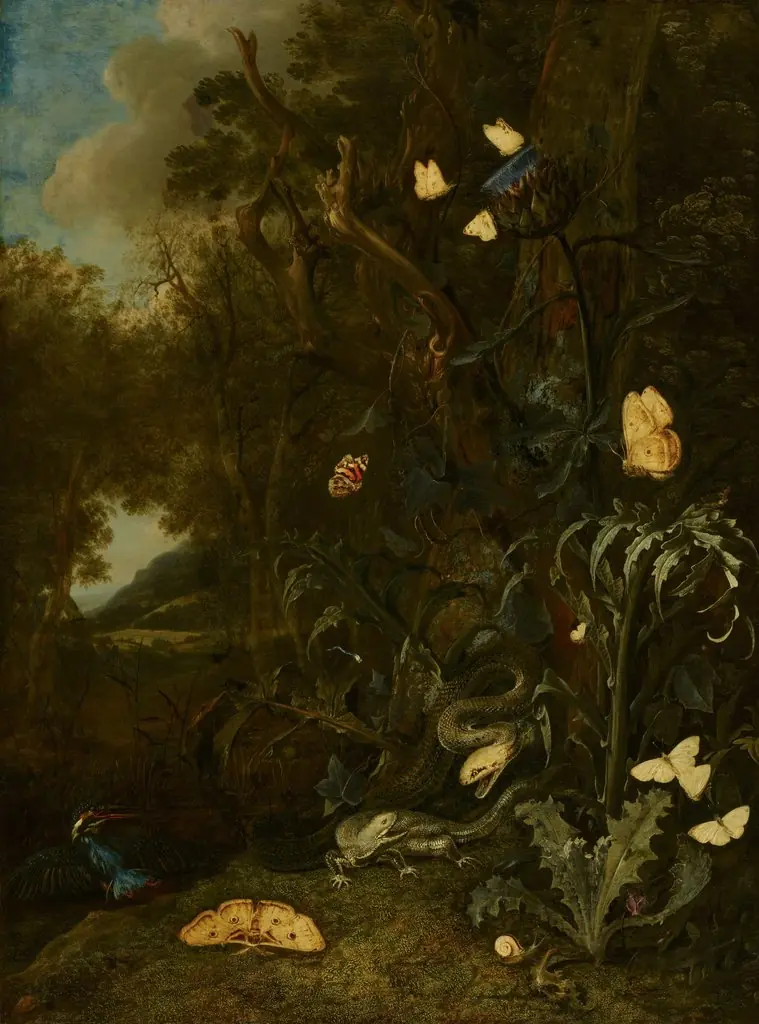
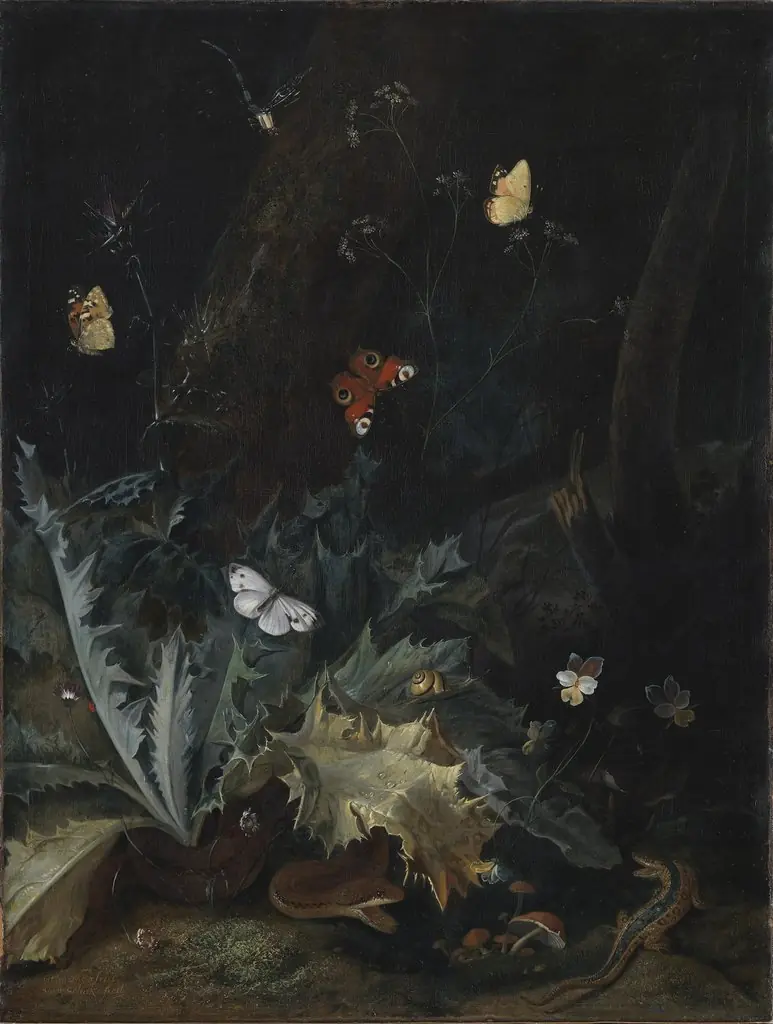
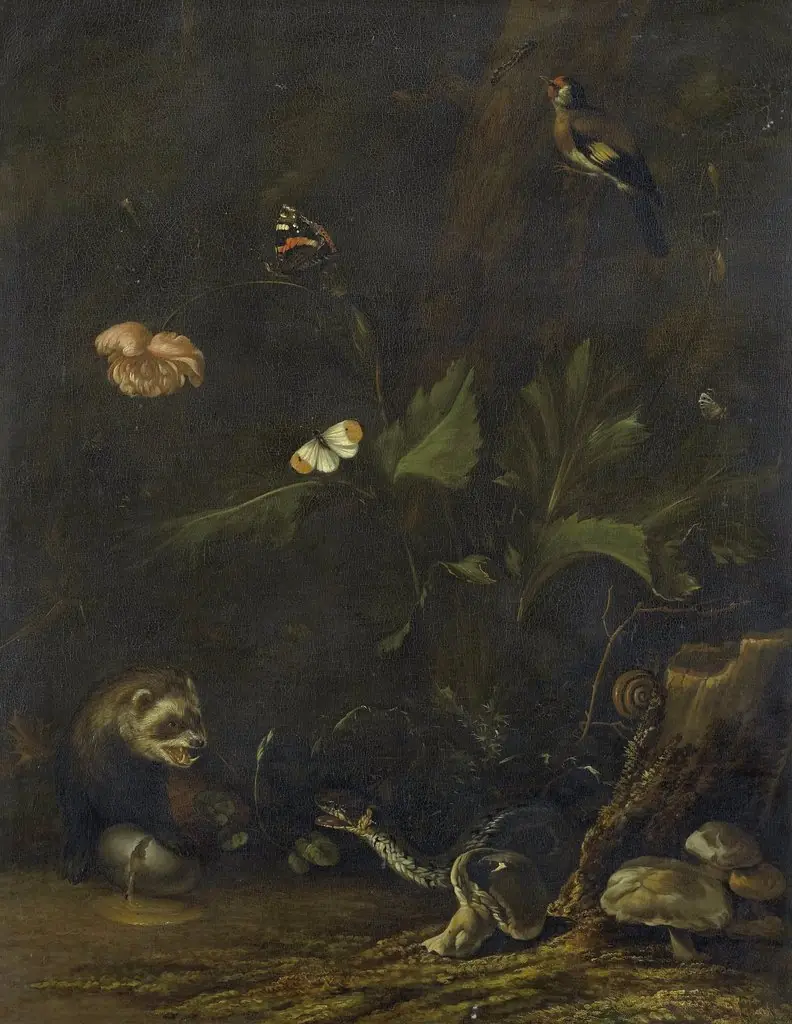
The canvas titled Animals and Plants presents a compact woodland tableau populated by a variety of fauna and flora. Central to the scene is a polecat clutching an egg, while a snake weaves among clustered mushrooms. Around them, butterflies, a bird, snails and caterpillars are interspersed within the leafy understory, creating a lively yet tranquil natural vignette.
Subject & Meaning
The work juxtaposes predator and prey, highlighting the interdependence of forest creatures. The polecat’s theft of an egg and the snake’s silent passage suggest a moment of tension, while the surrounding insects and birds convey the continual cycles of growth and decay. The composition invites viewers to observe the hidden interactions that sustain the ecosystem.
Own this work as a print
Artist & collection