Artwork
Forest Floor with a Snake, Lizards, Butterflies and other Insects
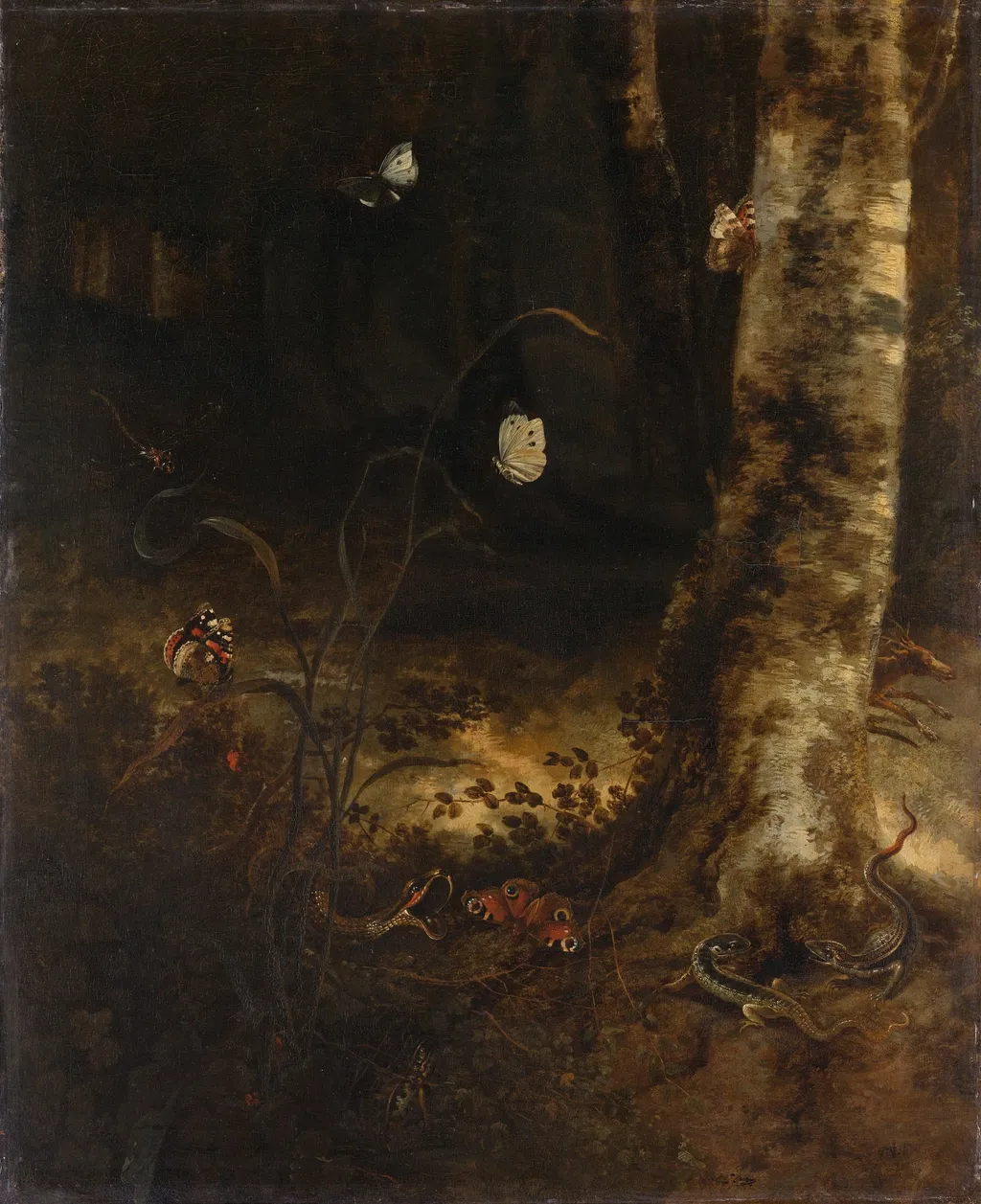
Forest Floor with a Snake, Lizards, Butterflies and other Insects is an unspecified painting by the Baroque artist Otto Marseus van Schrieck. It dates from 1664 and is held in the collection of the Rijksmuseum. The canvas depicts a dimly lit forest floor teeming with small creatures.
About this work
Subject & Meaning
Its subject draws on Baroque naturalism, emphasizing close observation of small creatures in their habitat.
The painting depicts a forest floor teeming with life, featuring a snake, lizards, butterflies and various insects intertwined among foliage and decaying matter. Its subject draws on Baroque naturalism, emphasizing close observation of small creatures in their habitat. Symbolically, the work reflects the era's fascination with the hidden vitality of nature, where reptiles and insects serve as emblems of transformation and the interconnectedness of life. The artist's practice of maintaining terrariums allowed him to capture these organisms with scientific precision, merging artistic observation with a quasi‑documentary interest in the natural world.
Technique & Style
Otto Marseus van Schrieck executed *Forest Floor with a Snake, Lizards, Butterflies and other Insects* as an oil painting on canvas, a standard support for his Baroque still-life works. The artist is credited with pioneering the technique of lepidochromy, a method involving the pressing of actual butterfly wings onto the canvas to transfer their scales directly into the paint surface. This unique handling contributed to the work's formal qualities, characterized by dark, mysterious compositions that depict a dense undergrowth populated by reptiles and insects. The style, often termed *sottobosco* or forest floor painting, relies on these realistic details to create an illusion of life within a shadowed, natural setting. His approach involved close observation, often utilizing live specimens kept in terrariums to achieve precise anatomical accuracy in the depiction of snakes and lizards.
History & Provenance
Forest Floor with a Snake, Lizards, Butterflies and other Insects is an undated work by Otto Marseus van Schrieck, placed within his active period of 1650 to 1678. The painting is held by the Rijksmuseum in Amsterdam, where it is recorded as a signed canvas measuring 76 × 62 cm. Marseus van Schrieck developed the sottobosco (forest floor) genre to which this work belongs during the 1660s, drawing on direct observation of reptiles and insects he kept in enclosures near his Amsterdam home. The sources do not document a specific commission, buyer, or chain of ownership for this particular painting beyond its current museum placement.
Otto Marseus van Schrieck's painting *Forest Floor with a Snake, Lizards, Butterflies and other Insects* is held by the Rijksmuseum in Amsterdam. The work is listed in the museum's collection without a specific accession number provided in the available sources, though it is dated between 1650 and 1678 and measures 76 × 62 cm. The painting is signed but undated. While the sources document a major 2017 exhibition titled *Die Menagerie der Medusa* dedicated to the artist at the Staatliches Museum Schwerin, there is no record in the provided texts of this specific work being included in that show or any other historical exhibition.
Context
Otto Marseus van Schrieck is credited with pioneering the *sottobosco* genre, a distinctive branch of Dutch still life that fused dark forest interiors with meticulous depictions of flora and fauna. His practice of keeping reptiles and insects in terraria informed the naturalism of works such as *Forest Floor with a Snake, Lizards, Butterflies and other Insects*, reinforcing the period fascination with empirical observation. The sobriquet “Snuffelaer” (ferreter), earned in Rome’s Bentvueghels circle, underscored his methodical pursuit of subjects and aligned him with contemporary scientific inquiry.
Scholars note his late-career focus on small animals and insects as pivotal to his posthumous reputation. Houbraken’s biography records that his wife attested to his living menagerie, linking the artist’s process to a broader culture of collecting and display among Dutch naturalists. By the 1660s, his dark, densely populated forest scenes achieved sustained recognition, distinguishing him from peers who favored floral abundance.
Legacy
Otto Marseus van Schrieck achieved lasting recognition primarily through his late works depicting forest floors populated by reptiles and insects, a genre he pioneered known as *sottobosco* or *bosgrondje*. These dark, mysterious compositions established his reputation as the leading master of forest still lifes, a title he retains in art historical discourse. His innovative practice of keeping live snakes and lizards in terrariums to study their details, along with his unique technique of lepidochromy (transferring butterfly scales directly to canvas), influenced a significant generation of followers. Notable artists who adopted his style include Willem van Aelst, Abraham Mignon, Rachel Ruysch, and the Withoos brothers. The enduring legacy of his work was highlighted by a 2017 exhibition at the Staatliches Museum Schwerin titled *Die Menagerie der Medusa*, which examined his contributions to the intersection of art and natural history.
Own this work as a print
Artist & collection
Artist
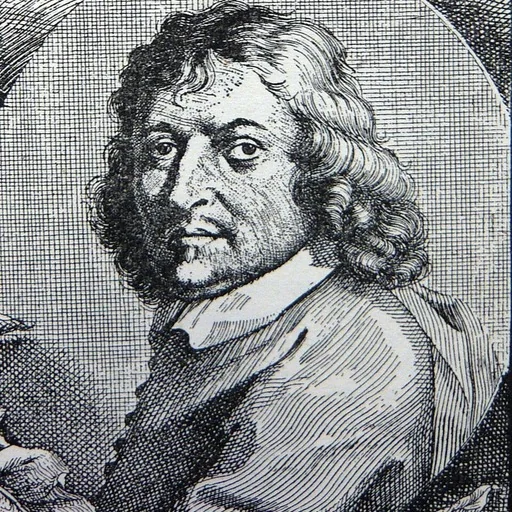
Otto Marseus van Schrieck (ca. 1613, in Nijmegen – buried 22 June 1678, in Amsterdam) was a painter in the Dutch Golden Age. He is best known for his paintings of forest flora and fauna.

- A forest floor with a snake, lizards, butterflies and other insects
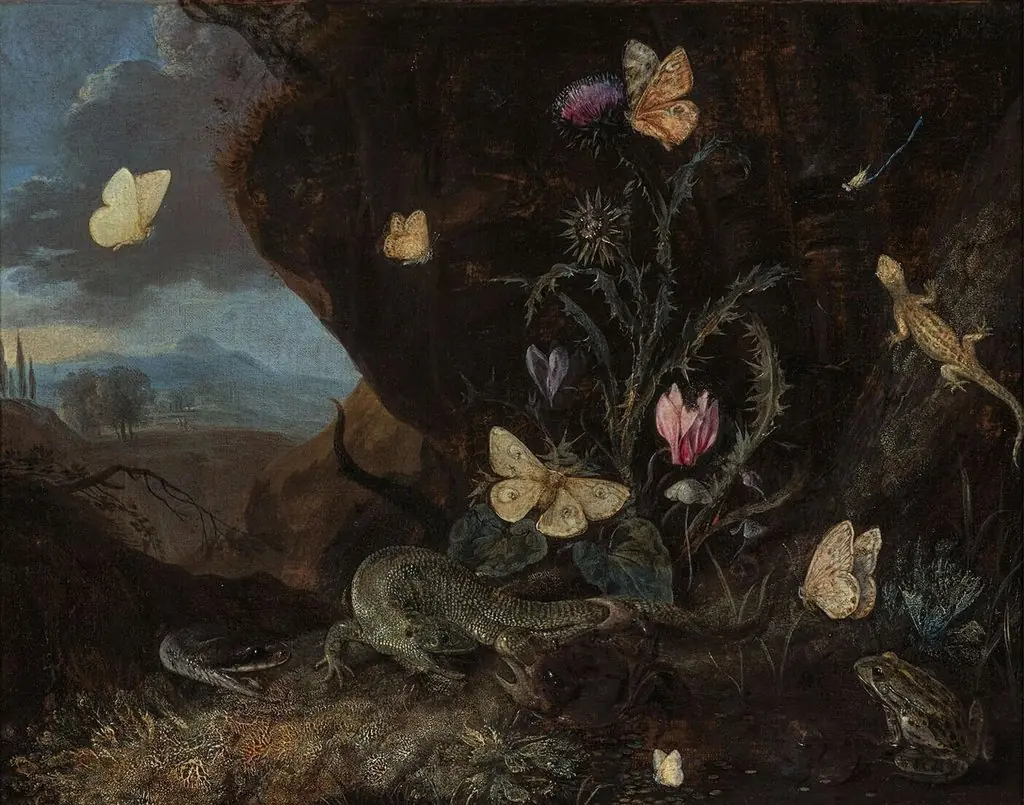 Landschap with insects, cyclamen and thistle
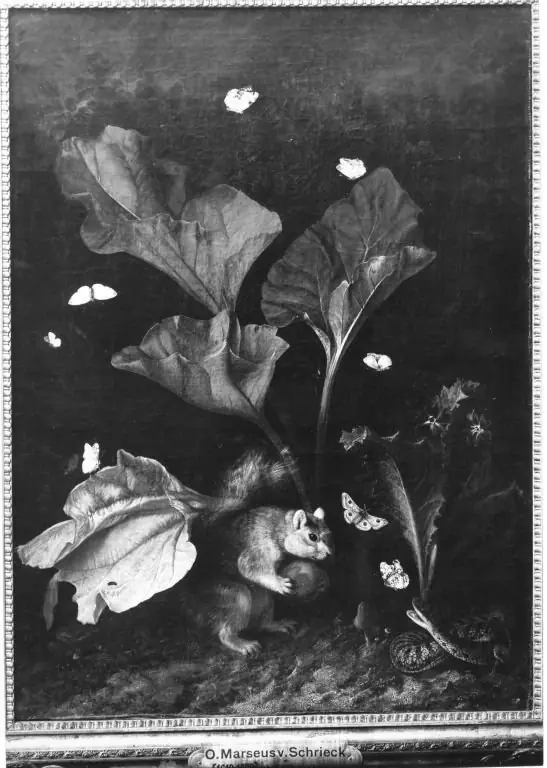 Forest floor still life with rodent
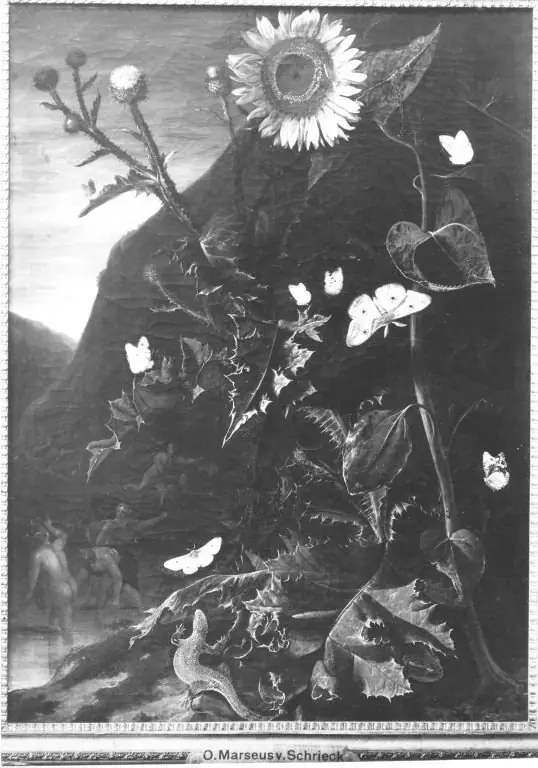 Forest floot still life with Diana and Actäon
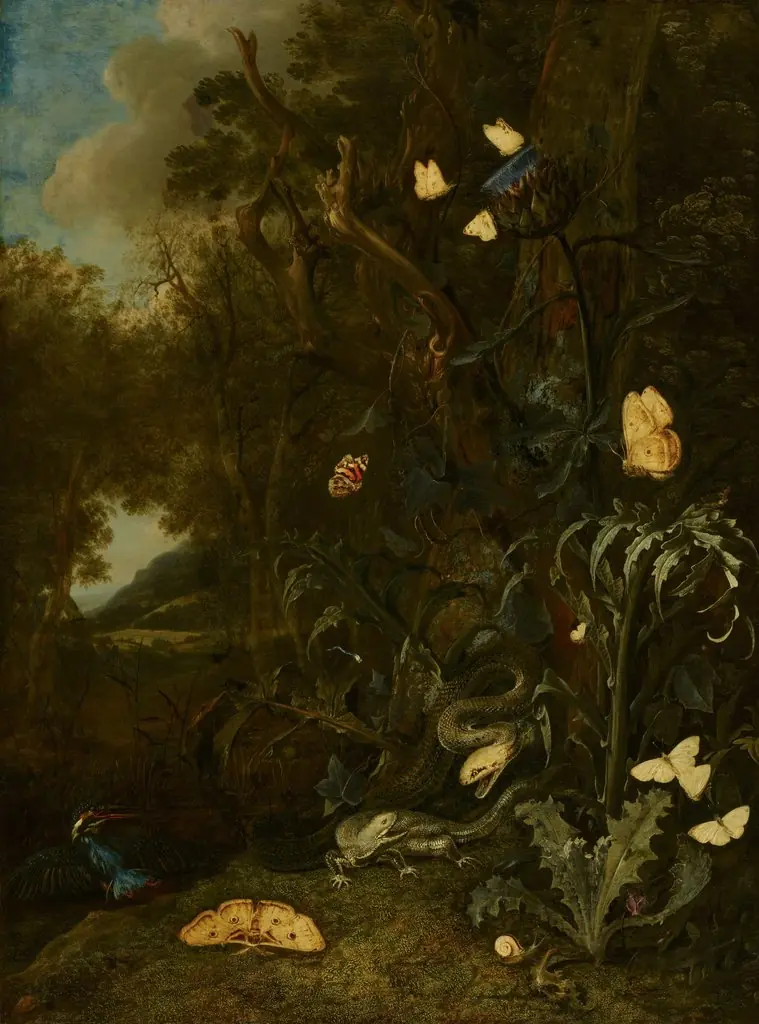 Plants and Insects
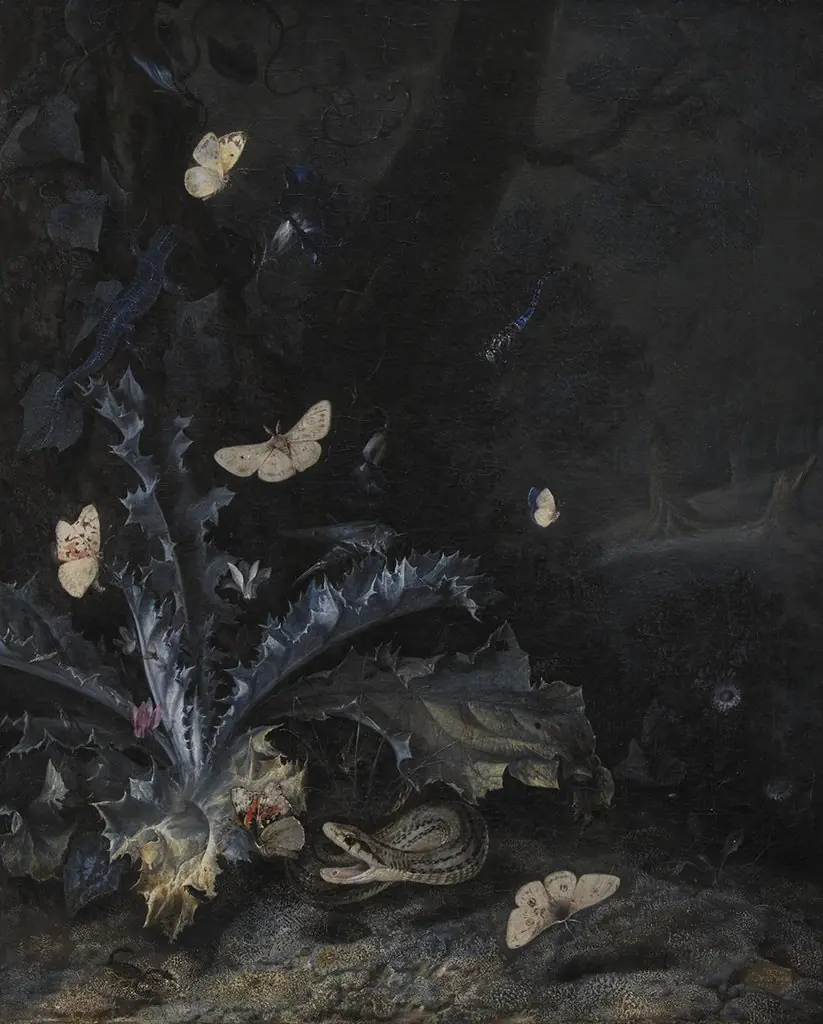 Still Life with Thistle and Snake
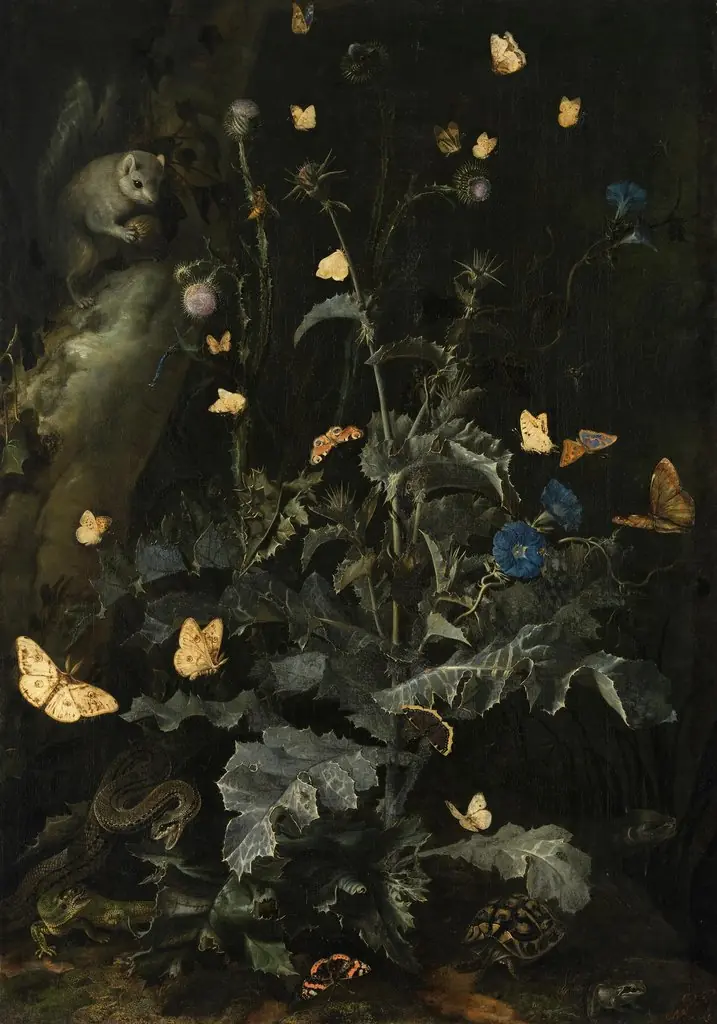 Forest floor still life with thistle and rodent
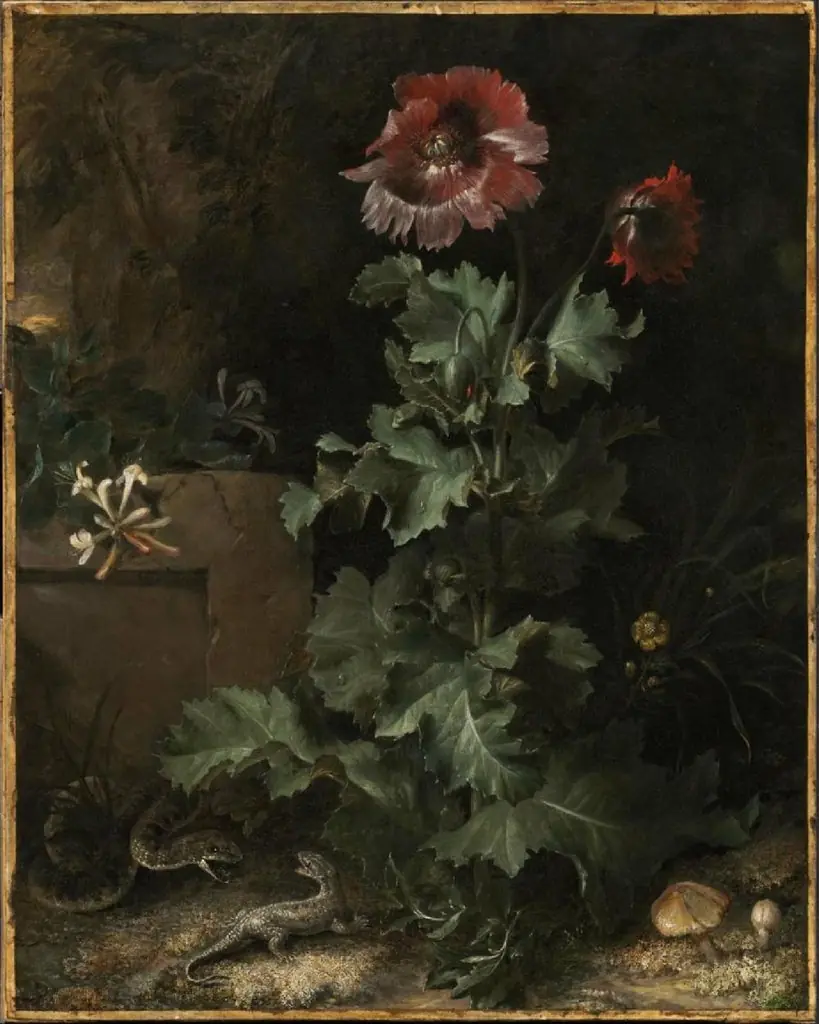 Still Life with Snake and Lizard
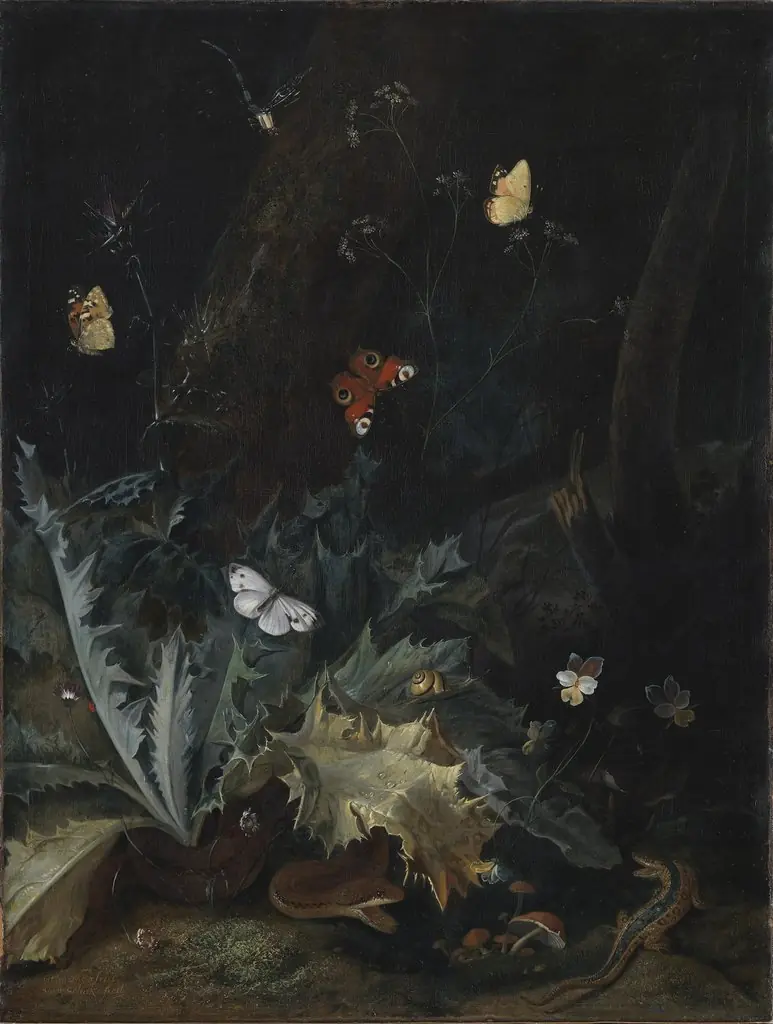 A Forest Floor with a Thistle, a Snake, a Lizard and Butterflies
 A Forest Floor with a Thistle, a Snake, a Lizard and Butterflies
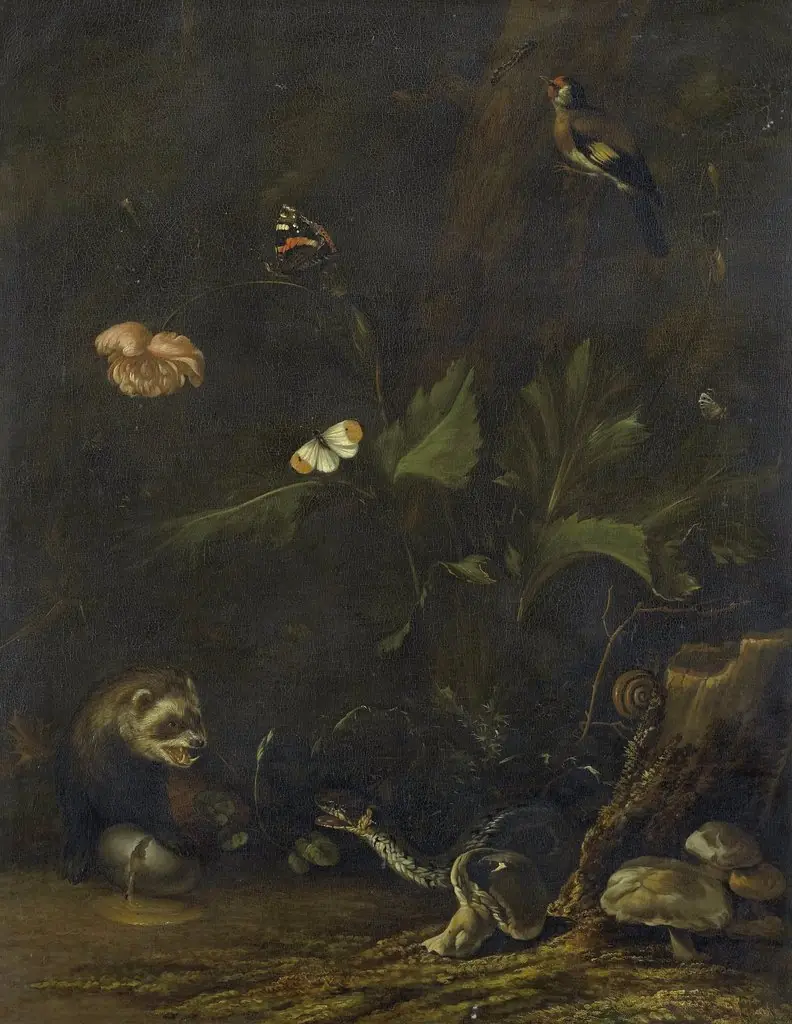 Animals and plants
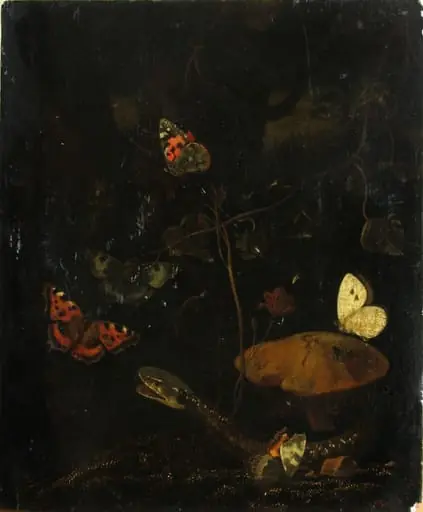 Șarpe și fluturi la rădăcina unui copac
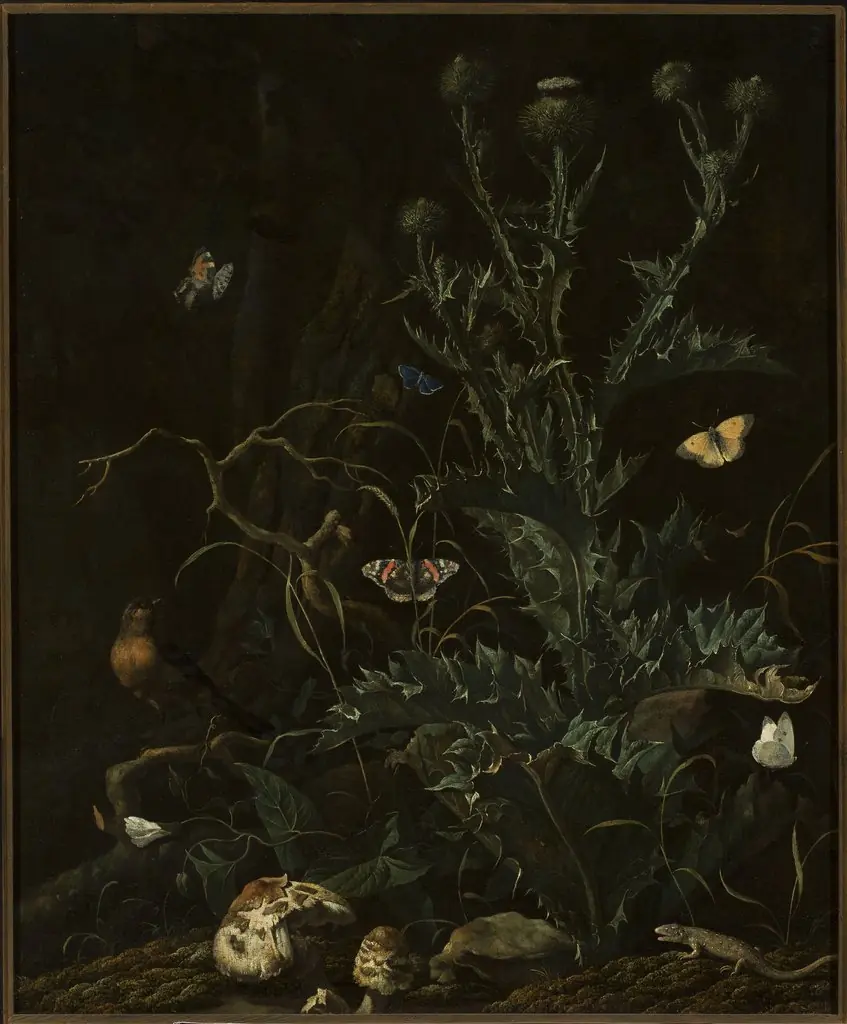 Thistles, butterflies and a lizard
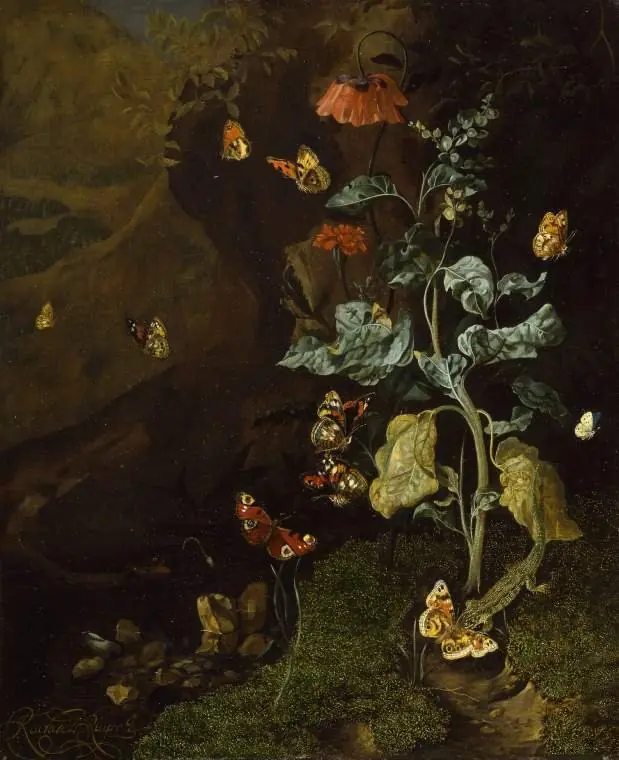 Insects and a lizard in a wood
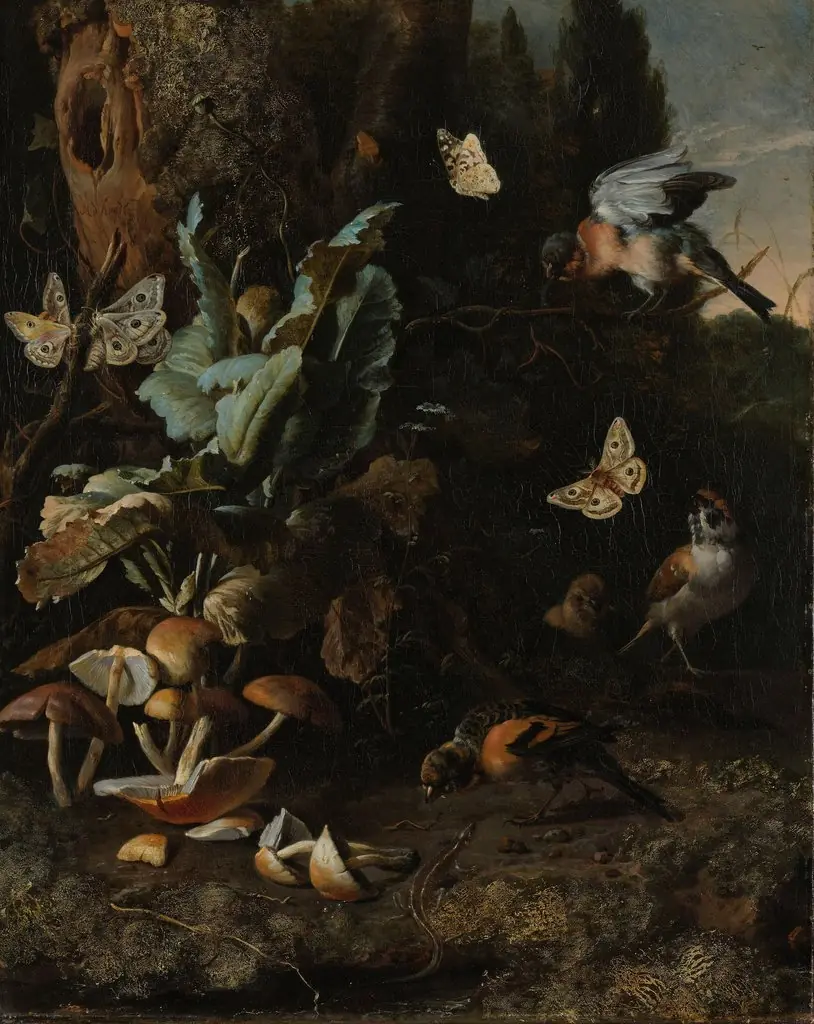 Animals and plants
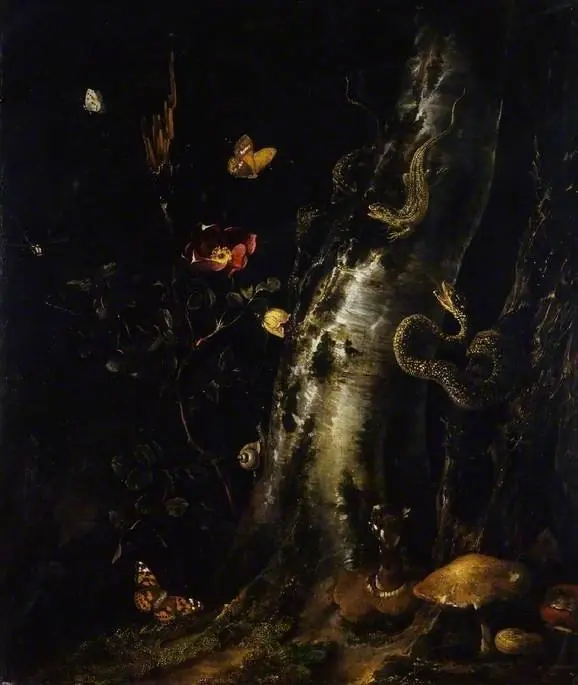 Silver birch trunk and branch with rose, lizards, a snake, toadstools, butterflies and a snail