Artwork
Adriaan van der Hoop’s Trotter ‘De Vlugge’ (The Fast One) in a Meadow
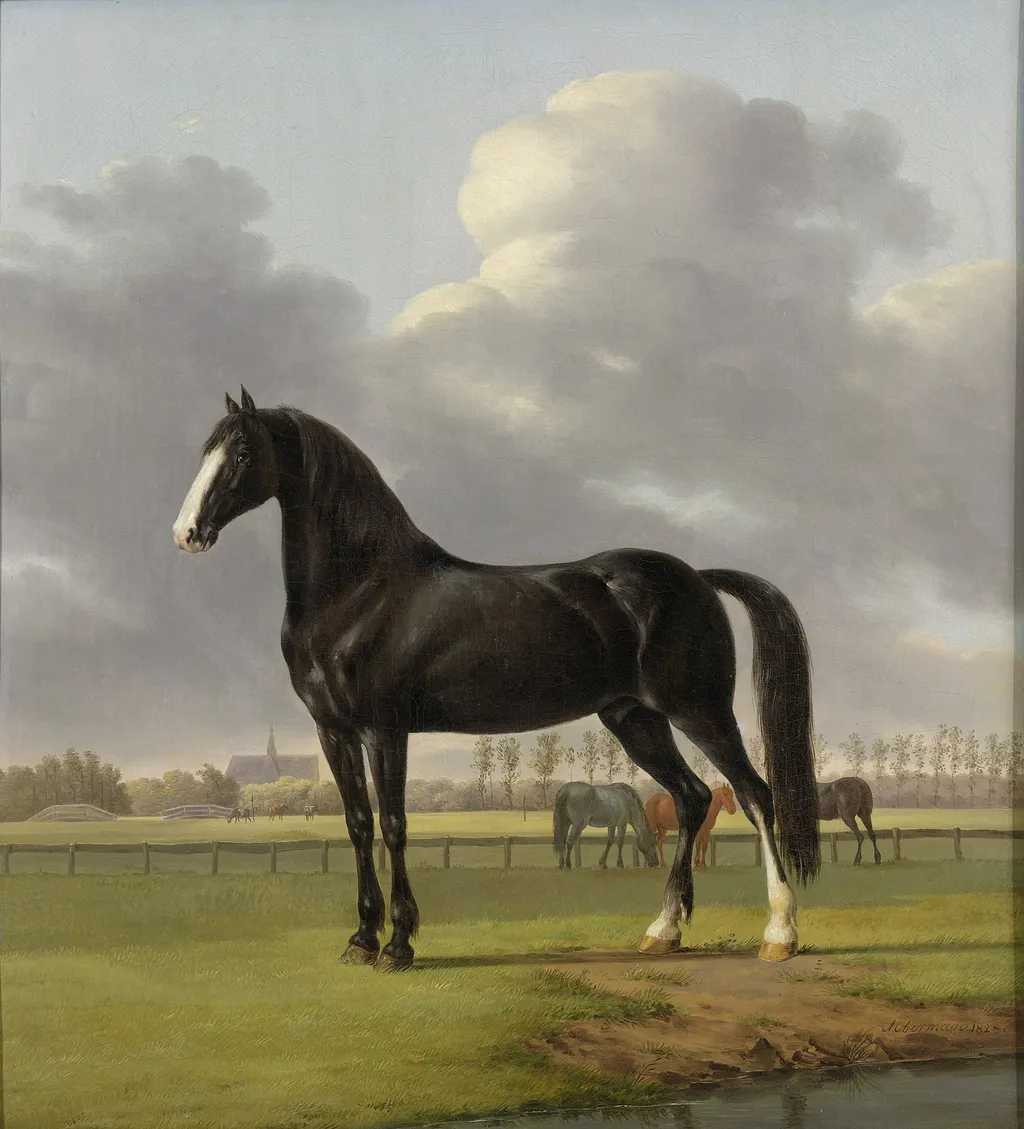
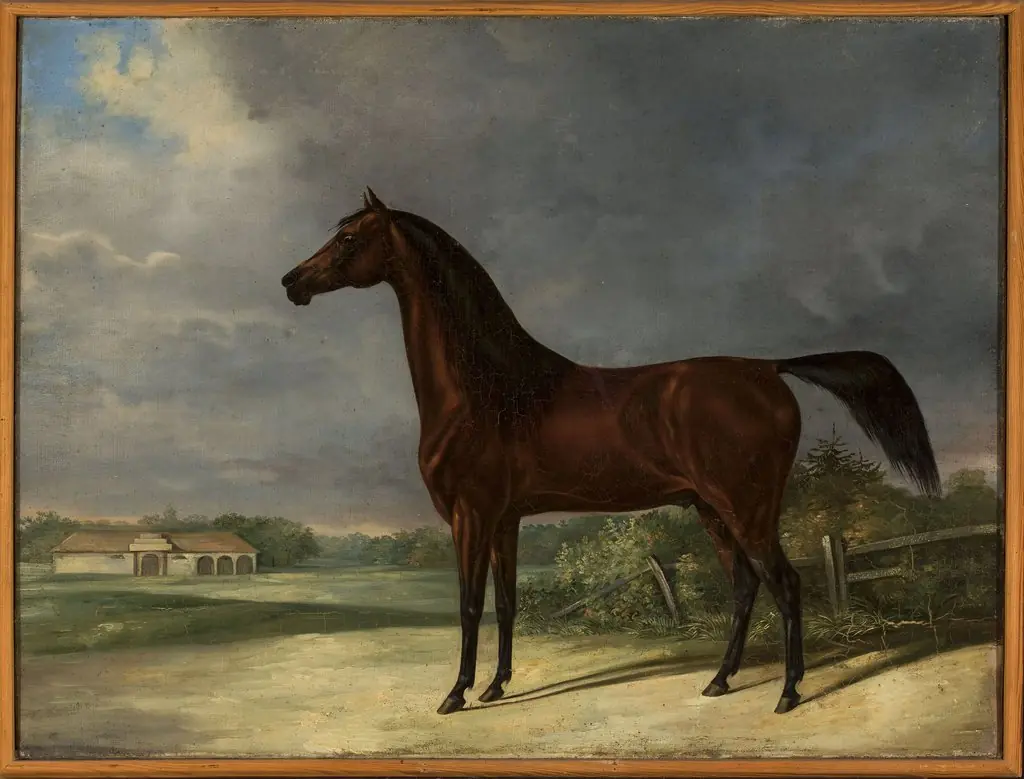
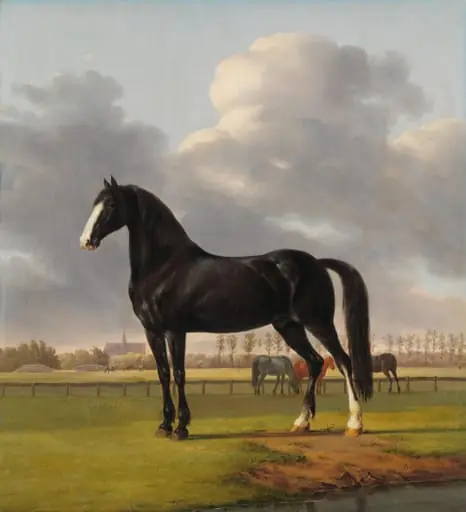
Adriaan van der Hoop’s Trotter ‘De Vlugge’ (The Fast One) in a Meadow is an oil painting by Anthony Oberman. It dates from 1828 and is held in the collection of the Rijksmuseum.
About this work
Subject & Meaning
Created by Anthony Oberman in 1828, the work falls within the genre of animal art, focusing on the portrayal of the equine subject in a natural landscape.
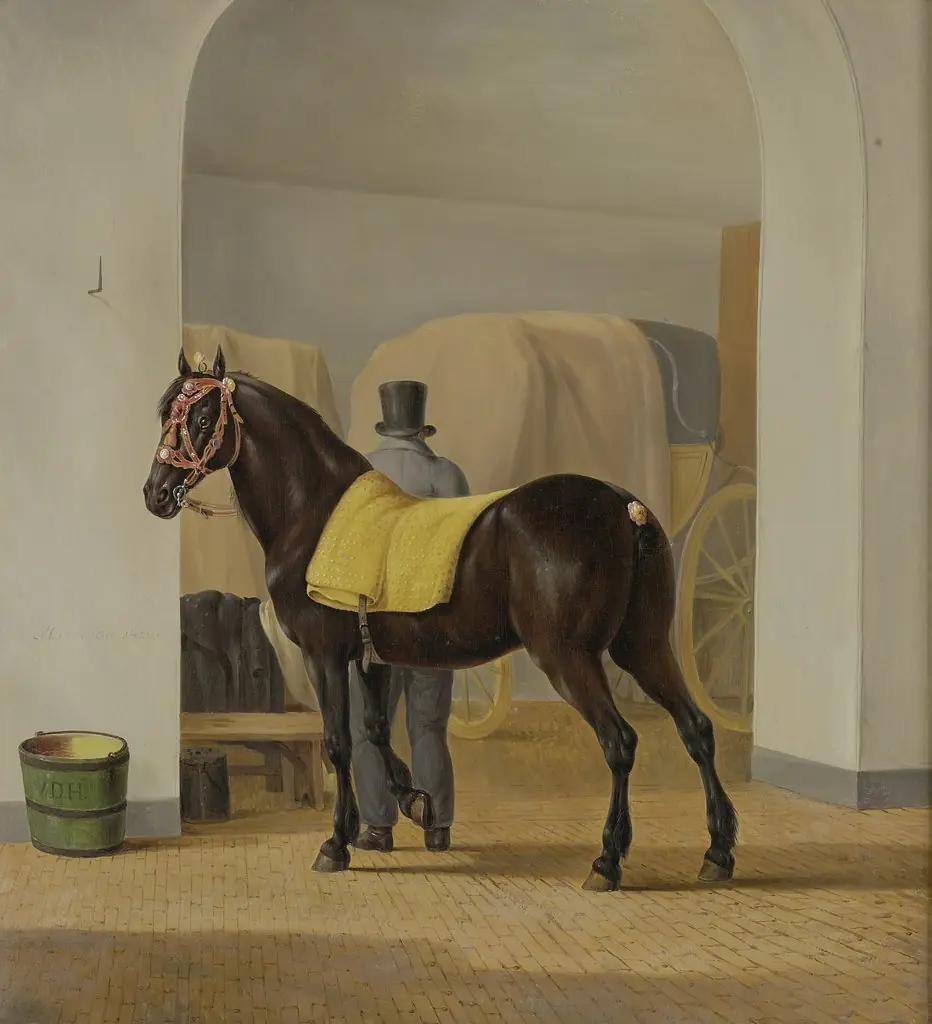
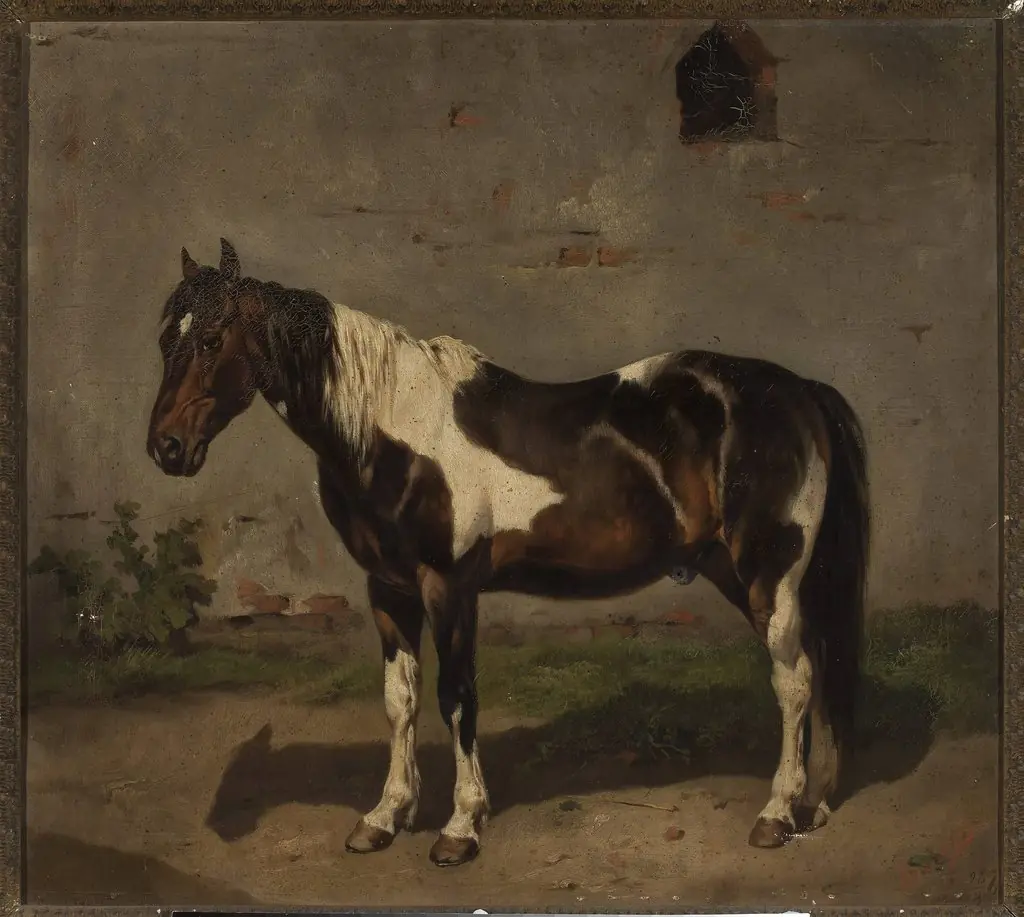
The painting depicts a single horse, identified as the trotter 'De Vlugge' (The Fast One), situated within a meadow setting. Created by Anthony Oberman in 1828, the work falls within the genre of animal art, focusing on the portrayal of the equine subject in a natural landscape. The title explicitly names the horse and its specific breed type, emphasizing the animal's identity and speed as central to the composition.
Technique & Style
The work is executed in oil paint on canvas, a standard support for easel paintings of the early nineteenth century. The composition depicts a horse in motion within a meadow, rendered with a naturalistic yet slightly idealized approach typical of animal portraiture of the period. The brushwork remains restrained, emphasizing the animal's musculature and the play of light across its coat.
The painting measures 60 cm in height and 54 cm in width, reflecting a modest scale suited to private display within the collector's residence. Its condition is stable, with no recorded interventions noted in the provenance history.
History & Provenance
The painting was commissioned by Adriaan van der Hoop, whose name it later incorporated, and is dated 1828.
Created by Anthony Oberman in 1828, the work entered the collection of its commissioner, Adriaan van der Hoop, in Amsterdam. It remained in his possession until it was donated to the Rijksmuseum in Amsterdam, where it is held today as part of the Adriaan van der Hoop collection.
Overview
Anthony Oberman’s 1828 oil on canvas, titled De Vlugge (The Fast One) in a Meadow, portrays a solitary black horse positioned in a grassy landscape. The work is part of the Rijksmuseum’s collection and exemplifies early‑nineteenth‑century Dutch animal painting.
Own this work as a print
Artist & collection