Artwork
Five farm horses
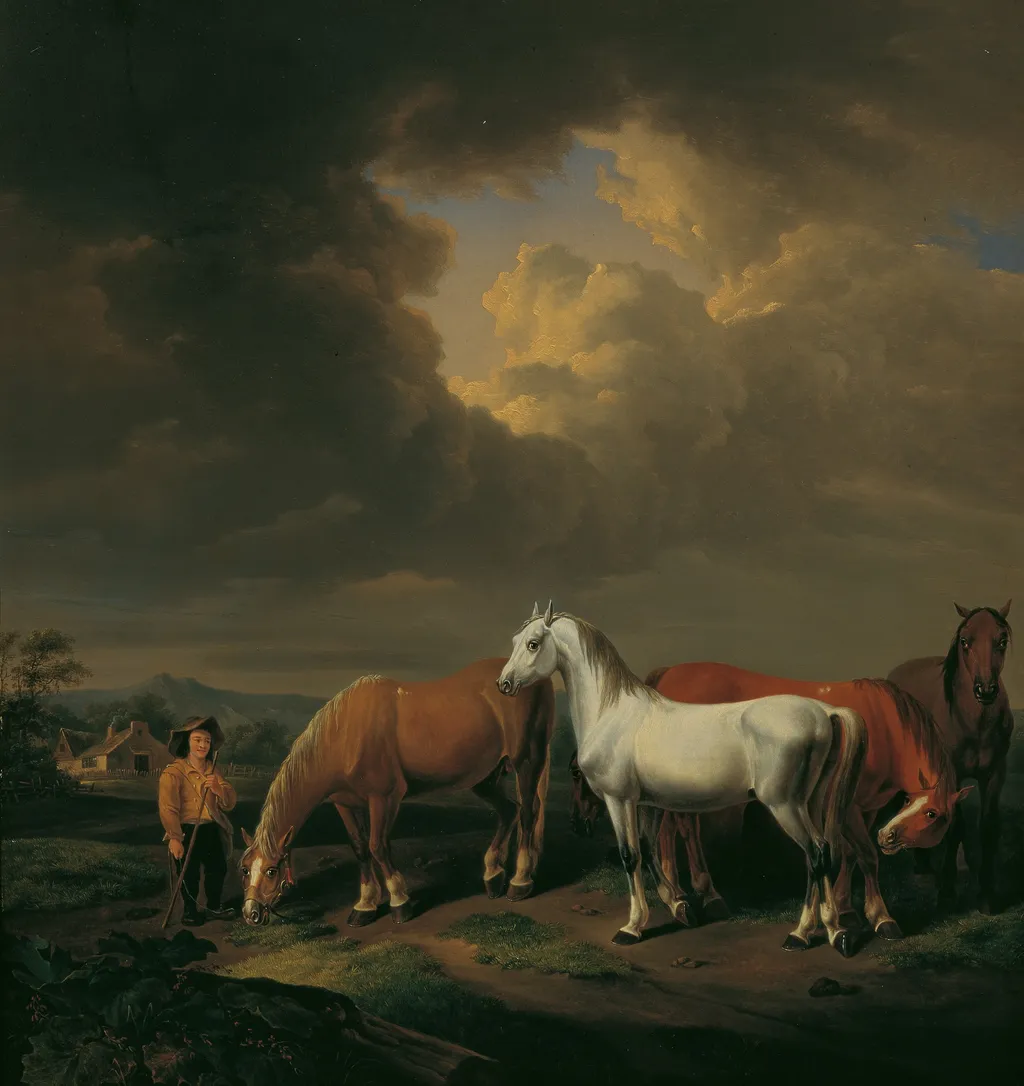
Five farm horses is an oil painting by the Biedermeier artist Johann Baptist Dallinger von Dalling. It dates from 1830 and is held in the collection of the Kunsthistorisches Museum.
About this work
Overview
Painted in 1830 by Austrian artist Johann Baptist Dallinger von Dalling, this oil-on-canvas work presents a quiet scene of five farm horses in a rural setting.
Painted in 1830 by Austrian artist Johann Baptist Dallinger von Dalling, this oil-on-canvas work presents a quiet scene of five farm horses in a rural setting. Dallinger, active during the Biedermeier era, focused on naturalistic depictions of animals and landscapes. The painting reflects his interest in observed reality rather than idealized forms, aligning with the period’s preference for intimate, unembellished subjects.
Subject & Meaning
The composition centers on five horses at rest on a farm, arranged with one in the foreground and four subtly placed behind. Some graze quietly; others stand still, heads lowered. There is no human presence, emphasizing the animals’ autonomy and daily rhythm.
The scene conveys a sense of calm labor and quiet dignity, typical of Biedermeier values that honored domestic and agricultural life without sentimentality.
Technique & Style
Dallinger employed oil paint to render the horses with careful attention to anatomical detail and surface texture. He used a restrained palette of browns, blacks, and whites to suggest variation in coat color and light. Chiaroscuro is applied subtly to model form and create spatial depth, while loose brushwork in the background grounds the figures in a believable, atmospheric environment without overt drama.
History & Provenance
The painting entered the collection of the Kunsthistorisches Museum in Vienna, where it remains on public display. Its acquisition likely occurred in the 19th century, following the artist’s established reputation in Austrian artistic circles. Dallinger’s works were collected by institutions and private patrons interested in the realistic depiction of rural life, securing this piece’s place in a major national collection.
Context
Created during the Biedermeier period, the painting reflects a broader cultural turn toward domestic tranquility and observable nature in post-Napoleonic Central Europe. Urban elites sought art that celebrated stability and the virtues of rural existence. Dallinger’s focus on farm animals aligned with this trend, offering a quiet alternative to grand historical or mythological themes.
Legacy
Though not widely known outside Austria, Dallinger’s work contributes to the understanding of 19th-century Austrian realism. Five Farm Horses exemplifies how animal painting served as a vehicle for quiet observation, influencing later regional artists who prioritized authenticity over theatricality. Its preservation in a major museum underscores its role as a representative work of its time and place.
Own this work as a print
Artist & collection
Artist
Johann Baptist Dallinger von Dalling
Johann Baptist Dallinger von Dalling (1782–1868) was an Austrian painter. A son of Johann Dallinger von Dalling, he was born in Vienna, and painted landscapes and animals in the old Dutch style, as well as portraits and…

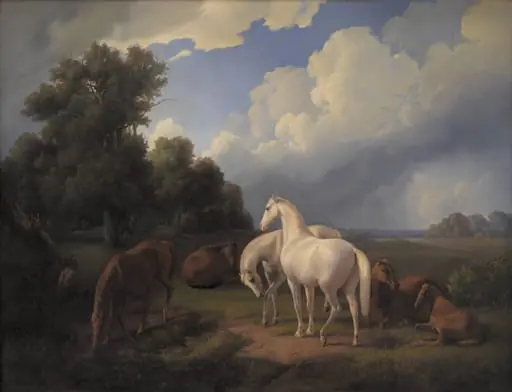 Lucia, Whimsey, Bellona, Hertha, Olga
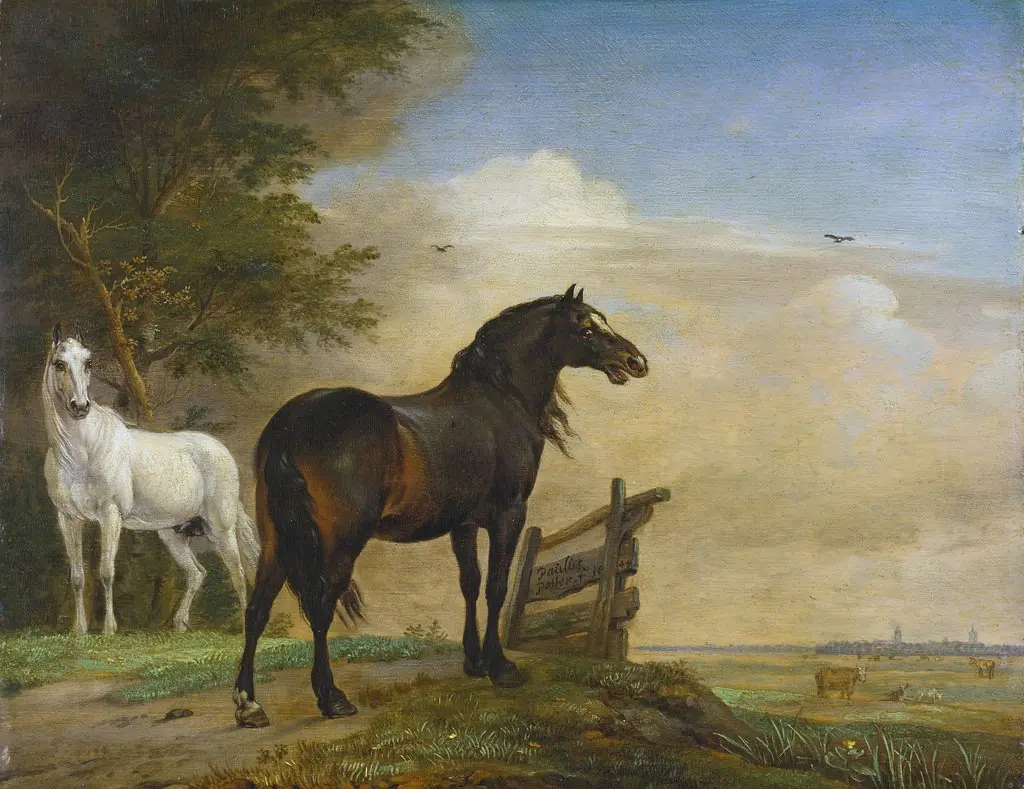 Two Horses in a Meadow near a Gate
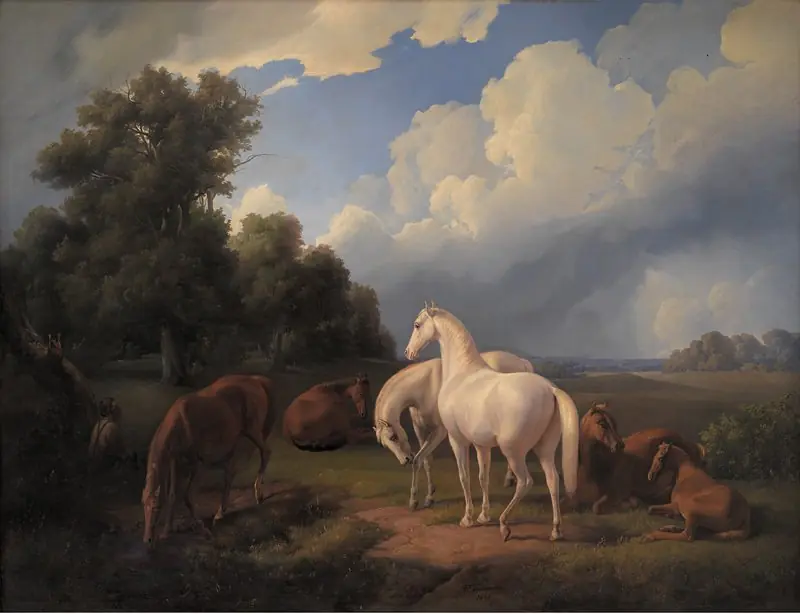 Lucia, Whimsey, Bellona, Hertha, Olga
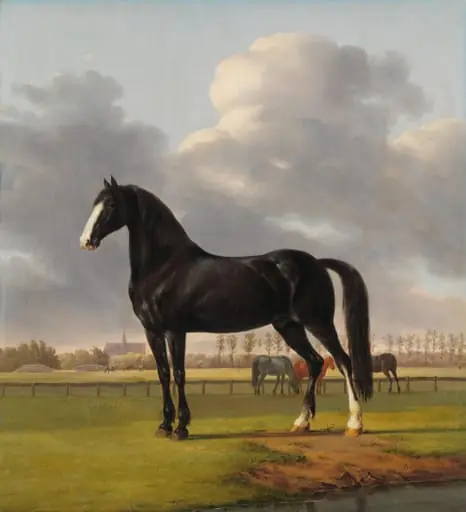 Adriaan van der Hoop’s Trotter ‘De Vlugge’ (The Fast One) in a Meadow
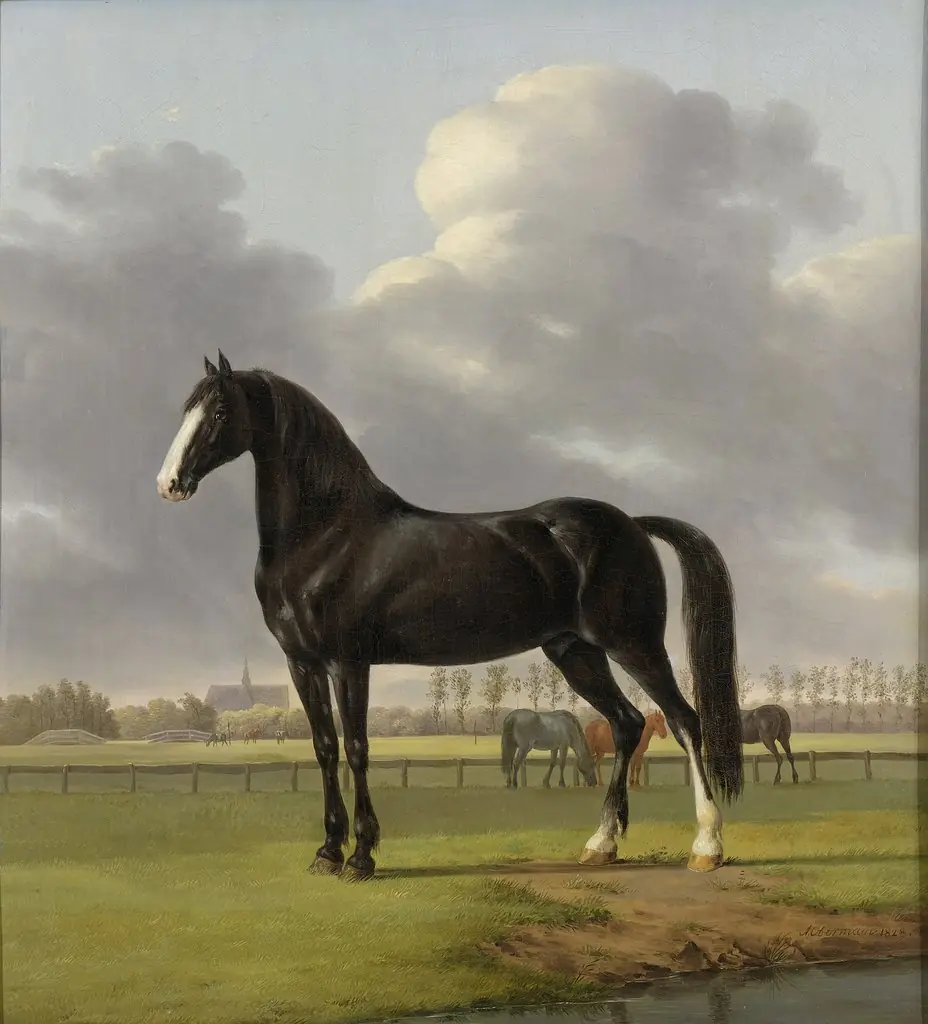 Adriaan van der Hoop’s Trotter ‘De Vlugge’ (The Fast One) in a Meadow
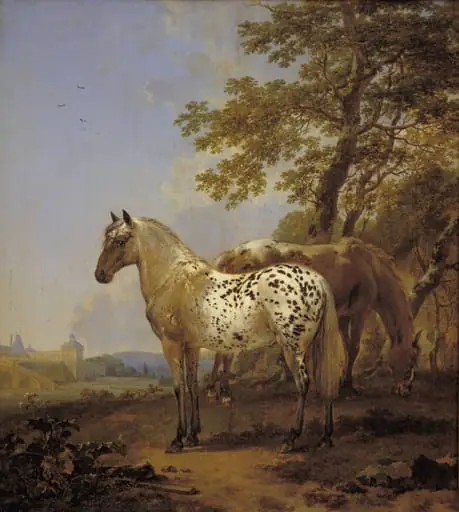 Two Horses in a Landscape
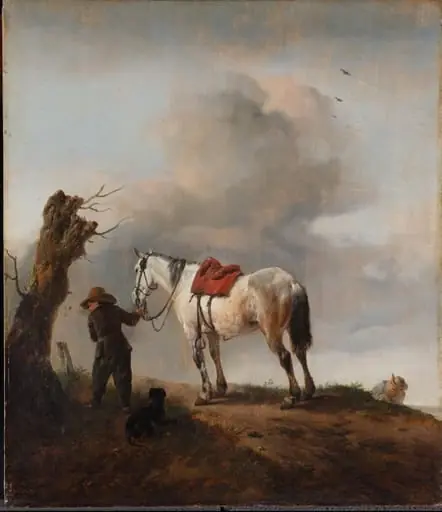 De schimmel
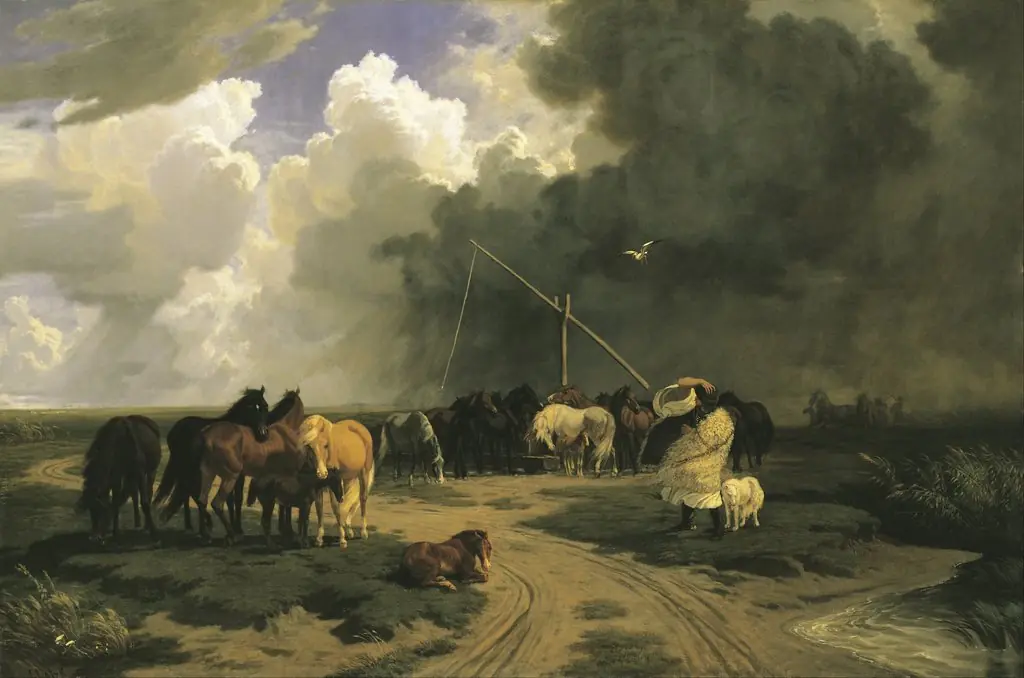 Horses in a Rainstorm
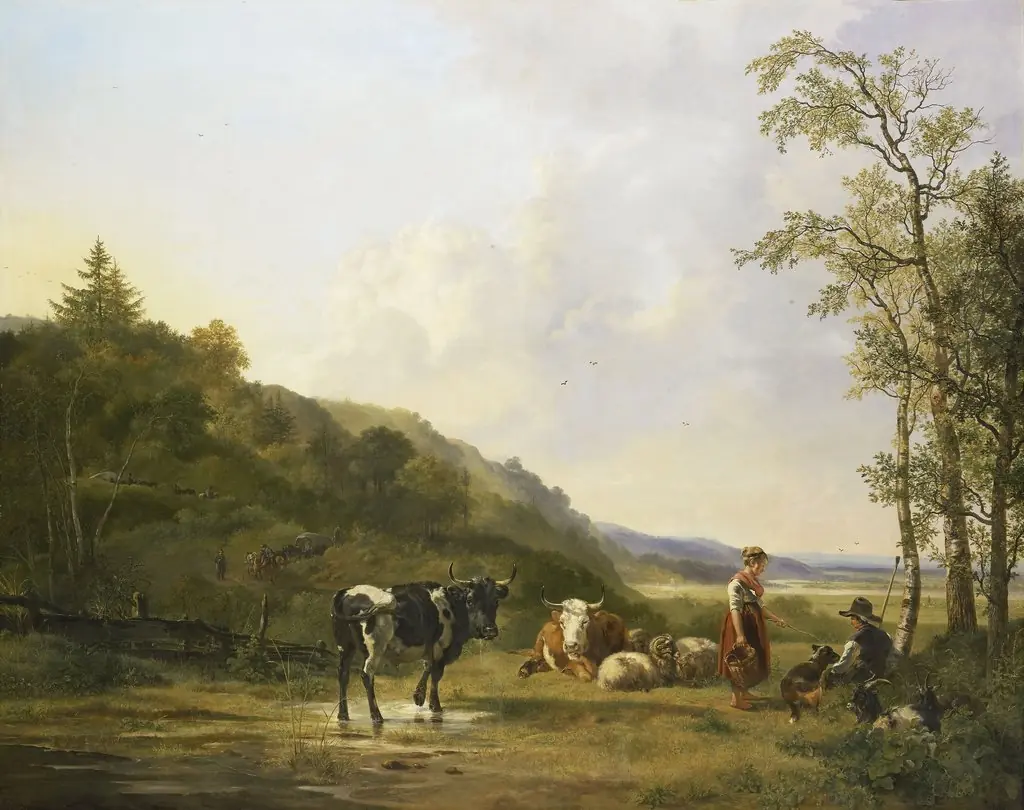 Landscape with Shepherd, Shepherdess and Cows