Artwork
Portrait of Louis XVI of France
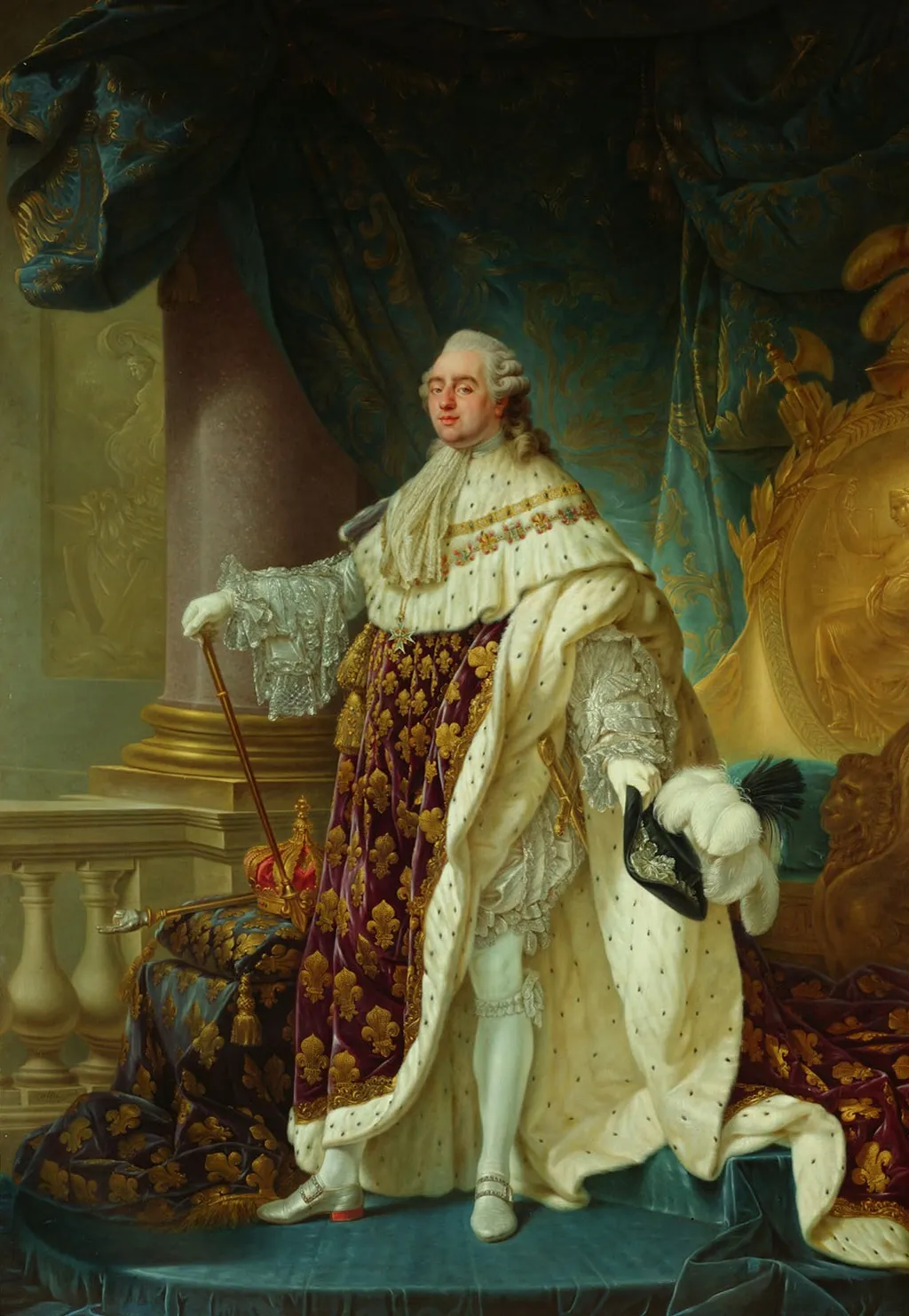
Portrait of Louis XVI of France is an oil painting by the Rococo painting artist Antoine-François Callet. It dates from 1791 and is held in the collection of the Kunsthistorisches Museum.
About this work
Overview
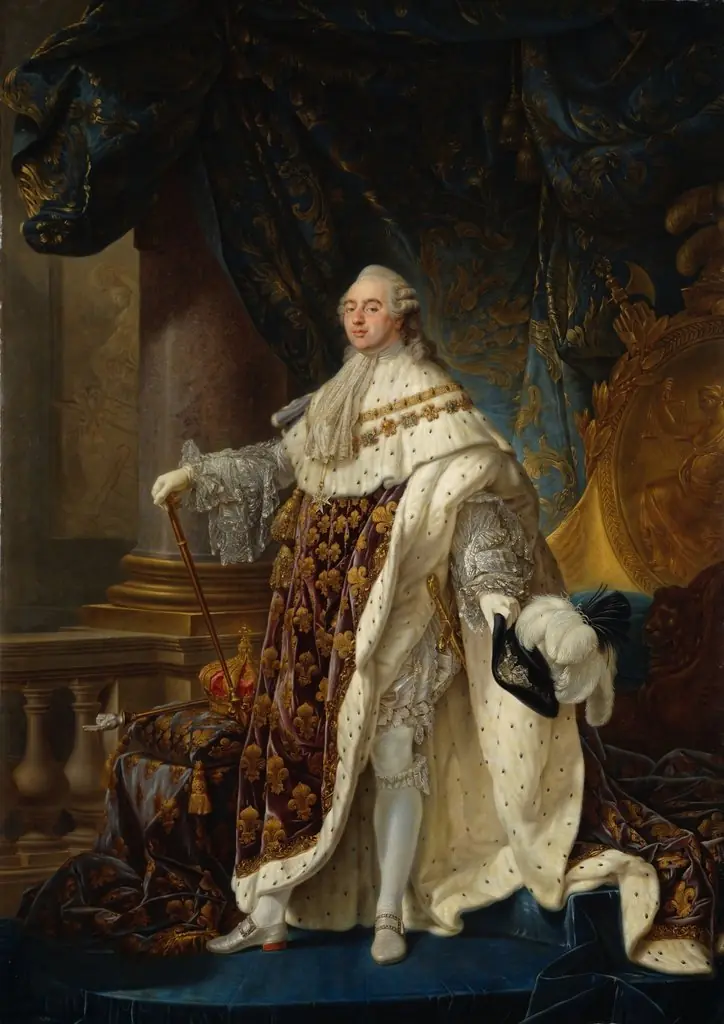
Portrait of Louis XVI is a ceremonial full-length portrait by the French artist Antoine-François Callet, depicting the French monarch in his coronation robes.
Portrait of Louis XVI is a ceremonial full-length portrait by the French artist Antoine-François Callet, depicting the French monarch in his coronation robes. Created as an oil on canvas painting, the composition was commissioned in 1778 and completed the following year, measuring 278 by 196 centimeters. The work shows the king standing on a platform, holding a golden scepter and wearing the traditional blue velvet cloak embroidered with gold fleurs-de-lis, lined with ermine. The best-known version of the painting was exhibited at the Salon of 1789 and is currently held in the Museum of French History at the Palace of Versailles. Callet's portrait became the definitive official image of the monarch, widely replicated and distributed to foreign courts as a substitute for the king's physical presence.
Subject & Meaning
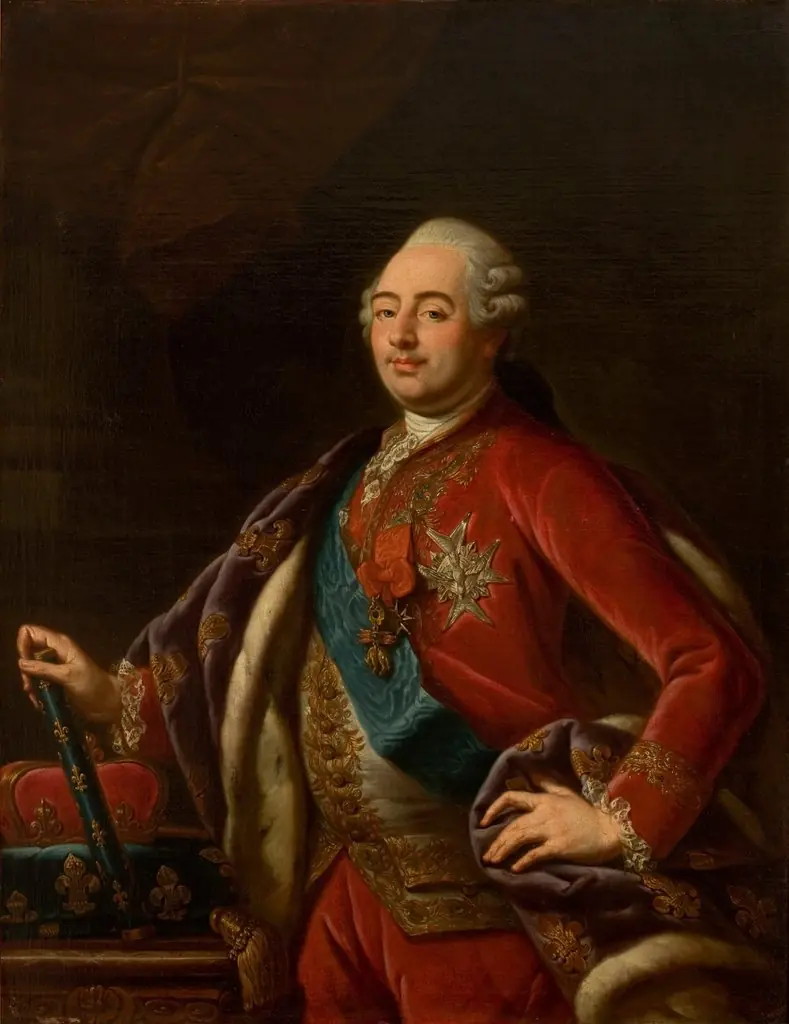
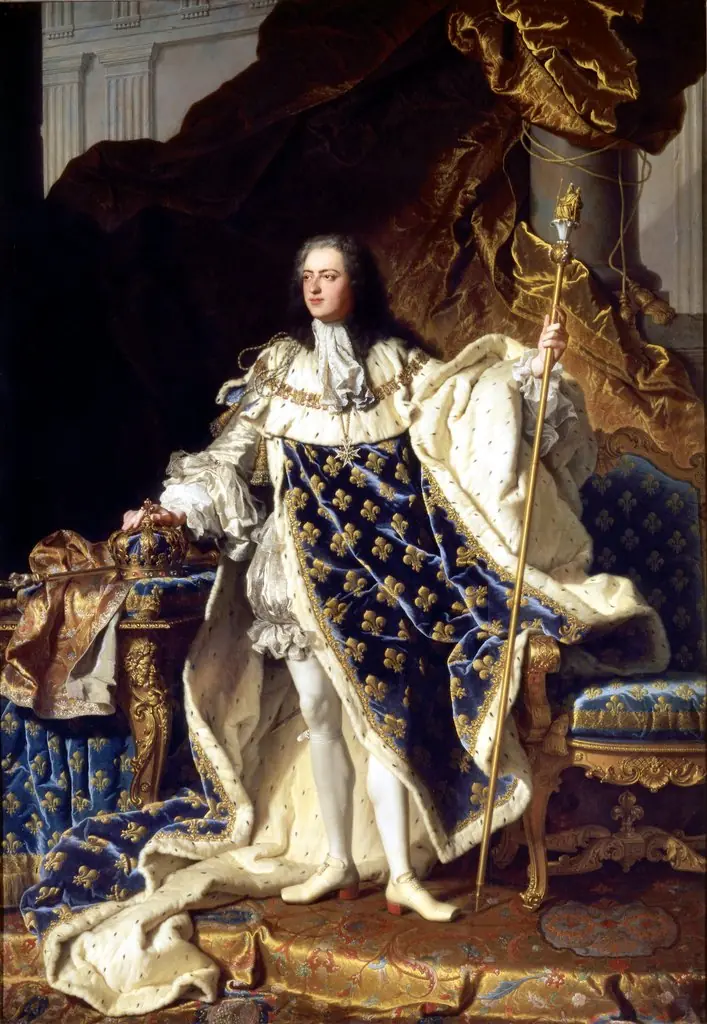
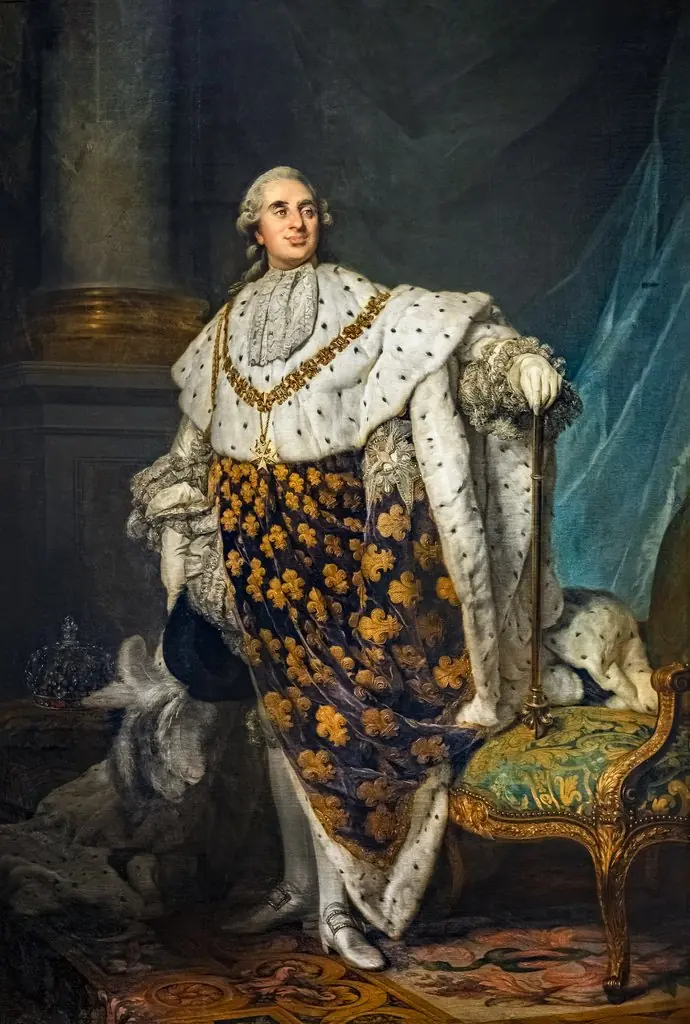
The painting functions as a comprehensive display of royal authority and continuity, deliberately echoing the 1701 Portrait of Louis XIV by Hyacinthe Rigaud. Louis XVI is shown wearing the coronation robe of the kings of France, a blue cloak patterned with gold fleurs-de-lis, the enduring symbol of the French monarchy, and lined with ermine. On his breastplate rest the collars of the Order of the Holy Spirit and the Golden Fleece. The insignia of royal power are carefully arranged on a blue velvet cushion with gold tassels to his left, featuring the hand of justice and the crown. He holds the scepter in his right hand and a black hat with white fur trim and black feathers in his left. The scabbard of Charlemagne's sword, used in French coronations since 1179, is visible on his left thigh. To achieve authenticity, Callet was lent the actual royal regalia conserved at the Abbey of Saint-Denis to paint these elements.
Technique & Style
Callet employed a highly finished, smooth brushwork to render the lavish textures of the ceremonial setting. The palette is restricted to shades of blue, white, and gold, which provides visual cohesion and allows the ermine white to radiate against the king's face. Light falls strongly from the left, illuminating the figure and creating deep shadows in the heavy drapery folds. The composition is animated by the careful rendering of materials, contrasting the shiny effect of the silk shirt and white stockings with the velvety surface of the ermine and the light feathers of the hat. A fluted column closes the composition on the left, a traditional Renaissance element popularized by Anthony van Dyck, while a golden ceremonial shield with a lion figure and a throne back decorated with a bas-relief of Justice add architectural depth. The impressive scale of the canvas gives the monarch a dominating physical presence over the viewer.
History & Provenance
The commission for the portrait was awarded in August 1778 by the French Foreign Affairs ministry under the Comte de Vergennes, who sought an official effigy of the king to distribute as gifts to embassies and foreign courts. Callet, primarily a history painter, was chosen for the task, possibly due to his acclaimed 1772 portrait of the Cardinal de Bernis in Rome. In October 1779, the minister requested two sittings with the king so Callet could paint the head from life, proposing the canvas be moved from Paris to Versailles. The primary version was finished in 1780, for which Callet received 12,000 livres. The best-known version was exhibited at the Salon of 1789 at the Louvre and entered the collection of the Museum of French History at the Palace of Versailles. Versailles also holds a smaller, contemporary replica commissioned by the Comte de Vergennes. Identifying the true original has proven difficult for scholars, and it has been suggested that the original may be a cut-down copy currently housed in the Musée d'Art Roger-Quilliot in Clermont-Ferrand. Other notable versions exist in the Prado in Madrid and Waddesdon Manor in Buckinghamshire. One version, measuring 2.68 by 1.9 meters and signed by Callet, was likely given by the king to the Marquise de Soucy in 1785 and passed through the Hôtel Drouot in 1893 and the Robert de Balkany collection before entering a private French collection.
Context
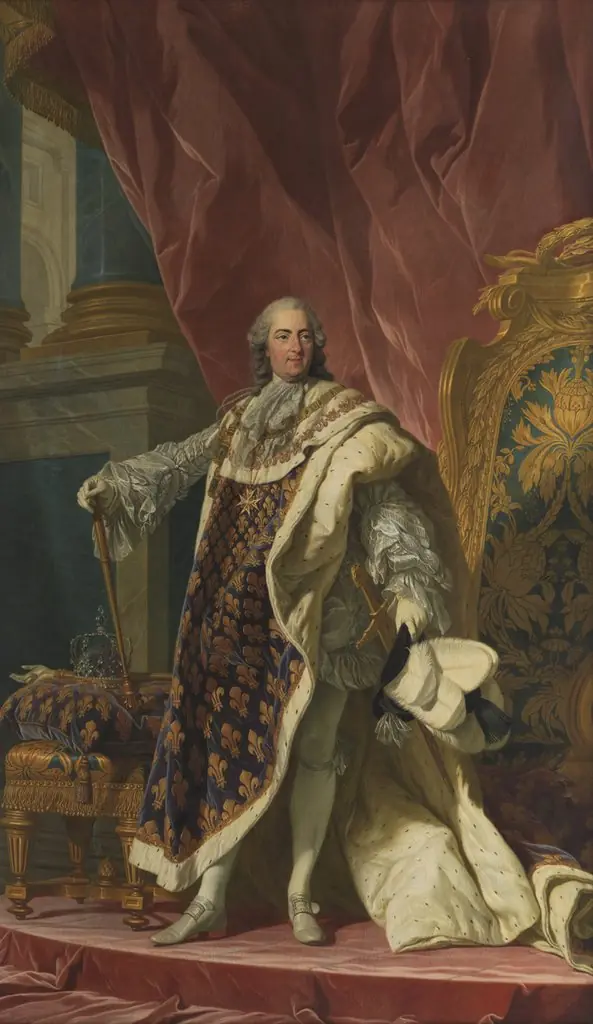
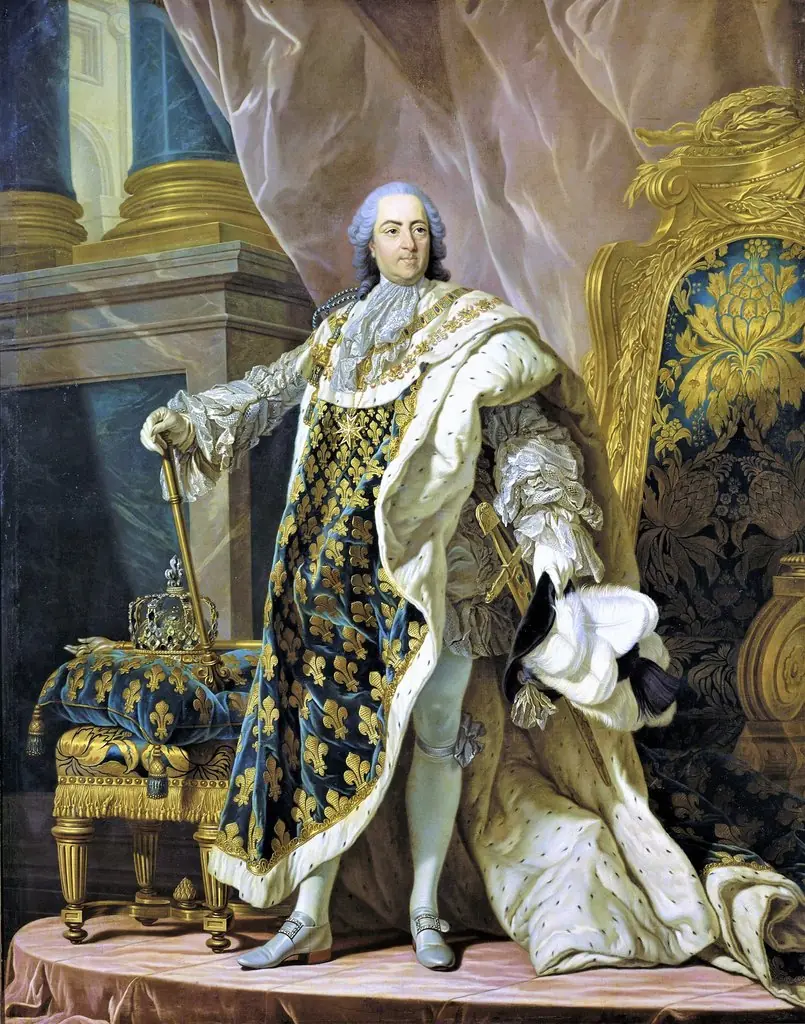
Callet's portrait emerged from a competitive context of royal representation. In 1777, the talented portraitist Joseph-Siffrein Duplessis had completed a splendid effigy of Louis XVI in coronation robes commissioned by the Comte d'Angiviller. However, the Comte de Vergennes found the Duplessis image unsuitable for circulation abroad and turned to Callet to create the desired substitute. Unlike the established portraitist Duplessis, Callet was a history painter who had won the grand prix de Rome in 1764 and was accepted by the Académie des beaux arts in 1779. This 1778 commission effectively launched his career as a court portraitist, leading to numerous subsequent versions until 1790 and commissions to paint the king's brothers. Stylistically, the work consciously follows the template established by Hyacinthe Rigaud's 1701 portrait of Louis XIV and continued by Louis-Michel Van Loo's 1763 portrait of Louis XV, cementing a visual tradition of French royal portraiture that would persist into the nineteenth century.
Legacy
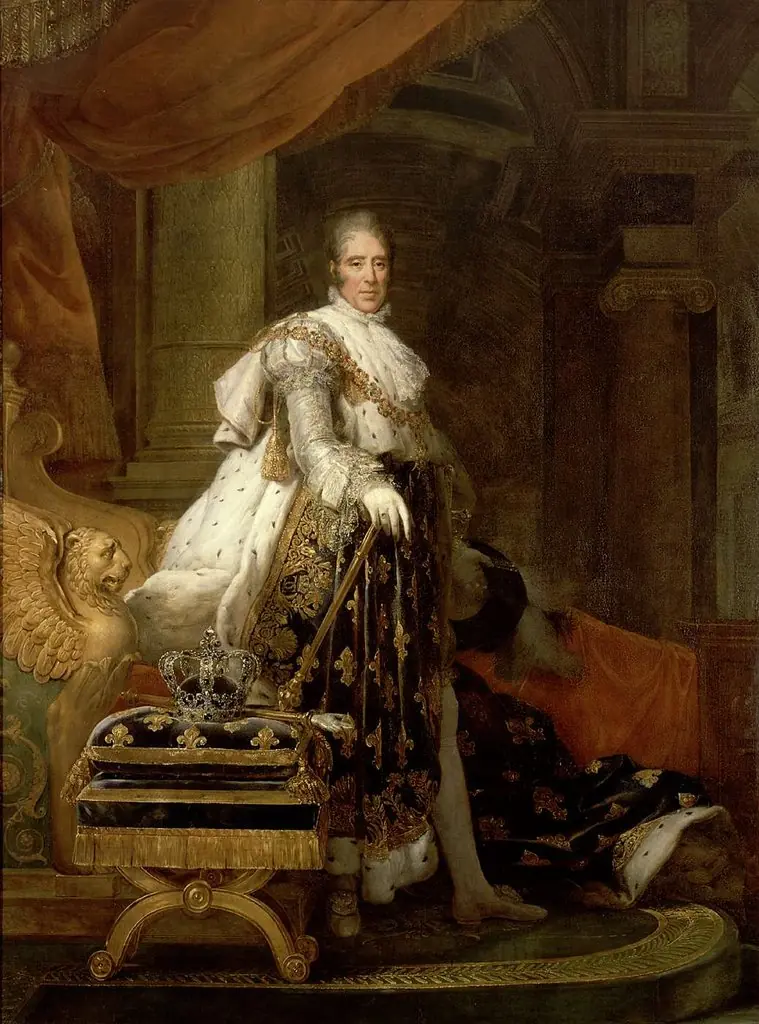
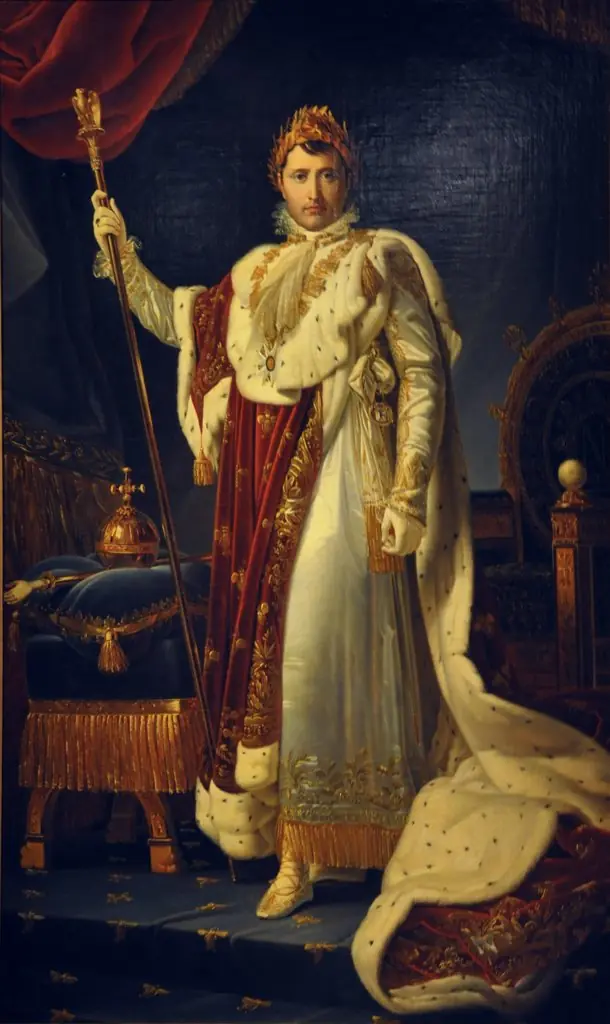
The portrait established the definitive visual formula for the representation of Louis XVI, designed specifically for broad circulation as a diplomatic tool and a stand-in for the monarch at foreign courts. Its reliance on the Rigaud template set a precedent that extended beyond the French monarchy, directly influencing the manner in which Napoleon would later be depicted in his own ceremonial portraits. The composition was widely replicated by Callet himself and other artists, with versions dispatched across Europe. The enduring power of this visual model is evidenced by its continued use as the standard for official state portraiture well into the nineteenth century, long after the execution of Louis XVI and the fall of the monarchy he symbolizes in the painting.
Artist & collection
Artist
Antoine-François Callet (1741–1823), generally known as Antoine Callet, was a French painter of portraits and allegorical works, who acted as official portraitist to Louis XVI.