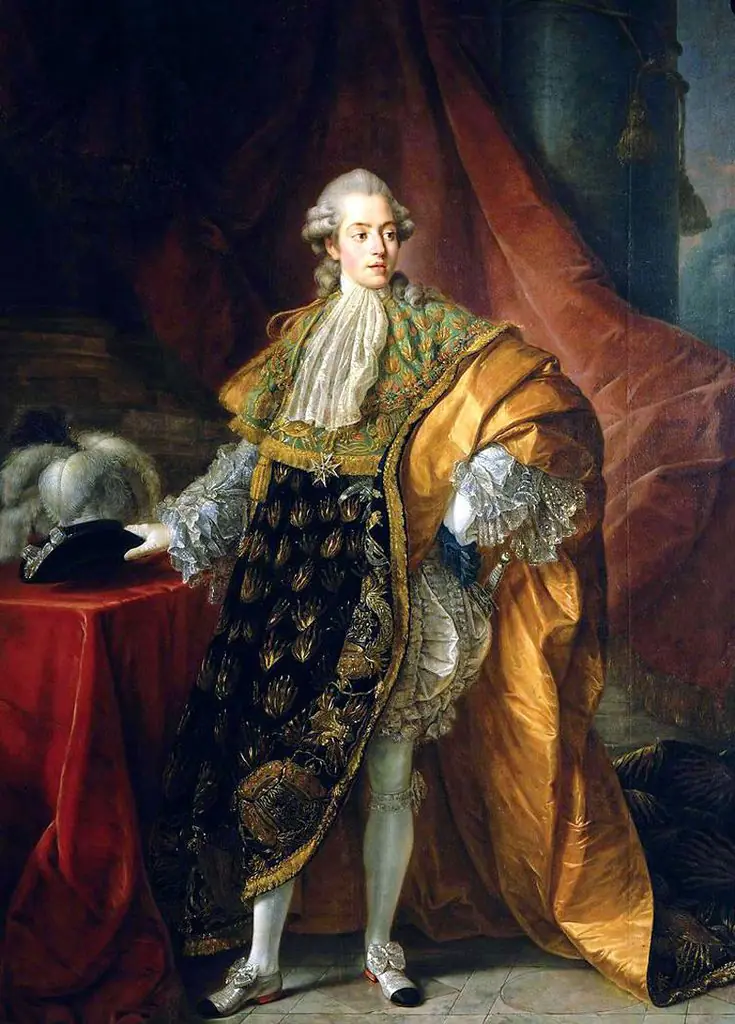
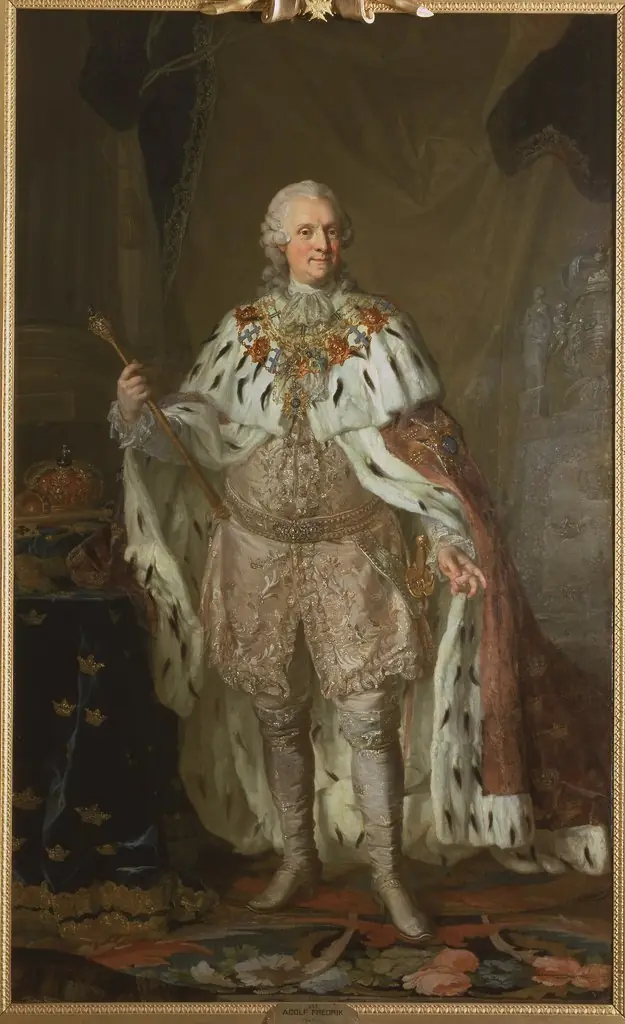
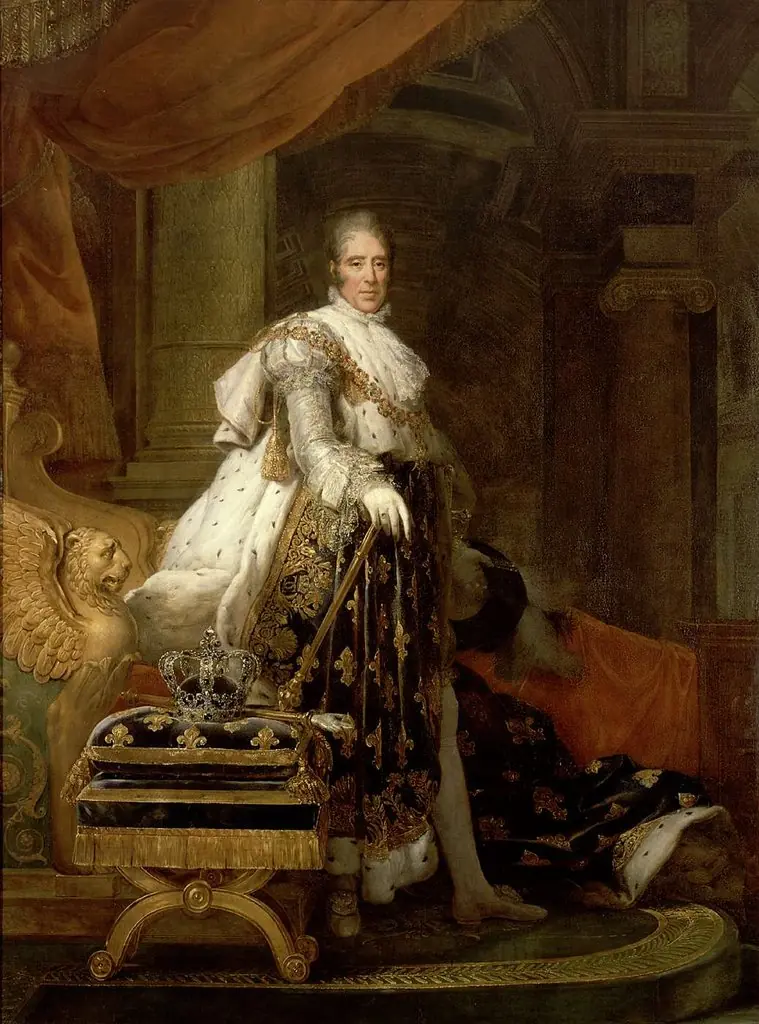
Artwork
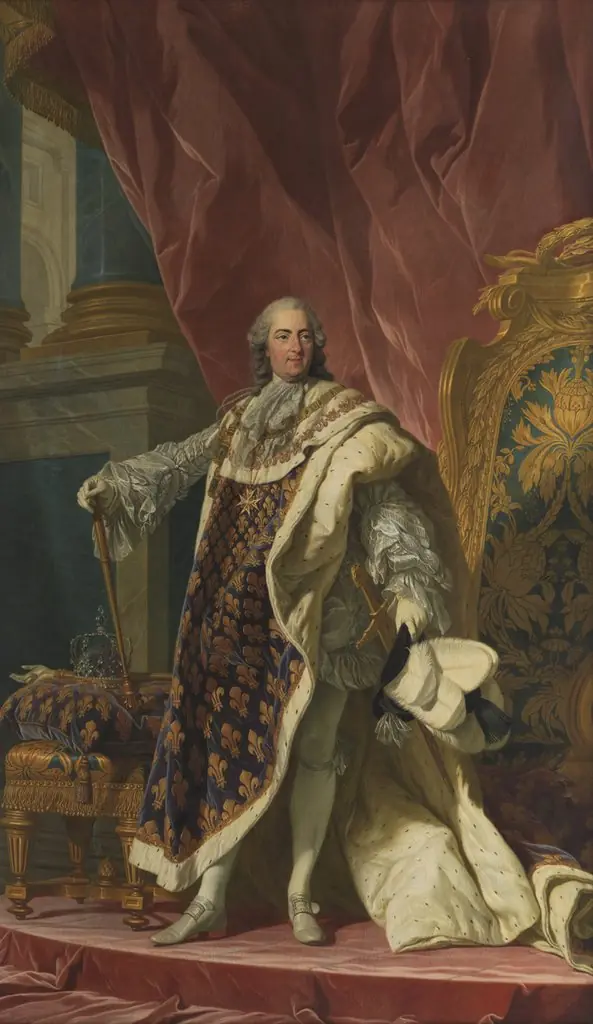
Louis XVI in Coronation Robes
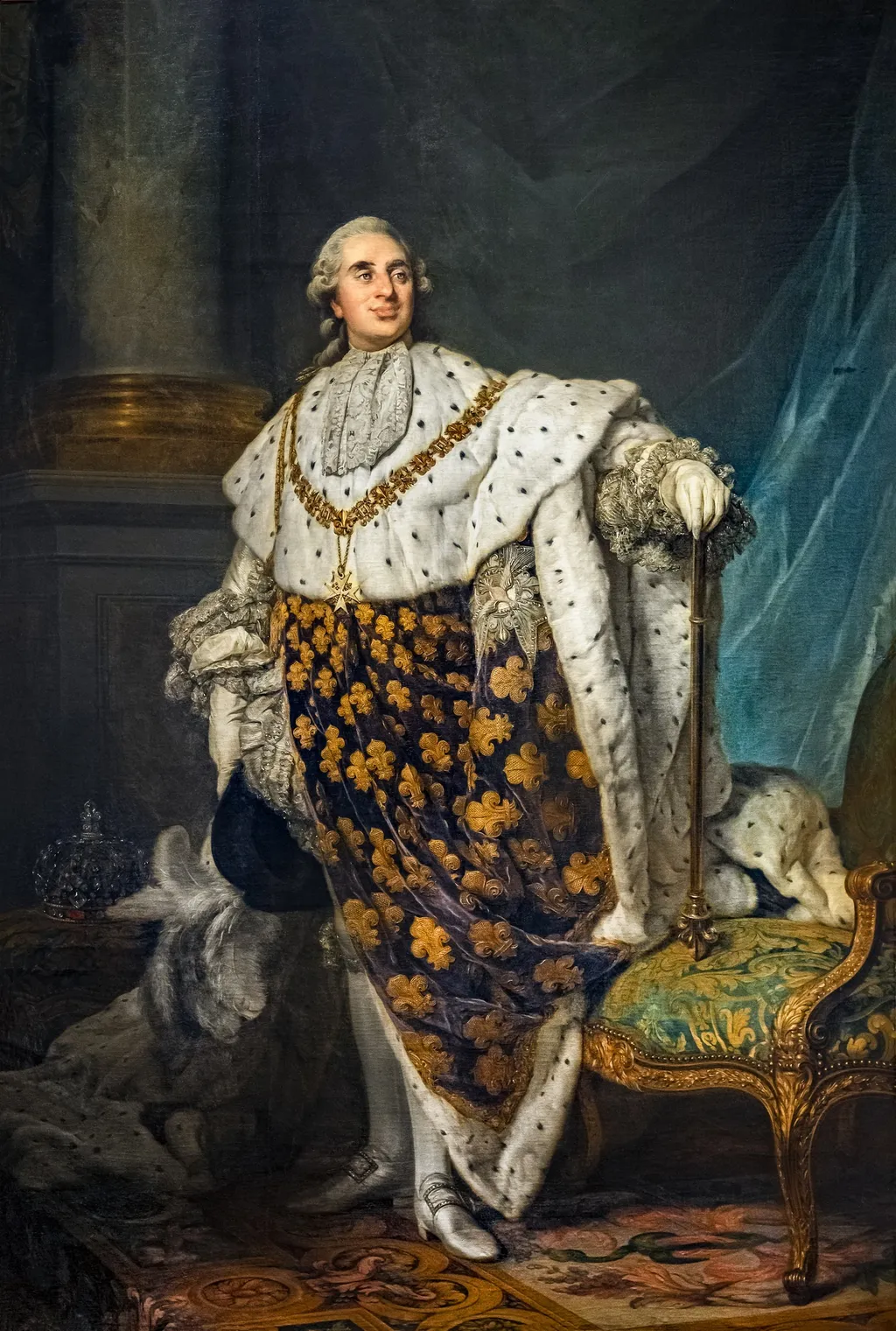
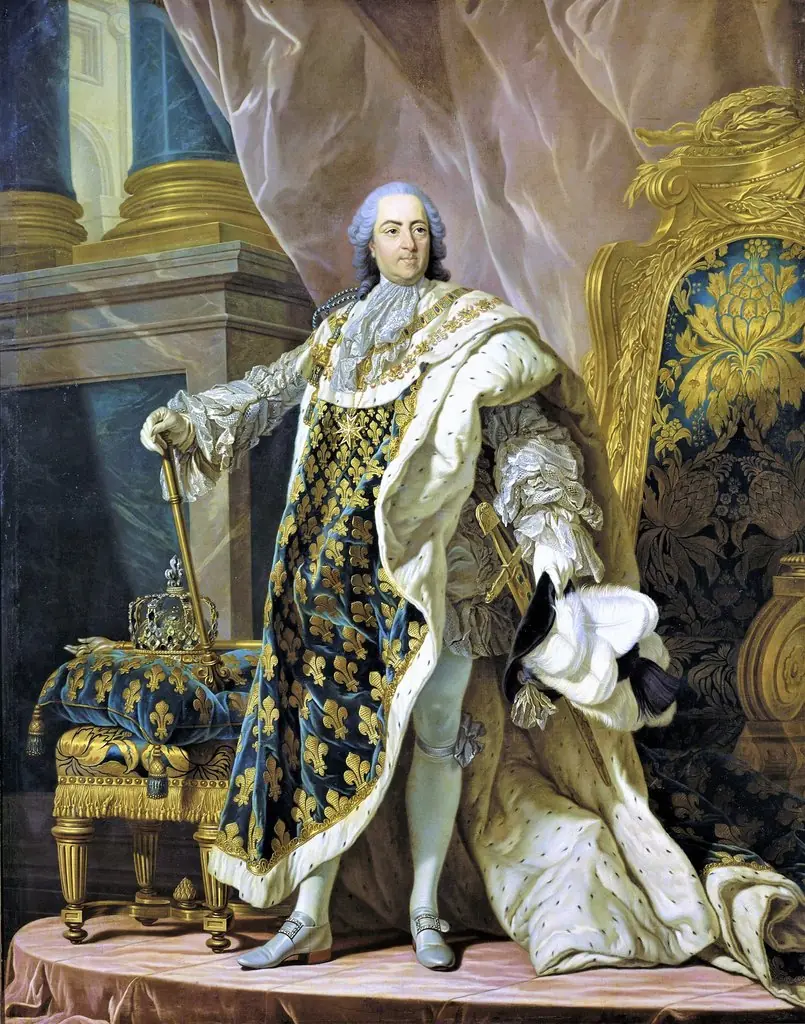
Louis XVI in Coronation Robes is an oil painting by the Rococo painting artist Joseph Siffred Duplessis. It dates from 1789 and is held in the collection of the Musée Ingres Bourdelle. Joseph Duplessis painted a portrait of Louis XVI in 1776, showing the king in the ermine‑lined robes he wore at his coronation in Reims.
About this work
Subject & Meaning
Additionally, the inclusion of a classical column and a seat further anchors the king within an established, enduring tradition of monarchical power.
The painting portrays Louis XVI of France, who had ascended to the throne in 1774. It specifically commemorates his coronation at Reims by depicting the monarch adorned in the ermine-lined robes he wore during the ceremony. The composition integrates traditional symbols of royal authority and legitimacy, prominently featuring the crown, ermine fur, a ceremonial glove, and the Order of the Holy Spirit.
Additionally, the inclusion of a classical column and a seat further anchors the king within an established, enduring tradition of monarchical power. Through these elements, the work functions as a formal assertion of the king's sovereign right and the continuity of the French monarchy.
Technique & Style
The painting is executed in oil on canvas, measuring 227 cm in height and 184 cm in width. The handling is precise and controlled, characteristic of Duplessis’s academic training, with smooth transitions in the depiction of textures and a restrained palette dominated by deep blacks, crimson, and gold.
Formal qualities emphasize Louis XVI’s ceremonial authority: he is shown in full-length pose, seated beside a column, wearing the ermine-lined coronation robes and the collar of the Order of the Holy Spirit. The composition balances dignity and restraint, with the monarch’s gaze directed slightly to the side rather than confronting the viewer, reinforcing regal reserve. The column serves as a vertical anchor, while the fur trim and metallic threads of the robe are rendered with meticulous detail, conveying both opulence and institutional power.
History & Provenance
The portrait was produced by Joseph-Siffred Duplessis in 1776 and publicly exhibited at the Paris Salon of 1777, where it became a popular image of the monarch. According to a 1913 assessment by Bellendy cited in the Joconde record, the original is now considered lost, surviving only through a print by Muller and a sketch by C. de Saint-Aubin in the Salon livret.
Of the multiple versions produced by Duplessis and other hands, the canvas at the Musée Ingres Bourdelle in Montauban is regarded as the most important. The Joconde entry argues that this Montauban example is genuinely by Duplessis and of markedly higher quality than the replicas or copies held at the Musée Carnavalet, the Museum of French History at Versailles, Besançon, Valenciennes, and the Louvre, and is likely the original itself rather than a copy. The same record disputes an earlier claim by Forestié (1907) that the painting came from Bishop Le Tonnelier de Breteuil of Montauban, asserting instead that it originated in the royal collections.
The Wikidata entry locates the work at the Palace of Versailles, while the Joconde database places it at the Musée Ingres Bourdelle in Montauban.
The principal version of the portrait is held at the Musée Ingres Bourdelle in Montauban, catalogued by the French Ministry of Culture under Joconde reference 06070000102. According to the museum's own records, the Montauban canvas is regarded as the definitive example, likely the original from the royal collections rather than a later copy.
The painting was first shown publicly at the Salon of 1777 in Paris. The original produced in 1776 is now considered lost; the Montauban version is accompanied by a Muller engraving and a sketch by C. de Saint-Aubin in the Salon livret as historical documentation.
Additional versions of the composition are held at the Musée Carnavalet and the Museum of French History at the Palace of Versailles, with further copies or replicas recorded at Besançon, Valenciennes, and the Louvre.
Context
The portrait was first exhibited at the Salon of 1777 in Paris, establishing its public significance as an representation of the newly crowned monarch. Scholarly debate, notably advanced by Bellendy in 1913, has centered on the status of the Montauban version at the Musée Ingres Bourdelle. While the 1776 original was long considered lost, this version's superior quality compared to other replicas at the Musée Carnavalet, the Museum of French History at Versailles, Besançon, Valenciennes, and the Louvre has led to its identification as likely the original from the royal collections rather than a copy from the collection of Mgr Le Tonnelier de Breteuil, bishop of Montauban, as Forestié claimed in 1907.
The image's political utility is underscored by the existence of multiple versions, indicating its function as a widely circulated portrait of Louis XVI during his reign.
Legacy
Duplessis's 1777 coronation portrait of Louis XVI established a visual archetype for the monarch's ceremonial authority, a motif that resonated through later Revolutionary and Restoration imagery. The work's emphasis on regalia such as the Order of the Holy Spirit and ermine-lined robes informed subsequent state portraits, reinforcing an image of continuity that persisted in French republican iconography. Reproductions of the painting circulated widely, influencing public perception of Louis XVI during the turbulent 1780s and beyond, and the surviving version at Musée Ingres Bourdelle is frequently cited as a reference point in scholarly analyses of royal portraiture.
Its status as the most authoritative replica underscores its role in shaping the legacy of the king's visual representation.
Overview
Joseph Duplessis painted a portrait of Louis XVI in 1776, showing the king in the ermine‑lined robes he wore at his coronation in Reims. The work was displayed at the Paris Salon of 1777 and quickly became a widely reproduced image of the monarch.
Own this work as a print
Artist & collection

Artist
Joseph-Siffred Duplessis (22 September 1725 – 1 April 1802) was a French painter known for the clarity and immediacy of his portraits.