Artwork
Description of Egypt: Thebes. Medynet-Abou, Vol. II, Pl. 12
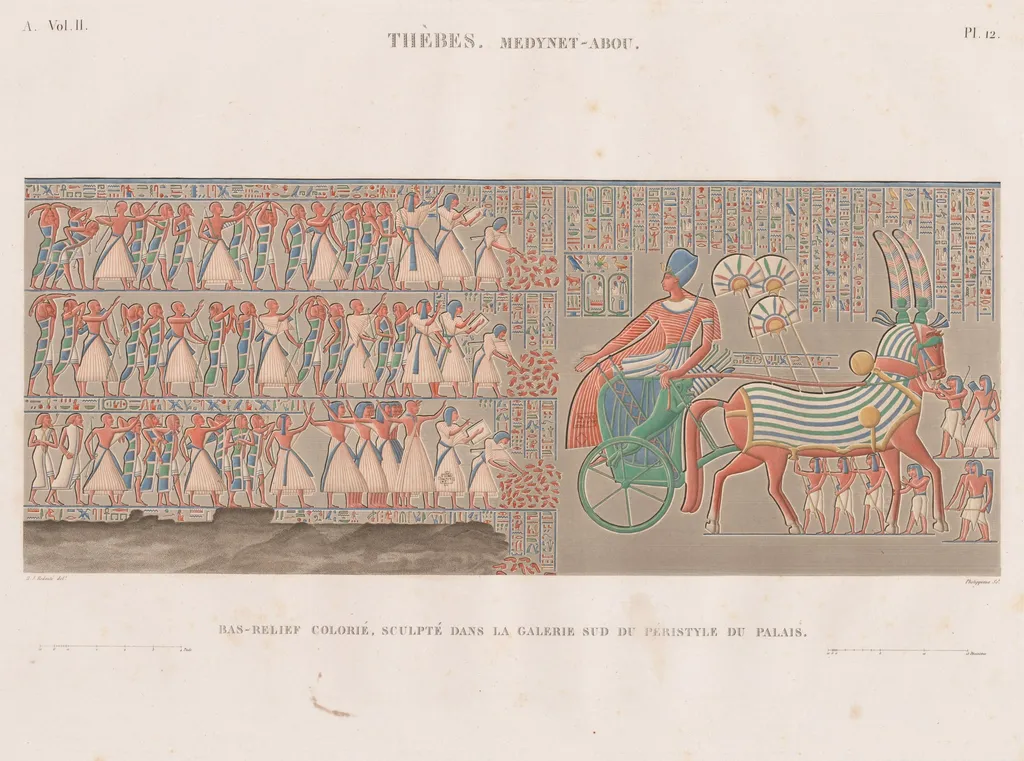
Description of Egypt: Thebes. Medynet-Abou, Vol. II, Pl. 12 is a print by the Romanticist artist Antoine Phelippeaux. It dates from 1822 and is held in the collection of the Cleveland Museum of Art.
- Accession no.
- 2008.198
- Credit line
- Gift of John Bonebrake
About this work
Overview
Antoine Phelippeaux’s 1822 work titled “Description of Egypt: Thebes. Medynet‑Abou, Vol. II, Pl. 12” is a printed representation of an ancient Egyptian bas‑relief. The image, now in the collection of the Cleveland Museum of Art, reproduces a long, painted stone carving that records a ceremonial scene.
Subject & Meaning
The composition depicts a procession of robed participants arranged in orderly rows, each bearing tools or offerings. To the right, a rider in a striped garment is shown on an elaborately decorated horse, with a solar emblem positioned above, suggesting a connection to divine or royal authority.
Technique & Style
The original relief was carved in stone and subsequently painted, a common practice in Egyptian art to enhance narrative detail. Phelippeaux’s print captures the vivid coloration and the dense hieroglyphic and symbolic background that frames the figures, preserving the visual complexity of the source.
History & Provenance
Created as part of the early‑19th‑century “Description of Egypt” series, the print reflects the period’s scholarly interest in documenting antiquities. It entered the Cleveland Museum of Art’s holdings through acquisition, where it remains accessible for study and public viewing.
Context
The scene illustrates typical Egyptian funerary or celebratory motifs, where processional figures and equestrian elements convey status and religious significance. The inclusion of hieroglyphic inscriptions underscores the narrative function of such reliefs in ancient monumental art.
Own this work as a print
Artist & collection

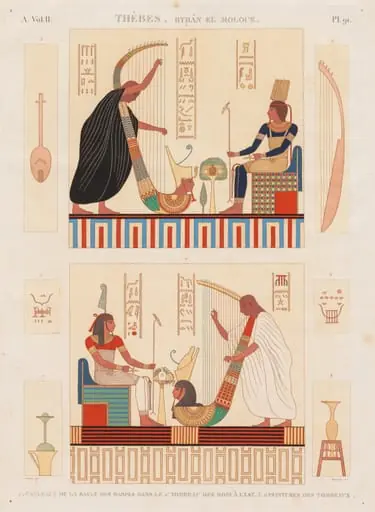
- Description of Egypt: Thebes Byban el Molouk, Vol. II, Pl. 91
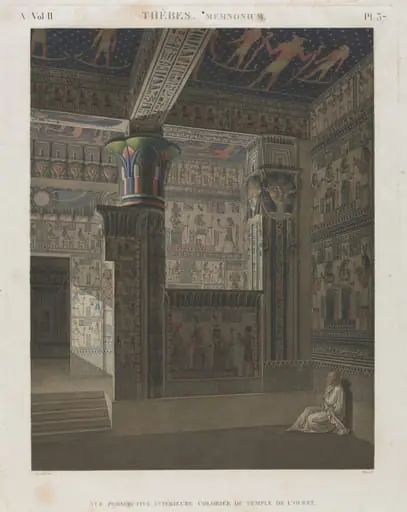 Description of Egypt: Thebes. Memnonium, Vol. II, Pl. 37
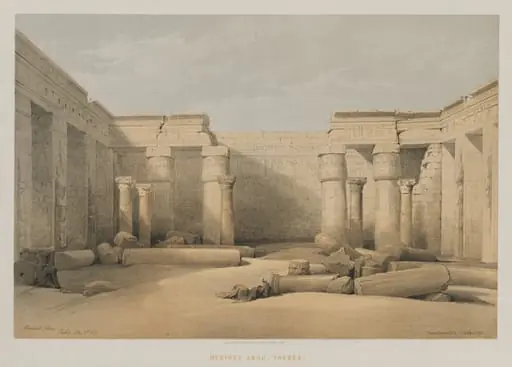 Egypt and Nubia, Volume II: Medinet Abou, Thebes
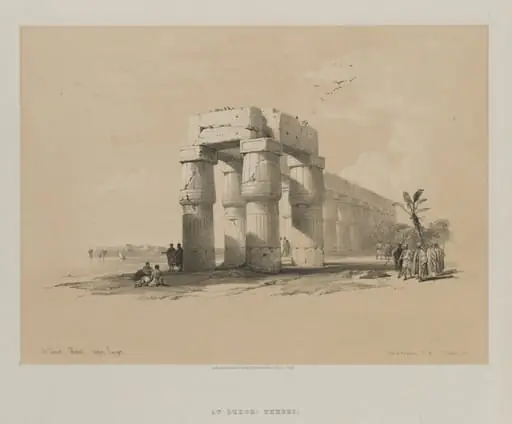 Egypt and Nubia, Volume I: At Luxor, Thebes, Upper Egypt
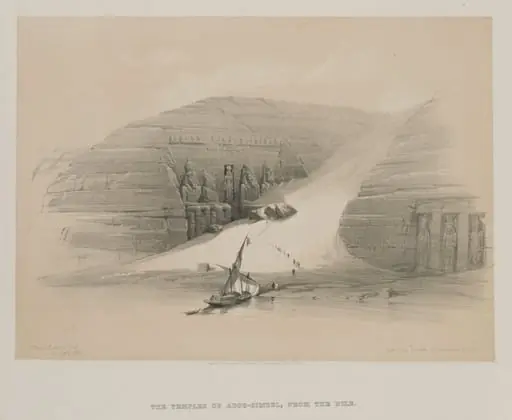 Egypt and Nubia, Volume II: Excavated Temples of Abo Simble, Nubia
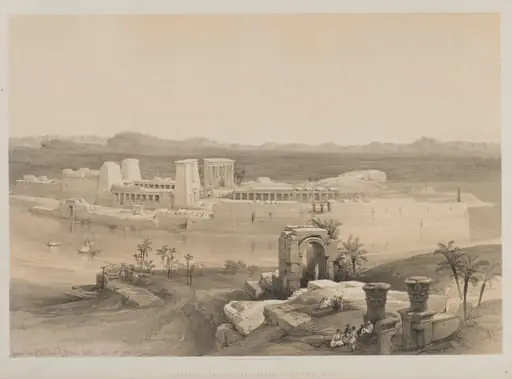 Egypt and Nubia, Volume I: General View of the Island of Philae, Nubia
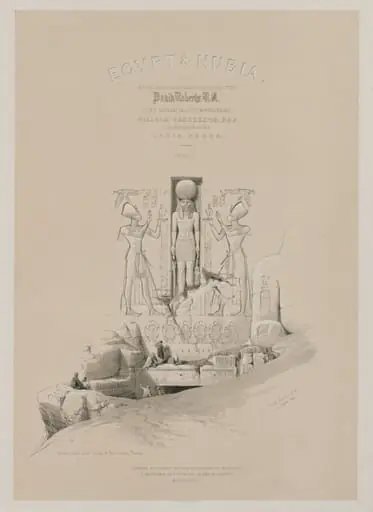 Egypt and Nubia, Volume I: Frontispiece
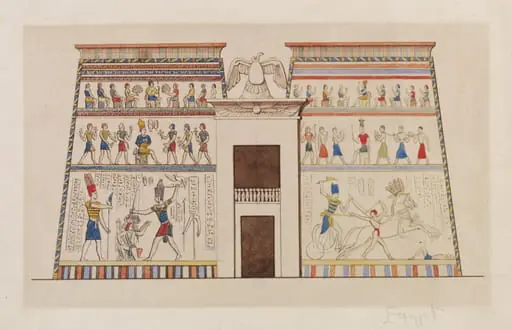 Architectural drawing of an entrance pylon to an Egyptian temple
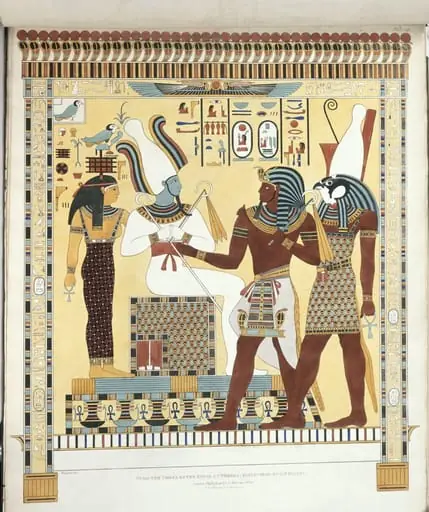 Plates Illustrative Of The Researches And Operations Of G. Belzoni In Egypt And Nubia
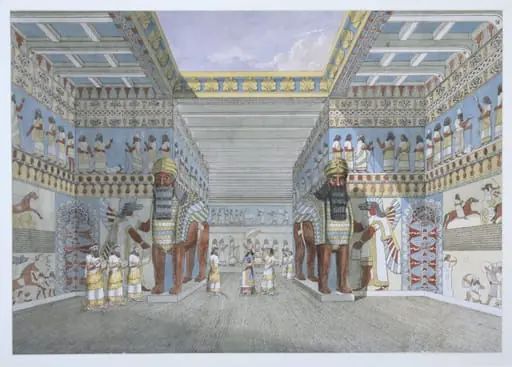 A Hall In An Assyrian Temple Or Palace, Restored From Actual Remains, And From Fragments Discovered In The Ruins
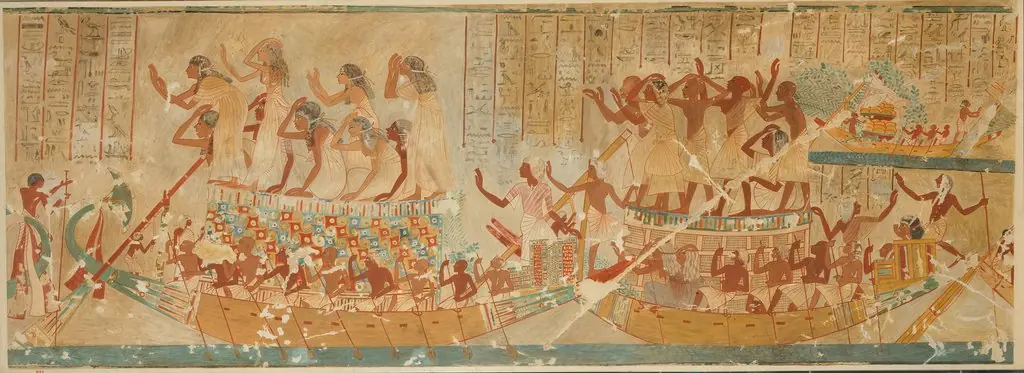 Boats with Mourners and Provisions, Tomb of Neferhotep
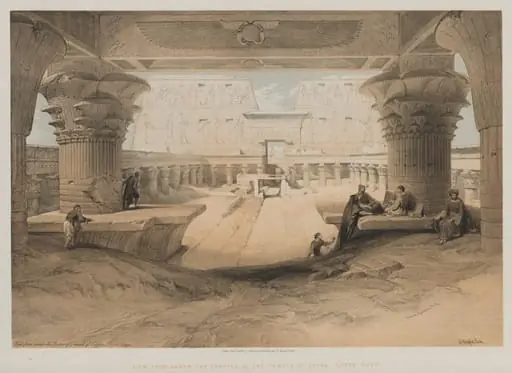 Egypt and Nubia, Volume I: View from Under the Portico of the Temple of Edfou, Upper Egypt