Artwork
Triptych: Bust of Christ, Saint John the Baptist and Saint Peter. Closed: Saint John the Evangelist and Saint Colombe
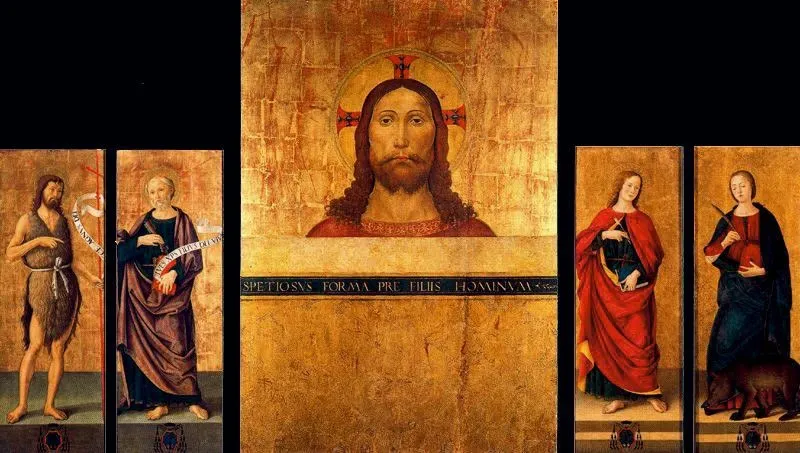
Triptych: Bust of Christ, Saint John the Baptist and Saint Peter. Closed: Saint John the Evangelist and Saint Colombe is an unspecified painting by the Early Renaissance artist Antoniazzo Romano. It dates from 1498 and is held in the collection of the Museo del Prado.
About this work
Subject & Meaning
When open, the central panel features a bust of Christ, flanked by Saint John the Baptist and Saint Peter, the latter identified by his attribute of a key.
Created in 1498, this religious triptych by Antoniazzo Romano presents an arrangement of biblical and hagiographical figures. When open, the central panel features a bust of Christ, flanked by Saint John the Baptist and Saint Peter, the latter identified by his attribute of a key. The closed exterior of the wings depicts Saint John the Evangelist holding a pen alongside Saint Columba (Colombe).
These figures collectively represent a devotional focus on Christ and the witness of his apostles and saints. The inclusion of specific attributes, such as the key for Peter and the writing implement for John the Evangelist, identifies the saints and underscores their roles within Christian theology.
History & Provenance
The triptych was created by Antoniazzo Romano in 1498. It is classified as a religious painting and measures 94 cm in height by 132 cm in width.
The work was formerly part of the Museo de la Trinidad and is now held in the Museo del Prado, Madrid. No further details regarding the original commission, patron, or intermediate ownership transfers are documented in the available sources, and no specific exhibition or loan history is recorded.
Overview
Antoniazzo Romano, a leading painter of the Roman school in the late 15th century, completed this triptych in 1498. The artwork, rendered in an Early Renaissance style, depicts various religious figures, including Christ, Saint John the Baptist, Saint Peter, Saint John the Evangelist, and Saint Colombe. This piece is currently preserved in the Museo del Prado, showcasing Romano's characteristic blend of contemporary and traditional elements.
Technique & Style
Executed in an Early Renaissance manner, the triptych intentionally incorporates older iconographic styles. Antoniazzo Romano was known for reviving such traditions, notably employing the gold ground technique in this work. This method contributes to the painting's archaic quality, fostering a sense of timelessness and reverence, consistent with its function as a cult image.
Artist & collection
Artist
Antonio di Benedetto Aquilo degli Aquili (c. 1430 – c. 1510), known as Antoniazzo Romano, was an Italian Early Renaissance painter, the leading figure of the Roman school during the latter part of the 15th century He…

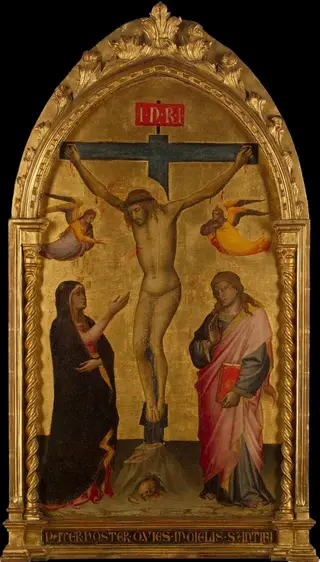 Crucifixion with the Virgin and St John
 Calvary Amongst Portraits
 Christ and the Twelve Apostles
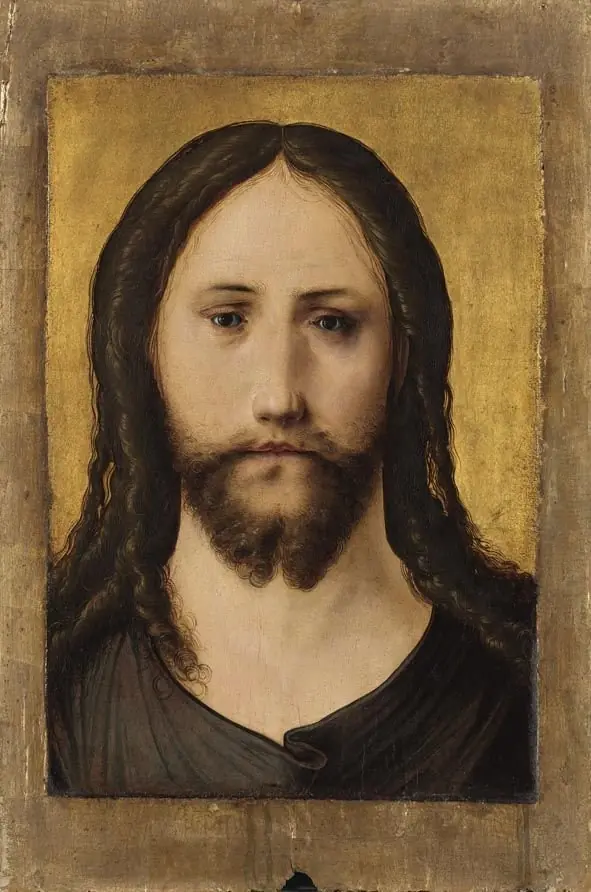 Christuskopf
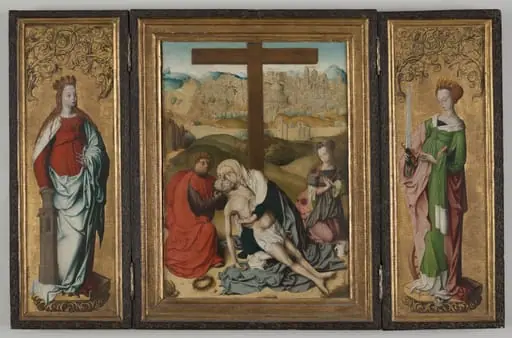 Triptych with The Lamentation of Christ (center), St. Barbara (left wing), St. Catherine of Alexandria (right wing), The Annunciation (reverse wings)
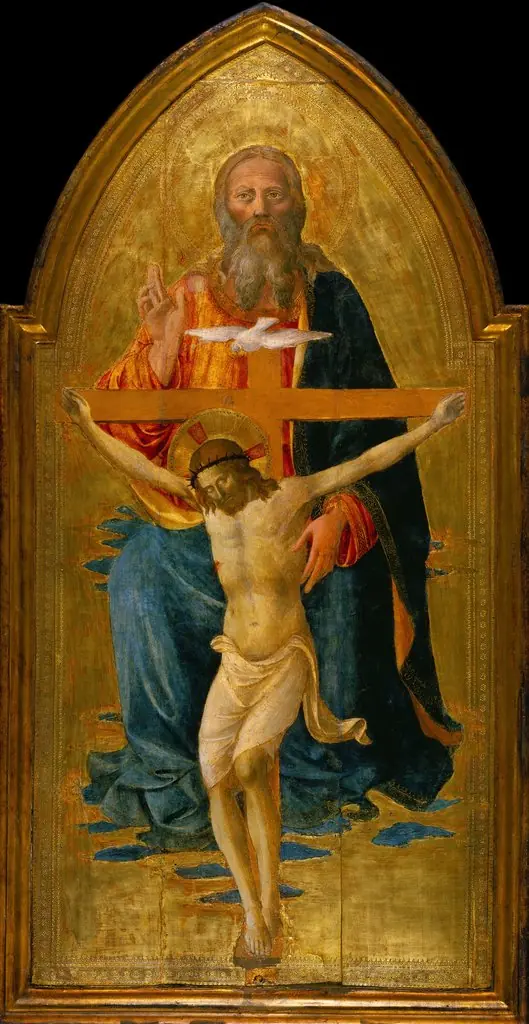 The Trinity
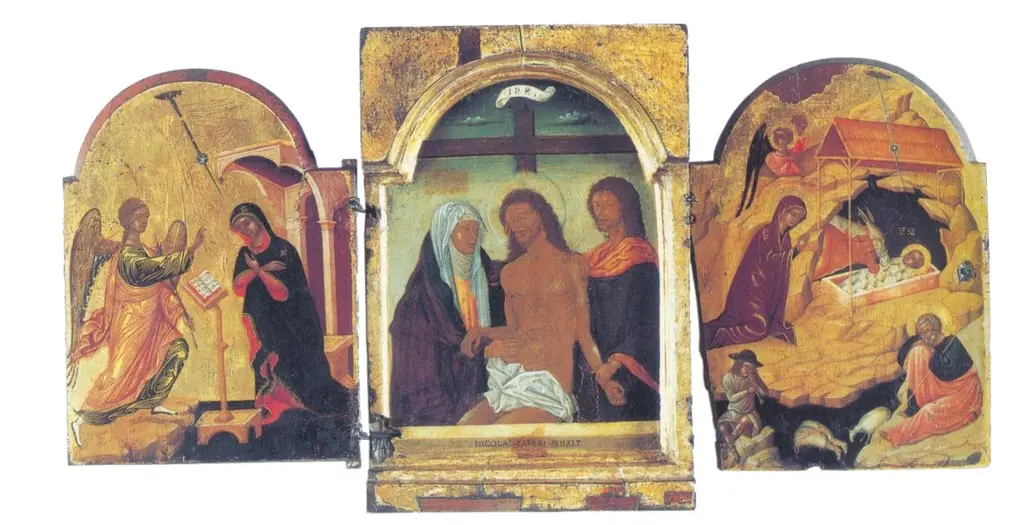 Triptych Pieta (Tzafouris)
 Christus Salvator Mundi
 Altarpiece with The Passion of Christ
 Crucifixion with Mary and St John the Evangelist
 Răstignirea
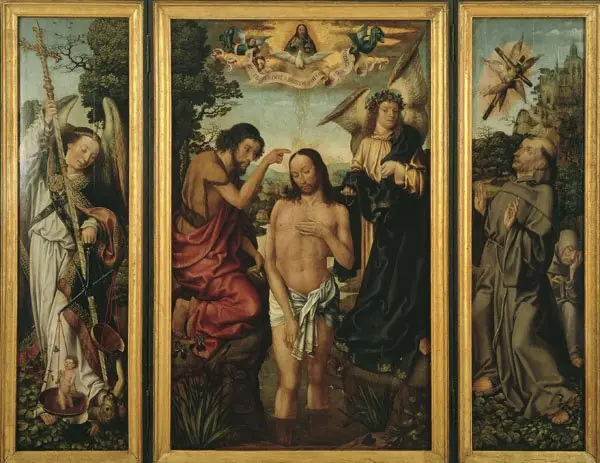
- Triptych of the Baptism of Christ