Artwork
David Victorious
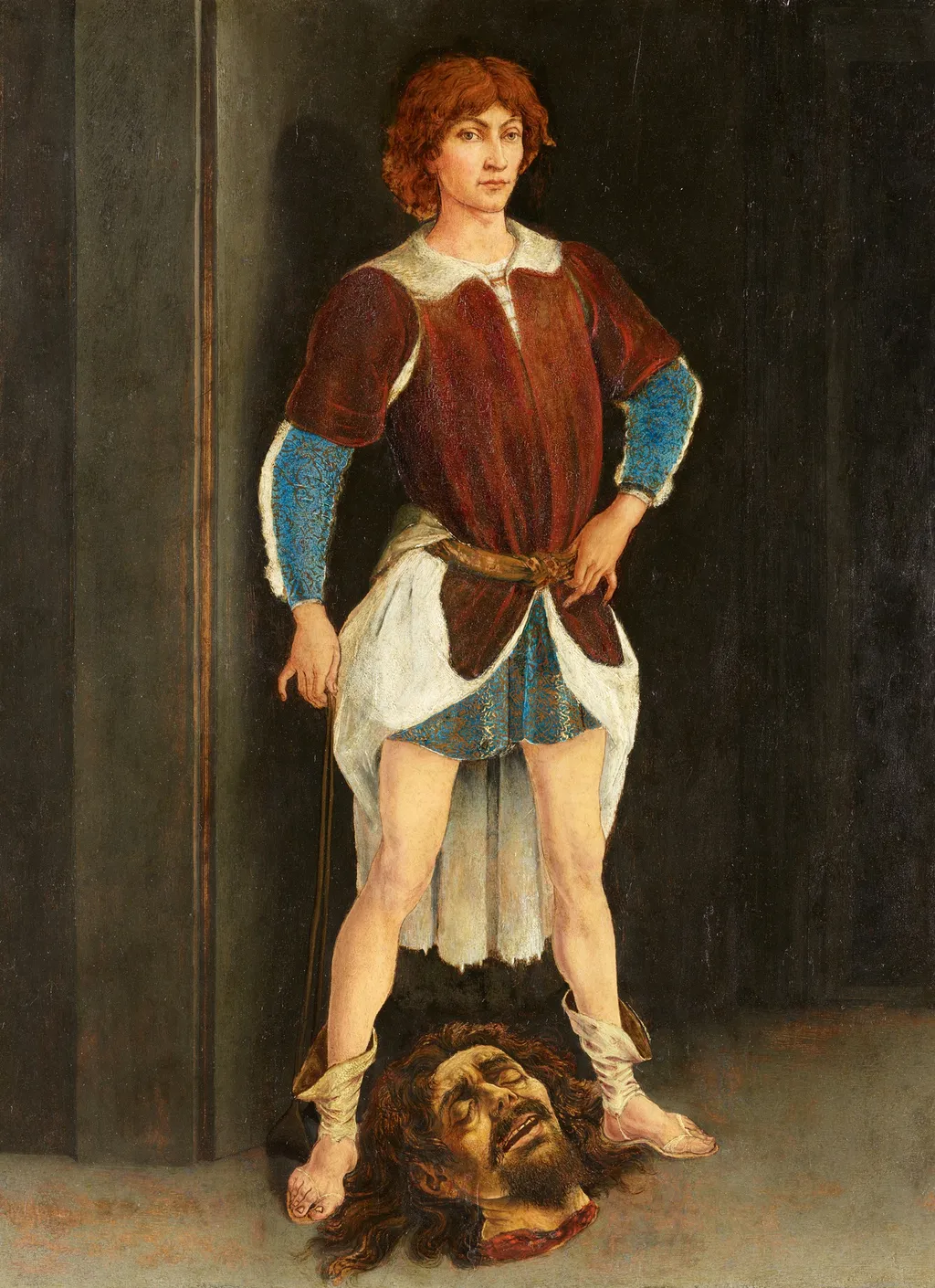
David Victorious is an oil painting by the Early Renaissance artist Antonio del Pollaiuolo. It dates from 1470 and is held in the collection of the Gemäldegalerie Berlin.
About this work
Subject & Meaning
The work shows David after his victory over Goliath, holding the Philistine’s severed head.
The work shows David after his victory over Goliath, holding the Philistine’s severed head. David is dressed in aristocratic garments that allude to his future role as King of Israel, while his sandals recall his origins as a shepherd; his sling is concealed along his side. Goliath’s aged, weakened head and expression contrast with David’s youthful, elegant appearance, emphasizing the triumph of virtue and divine favor over brute force.
The scene draws directly from the biblical narrative in 1 Samuel 17, reinforcing its religious genre and the moral message of the underdog’s triumph through faith.
Technique & Style
David Victorious is executed in oil paint on a poplar panel, a support characteristic of mid-to-late fifteenth-century Italian painting. The work is modest in scale, measuring 46.2 cm in height by 34 cm in width, a format suited to private domestic display rather than civic or ecclesiastical commission.
Stylistically, the painting presents its protagonist with refined elegance: David is shown in aristocratic dress that anticipates his future role as King of Israel, while his sandals allude to his earlier life as a shepherd. The sling is deliberately obscured along his side, shifting emphasis from the act of combat to the victor himself. This contrasts with the severed head of Goliath, rendered as aged and weakened, set against the youthful composure of David.
The handling reflects the collaborative practice of Antonio and Piero del Pollaiuolo, combining precise figure work with narrative clarity typical of Florentine workshop production around 1470.
History & Provenance
Created around 1470, David Victorious (also known as David with the Head of Goliath) is an oil-on-poplar panel painting by the Italian artists Antonio and Piero del Pollaiuolo. The work measures 46.2 cm in height and 34 cm in width. Unlike contemporary depictions of the biblical hero, this piece lacks any documented association with the Florentine government or the House of Medici.
Consequently, it is believed to have originally hung within the interior of a private palace rather than a public or governmental setting. The painting is currently housed in the Gemäldegalerie in Berlin, Germany, where it is displayed in the hall dedicated to Italian paintings from the 13th to 15th centuries.
The painting is held in the Gemäldegalerie, Berlin, where it is inventoried as part of the Italian painting holdings of the 13th–15th centuries in Gallery Room XVIII.
It has been exhibited within the museum’s permanent display of early Italian art, including in the gallery’s long-term installation of 15th-century Florentine works.
Context
The painting’s portrayal of David diverged from contemporary Florentine civic imagery by avoiding explicit ties to Medici or republican propaganda. Instead, the refined rendering of David in aristocratic dress positioned the biblical hero as an emblem of noble virtue for private patrons, aligning with humanist taste for classical exemplars reinterpreted through contemporary ideals of elegance and youthful grace. The severed head of Goliath, depicted with aged decrepitude, underscores a contrast that elevates David’s poise and future sovereignty, reflecting a shift toward psychological and sartorial nuance in fifteenth-century Florentine narrative painting.
Art-historical discussion situates the work within the Pollaiuolo brothers’ engagement with anatomical precision and dynamic composition, though the Berlin panel’s private context distinguishes it from their public commissions.
Overview
David Victorious is a 15th-century oil-on-poplar panel painting attributed to the Italian brothers Antonio and Piero del Pollaiuolo, dating to circa 1470. Measuring 46.2 cm × 34 cm, it is housed at the Gemäldegalerie in Berlin, Germany.
Legacy
As a privately commissioned work by the del Pollaiuolo brothers, 'David Victorious' contributes to the understanding of Renaissance art's dissemination beyond public and noble patronage, highlighting the demand for biblical themes in private settings.
Own this work as a print
Artist & collection
Artist
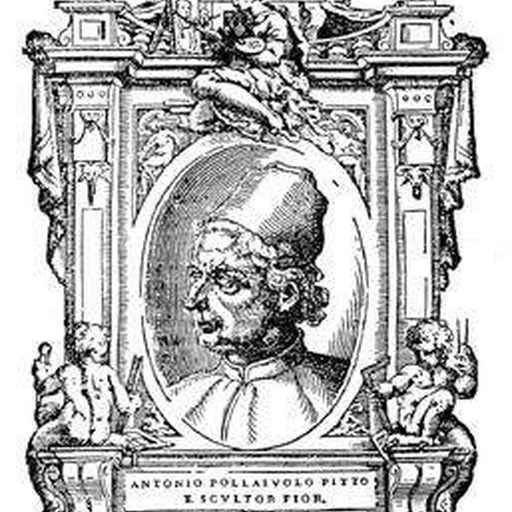
Antonio del Pollaiuolo (UK: POL-eye-WOH-loh, US: POHL-, Italian:; 17 January 1429/1433 – 4 February 1498), also known as Antonio di Jacopo Pollaiuolo or Antonio Pollaiuolo (also spelled Pollaiolo), was an Italian…

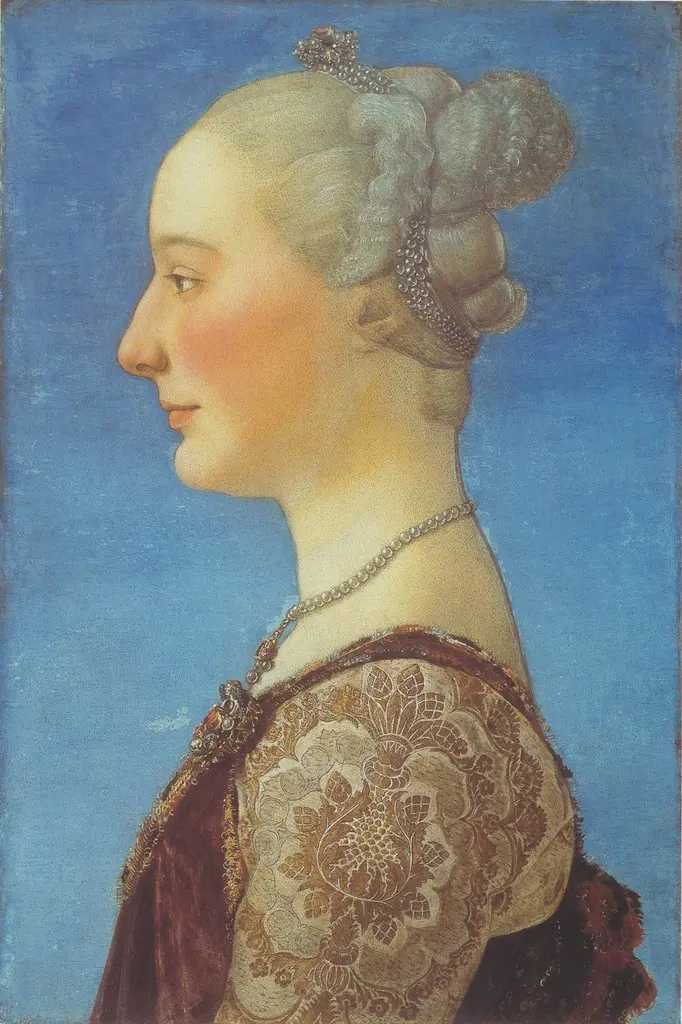
- Saint Matthew and Saint Sebastian
 David Contemplating the Head of Goliath
 Portrait of Alessandro de' Medici
 Die hll. Florian und Sebastian
 Joseph of Egypt
 Sleeping guardian of a grave with sword and halberd
 Jan Breydel
 Saint George and Saint Sebastian
 Saint Julian the Hospitaler Meeting His Wife after Killing His Parents
 Allegory of Navigation with a Cross-Staff: Averroës
 Leopold III, Margrave of Austria
 Knight in Armour – Saint George (?)