Artwork
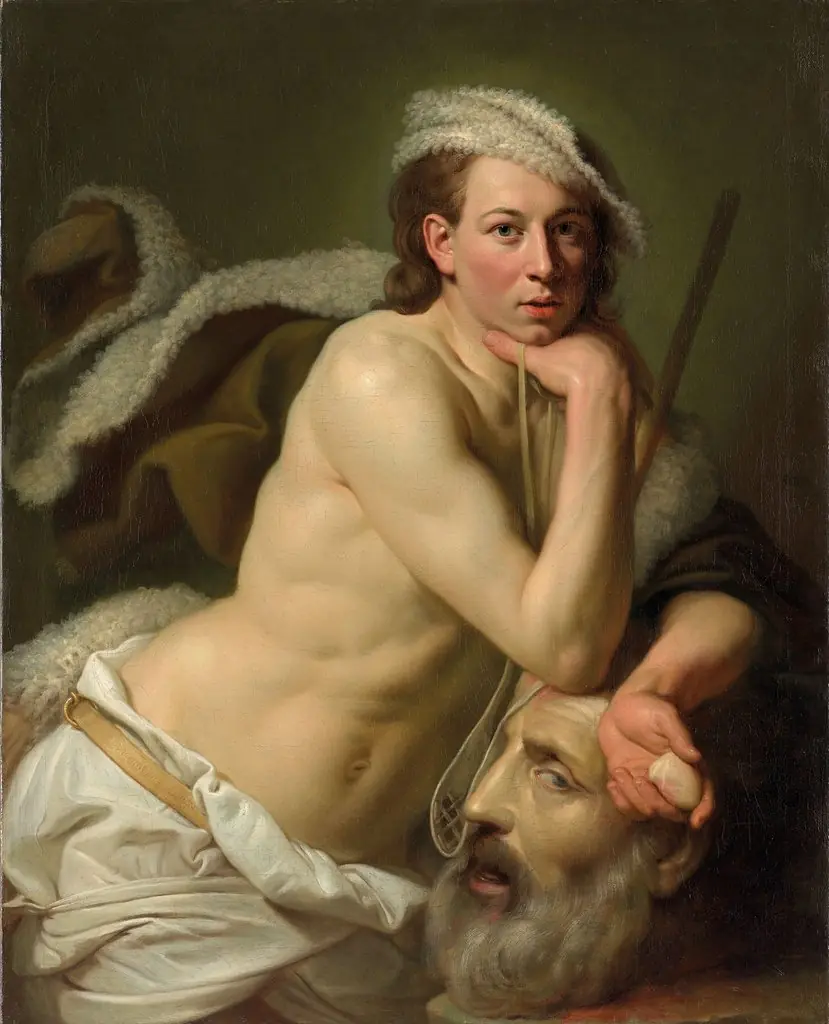
David Contemplating the Head of Goliath
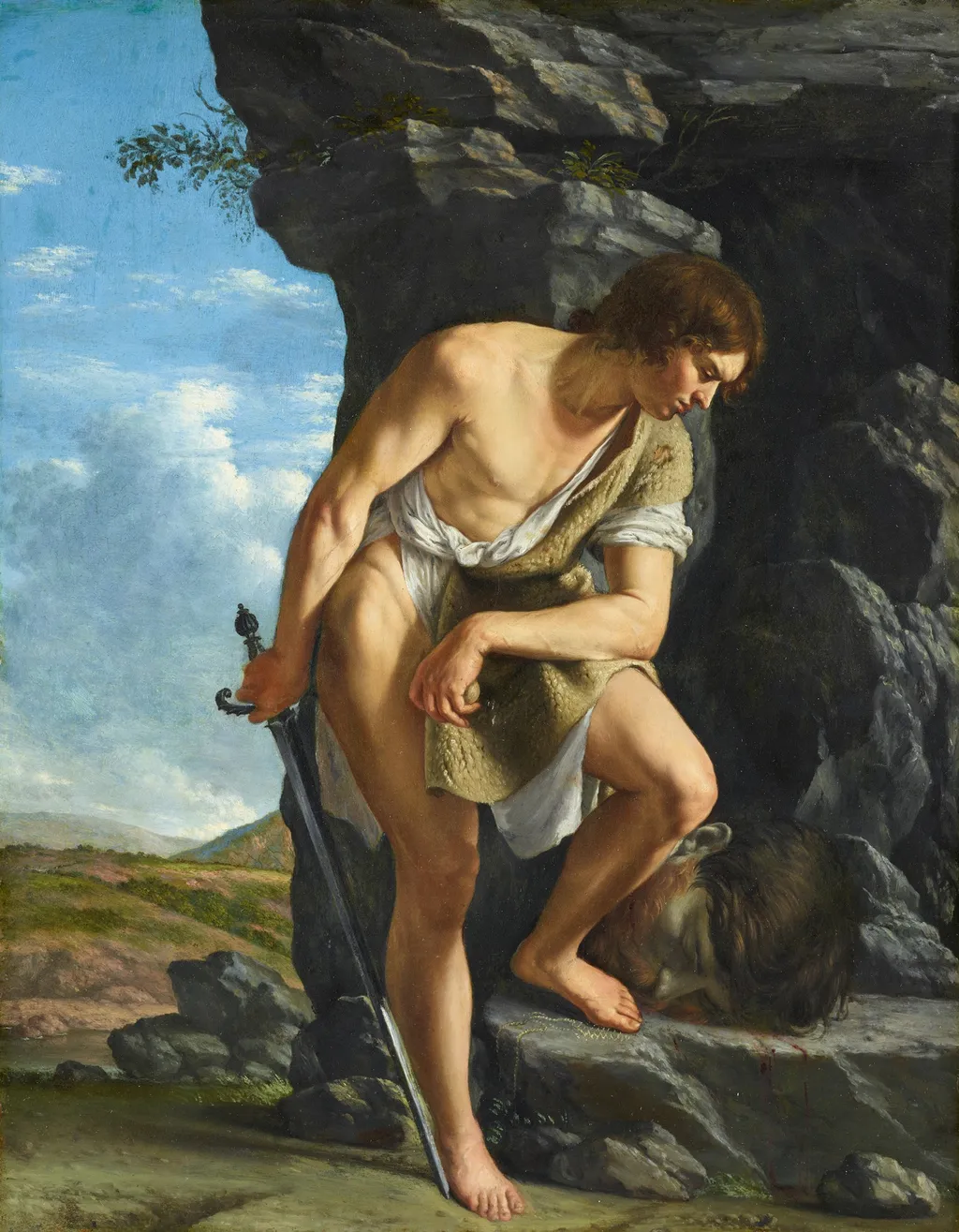
David Contemplating the Head of Goliath is an oil painting by the Early Baroque Italian artist Orazio Gentileschi. It dates from 1612 and is held in the collection of the Gemäldegalerie Berlin.
About this work
Overview
David Contemplating the Head of Goliath is a small oil painting on copper by Orazio Gentileschi, dated to approximately 1610-1612.
David Contemplating the Head of Goliath is a small oil painting on copper by Orazio Gentileschi, dated to approximately 1610-1612. Measuring 36.7 by 28.7 centimeters, the work is held in the Gemäldegalerie, Berlin, where it entered the collection through the Eigentum des Kaiser-Friedrich-Museums-Vereins as a loan in 1914, with accession number 1723. The painting belongs to a cluster of works in which Gentileschi treated the David and Goliath theme, a subject he revisited multiple times throughout his career. It exemplifies the meditative, psychologically charged religious imagery that emerged in early seventeenth-century Rome under the influence of Caravaggio, distinguishing itself from earlier heroic or triumphal interpretations of the biblical episode.
Subject & Meaning
The painting depicts the young David in a moment of quiet introspection after his victory over the Philistine giant. He stands in a dynamic, twisting pose, his body angled downward as he gazes toward the lower right where Goliath's severed head lies partially shadowed on rocky ground. In his right hand David grips a long sword by its hilt, the blade resting against the rocks; his left hand holds a small, round object, perhaps a stone from his sling. The figure wears a rough, sleeveless tunic of coarse fabric over a white undergarment that wraps around his torso and leaves his right shoulder bare. This representation breaks from tradition: rather than showing David as an uncompromised hero slaying Goliath or as a triumphant youth displaying the decapitated head, Gentileschi presents a pensive youth lost in deep introspection. The closed eyes of Goliath and the lack of interaction between victor and vanquished emphasize solitude and contemplation rather than celebration. The subject is not narrated in the biblical account, making this an invented, reflective moment that speaks to the new meditative image type introduced in early seventeenth-century Rome.
Technique & Style
The work is executed in oil on copper, a support that allows for exceptionally smooth, polished brushwork and fine detail. The surface shows careful attention to anatomical detail and textural variation between skin, fabric, stone, and metal. Strong directional light from the left models the figure's smooth skin and creates deep shadows in the rocky recesses, demonstrating the Caravaggesque tenebrism that Gentileschi adopted. The palette juxtaposes warm flesh tones and earthy browns against cool blues and deep shadows, with a massive dark rock formation and sparse vegetation behind the figure contrasting with bright blue sky and distant green landscape to the left. The verdant background in this Berlin copper differs strikingly from the dense, dark foliage in related versions, a variation that has prompted scholarly discussion. The handling is precise and luminous, exploiting the copper support's reflective ground to enhance depth and saturation. The figure is pushed toward the picture plane, creating an intimate, immediate engagement with the viewer.
History & Provenance
The Berlin copper is dated circa 1610 by the Web Gallery of Art, while other sources give 1612. It was acquired by the Gemäldegalerie through the Eigentum des Kaiser-Friedrich-Museums-Vereins, entering as a loan in 1914. The painting is one of several versions of the theme executed by Gentileschi. A related but larger canvas, now in the Galleria Spada in Rome, shows David cropped just below the knee with Goliath's head turned upward toward the viewer; technical evidence indicates this Spada version was extended on all four sides rather than cut down. A copy of the Berlin composition in the Quadreria Arcivescovile, Milan, was paired with Artemisia Gentileschi's Judith Beheading Holofernes, though there is no evidence the two were originally conceived as pendants. Another version was donated to the Galleria Nazionale delle Marche in Urbino by Paolo Volponi, having previously belonged to collections in a Swedish castle. Gentileschi also painted a David and Goliath now preserved at the National Gallery in Dublin. The Berlin painting's compact scale and copper support suggest it may have been intended for private devotion or as a collector's piece.
Context
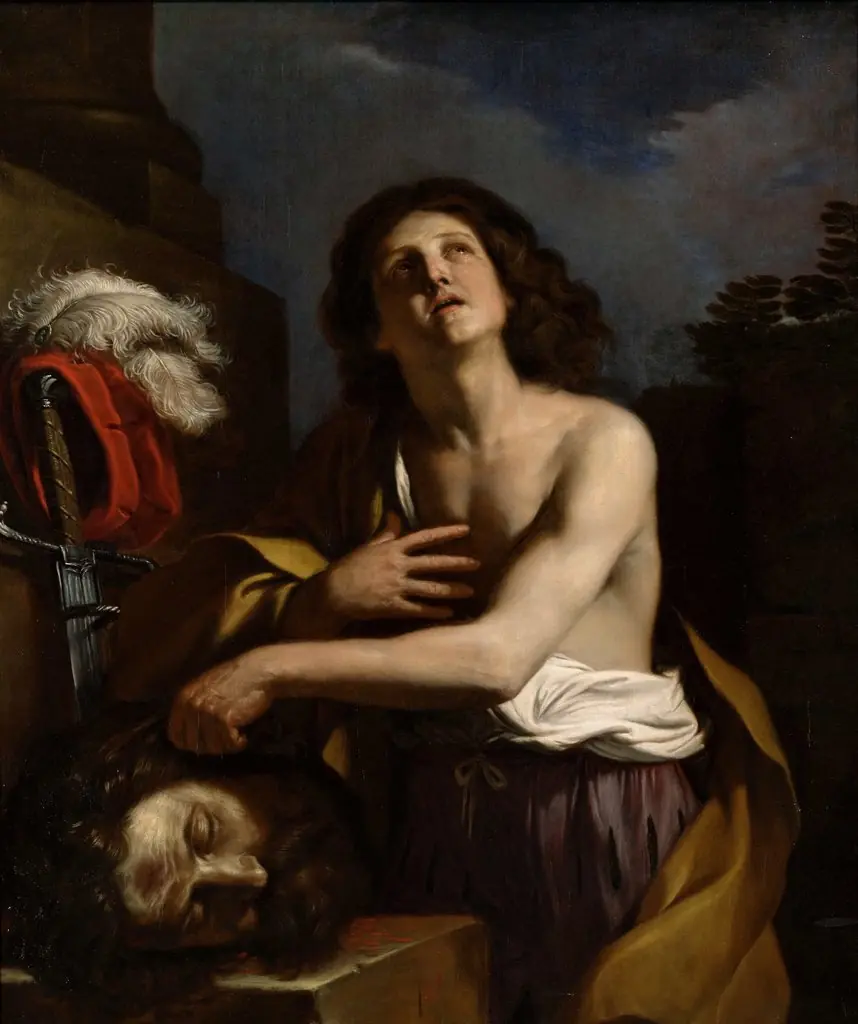
Gentileschi's treatment of the subject reflects the profound impact of Caravaggio on Roman painting in the first decades of the seventeenth century. Caravaggio's David with the Head of Goliath in the Galleria Borghese, likely sent from Naples around 1609 as a gift for Cardinal Scipione Borghese, established the prototype of the adolescent hero gazing tenderly at his victim's head, creating what scholars have described as a strong, almost erotic bond. Gentileschi's response in the Berlin copper is more reserved: his David does not interact with Goliath's head but stands beside it in contemplation, evoking a pensive atmosphere comparable to Caravaggio's St John the Baptist. The difference in background between the Berlin copper's rocky cliff and the Spada version's dense foliage has led some critics to suggest Agostino Tassi was responsible for the landscape in the Spada picture, though no conclusive proof substantiates this. The Urbino version, considered an author's replica, takes as its model Guido Reni's celebrated David in Contemplation of the Head of Goliath in Paris. Critical opinion on dating remains divided: following Keith Christiansen's interpretation of the Spada David, Pierluigi Dal Poggetto considers the Urbino work datable more toward 1610 than the 1620s, while Gianni Papi believes we should move further into the years before Gentileschi's Genoese period.
Legacy
The Berlin copper occupies a significant place in the study of Gentileschi's career and the broader diffusion of Caravaggesque modes across Europe. Its small scale and refined execution on copper exemplify the private devotional works that helped spread the new naturalistic and psychologically penetrating style beyond Rome. The multiple versions and replicas, including the author's replica in Urbino and the copy in Milan paired with Artemisia Gentileschi's Judith, attest to the composition's circulation and appeal. The work's influence can be traced in the continued exploration of the David theme by Gentileschi himself and in the broader transformation of biblical narrative toward intimate, contemplative moments. The painting remains in the Gemäldegalerie, Berlin, where it continues to be studied as a key example of Gentileschi's early maturity and his distinctive synthesis of Caravaggesque lighting with a more lyrical, meditative temperament. Its presence in a major public museum ensures its accessibility for scholarly examination and public appreciation, while the ongoing debates about dating, attribution of landscape elements, and the relationship among the various versions keep it actively engaged in art historical discourse.
Own this work as a print
Artist & collection

Artist
Orazio Lomi Gentileschi (Italian pronunciation: ; 1563 – 7 February 1639) was an Italian painter.



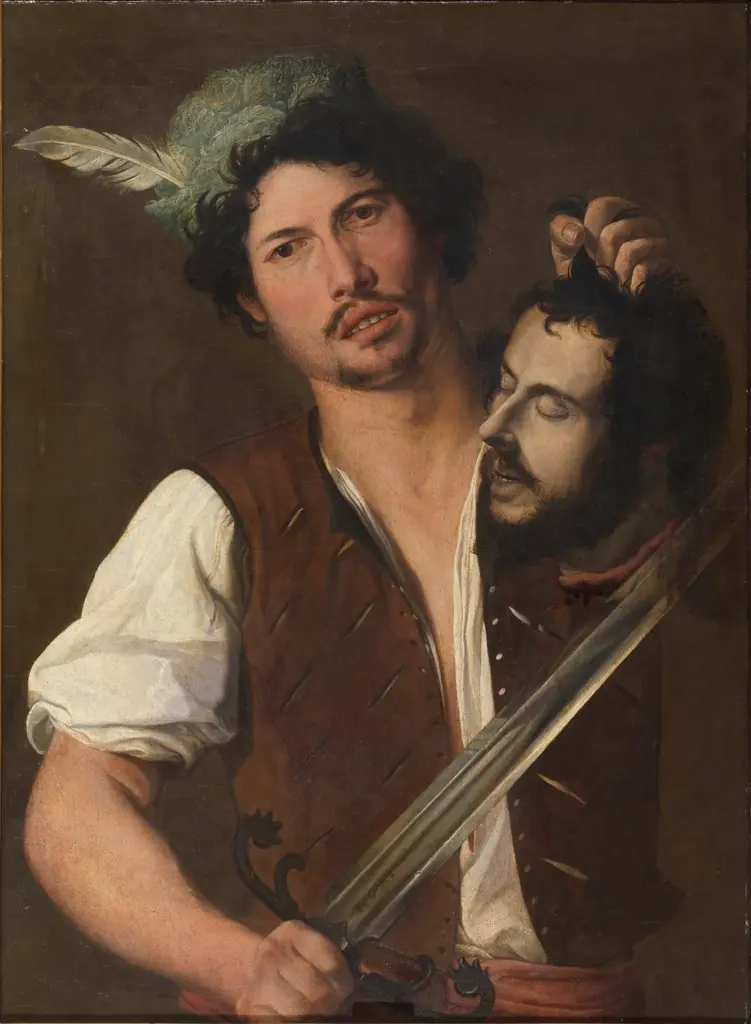
- David with the Head of Goliath
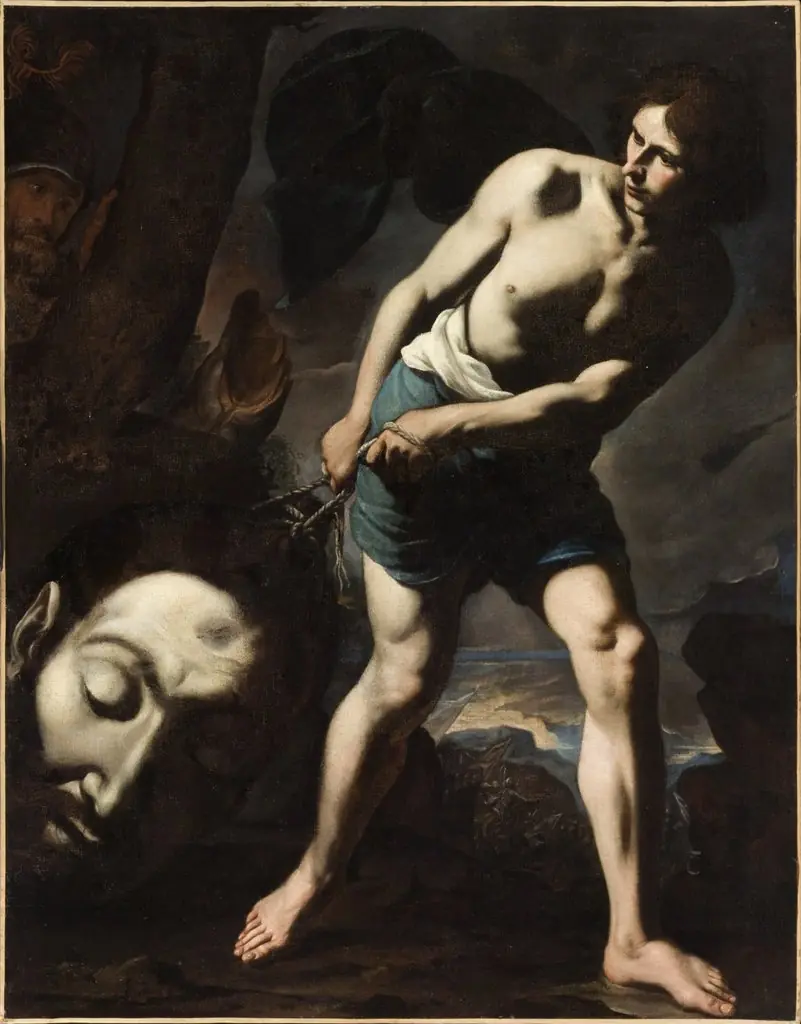 David with the Head of Goliath
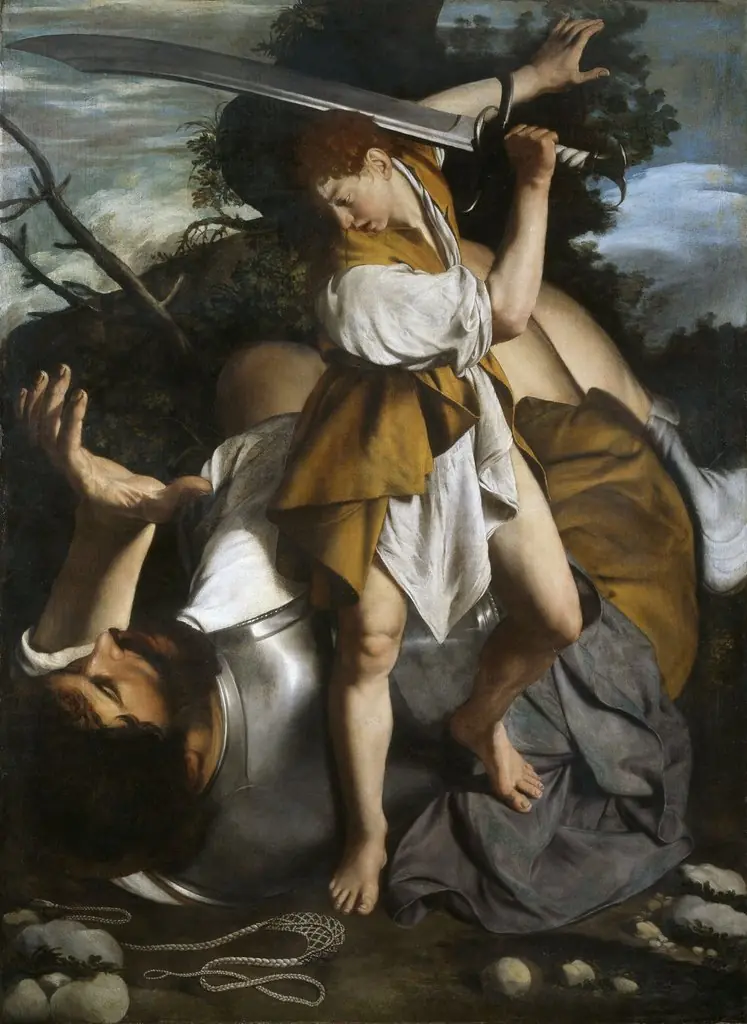 David and Goliath
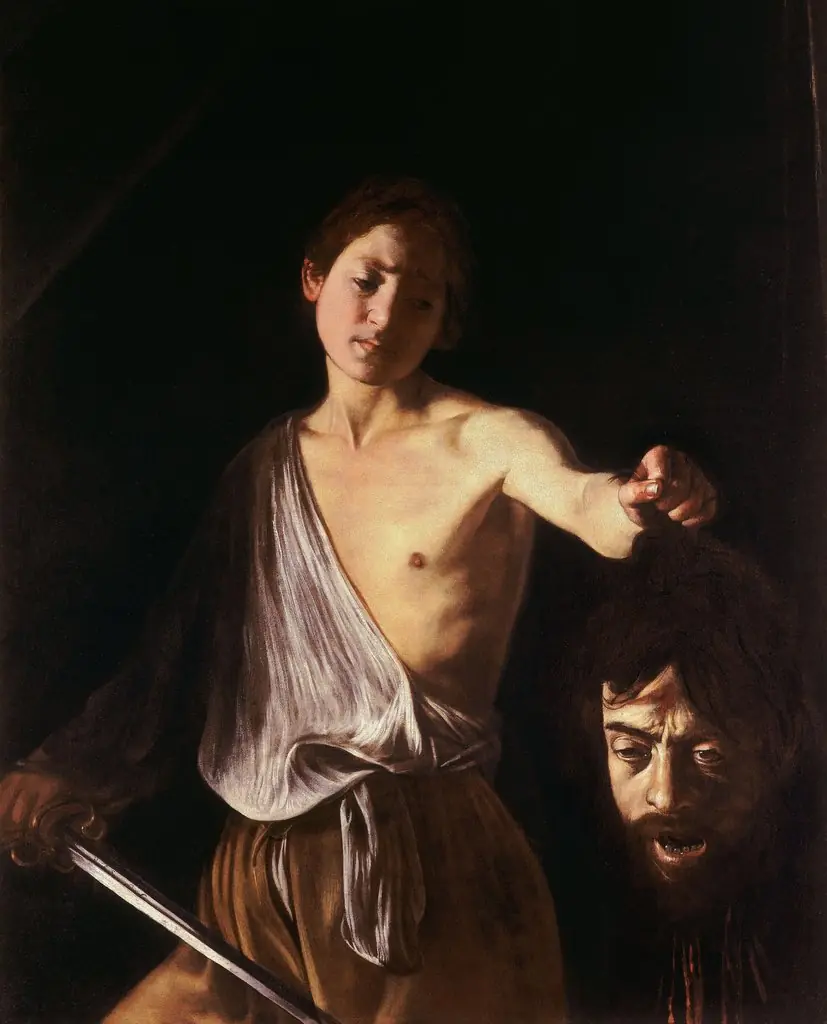 David with the Head of Goliath
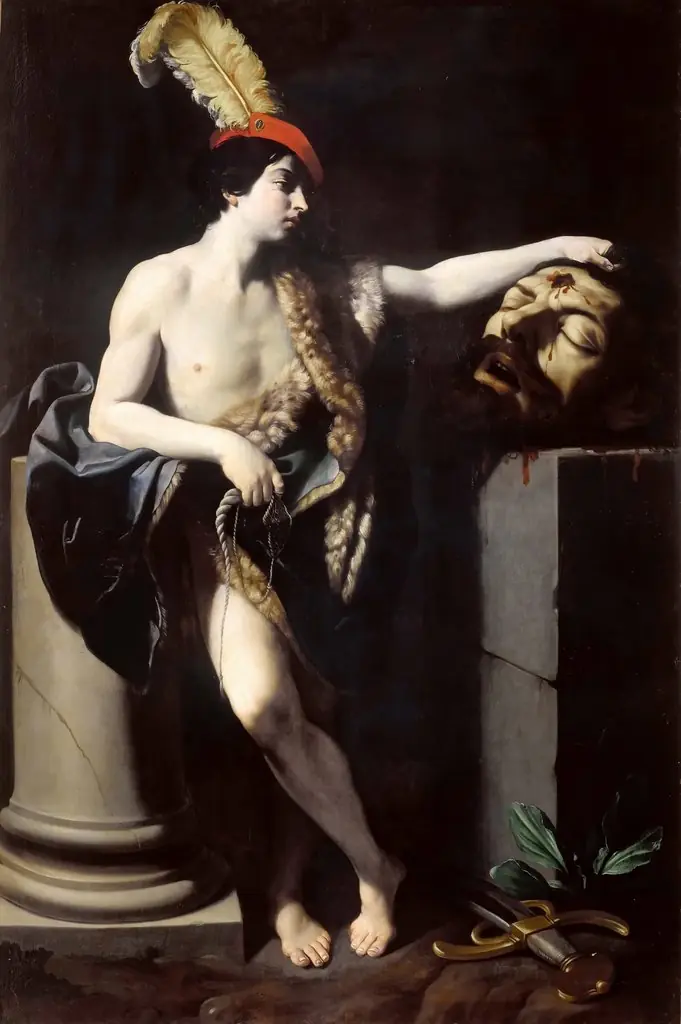 David with the Head of Goliath
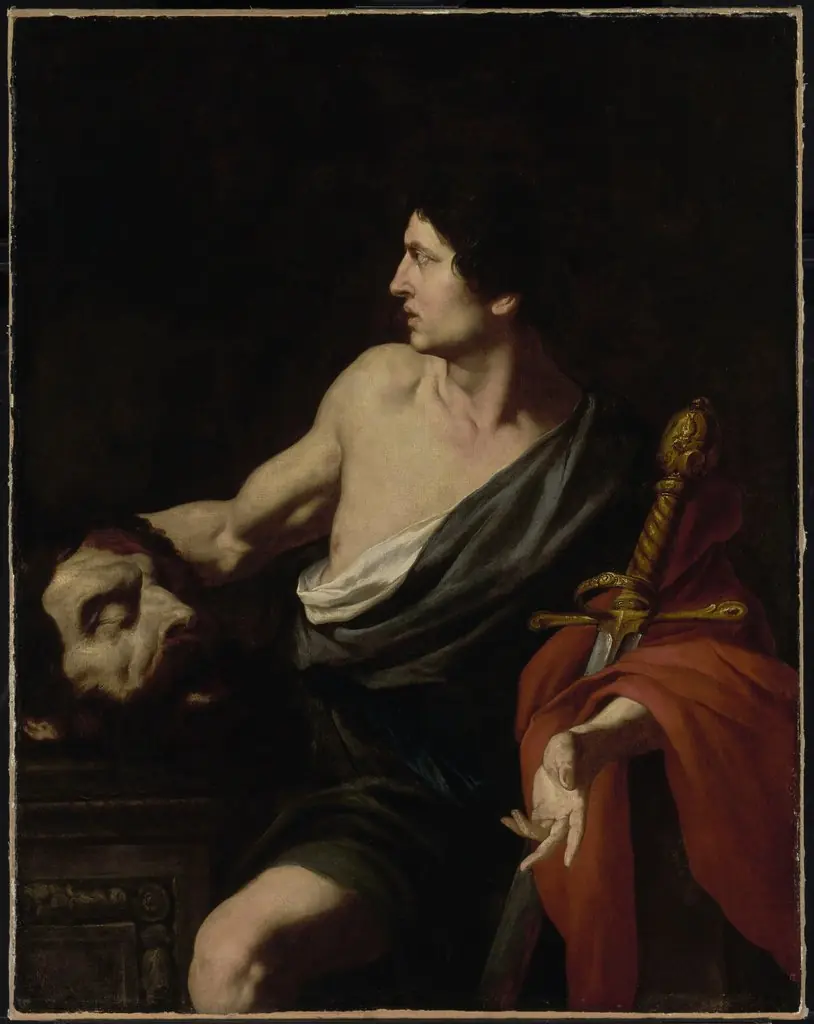 David with the Head of Goliath
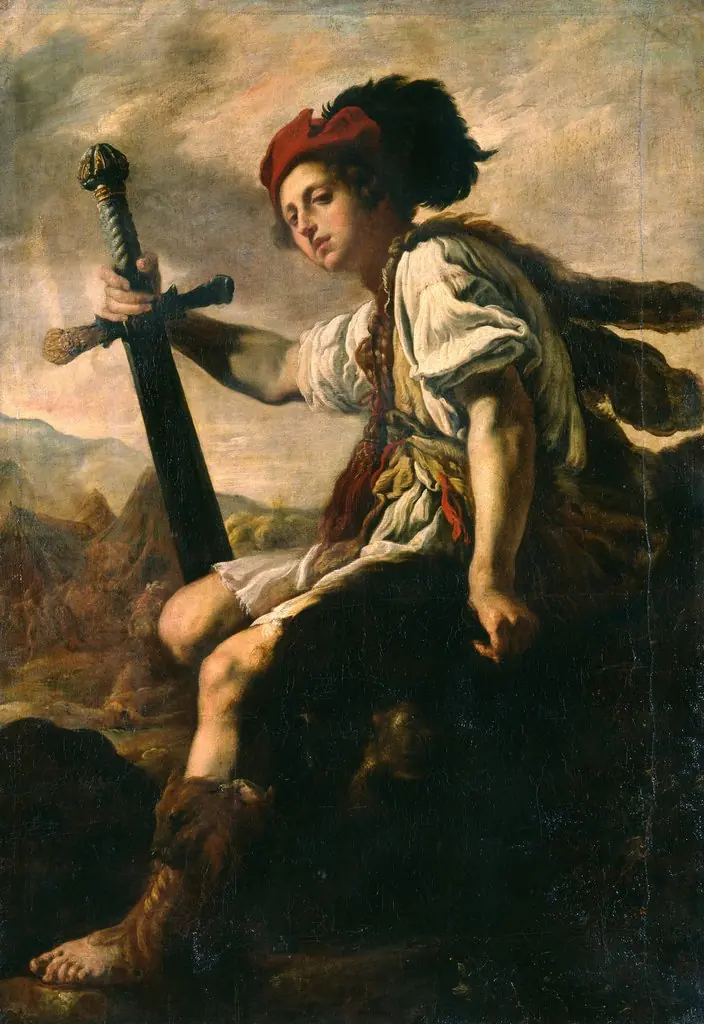 David with the Head of Goliath
 David with Goliath’s head
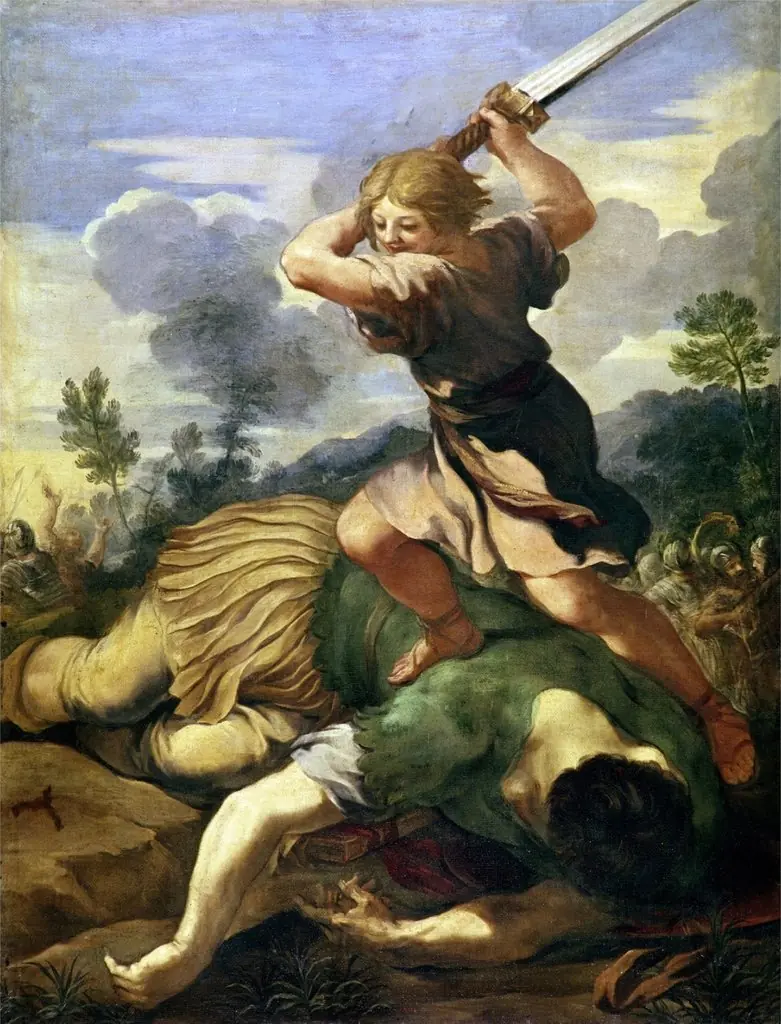 David killing Goliath
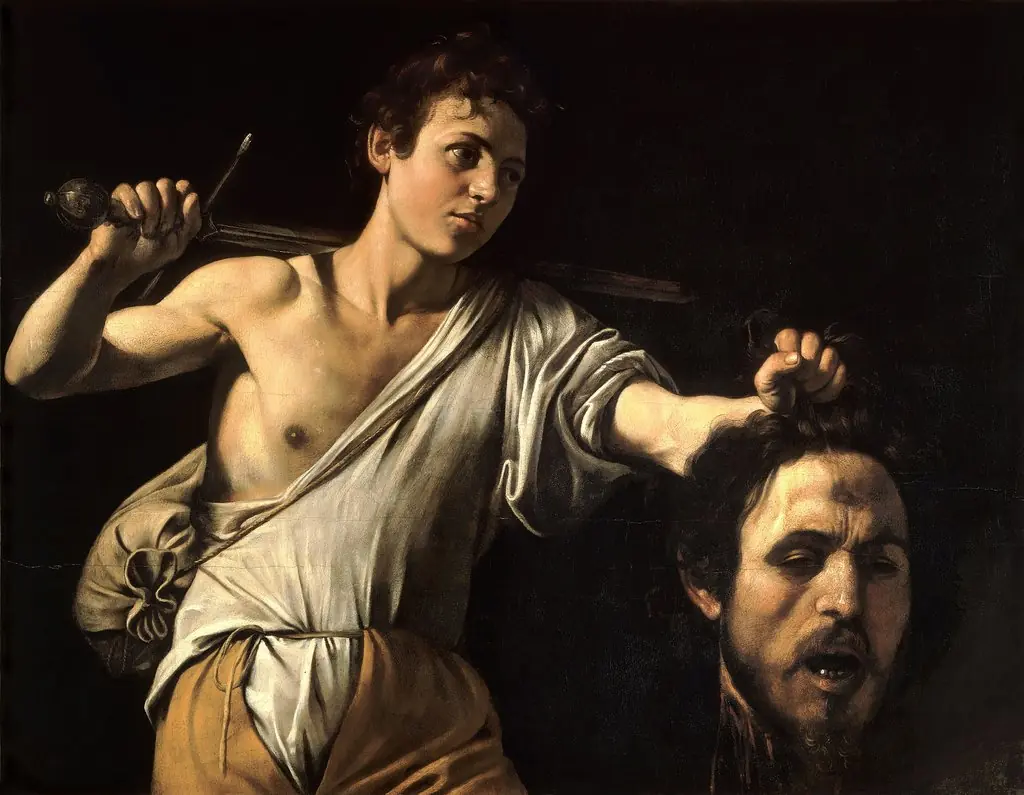 David with the Head of Goliath
 Self-portrait as David with the head of Goliath