Artwork
Ariadne on Naxos
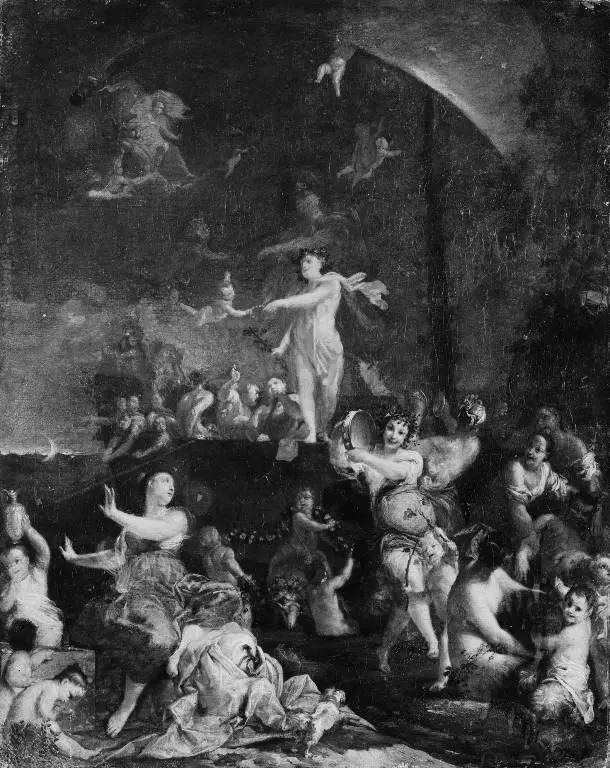
Ariadne on Naxos is an oil painting by Antonio Gionima. It dates from 1719 and is held in the collection of the Statens Museum for Kunst.
About this work
Subject & Meaning
In Gionima’s composition, Ariadne appears in a rocky coastal setting, her gaze turned away from the viewer, underscoring her abandonment and distress.
The painting depicts the mythological figure Ariadne abandoned on the island of Naxos by Theseus, shown as a reclining woman in a state of sorrow.
In Gionima’s composition, Ariadne appears in a rocky coastal setting, her gaze turned away from the viewer, underscoring her abandonment and distress. The island of Naxos functions as both a geographic place and a symbol of isolation and betrayal within the myth. The work emphasizes the emotional weight of Ariadne’s abandonment, aligning with classical retellings in which she is left behind after aiding Theseus’s escape from the Minotaur.
Technique & Style
Created in 1719, Ariadne on Naxos is an oil painting executed on a canvas support. The work employs oil paint as its sole medium, applied to create a mythological scene depicting Ariadne and the island of Naxos. As a piece of mythological painting by Antonio Gionima, the artwork adheres to the formal conventions of the genre while utilizing standard oil-on-canvas techniques typical of early 18th-century European art. The physical object is currently held in the collection of the Statens Museum for Kunst.
History & Provenance
Antonio Gionima created Ariadne on Naxos in 1719 as an oil painting on canvas, depicting the mythological scene of Ariadne on Naxos Island. The work belongs to the mythological painting genre and was produced during the early 18th century. It entered the collection of the Statens Museum for Kunst, where it remains part of the museum's holdings. The painting's inception is recorded as January 1, 1719, reflecting its creation date.
The artwork's provenance is directly tied to its acquisition by the Statens Museum for Kunst, indicating institutional ownership from its early history. Its creation history is documented through the artist's activity and the dated production of the piece, placing it firmly within the historical context of 1719.
Genre classification aligns with mythological themes, and the material composition consists of oil paint applied to canvas, consistent with contemporary practices for such works.
Ariadne on Naxos, painted by Antonio Gionima in 1719, is held in the collection of the Statens Museum for Kunst in Denmark. The work is an oil painting on canvas depicting the mythological figure Ariadne and the island of Naxos, and it forms part of the museum's holdings of mythological paintings. Beyond its current institutional location, no further exhibition history, accession number, or prior provenance details are documented in the available sources.
Legacy
Antonio Gionima's 1719 mythological painting Ariadne on Naxos entered the collection of the Statens Museum for Kunst, where it remains on display. The work is recognized as an example of early 18th-century mythological painting, reflecting the era's fascination with classical narratives. Its presence in a major Danish museum contributed to the continued scholarly attention to Gionima's oeuvre and to the representation of mythological subjects in European art.
The painting's inclusion in the museum's holdings has allowed for ongoing study of its compositional techniques and its role within the broader tradition of mythological art, influencing later interpretations of the Ariadne myth in visual culture.
Overview
Ariadne on Naxos is a 1719 oil painting by Italian late-Baroque artist Antonio Gionima, depicting the mythological figure Ariadne on the Greek island of Naxos, now part of the Statens Museum for Kunst collection.
Context
As a late-Baroque work, Ariadne on Naxos situates itself within a tradition of mythological themes, characteristic of the period's artistic preoccupations. Gionima's approach to light and shadow aligns with the dramatic intensity of late-Baroque painting.
Artist & collection
Artist
Antonio Gionima (1697–1732) was an Italian painter of the late-Baroque period. Born in Venice from a family of Padua, where his father Simone Gionima (a pupil of Cesare Gennari) and grandfather had been artists, he was…

 Bacchus and Ariadne
 Bacchus and Ariadne
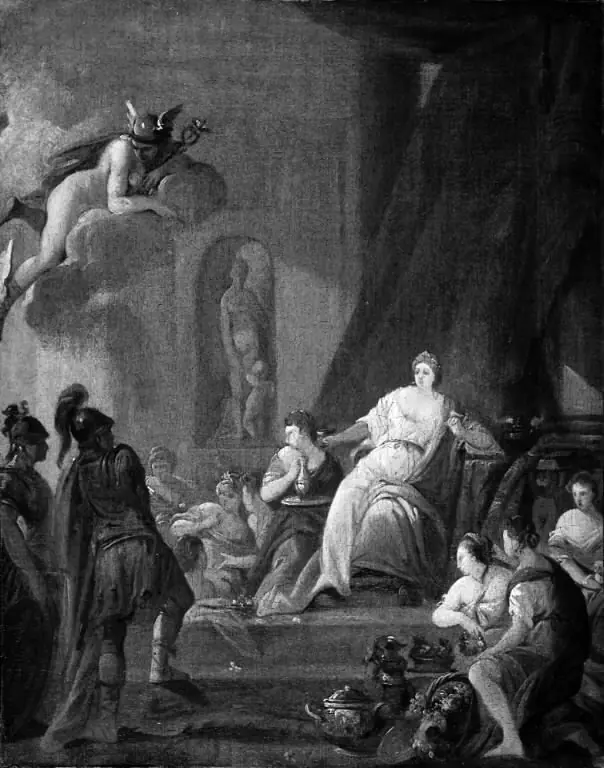 Hermes befaler Kalypso at frigive Odysseus
 Hermes befaler Kalypso at frigive Odysseus
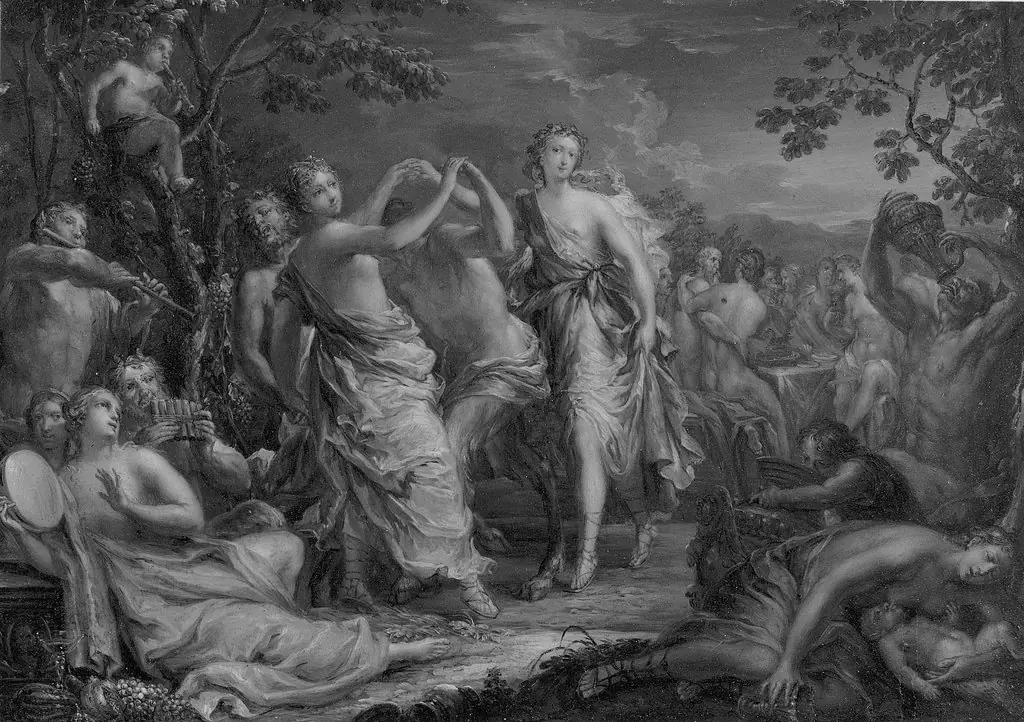 Bacchic Revels
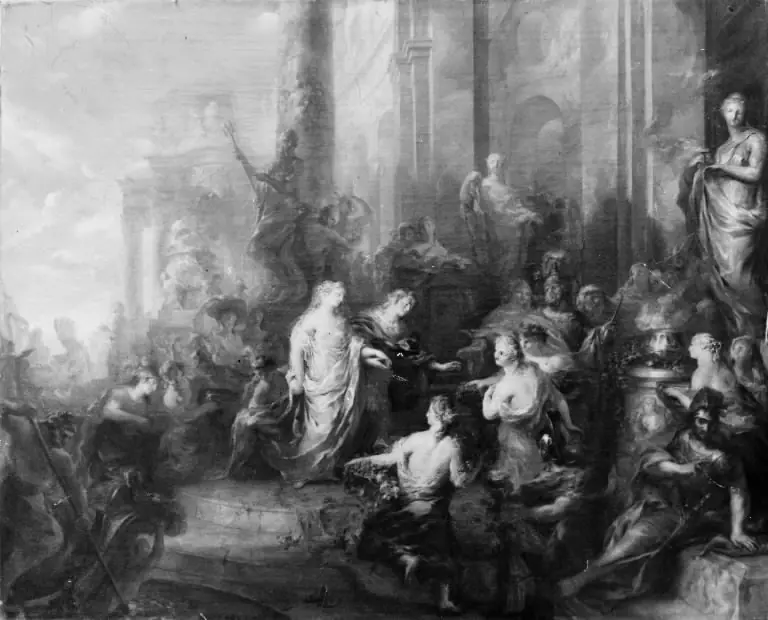 Mythological Scene
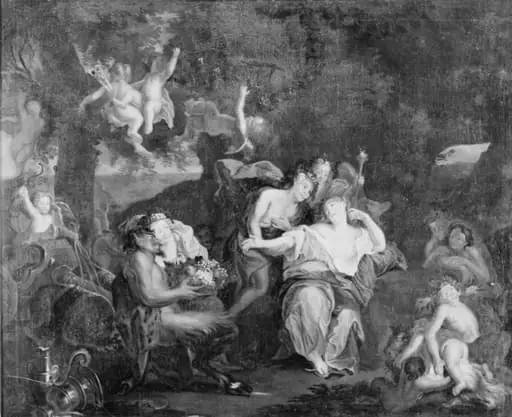 Bacchus og Ariadne sidder sammen i et landskab omgivne af amoriner, bacchantinder og satyrer
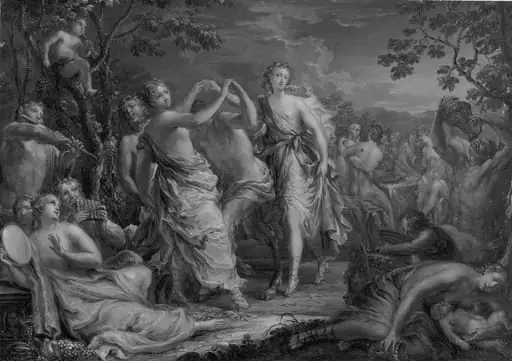 Bacchic Revels
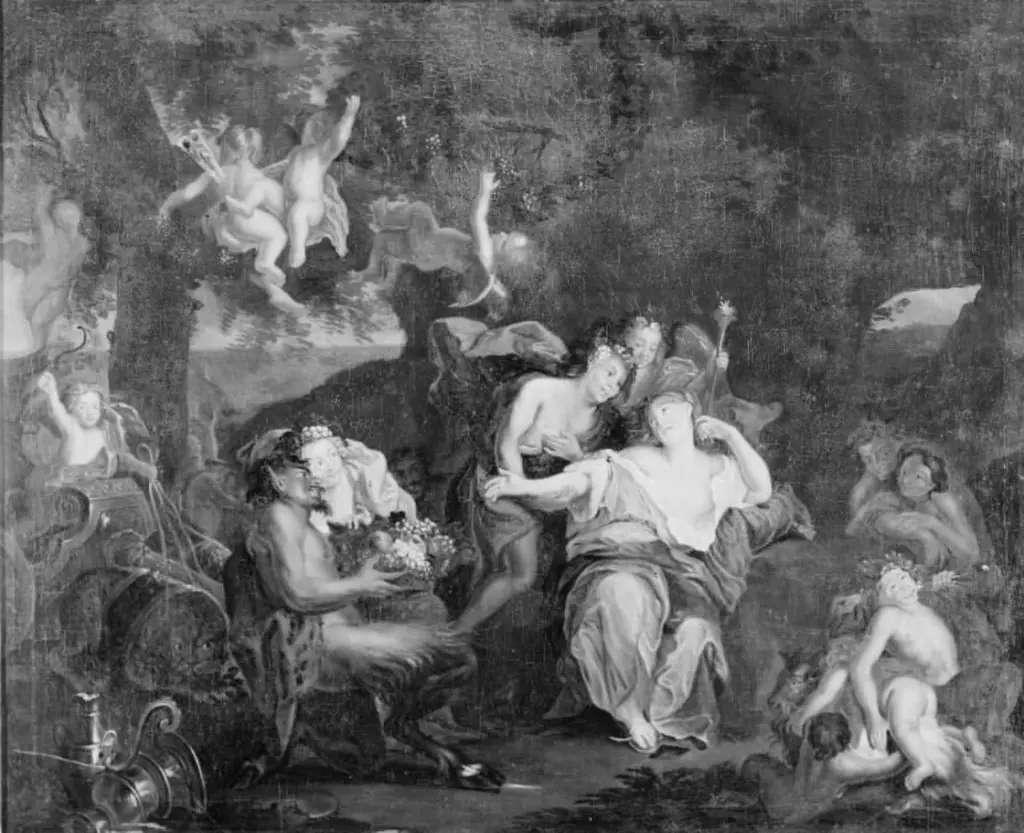 Bacchus og Ariadne sidder sammen i et landskab omgivne af amoriner, bacchantinder og satyrer
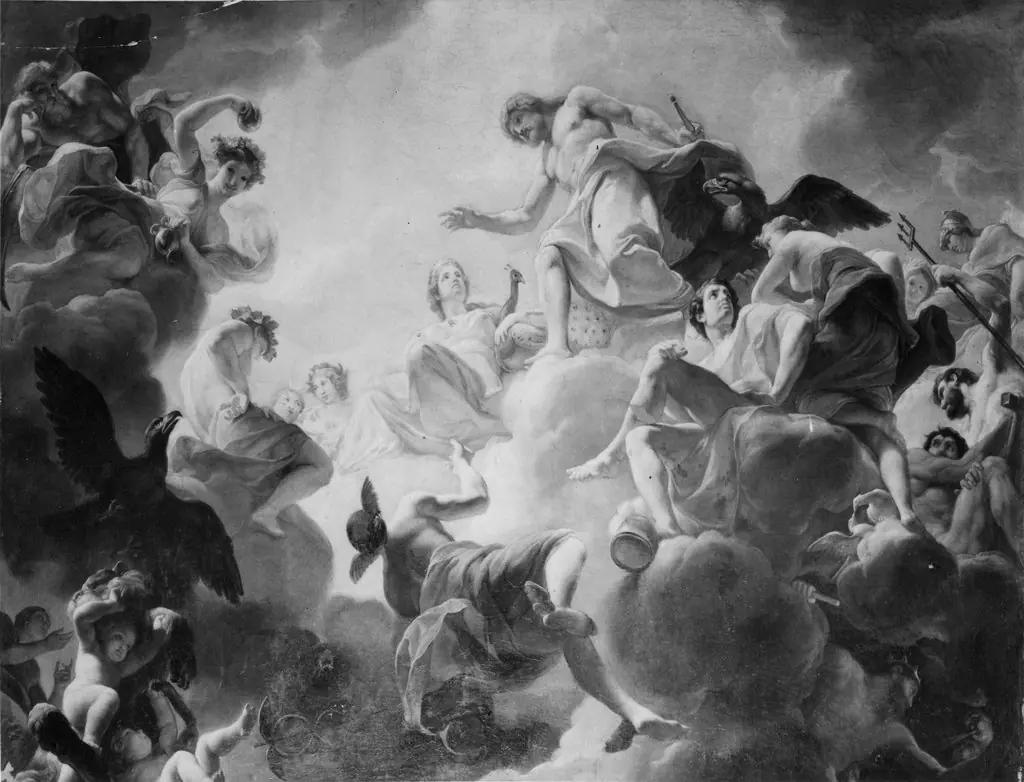 The Apotheosis of Hercules
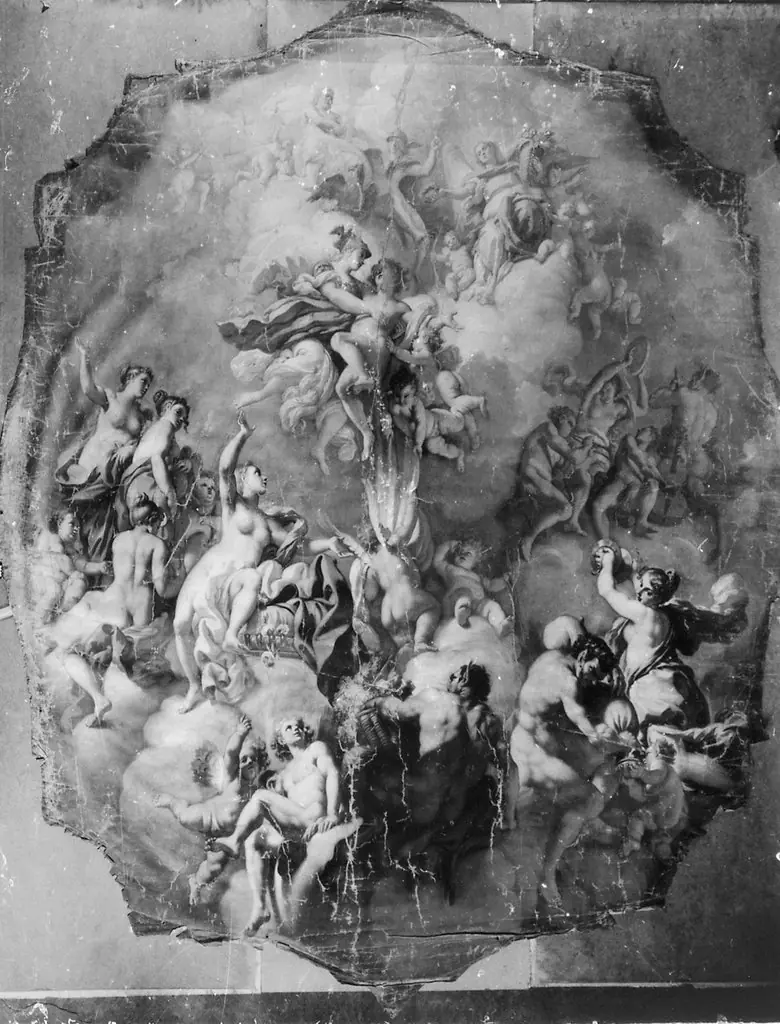 Pallas entführt Juventus aus den Armen der Venus
- Ariadne on Naxos