Artwork
Hermes befaler Kalypso at frigive Odysseus
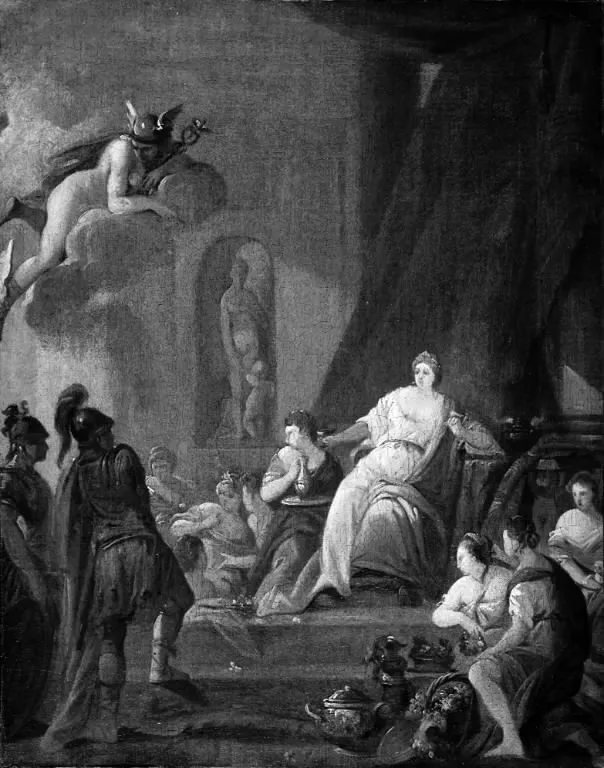
Hermes befaler Kalypso at frigive Odysseus is an oil painting by the Rococo painting artist Johan Edvard Mandelberg. It dates from 1765 and is held in the collection of the Statens Museum for Kunst.
About this work
Subject & Meaning
The painting depicts a pivotal moment from Greek mythology where the messenger god Hermes delivers a divine command to the nymph Calypso.
The painting depicts a pivotal moment from Greek mythology where the messenger god Hermes delivers a divine command to the nymph Calypso. Commissioned in 1765, the work illustrates the specific narrative instance where Hermes orders Calypso to release the hero Odysseus from her island, allowing him to continue his journey home. As a mythological painting, the subject centers on the interaction between these three figures: the divine emissary, the detained hero, and the reluctant goddess.
The scene represents the intervention of the Olympian gods in human affairs and the enforcement of divine will over personal desire, marking the turning point in Odysseus's long wanderings.
Technique & Style
Johan Edvard Mandelberg executed Hermes befaler Kalypso at frigive Odysseus in 1765 using oil paint applied to a canvas support. The work is classified as a mythological painting, depicting the figures of Hermes, Calypso, and Odysseus within a narrative scene derived from classical antiquity. The canvas measures 466 cm in height and 368 cm in width, indicating a substantial scale for the composition.
As an oil-on-canvas piece from the mid-eighteenth century, the handling reflects the techniques typical of the period's mythological genre.
History & Provenance
Johan Edvard Mandelberg created the oil-on-canvas painting Hermes befaler Kalypso at frigive Odysseus in 1765. The work depicts a mythological scene featuring Hermes, Calypso, and Odysseus. It is currently held in the collection of the Statens Museum for Kunst. The painting measures 466 cm in height and 368 cm in width.
The painting is held in the collection of the Statens Museum for Kunst in Denmark, as recorded in the Wikidata entry for the work.
No specific inventory or accession number is provided in the available sources, and no exhibition history is documented.
Legacy
The painting has been part of the permanent collection of the Statens Museum for Kunst since its acquisition, where it is displayed as a notable example of 18th-century mythological painting. Its composition and treatment of the mythic encounter have been referenced in scholarly studies of Nordic mythological art and in surveys of Mandelberg’s oeuvre, influencing later interpretations of the Hermes-Calypso-Odysseus narrative in Scandinavian visual culture.
Overview
Johan Edvard Mandelberg, a Swedish‑born artist who worked in Denmark, painted Hermes befaler Kalypso at frigive Odysseus in 1765. Executed in oil on canvas, the work is part of the collection of Denmark’s Statens Museum for Kunst. It presents a mythological episode from Homer’s Odyssey in a composition typical of the late Rococo period.
Context
Mandelberg’s choice of a Homeric episode aligns with the Enlightenment’s renewed interest in classical literature and moral exempla. The work also illustrates the period’s fascination with mythological subjects rendered in a decorative yet narrative‑driven manner, a hallmark of the late Rococo aesthetic in Northern Europe.
Artist & collection
Artist
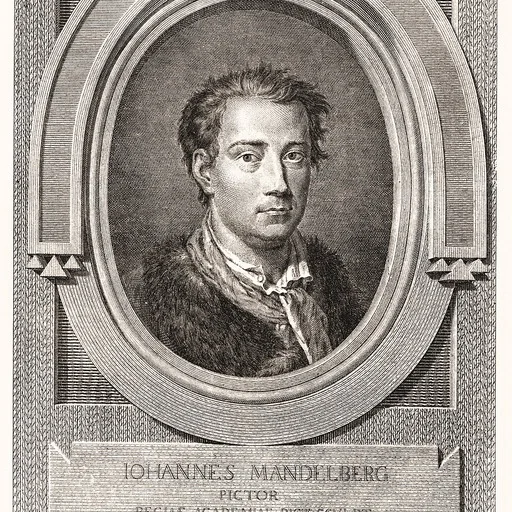
Johan Edvard Mandelberg (22 January 1730 – 8 January 1786), Swedish-born painter living in Denmark, was born at sea during a voyage between Stockholm and Livland, Sweden.

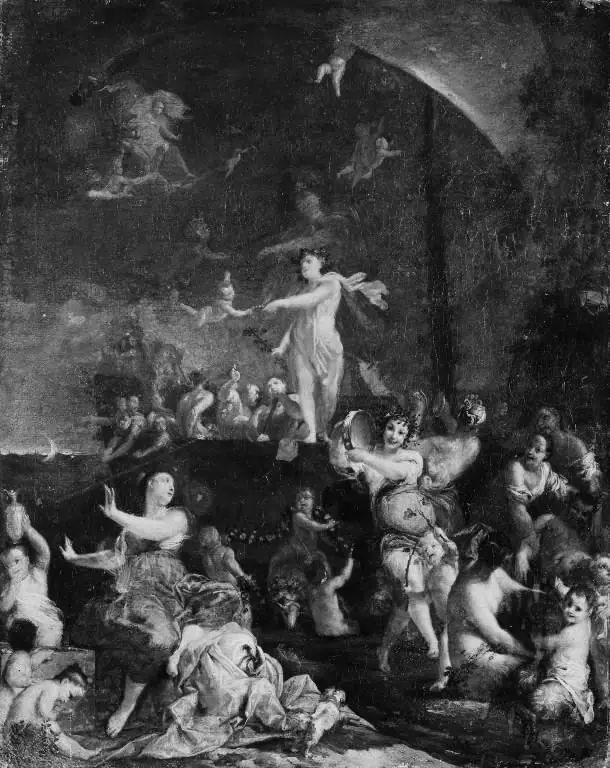 Ariadne on Naxos
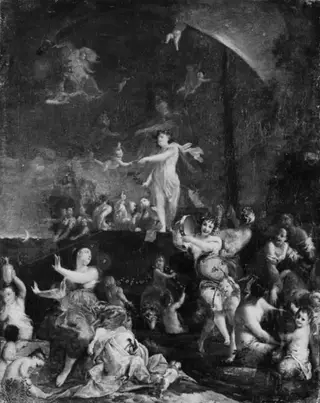 Ariadne on Naxos
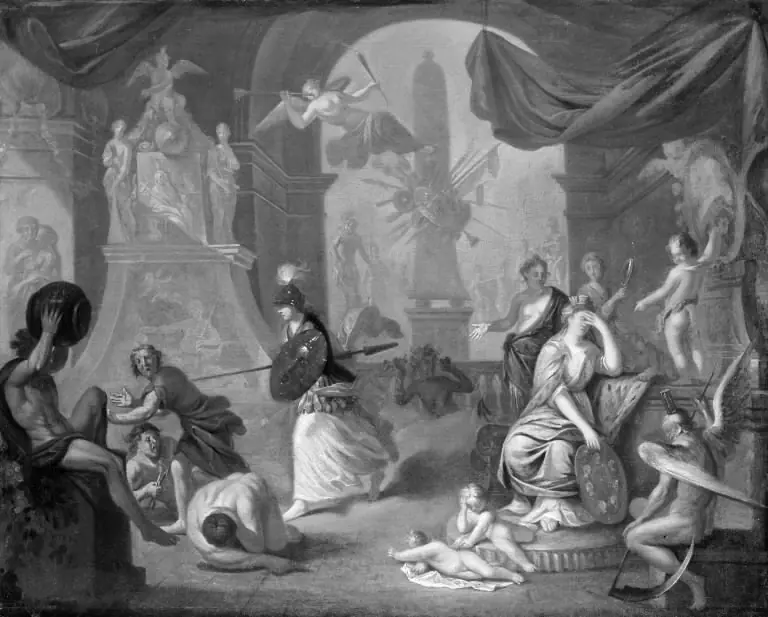 An Allegory
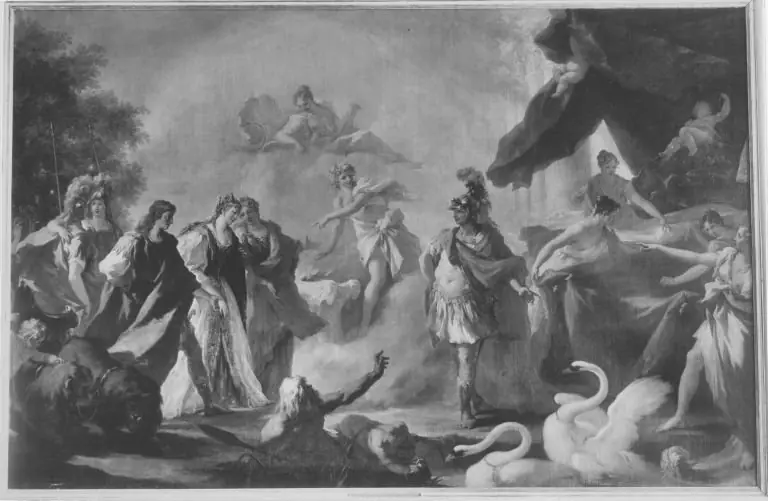 Beilager des Kurfürsten mit Maria Luisa
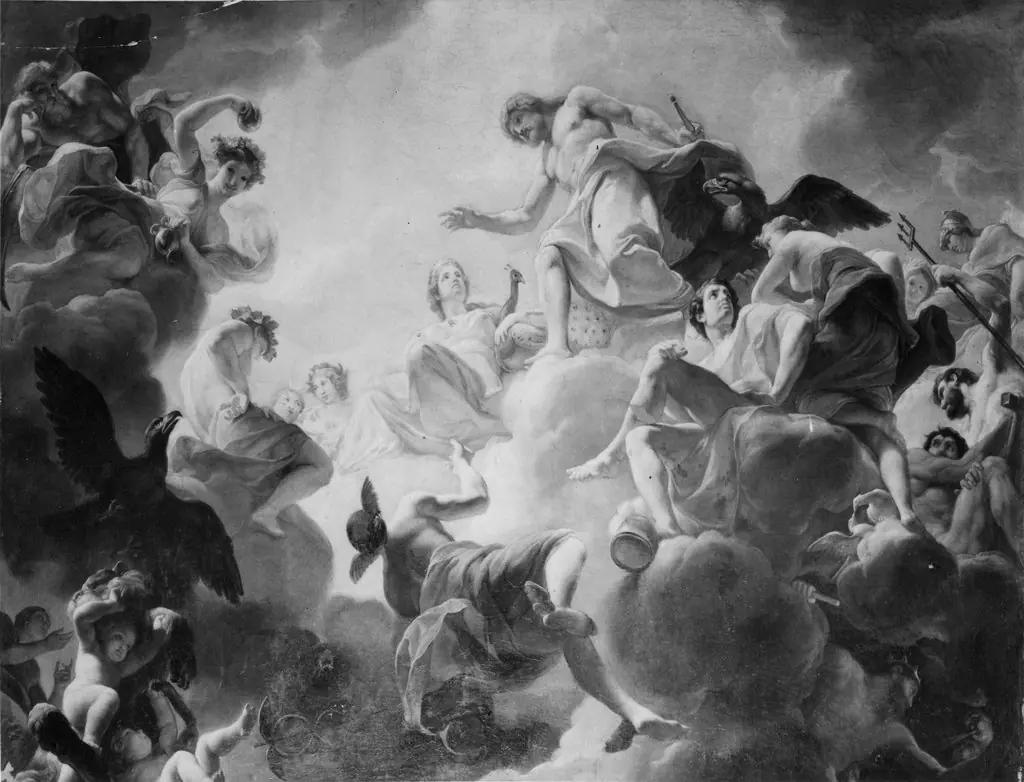 The Apotheosis of Hercules
 An Allegory
 Temptation of St. Anthony
 Plutus, IV akt, 4. scene
 A Peasant Handing a Fruit Basket to an Enthroned Woman
 Seven Nymphs in a Grotto
 Belshazzar's Feast
- Hermes befaler Kalypso at frigive Odysseus