Artwork
Portrait of Mary Tudor
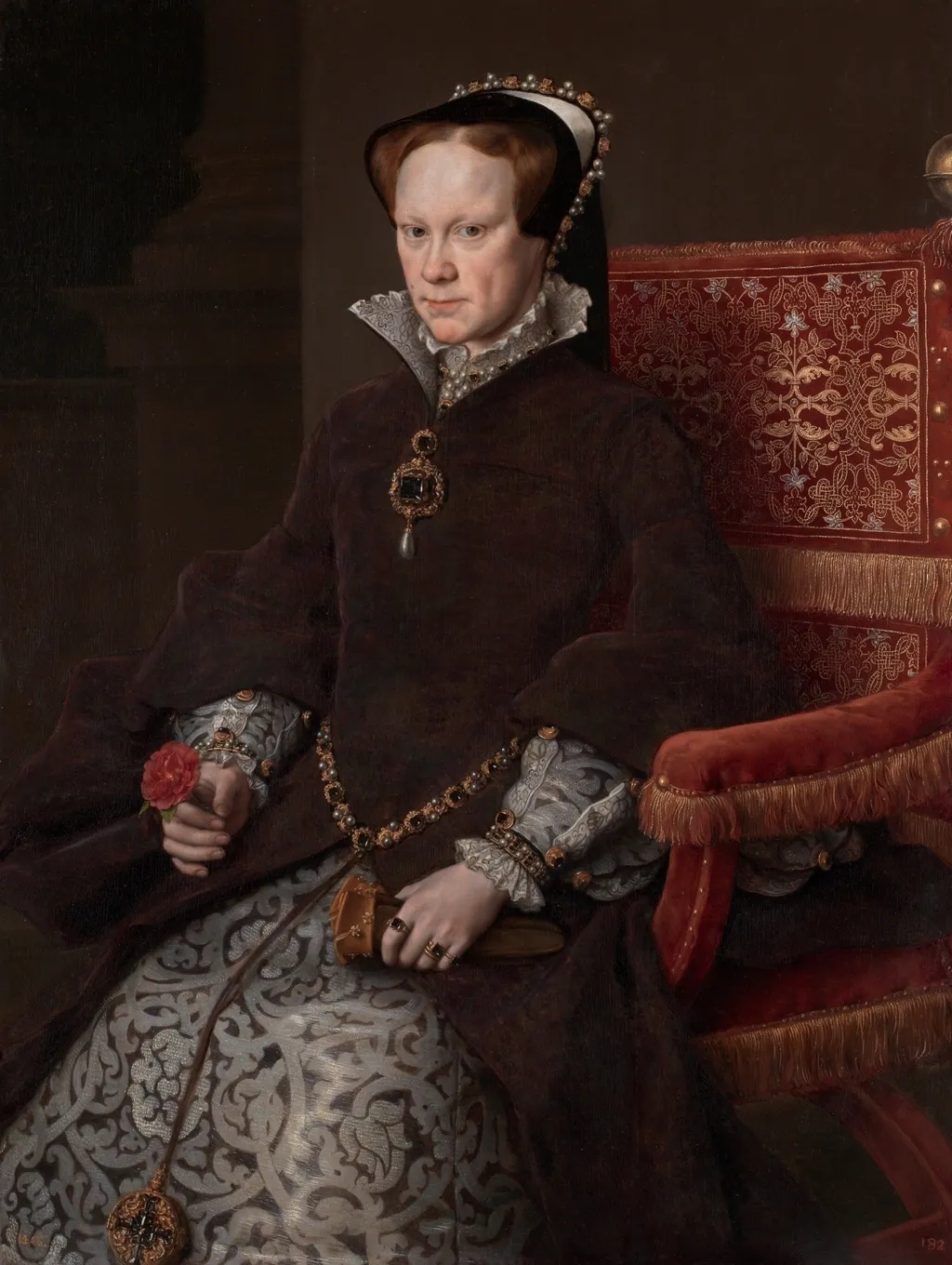
Portrait of Mary Tudor is an oil painting by the Northern Renaissance artist Antonis Mor. It dates from 1554 and is held in the collection of the Museo del Prado.
About this work
Technique & Style
Moro’s technique shows a precise drawing and a virtuoso rendering of the queen’s face, while the overall palette remains subdued.
The Portrait of Mary Tudor was executed in oil on panel, a support noted in the work’s material description. The painting’s surface has been treated with multiple layers of oil pigment, and a 2019 restoration at the Prado removed oxidized varnish that had darkened the composition, revealing the original tonal range. Moro’s technique shows a precise drawing and a virtuoso rendering of the queen’s face, while the overall palette remains subdued.
The portrait follows the compositional model of Raphael, using a three‑quarter view and an oblique velvet chair, and incorporates symbolic attributes such as a red rose, gloves, and a diamond‑set brooch with a pear‑shaped pearl, all documented in contemporary inventories.
History & Provenance
The portrait was commissioned by Charles V in connection with the diplomatic marriage of his son Philip to Mary Tudor, which was celebrated at Winchester in July 1554. Antonis Mor painted the work in London in 1554, using oil on panel.
When Charles V retired to the monastery of Yuste, he took the painting with him, indicating his personal esteem for it. Archival records confirm that the portrait had returned to Madrid by 1600. The painting subsequently entered the Spanish royal collection, passing into the ownership of Ferdinand VII of Spain and ultimately into the holdings of the Museo del Prado, where it is displayed in Hall 056 of the Royal Palace of Madrid.
In 2019, the Museo del Prado carried out a restoration of the panel, removing several layers of darkened, oxidized varnish that had obscured the original surface.
The painting is held by the Museo del Prado, Madrid, where it is inventoried as oil on panel, 109 × 84 cm. It has been exhibited in Madrid since at least 1600 and underwent conservation treatment at the Prado in 2019 to remove darkened varnish layers. The work has not been recorded in major traveling exhibitions in the sources provided.
Context
The 1554 Portrait of Mary Tudor by Antonis Mor is regarded as one of the artist's most significant works and a masterpiece of Early Netherlandish painting. Held by the Museo del Prado, which possesses the richest collection of Mor's oeuvre, the painting is celebrated for its technical virtuosity and its role in idealizing the English queen. Mor subtly dignified Mary's appearance, countering contemporary descriptions of her as pale and aging, while adhering to compositional models established by Raphael.
The work served as a crucial diplomatic instrument commissioned by Charles V to promote the marriage alliance between Spain and England. Its influence extended beyond the canvas, inspiring a standing portrait in the Palazzo Colonna, a medal by Jacopo da Trezzo, and a parallel portrait by Hans Eworth, demonstrating its central place in mid-16th-century royal iconography.
Legacy
The Portrait of Mary Tudor has exerted sustained influence across portraiture and visual culture since its creation. Its compositional authority shaped later representations of the queen, including a standing variant at the Palazzo Colonna and a parallel portrait by Hans Eworth in the National Portrait Gallery, London, both echoing Moro’s arrangement and attire. The image’s iconography migrated into medals by Jacopo da Trezzo and Jacques Jonghelinck, embedding the Tudor pearl and square diamond into numismatic tradition.
Within the Prado’s holdings, the work anchors the museum’s Anthonis Mor gallery, underscoring its canonical status in Spanish royal portraiture. Conservation in 2019 removed darkened varnish, restoring the subdued palette and technical precision that have long defined the painting’s reputation for refined yet unidealized dignity.
Overview
Antonis Mor, a prominent Netherlandish painter of the 16th century, created this oil portrait of Mary I of England in 1554. The artwork captures the monarch in elaborate Renaissance dress, adorned with significant symbols of her reign. This piece exemplifies Mor's renowned formal style, which made him a favored artist among European royal courts. It is currently housed in the collection of the Museo del Prado.
Subject & Meaning
The painting presents Mary I of England seated, her posture conveying authority. She wears a dark gown embellished with silver patterns, a pearl-decorated black hat, and a substantial necklace featuring a green gem. In one hand, she holds a red rose, a traditional emblem of the Tudor dynasty, while the other rests on a red cushion. These elements emphasize her royal status and lineage.
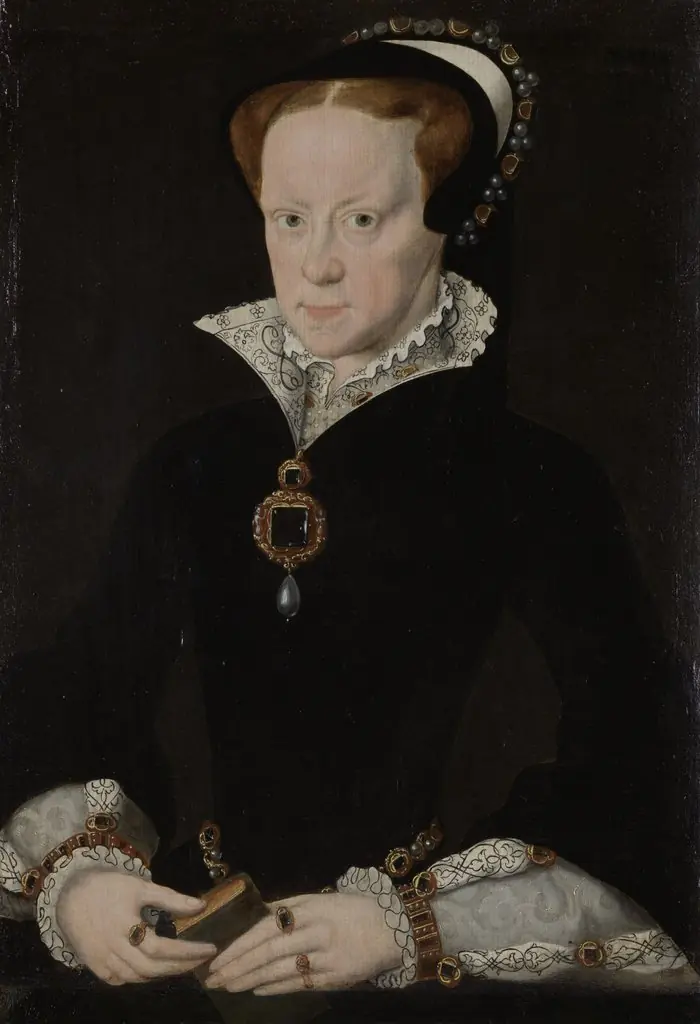
Own this work as a print
Artist & collection
Artist
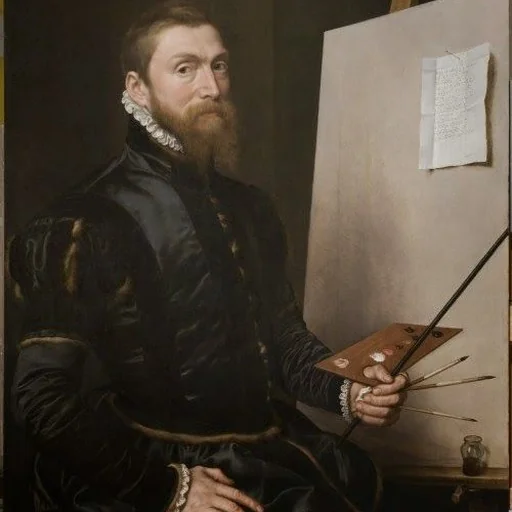
Anthonis Mor, also known as Anthonis Mor van Dashorst and Antonio Moro (c. 1517 – 1577), was a Netherlandish portrait painter, much in demand by the courts of Europe. He has also been referred to as Antoon, Anthonius,…

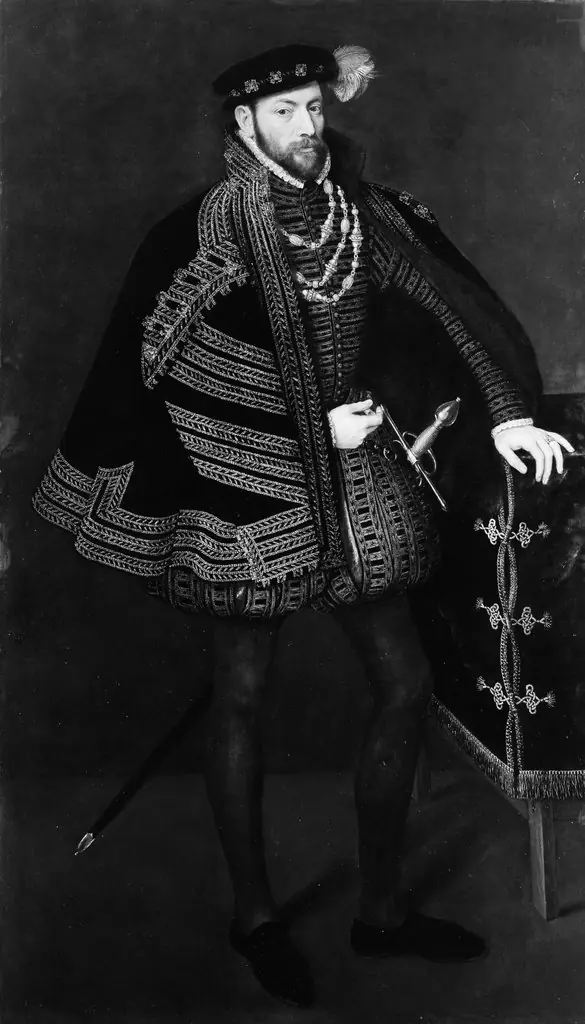 Portrait of a Man, Possibly Ottavio Farnese (1524–1586), Duke of Parma and Piacenza
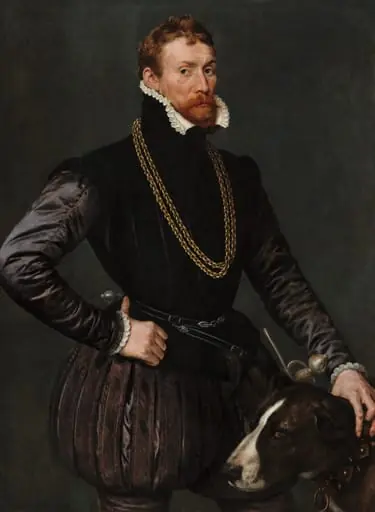 Portrait of a Gentleman
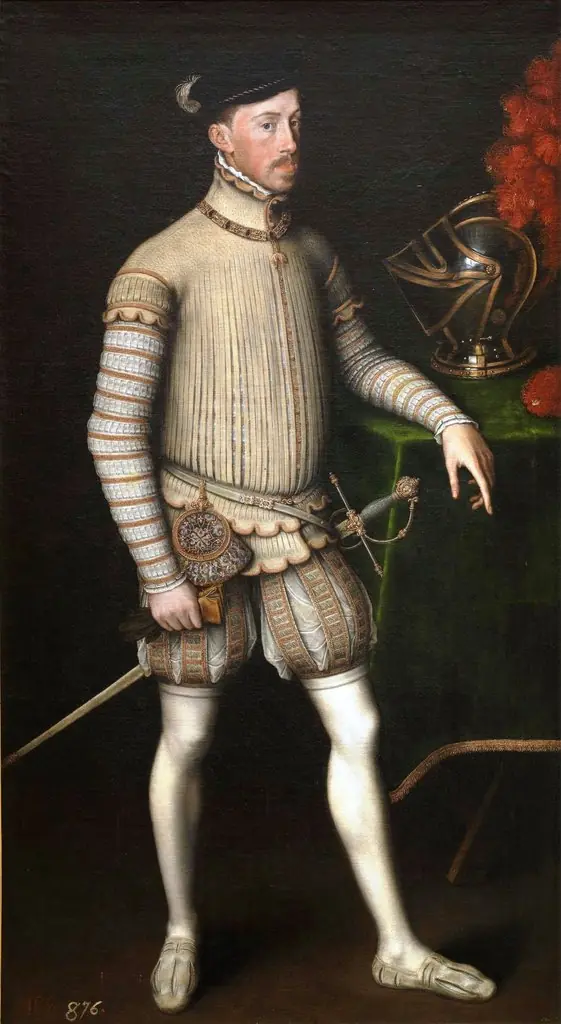 Emperor Maximilian II
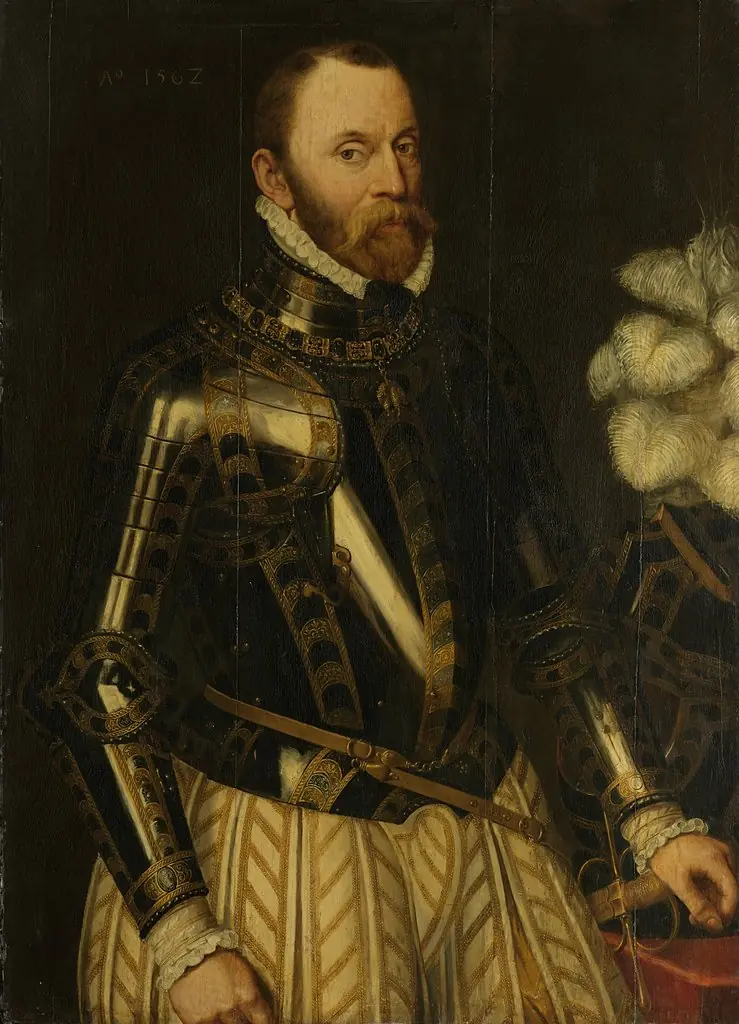 Philippe de Montmorency
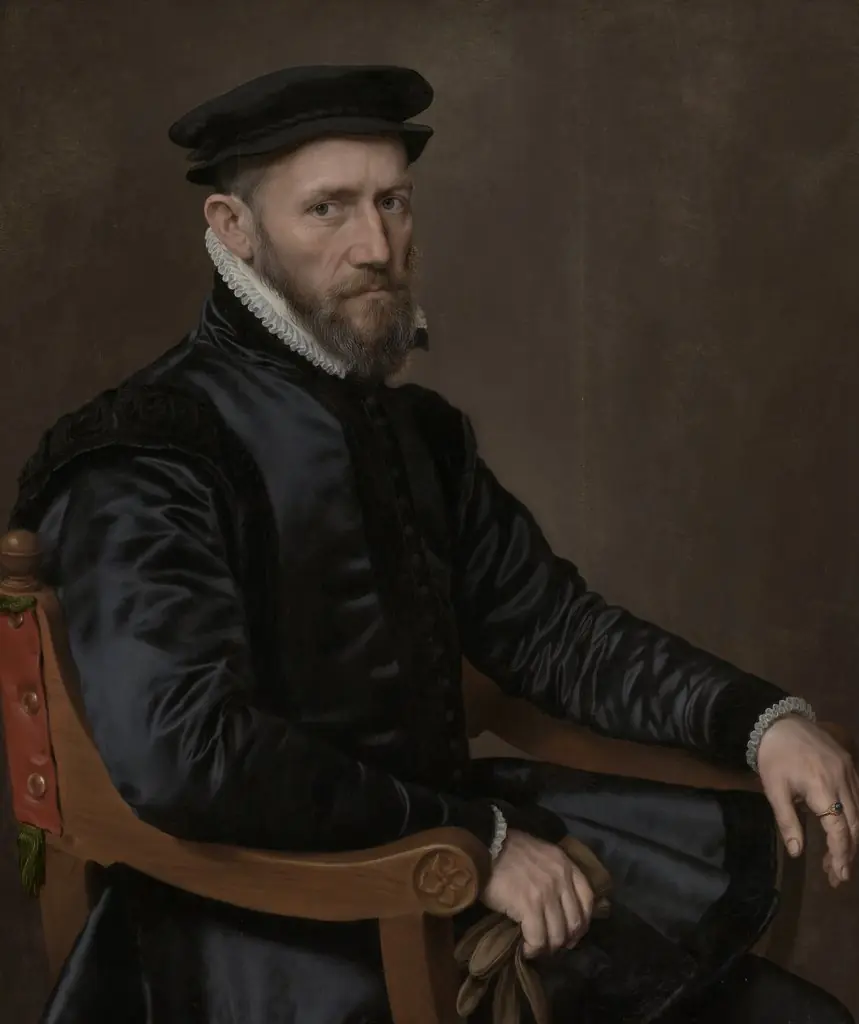 Portrait of Sir Thomas Gresham, pendant to portrait of Anne Fernely
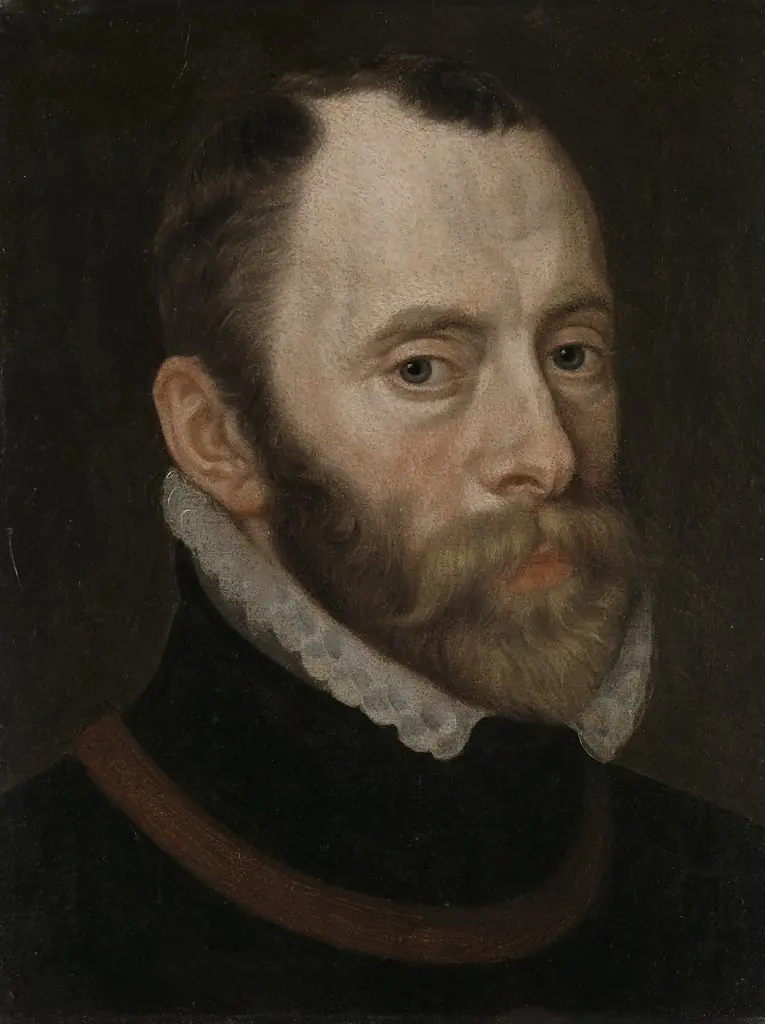 Portrait of Philippe de Montmorency, Count of Hoorne, Admiral of the Netherlands, Member of the Council of State
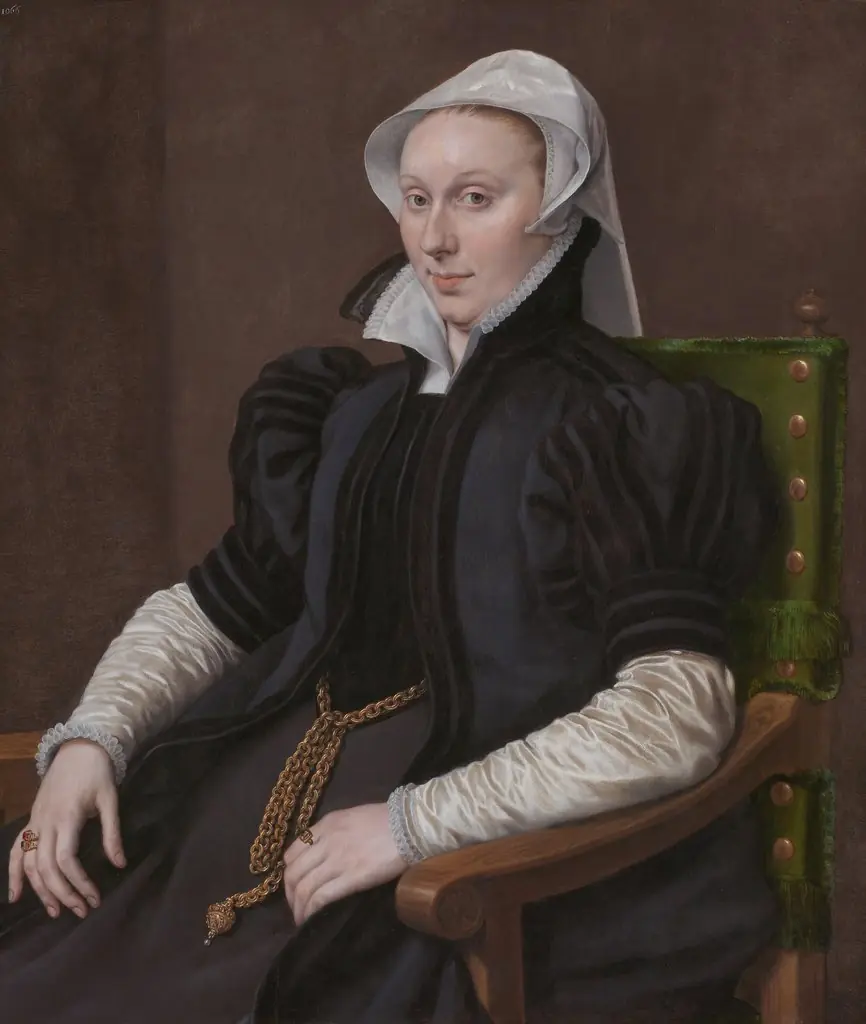 Portrait of Anne Fernely, pendant to Sir Thomas Gresham
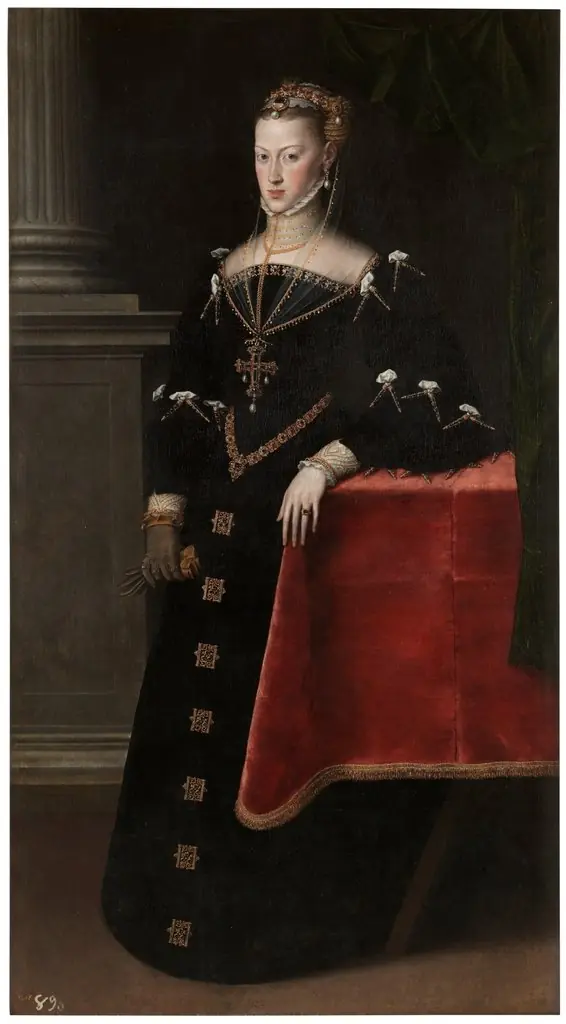 Empress Maria of Austria, Wife of Maximilian II
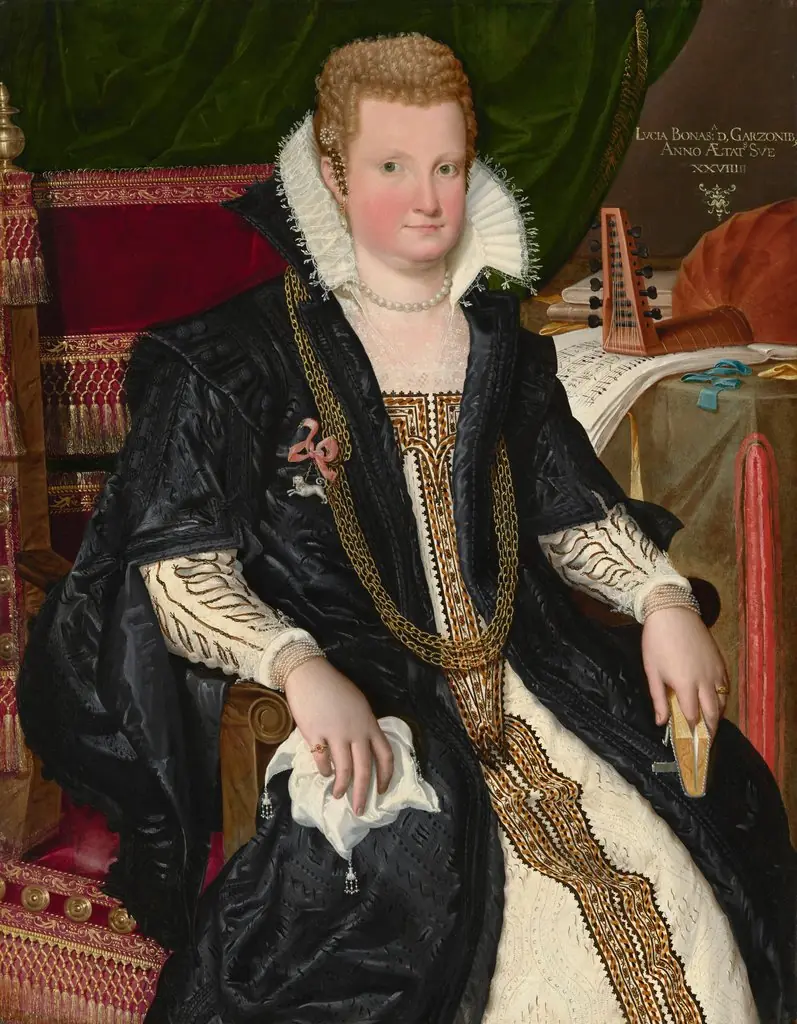 Lucia Bonasoni Garzoni
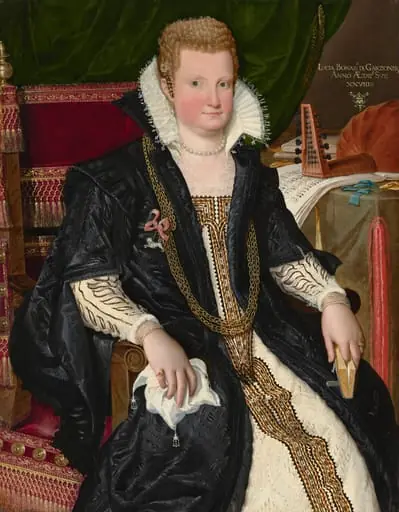 Lucia Bonasoni Garzoni
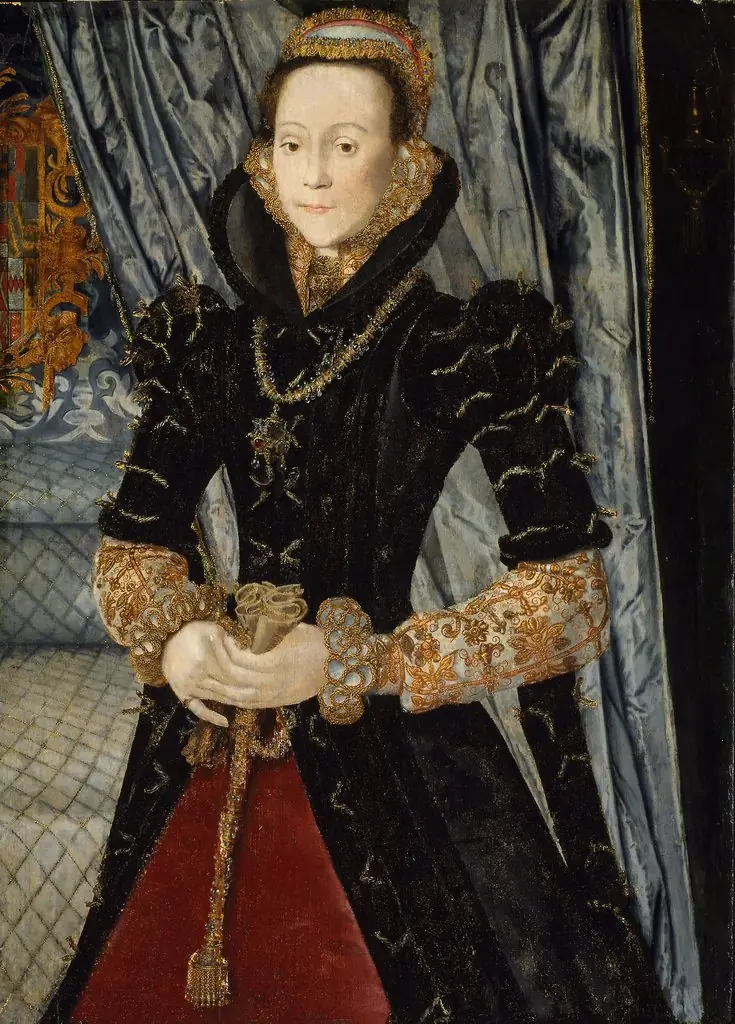 Portrait of a Lady of the Wentworth Family (Probably Jane Cheyne)
 Elisabeth of Valois
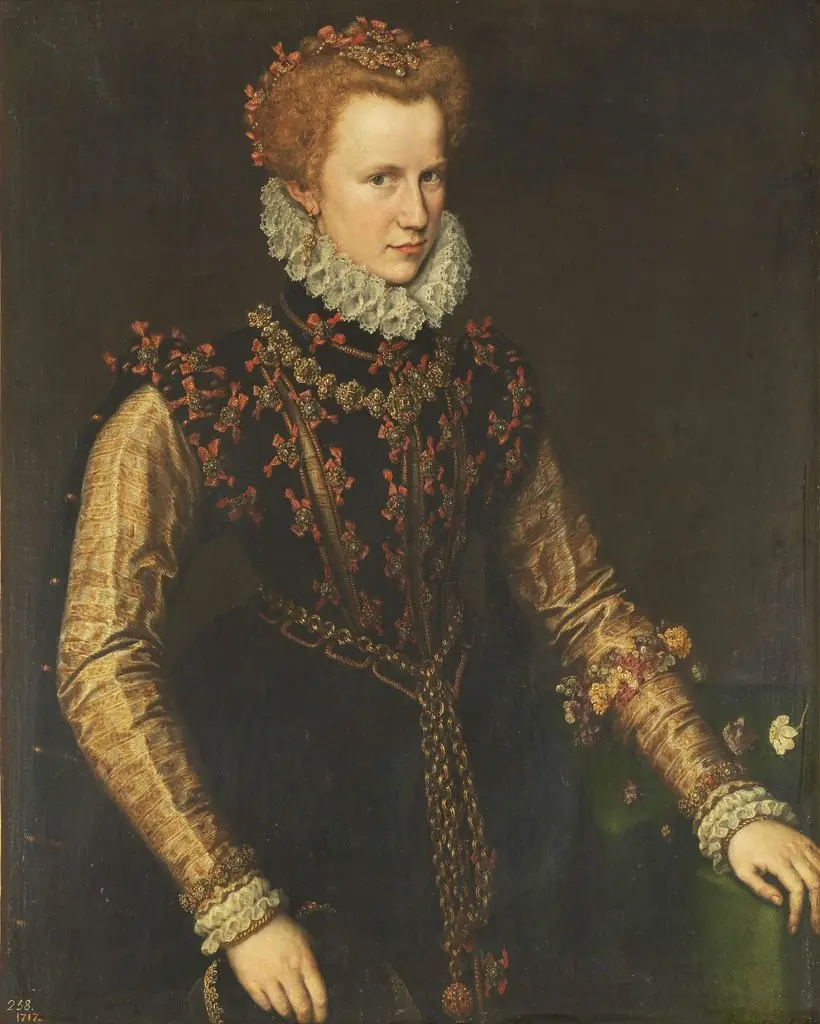 Jane Dormer, Duchess of Feria (?)
 Margaret, Duchess of Parma
 A Young Lady Aged 21, Possibly Helena Snakenborg, later Marchioness of Northampton
 Erzherzogin Maria (1531-1581), Herzogin von Jülich - Cleve - Berg, Bildnis in ganzer Figur
 Portrait of 'The Fair Geraldine' (Elizabeth Fitzgerald, Countess of Lincoln, c1528-1590)
 Betrothal portrait of Anne of Cleves