Artwork
Red Sunset on the Dnieper

Red Sunset on the Dnieper is an oil painting by the Realist artist Arkhip Kuindzhi. It dates from 1900 and is held in the collection of the Metropolitan Museum of Art.
About this work
Subject & Meaning
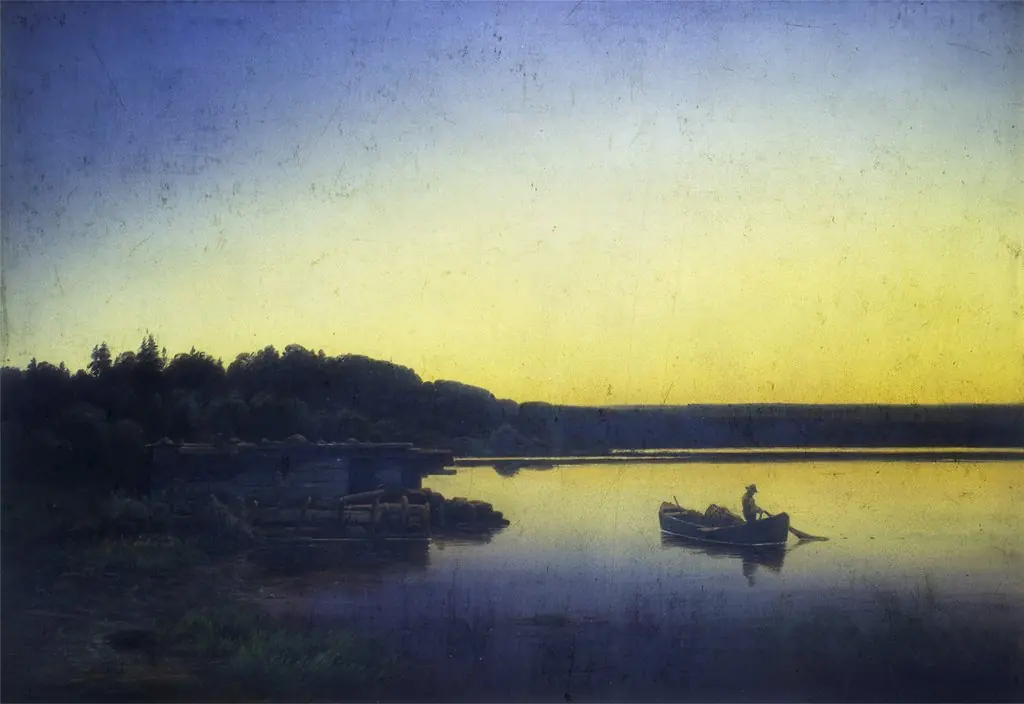
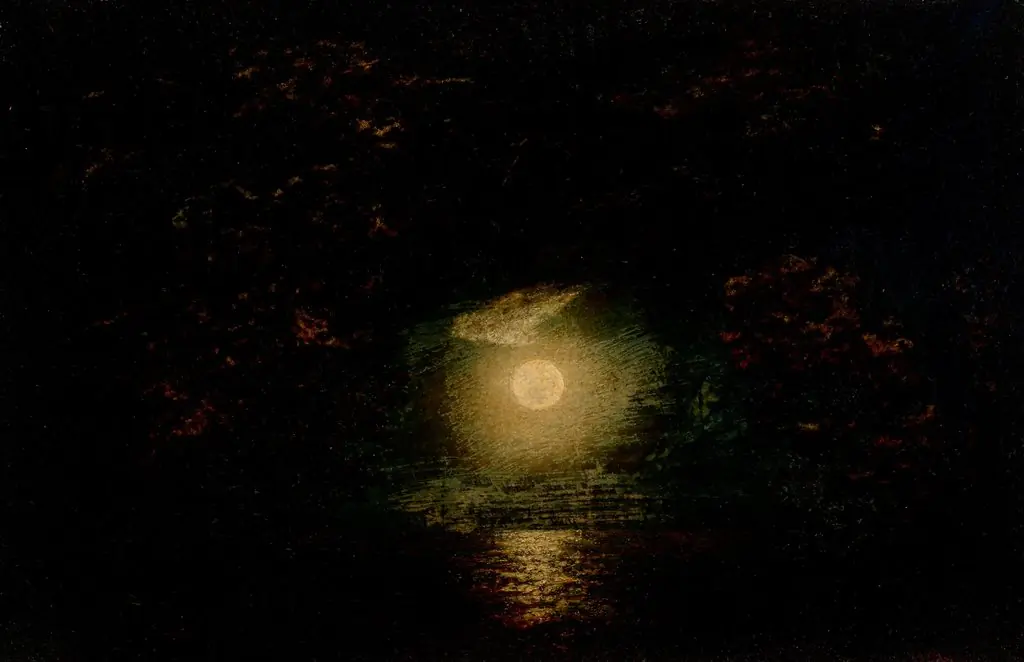
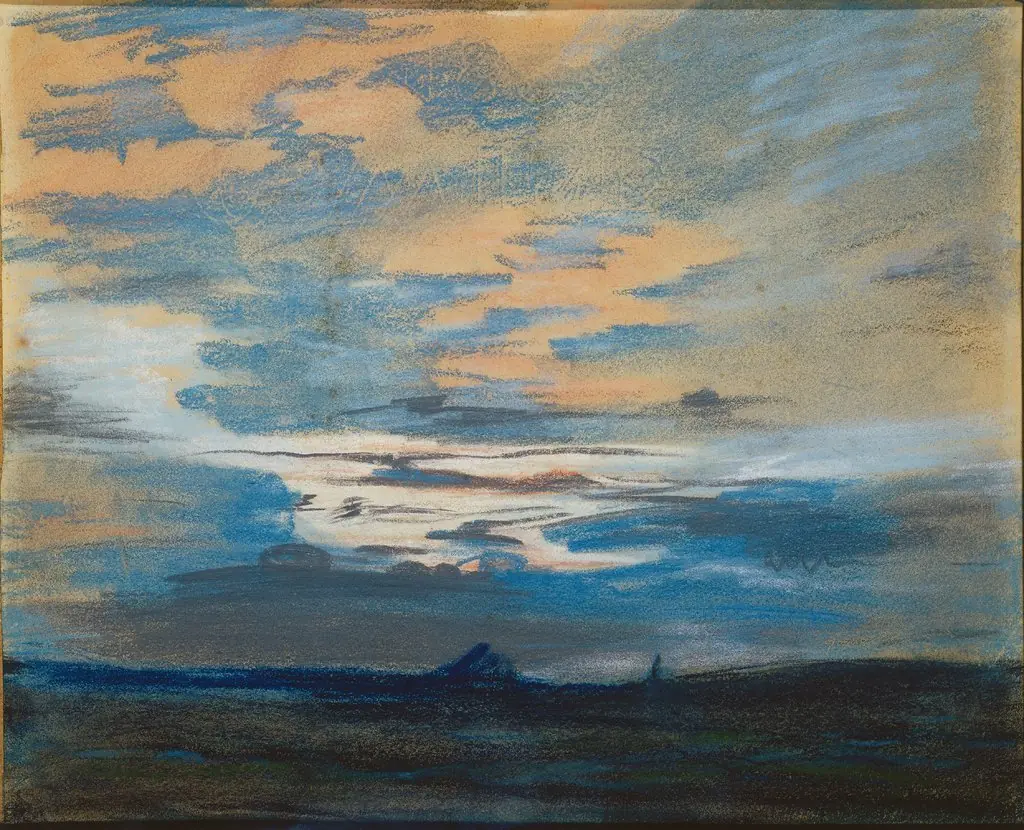
The painting shows a glowing red sun sinking behind the Dnieper River, a landscape that dominates the composition with a low horizon and intense sky.
The painting shows a glowing red sun sinking behind the Dnieper River, a landscape that dominates the composition with a low horizon and intense sky. The crimson light bathes the water and surrounding fields, creating a dramatic contrast between day and night that Kuindzhi used to suggest spiritual renewal and the power of nature. Art historians interpret the work as an embodiment of Russian luminism, where the sun functions as both a physical light source and a symbolic force of life and transition.
The depiction of the river, sky and fiery horizon reflects a symbolic dialogue between celestial fire and earthly calm, a theme emphasized in contemporary Russian criticism.
Technique & Style
Red Sunset on the Dnieper is an oil on canvas landscape painting, measuring 134.6 by 188 cm. Kuindzhi prepared preliminary oil sketches before executing the final work, including one on cardboard (19.2 × 35.5 cm) now held at the Russian Museum. Stylistically, the painting exemplifies Russian luminism, a mode uncommon in Imperial Russia, and departs from the prevailing conventions of Russian Realism. Its formal hallmarks include a centrally placed light source, a low horizon, and pronounced aerial perspective, all deployed to convey the glowing red sunset over the Dnieper.
The fusion of intense color and atmospheric depth has led commentators to read the canvas as an opposition between day and night, calm and storm, rendered on a large scale that marks it as one of Kuindzhi's last major compositions.
History & Provenance
Created around 1900, Red Sunset on the Dnieper stands as one of Arkhip Kuindzhi's final major works. Originally titled simply Red Sunset, the piece was bequeathed to the Society of Artists named after Kuindzhi in Saint Petersburg following the painter's death in 1910. In 1916 or 1918 the society sold the canvas to K. B. Demborskom for 22,500 roubles.
By the late 1960s the painting was in the New York collection of Piotr Tretiakov, and after several subsequent sales the Metropolitan Museum of Art acquired the work in April 1974 (accession 1974.100), at which time the institution appended the geographic descriptor to its title.
Context
Red Sunset on the Dnieper stands as a pivotal work in Arkhip Kuindzhi's oeuvre, representing a departure from the conventions of Russian Realism through its embrace of luminism, a style not widely adopted in Imperial Russia. Created around 1900, it is considered one of the artist's final major compositions. Scholarly analysis, such as that by Vitali Manin, interprets the painting as an elegy where the artist acts as a "peaceful pagan," juxtaposing the violent forces of the setting sun against the encroaching night to evoke themes of life and beauty.
The work is further contextualized by its association with a Russian luminist school, as explored by John Ellis Bowlt. Its acquisition by the Metropolitan Museum of Art in 1974 cemented its status as a significant example of Russian landscape art, distinguishing it through its dramatic light effects and atmospheric perspective.
Legacy
Red Sunset on the Dnieper is regarded as one of Arkhip Kuindzhi's last major works and a distinctive example of Russian luminism, a style that was not widely embraced in Imperial Russia. Its luminous treatment of the setting sun over the Dnieper broke with the prevailing conventions of Russian Realism. After Kuindzhi's death in 1910, the painting was bequeathed to the A. Kuindzhi Society of Artists in Saint Petersburg, and it subsequently passed through several private collections, including that of Piotr Tretiakov in New York, before being acquired by the Metropolitan Museum of Art in 1974.
The work has continued to attract scholarly attention, notably through John Ellis Bowlt's 1975 study framing it as the basis for a Russian luminist school, and through Vitali Manin's monograph on the artist, which reads the painting as a meditation on opposing natural forces and as a hymn to the sun.
Overview
Arkhip Kuindzhi's Red Sunset on the Dnieper, an oil on canvas created between 1905 and 1908, captures a dramatic evening sky over the expansive Dnieper River. Originally titled Red Sunset, this work exemplifies Kuindzhi's characteristic large-scale landscapes. It stands as a notable example of Russian luminism, an artistic approach that emphasized the portrayal of light and atmospheric effects, distinguishing it within the broader art movements of Imperial Russia.

Own this work as a print
Artist & collection

Artist
Arkhip Ivanovich Kuindzhi (27 January 1841 – 24 July 1910) was a Russian landscape painter of Urum (Crimean Greek) origin.